Last updated: May 4, 2026
In this article
Quick Comparison
The Silver Bengal vs Charcoal Bengal comparison brings together two visually striking Bengal coat varieties whose genetics work in fundamentally different ways. Silver in Bengals is produced by a dominant inhibitor gene (I) that suppresses warm yellow and red tones, leaving a silver-white background with black or dark gray markings. Charcoal in Bengals is a pattern modifier produced by a specific agouti gene combination that creates a dark “mask” across the face and a “cape” running down the back over various base colors.
The key conceptual difference: silver is a base color modifier, while charcoal is a pattern modifier. Silver changes the warmth of the background. Charcoal changes the contrast and adds the mask-and-cape feature on top of whatever base is underneath. Charcoal can be combined with brown, silver, snow, or melanistic bases, producing varieties like silver charcoal, snow charcoal, or brown charcoal.
TICA recognizes both varieties within the Bengal breed standard, though charcoal historically classified under “non-standard” or AOV (Any Other Variety) classes in some divisions. Both share full Bengal personality, care needs, and breed health profile. The comparison comes down to visual preference and breeder availability.
Genetics and Pattern
Silver in Bengals comes from the dominant inhibitor gene at the melanin inhibitor locus. A cat with one or two copies of the I allele expresses silver, suppressing the yellow and red tones that normally underlie agouti hair shafts. The result is a silver-white base with dark markings rather than the typical brown Bengal’s tawny or warm gold base. Eye color in silver Bengals tends toward green, gold, or hazel.
Charcoal is more genetically complex. It involves an interaction between a specific agouti allele inherited from the Asian Leopard Cat ancestor (often labeled A^Pb for Prionailurus bengalensis agouti) and the non-agouti allele at the same locus. The resulting heterozygous combination produces increased dark pigment expression on the face and back, creating the signature mask and cape pattern. Charcoal expresses on top of whatever underlying coat color the cat has, which is why you see brown charcoal, silver charcoal, snow charcoal, and melanistic charcoal varieties.
Because silver is a base color and charcoal is a pattern modifier, the two can be combined. A silver charcoal Bengal has the silver base (from the inhibitor gene) and the charcoal mask-and-cape (from the agouti gene combination), producing one of the most dramatic visual presentations in the breed. Both varieties also typically carry the Bengal-specific glitter trait. For breed-wide context see our Bengal cat breed profile.
Origin and History
Bengals were developed by Jean Mill and others starting in the 1960s and 1970s, with foundation crosses between domestic cats and the Asian Leopard Cat. Both silver and charcoal traits trace their genetic origins to different parts of this foundation. Silver entered the breed through outcrossing to silver American Shorthair lines, where the inhibitor gene was already established. The trait took time to gain broad TICA acceptance and is now recognized within the breed standard.
Charcoal as a recognized Bengal variety emerged later, as breeders observed and named the mask-and-cape phenotype. The interaction between the wild-type agouti allele inherited from the Asian Leopard Cat ancestor and the standard non-agouti allele was documented and explained by genetic researchers, leading to a clearer understanding of the variety. TICA accepts charcoal in Bengal show classes, though it has historically been classified under “non-standard” or AOV in some divisions, with show eligibility expanding over time.
Both varieties are considered relatively recent additions to mainstream Bengal recognition compared to the classic brown spotted and rosetted look. Their popularity has grown as breeders work them into established programs.
Appearance and Build
Bengal conformation does not change with color or pattern variety. Both silver and charcoal Bengals have the medium to large muscular body, long legs, broad chest, thick tail, broad muzzle, and almond-shaped eyes that define the breed. Adult weights typically fall between eight and fifteen pounds, with males larger than females.
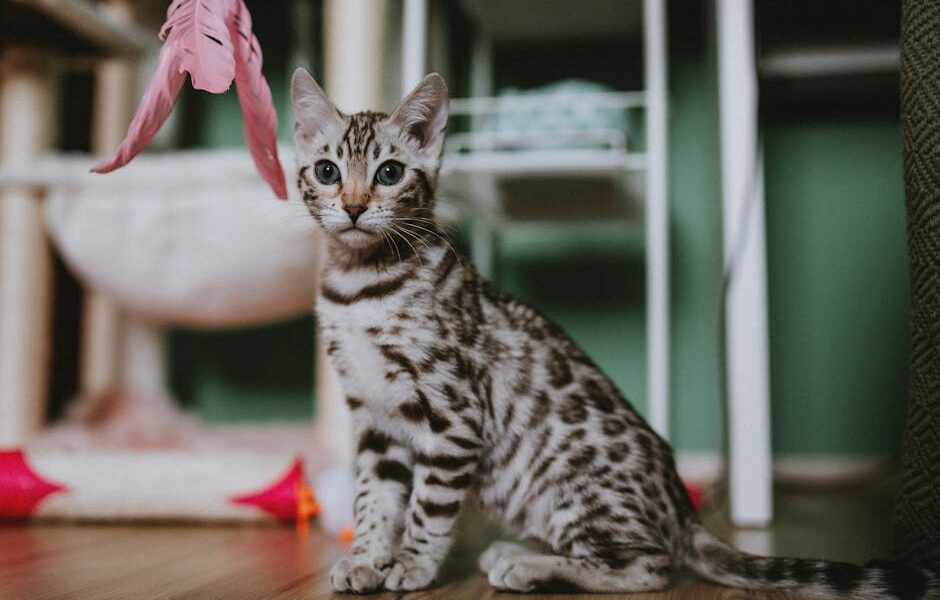
Silver Bengals show a silver-white background with markings in shades of black, dark gray, or charcoal-gray. The contrast between background and markings is high, giving a crisp, almost tuxedo-like visual on a Bengal-patterned cat. Pattern can be spotted, rosetted, or marble within the silver color class. Eye color is usually green, gold, or hazel; blue eyes do not occur in silver Bengals because the underlying base is not snow.
Charcoal Bengals show a darker overall appearance because the pattern modifier increases dark pigment expression. The signature features are the dark mask across the face (often described as a “Zorro mask”) and the dark cape running from the shoulders down the back. The base coat color underneath determines the overall color. Brown charcoal looks like a darker brown Bengal. Silver charcoal looks dramatic with silver-white contrast and dark mask-and-cape. Snow charcoal layers the modifier on a colorpoint base.
Temperament and Personality
Bengal personality is consistent across all coat varieties. Silver and charcoal Bengals share full Bengal energy, intelligence, athleticism, water curiosity, and prey drive. Coat color genes do not meaningfully affect behavior, so anecdotal claims of color-linked personality differences should not drive your choice.
Both varieties typically form strong bonds with their families and are vocal in the way Bengals are. They tolerate or enjoy other social cats, friendly dogs, and active multi-pet households. Prey drive can be challenging in homes with small caged pets like birds or hamsters; secure caging is essential.
For more on what to expect across all Bengal varieties, see our Bengal cat care guide and Bengal cat hub. Both resources apply equally to silver and charcoal varieties.
Care, Grooming, and Activity Needs
Grooming is straightforward for both varieties. The short, dense Bengal coat with glitter trait needs only weekly combing to manage shedding. Silver Bengals’ silver-white background can show dirt and oily marks more visibly, which sometimes prompts more frequent grooming for show preparation. Charcoal Bengals’ darker base hides minor marks more readily.
Activity needs are the same as for any Bengal: substantial. Both varieties require daily structured play, vertical climbing space, and ideally puzzle feeders or training sessions. A bored silver or charcoal Bengal will create its own enrichment, often at the expense of furniture and household items. See our cat enrichment ideas guide and puzzle feeders for cats overview.
Diet considerations match the broader Bengal breed. Our Bengal cat diet guide covers protein and ingredient considerations relevant to all Bengal varieties.
Health and Lifespan
Both silver and charcoal Bengals share the broader Bengal breed health profile. Hypertrophic cardiomyopathy is a relevant concern across pedigreed cats and should be screened with cardiac ultrasound. Bengal-specific concerns include progressive retinal atrophy (genetically testable) and Bengal pyruvate kinase deficiency (also testable). Reputable breeders screen for all three regardless of color.
Lifespan typically falls within the typical pedigreed cat range, with well-bred and well-cared-for Bengals reaching their mid-teens. Routine wellness exams, dental care, and weight management contribute most to longevity. Our HCM in cats overview is the most relevant cardiac resource.
Color-specific health concerns are minimal. The silver inhibitor gene and the charcoal agouti combination do not introduce additional risks beyond what the breed already carries. As with all Bengals, ask breeders about parental cardiac screening, genetic test results, and any history of structural or metabolic conditions in the lines.
Living Situation Fit
Both varieties suit households that can deliver Bengal-level engagement: active families, work-from-home owners, multi-pet households with social companion cats, or homes with extensive cat trees, wall shelves, and secure outdoor enclosures. Apartment living is possible but requires deliberate setup; small apartments with absent owners are a poor fit for any Bengal.
Silver Bengals’ striking visual contrast often appeals to owners who want a cat that visibly stands out. Charcoal Bengals’ dramatic mask-and-cape pattern often appeals to owners who want a cat that looks closest to a small wild cat. Both varieties work equally well functionally.
For climate, both varieties handle temperate to warm conditions well thanks to the short coat. Indoor temperature stability is preferred, with sunny window perches a particular favorite. For lifestyle alternatives, see our most playful cat breeds and highest energy cat breeds roundups.
Cost and Availability
Both silver and charcoal Bengals are widely available through TICA breeders, though specific combinations like silver charcoal are rarer and command higher prices. Pet-quality silver Bengals typically start in the mid four figures, with show-quality cats higher. Charcoal Bengals across various base colors generally fall in similar ranges, with silver charcoal and snow charcoal often at the top because of visual rarity.
For sibling B107 articles in this batch, see our silver Bengal cat color profile and charcoal Bengal cat color profile. Related comparisons include snow Bengal cat color variants, marble Bengal cat coat pattern, and our F3 Bengal cat breed profile.
Rescue is worth considering. Bengals turn up in shelters and breed rescues regularly, often as adolescents whose energy outpaced their previous owner’s expectations. Our adopting a rescue Bengal cat guide and cat-only rescues overview can help.
Decision Framework: When to Choose Each
Choose a Silver Bengal if you want a bright, high-contrast silver-white background with crisp dark markings, you find the silver-and-black aesthetic compelling, and you want a coat color that visibly stands out. Silver Bengals work in spotted, rosetted, or marble patterns and pair particularly dramatically with the charcoal modifier.
Choose a Charcoal Bengal if you want the signature dark mask and cape look, you find the wild-cat aesthetic compelling, and you want one of the darkest, most dramatic Bengal varieties. Charcoal can be layered on brown, silver, or snow bases for different effects. Brown charcoal is the most common; silver charcoal is among the rarest.
Choose a silver charcoal Bengal if you want both modifications combined: silver-white background plus dark mask-and-cape pattern. These are among the most visually striking Bengals available and have the longest waitlists. For other Bengal coat varieties to compare, see our cat breeds with spotted coats roundup.
Frequently Asked Questions
What is the difference between silver and charcoal in Bengals?
Silver is a base color modifier (dominant inhibitor gene) that suppresses warm tones, producing a silver-white background. Charcoal is a pattern modifier (agouti gene combination) that produces a dark mask across the face and a cape down the back. Silver changes the background color; charcoal adds a darker pattern overlay.
Can a Bengal be both silver and charcoal?
Yes. A silver charcoal Bengal has the silver base color (from the inhibitor gene) and the charcoal mask-and-cape (from the agouti gene combination). These cats are dramatic in appearance and among the rarer combinations.
Are charcoal Bengals show eligible?
TICA recognizes charcoal in Bengal show classes, though it has historically been classified under “non-standard” or AOV (Any Other Variety) in some divisions. Show eligibility for specific charcoal combinations has expanded over time. Check current TICA Bengal standard for the latest classification.
Do silver or charcoal Bengals have different health concerns?
No. Both varieties share the broader Bengal breed health profile. The inhibitor gene producing silver and the agouti combination producing charcoal do not introduce additional health concerns beyond what Bengals already carry.
Where can I find a silver or charcoal Bengal?
TICA breeders specializing in these varieties are listed through the TICA breeder directory. Waitlists are common for rarer combinations. Rescue is also worth considering; browse the adopt cats hub for current listings and consult our reputable rescue red flags guide.
Looking to adopt a Silver Bengal vs Charcoal Bengal?
Browse Silver Bengal vs Charcoal Bengal cats and mixes available for adoption from shelters and rescues near you.
Find Silver Bengal vs Charcoal Bengal Cats for Adoption