
Last updated: May 16, 2026
In this article
- What Taurine-Deficiency DCM Is
- The Cat Food Crisis and the Modern Diet Story
- Breeds and Diets Most at Risk
- How Owners Notice Symptoms
- How the Diagnosis Is Made
- Treatment: Diet Change Plus Supplementation
- Heart Failure Management While Diet Heals
- Living With a Recovering DCM Dog
- Prognosis
- Cost Reality and Insurance
- When to Call the Vet
- Frequently Asked Questions
What Taurine-Deficiency DCM Is
Taurine-deficiency dilated cardiomyopathy in dogs is a form of heart muscle disease where low circulating taurine levels appear to be a major driver of left-ventricular dilation and contractile failure. Taurine is an amino acid that cats famously cannot synthesize in adequate amounts and must obtain from diet, but dogs were historically considered able to make their own. The story is now more complicated. Certain dog populations, certain breeds, and dogs eating certain diets develop low taurine levels and a DCM phenotype that looks remarkably similar to traditional canine dilated cardiomyopathy.
The big difference between taurine-deficiency DCM and traditional genetic DCM is that taurine-deficiency cases are at least partially reversible with diet change and supplementation. That single fact reshapes the conversation. Catching this version of DCM early gives you the best chance of meaningful improvement, sometimes even normalization of cardiac function on echocardiogram over months to a year.
If your dog has just been diagnosed with DCM, ask your vet whether taurine testing is part of the workup. The answer in most cardiology services today is yes — particularly if your dog is eating a grain-free or boutique diet, or belongs to certain at-risk breeds. The dog DCM overview covers the broader cardiomyopathy picture in plain language.
The Cat Food Crisis and the Modern Diet Story
Most veterinary readers think of taurine deficiency as a cat-food problem, and historically that is correct. In the 1970s and 1980s, cats fed taurine-poor commercial diets developed dilated cardiomyopathy and retinal degeneration. The pet food industry responded by supplementing all cat foods with taurine, and feline DCM nearly disappeared as a clinical entity by the 1990s — replaced by HCM as the dominant feline cardiomyopathy.
The modern story in dogs began emerging in the 1990s with sporadic reports in specific breeds — Cocker Spaniels, Newfoundlands, Golden Retrievers, English Setters — and accelerated dramatically around 2018 when the FDA opened a public investigation into a possible link between grain-free diets and DCM in atypical breeds. The phrase that caught on was “BEG diets” — boutique, exotic-protein, grain-free — describing the family of diets implicated in many cases.
The exact mechanism remains under investigation. Theories include reduced taurine bioavailability from certain pulse-based ingredients (peas, lentils, chickpeas), interference with taurine metabolism, or a combination of factors yet to be fully characterized. What is clearer is that some dogs eating these diets developed DCM, often with low blood taurine levels, and a meaningful proportion improved with diet change and supplementation.
Breeds and Diets Most at Risk
Breed predispositions to taurine-related DCM include:
- Cocker Spaniels (American and English) — one of the most clearly taurine-responsive populations
- Newfoundlands
- Golden Retrievers — over-represented in the FDA case series
- English Setters
- Saint Bernards
- Various large and giant breeds
Diet patterns that have been associated with the modern wave of cases include grain-free formulations, diets with peas, lentils, chickpeas, or potatoes as primary ingredients, exotic protein sources, and boutique-brand foods without large feeding-trial backing. The picture is not uniform — many dogs eat these diets without ever developing DCM, and traditional genetic DCM still occurs in dogs eating grain-inclusive diets. But the association is meaningful enough that diet history is now a routine part of the DCM workup.
The American College of Veterinary Internal Medicine (ACVIM) has published consensus statements on diagnostic and management approaches. Your cardiologist will be familiar with the current recommendations and will incorporate them into your dog’s workup.
How Owners Notice Symptoms
The clinical signs of taurine-deficiency DCM are the same as any other form of DCM, since the end-organ disease — a dilated, weakly contracting left ventricle — looks similar regardless of cause. Owners notice:
- Exercise intolerance — slowing down on walks, refusing stairs, lying down mid-walk
- Persistent cough, especially at night or in the early morning
- Labored or fast breathing
- Belly breathing
- Episodes of weakness or fainting
- Distended abdomen from right-sided fluid accumulation
- Decreased appetite and weight loss
- Restlessness at night
The hallmark physical exam finding is often a soft new murmur of mitral regurgitation as the left ventricle dilates and stretches the valve apparatus. An atrial fibrillation rhythm may emerge in advanced cases as the left atrium dilates. Some dogs are diagnosed before any clinical signs appear, when a screening echo done for a research study or a wellness recommendation incidentally shows DCM-pattern changes.
How the Diagnosis Is Made
The diagnostic workup for taurine-deficiency DCM is the same as for any DCM — plus a taurine level. Your primary vet will start the path, and most cases earn a referral to a board-certified veterinary cardiologist (ACVIM-Cardiology).
Expect this sequence:
- Detailed history including a thorough diet history — brand, protein source, grain-free or grain-inclusive, supplements
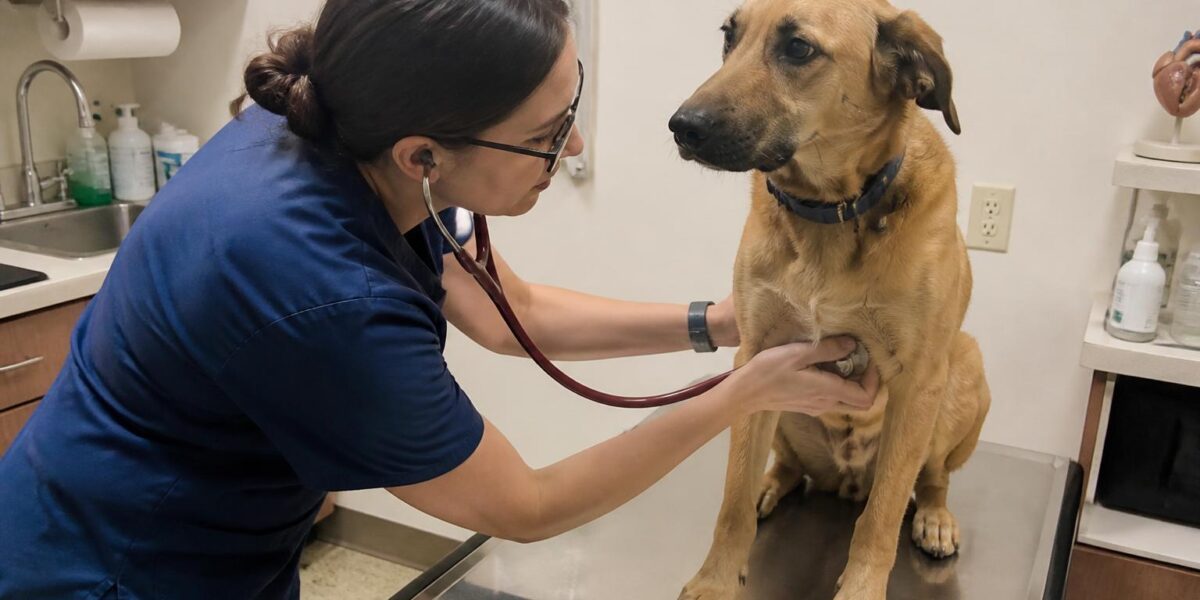
- Physical exam, listening for a murmur, gallop, or arrhythmia
- Chest radiographs — looking for cardiomegaly and pulmonary edema
- ECG to characterize any arrhythmia
- Bloodwork including a taurine level (whole blood and plasma, ideally both — different reference ranges)
- NT-proBNP if heart failure status is uncertain
- Echocardiogram — confirms DCM phenotype and quantifies severity
- Holter monitor in dogs with arrhythmia or high-risk breeds
The taurine level is the test that distinguishes this version of DCM from traditional genetic DCM. Whole-blood and plasma taurine reference ranges differ, and your cardiologist will interpret the result in context with the diet history and the echo findings. A low or low-normal taurine level in a dog eating a high-risk diet with a DCM-pattern echo is the classic constellation.
Treatment: Diet Change Plus Supplementation
The treatment that distinguishes taurine-deficiency DCM from genetic DCM is the diet intervention. Standard recommendations include:
- Switching to a grain-inclusive diet from a major manufacturer with strong feeding-trial credentials
- Taurine supplementation, dosed by your cardiologist based on weight and taurine levels
- L-carnitine supplementation in some cases, since combined deficiencies have been described
- Standard heart failure medications layered on top — pimobendan, ACE inhibitors, spironolactone, diuretics as needed
- Anti-arrhythmic therapy if AF or ventricular arrhythmias are present
Specific supplement doses, brands of food, and combinations of medications are vet-determined based on your dog’s specific case. The diet conversation is one your cardiologist and your primary vet should have together — therapeutic diets vary, and the goal is a reformulated long-term plan, not a single trial-and-error swap.
The remarkable feature of taurine-responsive DCM is that some dogs show meaningful echocardiographic improvement over three to twelve months on the new diet plus taurine. Reversibility is not guaranteed, and severely affected dogs may not recover full cardiac function, but the upside potential is real and is the reason early diagnosis matters so much.
Heart Failure Management While Diet Heals
Many dogs with taurine-deficiency DCM are already in congestive heart failure at diagnosis. Heart failure management runs parallel to the diet intervention — diuretics for fluid overload, pimobendan for contractility support, ACE inhibitors and spironolactone for neurohormonal modulation, and rate control if AF is present.
Dogs in active failure may need an overnight hospitalization in an oxygen cage with injectable diuretics before they can be safely sent home. Once stabilized, the goal shifts to oral medications and a careful monitoring schedule. The diet change happens at the same time, with taurine supplementation typically started within the first week.
Recheck appointments at one to two weeks for bloodwork and clinical reassessment, then at three months and six months for follow-up echocardiograms, are standard. The repeat echo at three to six months is the moment that often tells you whether the diet intervention is working — improvement in fractional shortening or reduction in left-ventricular diameter is the news everyone is hoping for.
Living With a Recovering DCM Dog
Track and log:
- Resting respiratory rate while sleeping — under 30 breaths per minute is the canine target
- Body weight
- Exercise tolerance versus baseline
- Any episodes of weakness, fainting, or pronounced lethargy
- Cough frequency and timing
- Appetite and demeanor
Bring the log to every cardiology recheck. Resting respiratory rate is the single most useful home metric in heart disease — a trend upward from your dog’s normal range often precedes overt heart failure decompensation by several days, giving you a window to call your vet before the lungs flood.
Stick with the new diet rigorously. Even occasional reversion to the old high-risk diet undermines the intervention. Treats and table foods need re-evaluation in the same context — talk to your cardiologist about which treats fit the new dietary plan, and avoid jerky, dental chews, and biscuits made primarily from peas, lentils, or chickpeas.
Prognosis
Prognosis for taurine-deficiency DCM is more variable — and on average more favorable — than for traditional genetic DCM. Dogs caught early, particularly Cocker Spaniels with low taurine levels, often show meaningful improvement on diet change plus supplementation, sometimes with substantial recovery of cardiac function. Dogs caught late, with advanced heart failure or severe arrhythmias, have a more guarded outlook even with diet intervention.
Your cardiologist will frame prognosis qualitatively — “guarded but potentially reversible,” “good chance of stabilization with diet change,” “advanced disease, focus on quality of life and stabilization” — rather than commit to specific survival times. The variability between dogs is too wide for a single statistic to be meaningful.
Quality-of-life conversations remain part of the picture in advanced cases. The ASPCA Pet Loss Hotline at 877-474-3310 is a free resource if you find yourself thinking about end-of-life decisions, and your vet can walk you through hospice approaches when the time comes.
Cost Reality and Insurance
Cardiology workup, taurine testing, echocardiograms, ongoing medications, and a transition to a new therapeutic diet all add up. Repeat echocardiograms at three and six months are standard for tracking response. Hospitalization for heart failure pushes into thousands-of-dollars territory.
If your dog is at-risk-breed and you do not yet have insurance, look at the pet insurance decision for dogs guide and enroll before any heart disease has been diagnosed. Pre-existing exclusions are the biggest financial pitfall in cardiac coverage. The veterinary specialist cost breakdown sets expectations for cardiology pricing.
Adopters considering a senior dog with stable taurine-responsive DCM on diet plus supplementation can absolutely give them a wonderful retirement home — many of these dogs are calm, settled, and easy to care for once on a good regimen. Ask the rescue for the most recent cardiology report including the taurine level and the most recent echo, and budget for at least one cardiology recheck in the first three to six months.
When to Call the Vet
Call your primary vet during business hours for: gradual exercise intolerance, occasional cough, mild but persistent rise in resting respiratory rate, dietary questions, or upcoming cardiology recheck.
Go to the emergency vet for: open-mouth breathing, persistent labored breathing, sudden collapse, vomiting plus lethargy in a dog on cardiac medications, sudden abdominal distension, blue or gray gums, or any acute deterioration. Worsening heart failure does not wait for office hours. The dog heart murmur guide covers how vets categorize cardiac findings during the initial workup.
Keep your dog’s medication and supplement list — drug name, strength, dose, and last administration time — printed on your fridge. Save your cardiologist’s after-hours instructions in your phone.
Frequently Asked Questions
Is grain-free dog food causing DCM?
The FDA opened a public investigation in 2018 examining a possible association between grain-free and boutique diets and DCM in atypical breeds. The exact mechanism remains under investigation, but enough cases improved on diet change plus taurine supplementation that diet history is now part of the routine DCM workup. Talk to your veterinarian about whether your dog’s current diet poses any concern.
Can taurine-deficiency DCM be reversed?
Some dogs, particularly Cocker Spaniels with low taurine levels, show meaningful echocardiographic improvement on diet change plus taurine supplementation over three to twelve months. Reversibility is not guaranteed and depends on severity at diagnosis, the underlying cause, and individual response. Early diagnosis improves the odds of meaningful recovery.
Should I give my dog taurine just in case?
Discuss any supplement with your veterinarian first. Routine taurine supplementation in healthy dogs is not generally recommended without a clinical reason. If your dog is in an at-risk breed or eating a high-risk diet, ask about a taurine level and an echocardiogram screening rather than starting an unprescribed supplement.
What diet should I switch to?
Veterinary cardiologists generally recommend a grain-inclusive diet from a major manufacturer with feeding-trial credentials and a board-certified veterinary nutritionist on staff. Specific brand recommendations should come from your cardiologist or your primary vet, who can match the diet to your dog’s specific case, including any concurrent medical conditions.
How is taurine-deficiency DCM different from traditional canine DCM?
The end-organ disease — a dilated, weakly contracting left ventricle — looks similar on echocardiogram. The difference is the underlying cause: traditional DCM is largely genetic and irreversible, while taurine-deficiency DCM is at least partially reversible with diet change and supplementation. The taurine level distinguishes the two and changes the treatment plan substantially.


