Last updated: May 6, 2026
In this article
- What a Rescue Staffy Actually Is
- The “Nanny Dog” Myth and Real Supervision
- Energy and Daily Exercise
- Dog-to-Dog Behavior: Honest Framing
- Training a Smart, People-Focused Breed
- Health Concerns to Track
- BSL and Insurance Realities
- Living Setup and Family Fit
- The First Month at Home
- Sourcing a Rescue Staffy
- Is a Rescue Staffy Right for You?
- Common Mistakes New Staffy Adopters Make
- Frequently Asked Questions
What a Rescue Staffy Actually Is
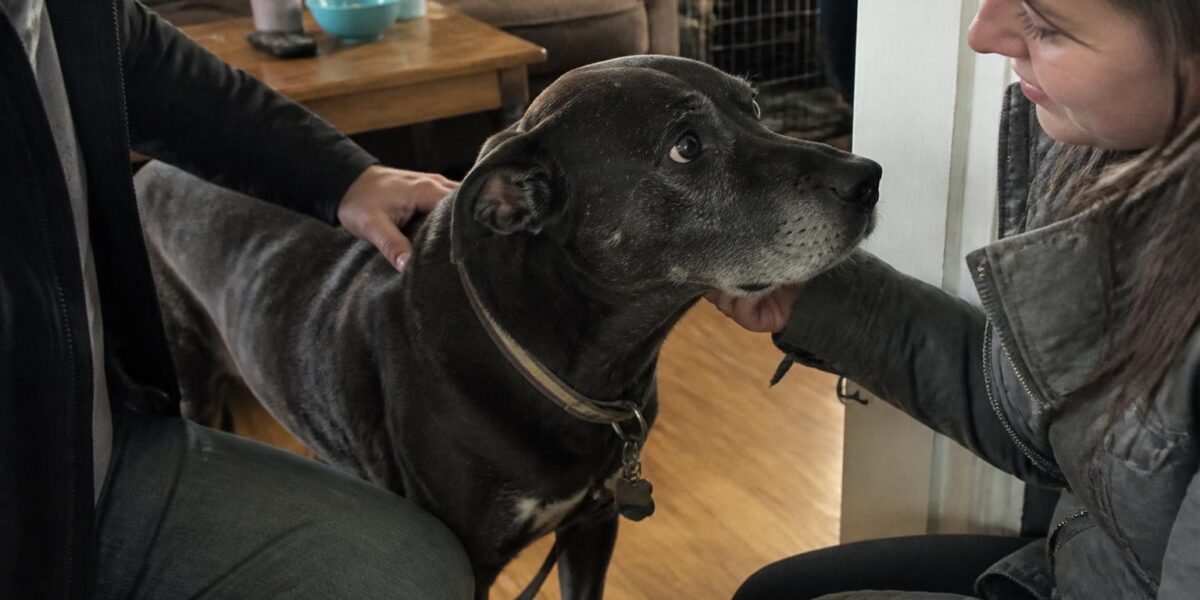
Adopting a rescue Staffordshire Bull Terrier means meeting one of the most people-focused dogs in the bully family — a smaller, stockier, deeply affectionate breed that lives for human contact. The Staffy was developed in the English Midlands as a dog of the working class, prized for being safe and affectionate with the family while sturdy enough to do real work. The result is a compact, muscular dog with an enormous personality and a strong preference for being on a lap, a couch, or a bed.
Staffies are often confused with American Staffordshire Terriers and “pit-type” dogs more broadly. The breeds share ancestry but the Staffy is meaningfully smaller — most adults are between 24 and 38 pounds, with a stocky frame and a square head. The temperament profile is also distinctive: extreme people-orientation, low aggression toward humans in well-raised individuals, and a real “Staffy smile” that owners recognize on sight.
Most rescue Staffies arrive at rescue for reasons that are not unique to the breed — life changes, financial stress, or families who underestimated daily energy. The breed is over-represented in some shelter systems because of broad bully-breed assumptions and BSL pressures. The dogs themselves are often easy candidates for adoption — many are sociable, biddable, and ready for a home.
The “Nanny Dog” Myth and Real Supervision
The “nanny dog” myth circulates around Staffies and similar breeds, suggesting the dogs have a special natural ability to babysit children. The myth is not historically accurate, and treating it as guidance leads to bad outcomes. Like any dog, a Staffy needs the same supervision rules around children as any other breed: dog has its own space, kids learn to respect it, no resource access during meals or rest, and active adult supervision when both are in the same room.
What is true is that most Staffies are genuinely affectionate with the family and tolerant of normal household life. That is a temperament tendency, not a guarantee. Practical supervision still matters and looks like:
- The dog has a quiet retreat space that children do not enter
- Resource items — food bowls, chews, beds — are off-limits during use
- Adults supervise actively rather than just being in the room
- Children are taught dog body language and how to recognize “leave me alone” signals
- The dog gets daily exercise and mental work so the household stays calm
Our dog body language guide is useful for kids and adults alike. The basics are not complicated and prevent most household incidents.
Energy and Daily Exercise
Staffies are athletic, muscular dogs with serious daily exercise needs. They are not the highest-energy breed in the world, but skipping exercise for a Staffy does not produce a relaxed dog — it produces a pacing, demanding, sometimes destructive one. Plan on at least an hour of real activity per day, ideally split into two outings.
Workable exercise plans:
- Two daily walks of thirty to forty-five minutes
- Yard play with structured fetch or tug
- Scent work or nosework — taps the brain
- Hiking on weekends
- Swimming when conditions allow — many Staffies enjoy water
- Flirt pole or spring pole work for short bursts of muscular workout
Staffies are not generally endurance athletes. They sprint, wrestle, and fetch, but most are not built for long-distance running, especially in heat — the brachycephalic-leaning skull means heat tolerance is moderate at best.
Dog-to-Dog Behavior: Honest Framing
Many Staffies are genuinely dog-friendly and live happily with other dogs. Some are dog-selective, especially with same-sex adults. A meaningful number become dog-reactive in adolescence and adulthood. None of this makes the dog dangerous to humans; the breed’s aggression toward people is famously low. But planning for variable dog-to-dog behavior is honest and important.
The practical approach:
- Skip dog parks until you know your individual dog well
- Choose play dates with known, well-matched dogs in controlled settings
- Read body language constantly and end interactions before they escalate
- Use baby gates and management at home if you have multiple dogs and tension exists
- Get a force-free trainer involved early if reactivity develops
For the broader picture on adopting bully breeds and what to expect, see our guide on finding a bully breed rescue.
Training a Smart, People-Focused Breed
Staffies are bright, biddable, and food-motivated. The breed responds beautifully to reward-based training and shuts down or becomes defensive under harsh handling. Force-free methods are not a soft preference; they are the approach that produces the most engaged, confident Staffy.
The skills that pay off in the first months:
- Marker training — a clean “yes” or click that means a treat is coming
- Settle on a mat — patient practice builds the off-switch the breed needs
- Loose-leash walking — Staffies pull when excited; front-clip harness plus practice
- Recall in the yard — short, frequent, high-value rewards
- Crate or pen comfort — paired with food puzzles, builds the foundation for time alone
- Polite greetings — Staffy enthusiasm at the door knocks people down
Most Staffies pick up training quickly when motivated. The training relationship tends to be one of the joys of the breed.
Health Concerns to Track
The breed is generally hardy but has a few specific health considerations.
- Hip dysplasia at moderate rates — varied surfaces and reasonable exercise help
- L-2-hydroxyglutaric aciduria — a genetic neurometabolic condition; reputable rescues often have DNA testing on file or can refer you to do it
- Hereditary cataracts and persistent hyperplastic primary vitreous (PHPV) — eye conditions that can affect vision; ophthalmology screening is reasonable
- Skin allergies — itchy skin, paws, and ears are common
- Heat sensitivity — moderate; avoid exercising in hot conditions
- Mast cell tumors later in life
For broader breed information including conformation and standard temperament, see our Staffordshire Bull Terrier breed profile.
BSL and Insurance Realities
Some U.S. cities and counties have breed-specific legislation that includes Staffordshire Bull Terriers, and many homeowners’ or renters’ insurance policies exclude bully-type breeds. None of this reflects the temperament of the individual dog, but it has real practical consequences.
Practical steps before adopting:
- Check your municipal and county ordinances
- Talk to your homeowners’ or renters’ insurance about exclusions
- If renting, get the breed in writing on the lease
- Consider third-party canine liability coverage if your insurance excludes the breed
- Plan travel routes around BSL jurisdictions
The work is unfair, but skipping it does not make it go away. Doing it before adoption protects both the dog and the family.
Living Setup and Family Fit
Staffies are highly adaptable and live well in apartments, townhouses, or suburban homes — provided the dog gets daily exercise and mental work. The breed wants to be near people, so households with someone home much of the day are an easier fit than long-workday-no-pets-allowed setups.
Setup considerations:
- Secure fencing for yards — Staffies can be agile climbers and persistent diggers
- Crate or confinement area for safe alone time
- Dog-friendly furniture (Staffies pick the couch every time)
- Air conditioning or fans in summer
- A vet experienced with bully breeds and skin conditions
If you want to start the application process, see the browse adoptable pets page.
The First Month at Home
The first month with a rescue Staffy sets up the rest of the relationship. Staffies tend to settle quickly compared to many breeds — most are recognizable to themselves within two to three weeks, and full settling happens by the second or third month. The trade-off is that early mistakes also stick fast, so it is worth being deliberate.
Week one looks like calm decompression. Limit visitors. Two short walks a day on a quiet neighborhood route. Feed and sleep in consistent places. Skip the dog park, the pet store, and busy events. Most Staffies will be intensely affectionate from day one — that is part of the breed, not a sign that decompression is finished.
Weeks two and three add structure. Short training sessions twice a day, marker-based and reward-rich. Begin polite-greeting work — Staffies tend to launch themselves at humans they meet, and this is one of the easier breed traits to address early. The first short deliberate absences paired with a frozen Kong build alone-time tolerance.
By week four most rescue Staffies are clearly settled into the household — predictable energy patterns, reliable house training, and recognizable preferences for couch spots and family members. The full settling period continues for months. Our three-three-three rule for rescue dogs covers the framework.
Sourcing a Rescue Staffy
Staffies turn up in breed-specific bully-breed rescues, generalist shelters, and increasingly in foster-based organizations that have stepped into the bully-breed space because of how often these dogs are over-represented in shelters. Each model has trade-offs.
Foster-based rescues offer the most behavioral information about the individual dog and tend to be selective about matching. Shelters move faster and cost less but provide less behavioral context. Either path can work; the difference is mostly in how much information you get up front. Our overview of foster-based rescue walks through what to expect from the application and home-visit process.
Is a Rescue Staffy Right for You?
The honest checklist:
- You want a dog that is constantly attached to you
- You can commit to one to two hours of daily activity
- You are committed to reward-based training
- You have checked BSL and insurance for your location
- You can manage variable dog-to-dog behavior with thought
- You have a securely fenced yard or workable management plan
- You enjoy a goofy, affectionate, people-pleasing companion
If those line up, a rescue Staffy is one of the most rewarding small-medium dogs you can bring home. The breed’s mix of compact size, affection, and personality is hard to beat.
Common Mistakes New Staffy Adopters Make
Several patterns repeat among first-time Staffy adopters. Recognizing them in advance saves the dog some confusion and saves you frustration.
- Skipping the dog-park decision — many Staffies are dog-friendly as juveniles and selective as adults; defaulting to dog parks before knowing your individual dog can produce a fight that ends the social-dog phase
- Underestimating exercise needs — small size does not mean small energy; without a real daily plan, the dog becomes pacing and demanding
- Skipping skin care — Staffies are prone to skin allergies that show up as paw licking and itchy ears; early intervention prevents secondary infections
- Not training polite greetings from week one — Staffy enthusiasm at the door knocks people down and escalates over time if not redirected
- Ignoring BSL and insurance until after adoption — finding out the lease excludes the breed two weeks in is a heartbreaking and avoidable situation
None of these are unique to Staffies, but they show up consistently enough that planning for them in week one pays off for years.
Frequently Asked Questions
Are Staffies safe with children?
Most Staffies are affectionate with their family children, but supervision and rules apply the same way they do for any breed. The “nanny dog” framing is a myth — treat the dog like a dog, not a babysitter.
Are Staffies the same as Pit Bulls?
No. Staffies share bully ancestry but are smaller and a separate breed standard. They are also distinct from American Staffordshire Terriers, which are larger.
Are Staffies good with other dogs?
It depends on the individual. Many are dog-friendly; some are dog-selective, especially in adulthood. Plan for the variability and skip dog parks until you know your dog.
Do Staffies have separation anxiety?
The breed is highly people-oriented and some individuals struggle with alone time. Build absence training gradually and use food puzzles to make alone time positive.
Can a Staffy live in an apartment?
Yes, with daily exercise and mental work. The breed is adaptable, and most apartment-living Staffies do well as long as the household includes the dog in daily life.