
Last updated: May 16, 2026
In this article
- Is Begonia Lucerna Toxic to Pets?
- Meet Begonia Lucerna: Tall Cane Begonia With Angel-Wing Leaves
- Why Begonia Lucerna Is Toxic: Soluble Calcium Oxalates
- Symptoms After a Begonia Lucerna Bite
- What to Do in the First Ten Minutes
- Cats Versus Dogs: Different Risk Patterns
- Begonia Lucerna Versus Other Begonia Varieties
- Placing Begonia Lucerna in a Pet Home
- Care Tips That Reduce Pet Risk
- Adoption and Pet-Safe Living
- Frequently Asked Questions
Is Begonia Lucerna Toxic to Pets?
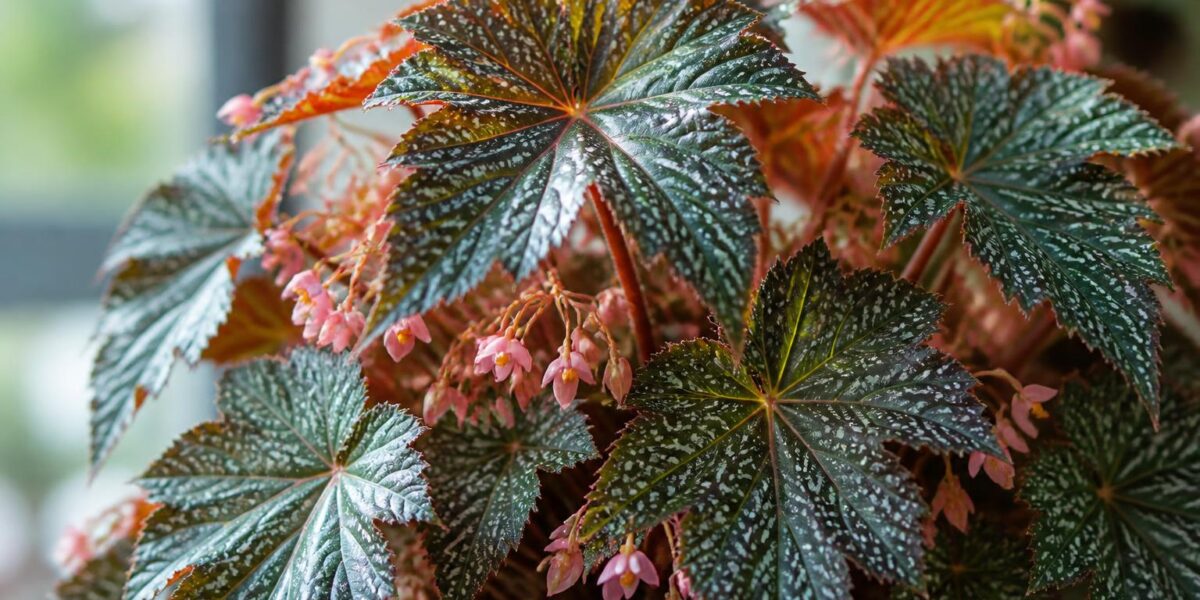
Yes. Begonia Lucerna is toxic to cats and dogs, and the question of whether begonia lucerna toxic pets is a real concern is one we hear often from collectors who have just brought home this stately cane begonia. Begonia ‘Lucerna’ is one of the most widely grown angel-wing cane begonias, prized for its long arching stems, large lopsided leaves spotted with silver, and dramatic dangling clusters of pink flowers. The ASPCA classifies the entire Begonia genus as toxic to dogs, cats and horses because of soluble calcium oxalates concentrated in the underground tubers and rhizomes, with lower but still meaningful amounts in stems, petioles and leaves. Toxicity is generally mild to moderate when only foliage is chewed, with the more concerning systemic risk arising from rhizome or tuber ingestion.
The reassuring half of the story is that most cane begonia exposures involve a curious cat batting at a flower or a puppy mouthing a fallen leaf, which usually produces drooling, oral irritation and a single episode of vomiting rather than a true emergency. The less reassuring half is that the soluble oxalates in begonias differ from the calcium oxalate raphides in pothos or philodendron because they can be absorbed and distributed through the body, raising the theoretical possibility of kidney effects after large or repeated ingestion. This guide covers what makes Begonia Lucerna distinctive, why the chemistry matters, the first ten minutes of triage, and how to keep this beautiful cane begonia in a home that includes pets.
Meet Begonia Lucerna: Tall Cane Begonia With Angel-Wing Leaves
Begonia ‘Lucerna’ is a hybrid cane begonia bred in Switzerland in the early 1890s and named for the city of Lucerne. It belongs to the angel-wing group of cane-stemmed begonias, characterized by tall jointed stems that resemble bamboo canes, and large asymmetrical leaves shaped like wings. Mature plants can reach four to six feet tall indoors when grown in a deep pot with bright indirect light, and they cascade outward into a fountain of foliage. Each leaf is typically six to ten inches long, dark olive green on the upper surface, deep red on the underside, and dotted with silver-white spots that catch the light.
The flowers are the second great attraction of Begonia Lucerna. Pendulous clusters of small coral-pink to rose-red blooms hang from the upper joints of the canes for much of the warm season, sometimes producing dozens of flowers per cluster. The combination of architectural canes, spotted angel-wing leaves and long-lasting pink flower sprays has made Lucerna a heritage cane begonia found in old conservatories, botanical gardens and private collections around the world. Walk Me Home Rescue covers the wider Begonia genus in our umbrella guides on begonias and cats and begonias and dogs, and our companion piece on angel-wing begonias covers the broader cane group.
Why Begonia Lucerna Is Toxic: Soluble Calcium Oxalates
The toxic compounds in Begonia Lucerna are soluble calcium oxalates, which are different in important ways from the insoluble calcium oxalate raphides that cause stinging mouth pain in pothos, philodendron, dieffenbachia and other aroids. Soluble oxalates do not deliver an instant mechanical sting; instead, they dissolve in the digestive tract, can be absorbed into the bloodstream, and travel to other tissues. Once absorbed, they bind with calcium in the body and can theoretically deposit calcium-oxalate crystals in the kidneys after large or repeated exposures, which is why the ASPCA notes possible kidney effects in livestock that graze heavily on oxalate-rich plants.
In a typical cane-begonia exposure in cats and dogs, the oxalate dose is small enough that signs are limited to drooling, oral irritation, a sour stomach and one or two episodes of vomiting. The systemic kidney concern is more theoretical than practical for a single household chew, but it is the reason veterinarians take repeated or large ingestions seriously. The highest concentration of oxalates is in the underground rhizome of cane begonias, so a curious dog who digs into a Lucerna pot and chews on the woody rhizome is at higher risk than a cat who licks a flower or chews a leaf tip.
Begonia foliage and stems also contain bitter sap that discourages most pets after a single bite. The sap is mildly irritating to the lips and tongue, so a cat who chews a Lucerna leaf usually drops it quickly and shakes the head or paws at the mouth. Dogs are more variable: some are deterred immediately, while puppies and adolescents may keep mouthing a fallen leaf or flower spray long enough to swallow a meaningful amount.
Symptoms After a Begonia Lucerna Bite
Watch for the following signs in the first hours after a known or suspected ingestion:
- Drooling, lip-licking and repeated swallowing
- Pawing at the mouth or rubbing the face on furniture
- One or more episodes of vomiting, sometimes with shredded leaf material
- Reduced appetite and skipping a meal
- Mild lethargy or hiding
- Soft stool or short-lived diarrhea over the next day
- Reluctance to drink because of mouth discomfort
- Restlessness or uncomfortable pacing in the first hour
What you should not see with a small begonia exposure is severe weakness, breathing trouble, repeated heavy vomiting, blood in vomit or stool, swollen face, weak pulse or seizures. If any of those signs appear, the cause is unlikely to be a small leaf bite alone and your pet needs urgent veterinary care regardless of what they chewed. Most uncomplicated begonia cases resolve within twenty-four hours with calm supportive care at home or one routine vet visit.
What to Do in the First Ten Minutes
Move calmly. Take the plant out of reach so a curious pet cannot return for a second bite, then wipe your pet’s mouth gently with a soft damp cloth and remove any visible leaf fragments from between the teeth or on the tongue. Offer fresh water in small amounts to help rinse the mouth and stomach, but skip the next meal so the digestive tract can settle. Do not give milk, do not try to make your pet vomit at home, and do not give any human pain or anti-nausea medication without veterinary guidance.
Call your own veterinarian if drooling and oral irritation last more than an hour, if vomiting recurs more than two or three times, if your pet is very young or very old, if your pet has existing kidney or heart conditions, or if you suspect the rhizome rather than just a leaf was chewed. For after-hours guidance, the ASPCA Animal Poison Control Center is reachable at (888) 426-4435, and the Pet Poison Helpline is at (855) 764-7661. Both lines charge a consultation fee and provide a case number that your regular vet can follow up on.
Bring a leaf, a flower cluster or a clear photograph to any clinic visit. If you have the original nursery tag confirming Begonia ‘Lucerna’, bring that too. Documenting the species helps your vet decide whether observation is enough or whether bloodwork to check kidney values is warranted.
Cats Versus Dogs: Different Risk Patterns
Cats and dogs interact with Begonia Lucerna very differently. Cats are most often drawn to the dangling pink flower clusters, which look like prey from below and like dangling toys from a shelf. A cat who bats at a flower spray often ends up with a mouthful of petals and stamen, and the bitter sap usually delivers a quick lesson. Cats are particularly sensitive to oxalate-mediated drooling and may produce dramatic strings of saliva that look alarming but usually settle within an hour. Repeated returns to the plant are the bigger worry, since persistent licking and chewing can deliver a larger cumulative oxalate dose.
Dogs, especially puppies and adolescents, are more likely to mouth large pieces of leaf or to dig in the pot and gnaw on the woody rhizome. The rhizome carries the highest oxalate concentration in cane begonias, so a puppy who has unearthed and chewed begonia roots deserves prompt veterinary contact even if symptoms look mild. Brachycephalic breeds such as French bulldogs and pugs handle oral irritation poorly, and toy breeds dehydrate fast after even short bouts of vomiting, so both groups warrant a lower threshold for vet review. Larger dogs occasionally knock over tall cane-begonia pots while playing, and a fallen pot exposes both leaves and rhizome at once.
Begonia Lucerna Versus Other Begonia Varieties
Every begonia in commerce shares the same soluble calcium oxalate chemistry, so you cannot pick a “safer” begonia based on shape, color or growth habit. Our cultivar guides on rex begonias, tuberous begonias, wax begonias, dragon wing begonias, Begonia maculata and Begonia masoniana all describe the same chemistry applied to different leaf shapes and growth habits. Tuberous begonias warrant the highest caution because the underground tuber concentrates oxalates more strongly than fibrous-rooted types.
Within the cane-begonia group, Lucerna sits alongside Begonia ‘Sophie Cecile,’ Begonia ‘Looking Glass,’ Begonia ‘Pink Spot’ and many other long-stemmed angel-wing hybrids. All share essentially the same risk profile. Begonia brevirimosa, our companion guide for the next row in this series, is a different growth habit but the same chemistry. The practical takeaway is consistent: any begonia, by any name, should be considered toxic to pets at a mild-to-moderate severity tier with a small added kidney concern after heavy exposure.
Placing Begonia Lucerna in a Pet Home
You do not have to part with this lovely cane begonia to live with a cat or a dog. Lucerna is tall and sculptural and naturally suits a dedicated stand, a sunny corner away from main pet traffic, or a hanging basket where the trailing canes drift well above paw and mouth range. Choose a heavy ceramic or terracotta pot to discourage tip-overs, and consider trimming the lowest canes so that no foliage dangles within easy paw reach. The bare-stem look of mature canes is naturally suited to pet-aware placement.
If your home is full of leaping cats or determined puppy chewers, you can move Lucerna to a closed conservatory, a bedroom that is gated off during the day, or a tall plant shelf with no surrounding launching points. Sweep up any fallen leaves, flowers or stem fragments promptly. Cane begonia flowers shed petals as they age, and a dropped petal on the floor is a tempting taste-test for a bored pet. For inspiration on confirmed pet-safe alternatives that complement a begonia collection, see our list of cat-safe houseplants and our roundup of pet-safe garden plants.
Care Tips That Reduce Pet Risk
A healthy Lucerna is a tidy Lucerna. Provide bright indirect light, water when the top inch of soil dries, and use a free-draining potting mix with extra perlite. Cane begonias dislike soggy roots, and overwatering causes leaf drop, which scatters chewable plant material on the floor. Stake taller canes with bamboo or rattan to prevent flopping, since a leaning cane is easier for a curious pet to reach.
Prune yellowing leaves and spent flower clusters at the base, rather than letting them dangle as half-attached chew lures. Wipe the leaves with a soft damp cloth rather than a leaf-shine product, since aerosolized polishes leave residue that ends up on any pet that brushes past. If you propagate cuttings, store the cuttings in a closed propagation case rather than on an open windowsill, since rooting cane fragments are particularly inviting for a chewing puppy or a bored cat. Keep fertilizer storage out of pet reach; concentrated houseplant feed is more dangerous than the plant itself.
Adoption and Pet-Safe Living
If you are reading this because you are pet-proofing in advance of welcoming a new companion, that is the level of care a rescue animal deserves. Walk Me Home Rescue connects people with pets through our adopt cats and adopt dogs hubs, and a thoughtfully curated plant collection is one small but meaningful piece of a welcoming home. A cane begonia in a heavy pot, placed where leaping cats cannot reach the flowers, can coexist comfortably with most pets.
Most adopters find that a few simple adjustments make their existing greenery compatible with a new dog or cat. Lucerna can stay in your home if you commit to a heavy pot, an inaccessible corner, prompt cleanup of dropped leaves and flowers, and a couple of pet-safe alternatives at floor level. Pair this dramatic begonia with a true pet-safe companion plant, give your new pet plenty of legal chew options, and your collection can keep doing what it does best: arching gracefully through a sunny window without giving you a single midnight worry.
Frequently Asked Questions
My cat licked a Begonia Lucerna flower. Is that an emergency?
For a single licked or chewed flower with mild drooling, calm home monitoring is usually appropriate. Wipe the mouth, offer a small amount of water and skip the next meal so the stomach can settle. Call your vet or the ASPCA Animal Poison Control Center at (888) 426-4435 if drooling persists for more than an hour, if your cat vomits more than once or twice, or if your cat seems unusually lethargic. Repeated returns to the plant warrant relocating it.
Are cane begonias more toxic than wax begonias?
The chemistry is essentially the same across the begonia genus. Cane types like Lucerna, wax begonias, rex begonias and dragon-wing begonias all contain soluble calcium oxalates and are listed as toxic to dogs and cats by the ASPCA. Tuberous begonias warrant slightly more caution because the underground tuber concentrates oxalates more strongly. The same first-aid steps apply across all begonias.
What is the difference between begonia oxalates and pothos oxalates?
Pothos, philodendron and dieffenbachia contain insoluble calcium oxalate raphides that act as instant mechanical stings in the mouth. Begonias contain soluble calcium oxalates that dissolve in the digestive tract and can be absorbed into the bloodstream. The result is less dramatic mouth pain but a small theoretical kidney concern after large or repeated exposures. Both groups are toxic and warrant the same vigilance.
Can a dog die from eating Begonia Lucerna?
Fatal outcomes are very uncommon for healthy adult dogs after a typical leaf or flower bite. The realistic risk is a few hours of drooling, oral discomfort, and one or two episodes of vomiting. Dogs that dig up and chew on the rhizome have the highest risk because the underground portion concentrates more oxalate, so call your vet promptly if you suspect rhizome ingestion or if your dog vomits repeatedly.
Where should I keep my Begonia Lucerna in a multi-pet home?
Place the plant in a heavy pot on a tall stand or in a hanging basket, away from cat leaping paths. Trim the lowest canes so no foliage dangles within paw range. Sweep up any fallen leaves and flower petals promptly so they do not become floor-level snacks. Our roundup of cat-safe houseplants lists vetted alternatives if you would like to add a confirmed pet-safe plant nearby.


