
Last updated: April 10, 2026
In this article
Are Begonias Toxic to Cats? What Every Cat Owner Needs to Know
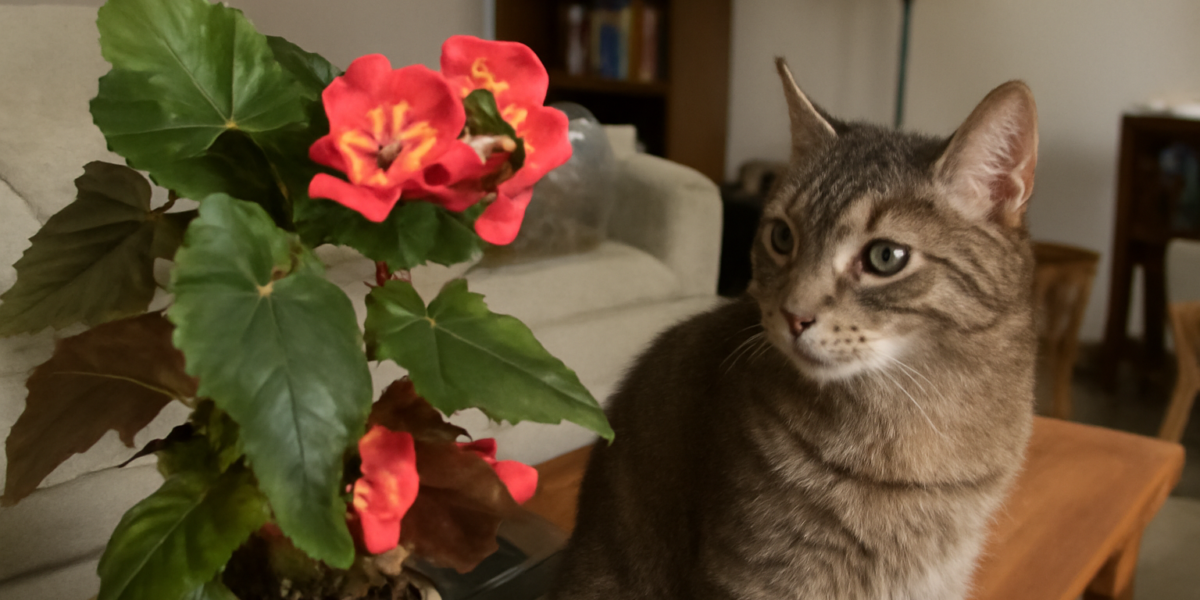
Begonias are among the most popular ornamental plants in the world, beloved for their stunning variety of colors, leaf shapes, and growth habits. With over one thousand eight hundred species and thousands of cultivated hybrids, begonias are a fixture in gardens, hanging baskets, windowsills, and indoor plant collections. But if you share your home with a cat, there is a critical piece of information you need to know: begonias are toxic to cats. All parts of the begonia plant contain compounds that can cause painful irritation and illness if ingested by your feline companion. In this guide, we will cover exactly which parts are toxic, the symptoms to watch for, what to do in an emergency, and safe plant alternatives that let you enjoy greenery without putting your cat at risk.
What Makes Begonias Toxic to Cats?
Begonias contain soluble calcium oxalate crystals, which are the primary toxic compound in the plant. These microscopic, needle-shaped crystals are present throughout the plant — in the leaves, stems, and flowers — but are most highly concentrated in the tubers and underground roots.
When a cat chews on or bites into any part of a begonia, the calcium oxalate crystals are released and immediately penetrate the soft tissues of the mouth, tongue, throat, and digestive tract. These tiny crystals act like microscopic needles, embedding themselves in the mucous membranes and causing intense pain, irritation, and swelling. The reaction is typically immediate, which is actually somewhat protective — the intense discomfort usually causes cats to stop chewing quickly, limiting the amount of plant material they ingest.
The level of toxicity varies depending on which part of the plant is consumed. The tubers (the underground bulb-like structures found in tuberous begonia varieties) contain the highest concentration of oxalate crystals and are therefore the most dangerous. Ingestion of tubers can cause more severe symptoms than chewing on leaves or stems. Fortunately, outdoor tuberous begonias are more commonly the concern here, as most indoor begonias are fibrous or rhizomatous types that do not have prominent tubers.
It is worth noting that begonias are not in the same toxicity category as lilies, which can cause acute kidney failure and death in cats even from small exposures. Begonia toxicity is generally classified as mild to moderate. However, this does not mean it should be taken lightly, as significant ingestion — particularly of tubers — can cause serious symptoms requiring veterinary care.
Symptoms of Begonia Poisoning in Cats
The symptoms of begonia poisoning in cats typically appear very quickly — often within minutes of the cat chewing on the plant. The severity of symptoms depends on how much plant material was consumed and which part of the plant was eaten.
Oral Irritation and Pain: The most immediate and prominent symptom is intense irritation of the mouth, tongue, and lips. The calcium oxalate crystals cause a burning, stinging sensation that is quite painful. You may notice your cat pawing at its mouth, rubbing its face against surfaces, or vocalizing in distress.
Excessive Drooling: Hypersalivation is one of the hallmark signs of calcium oxalate crystal ingestion. Your cat may drool profusely as a result of the oral irritation and the body’s attempt to flush the irritating crystals from the mouth.
Difficulty Swallowing: Swelling of the mouth, tongue, and throat tissues can make swallowing painful and difficult. Your cat may appear to be gagging or having trouble eating and drinking.
Swelling: The mouth, tongue, and lips may become visibly swollen. In more severe cases, swelling can extend to the throat, which — while rare — could potentially compromise the airway. This is a more serious concern that warrants immediate veterinary attention.
Vomiting: If your cat swallowed plant material beyond just chewing, vomiting is common as the oxalate crystals irritate the stomach lining. The vomit may contain visible plant material.
Decreased Appetite: The pain and irritation in the mouth often cause cats to refuse food and water for several hours or even a day or two after exposure. This is a natural response to the oral discomfort.
Diarrhea: In cases where a larger amount of begonia was ingested, diarrhea may occur as the plant material irritates the intestinal tract.
In the vast majority of cases, symptoms are mild to moderate and resolve within twelve to twenty-four hours with appropriate care. Severe symptoms — particularly significant throat swelling, persistent vomiting, inability to drink water, or signs of dehydration — require prompt veterinary treatment.
First Aid and What to Do If Your Cat Eats a Begonia
If you catch your cat chewing on a begonia or suspect they have ingested part of the plant, taking quick, calm action can help minimize their discomfort and prevent complications.
Remove the Plant Material: Gently remove any remaining plant material from your cat’s mouth if you can do so safely without getting bitten. If your cat is in pain and agitated, do not force their mouth open — this can cause more stress and potential injury to both you and your cat.
Rinse the Mouth: If your cat will tolerate it, gently rinse their mouth with cool water to help flush out oxalate crystals. You can use a syringe (without a needle) to carefully squirt small amounts of water into the side of your cat’s mouth. Do not force water if your cat is resistant, as aspiration is a risk.
Offer Water or Milk: Provide fresh water or a small amount of milk or lactose-free milk. The casein protein in milk can help bind to the oxalate crystals and provide some relief. This is one of the rare situations where a small amount of dairy may be beneficial for a cat, though it is not essential.
Monitor Closely: Watch your cat carefully for the next several hours. Note the severity of symptoms, whether they are improving or worsening, and whether your cat is able to drink water on their own. Keep track of any vomiting episodes.
Contact Your Veterinarian: Even if symptoms appear mild, it is a good idea to call your veterinarian or an animal poison control hotline for guidance. They can advise you on whether home care is sufficient or whether your cat needs to be seen in person. Provide them with information about which part of the begonia your cat ate, approximately how much, and the symptoms you are observing.
Seek Immediate Veterinary Care If: Your cat shows signs of severe throat swelling or difficulty breathing, persistent vomiting that does not resolve within a few hours, inability or refusal to drink water for more than twelve hours, lethargy or depression, or signs of dehydration such as sunken eyes, dry gums, or skin that does not snap back when gently pinched. These symptoms indicate a more serious reaction that may require fluid therapy, anti-inflammatory medications, or other supportive care.
For more information on handling plant-related emergencies, see our comprehensive guide on pet poisoning emergencies.
Veterinary Treatment for Begonia Poisoning
If your cat requires veterinary care after ingesting begonia, the treatment is primarily supportive and focused on managing symptoms and ensuring comfort while the body recovers.
Oral Examination: Your veterinarian will examine your cat’s mouth, tongue, and throat for swelling, redness, and embedded crystal damage. They will also assess the airway to ensure breathing is not compromised.
Pain Management: If your cat is in significant discomfort, your vet may administer pain medication to help them feel more comfortable. This can also help your cat resume eating and drinking sooner.
Anti-Inflammatory Medication: In cases of significant swelling, anti-inflammatory drugs may be prescribed to reduce tissue inflammation and prevent complications, particularly if there is concern about throat swelling.
Fluid Therapy: If your cat has been vomiting, unable to drink, or is showing signs of dehydration, intravenous or subcutaneous fluids may be administered to restore hydration and electrolyte balance.
Gastroprotection: If vomiting or gastric irritation is present, your vet may administer medications to protect the stomach lining and reduce nausea.
The prognosis for begonia poisoning in cats is generally excellent. Most cats recover fully within twenty-four to forty-eight hours with appropriate care. Fatalities from begonia ingestion are extremely rare and would typically only be a concern if a very large amount of tuber material was consumed — a scenario that is uncommon due to the immediate pain response that discourages continued eating.
Preventing Begonia Exposure: Keeping Your Cat Safe
The most effective way to protect your cat from begonia poisoning is prevention. Here are practical strategies for keeping your feline safe.
Remove Begonias from Your Home: The simplest and most effective approach is to not keep begonias in areas accessible to your cat. If you love begonias, consider keeping them in rooms that your cat does not enter, in hanging baskets well out of reach, or exclusively in outdoor garden areas that your indoor cat cannot access.
Know Your Plants: Many cat owners are unaware of which plants in their home are toxic. Take an inventory of all your houseplants and compare them against a reliable toxic plant database such as the ASPCA’s list. Replace any toxic plants with cat-safe alternatives.
Provide Cat Grass: Cats are naturally drawn to nibble on greenery. Providing cat grass (typically wheatgrass or oat grass) gives your cat a safe outlet for this instinct and may reduce their interest in your houseplants.
Use Deterrents: If you must keep begonias and cannot fully restrict your cat’s access, consider using pet-safe deterrent sprays on and around the plants. Citrus-scented sprays or placing citrus peels near plants can also help, as many cats dislike citrus smells. However, deterrents are not foolproof, and physical separation is always more reliable.
Choose Safe Alternatives: There are many beautiful, non-toxic plants that can replace begonias in your home and garden. For a comprehensive list, visit our guide to cat-safe houseplants. Some popular non-toxic options include spider plants, Boston ferns, African violets, calatheas, and orchids.
Frequently Asked Questions
Are all types of begonias toxic to cats?
Yes, all begonia species and varieties are considered toxic to cats. This includes the most common types — wax begonias, rex begonias, angel wing begonias, and tuberous begonias — as well as the thousands of hybrid varieties available. The toxic compound, soluble calcium oxalate crystals, is present across the entire genus. Tuberous begonias pose the highest risk because their underground tubers contain the most concentrated levels of these crystals. If you have any type of begonia in your home, it should be kept well out of your cat’s reach.
How much begonia does a cat need to eat to get sick?
Even a small amount of begonia can cause symptoms in a cat. Because the calcium oxalate crystals cause immediate pain upon contact with the mouth tissues, most cats will stop chewing after just a bite or two. This self-limiting behavior means that most cases of begonia ingestion involve very small amounts, resulting in mild symptoms that resolve relatively quickly. However, if a cat somehow consumes a larger portion — particularly the tubers — symptoms can be more severe. There is no safe amount of begonia for cats, and any ingestion should be taken seriously.
Can begonias cause long-term health problems in cats?
In the vast majority of cases, begonia poisoning does not cause long-term health problems. The irritation and inflammation from calcium oxalate crystals are temporary, and most cats make a full recovery within one to two days. However, if a very large amount is consumed and severe vomiting or dehydration occurs without treatment, there could be complications. The key is prompt recognition and appropriate care — either at home for mild cases or at the veterinarian for more significant symptoms. With proper management, lasting effects from begonia ingestion are extremely uncommon.
My cat brushed against a begonia but did not eat it. Is that a concern?
Simply brushing against or walking past a begonia plant is not a concern. The calcium oxalate crystals in begonias are contained within the plant’s cells and are only released when the plant tissue is broken — through chewing, crushing, or tearing. External contact with intact begonia leaves, stems, or flowers does not release these crystals and will not cause irritation to your cat’s skin or fur. The risk arises only when a cat bites into or chews on the plant material, releasing the crystals into contact with the soft tissues of the mouth.
Begonias are beautiful plants that unfortunately do not mix well with curious cats. By understanding the toxicity risk, recognizing the symptoms of exposure, knowing how to respond in an emergency, and taking proactive steps to prevent access, you can keep your feline companion safe. If you are a plant enthusiast with cats, the good news is that there are plenty of gorgeous, non-toxic plant options that let you enjoy a lush indoor garden without worry. Your cat’s safety is always worth the swap.


