
Last updated: April 9, 2026
In this article
Yes, Bleeding Heart Is Toxic to Dogs
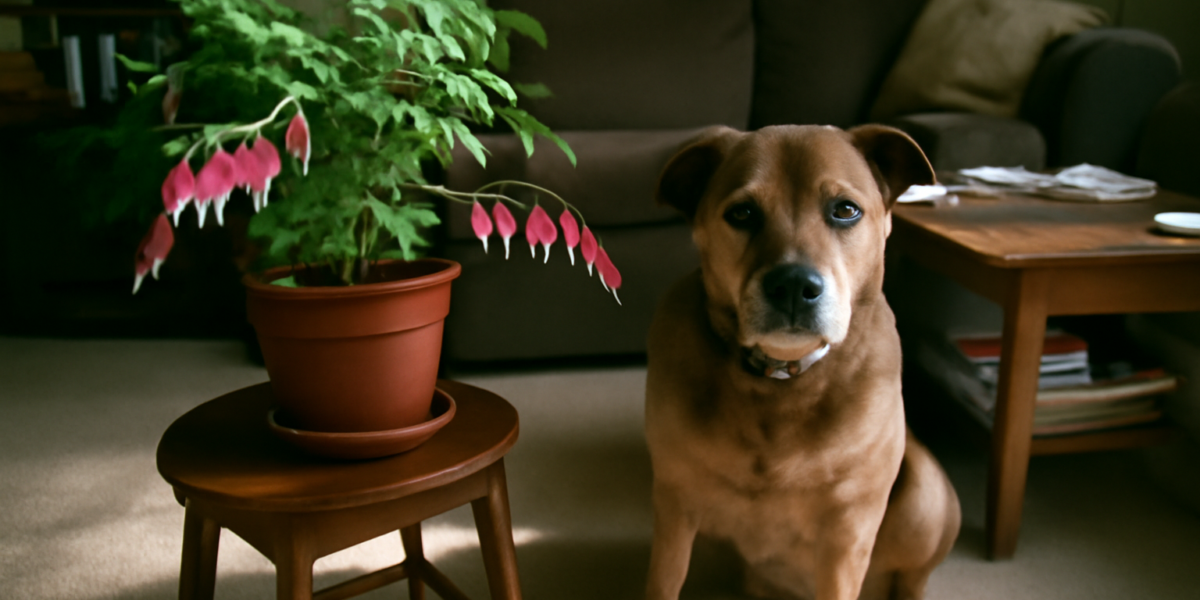
Bleeding heart is toxic to dogs, and every part of the plant contains compounds that can cause significant illness if ingested. Named for the distinctive heart-shaped pink or white flowers dangling from arched stems, bleeding heart (Dicentra spectabilis, now officially classified as Lamprocapnos spectabilis) is a common perennial in shade gardens across North America. It is visually striking and relatively easy to grow, which makes it popular, but it deserves a spot on the list of plants to avoid if you share your home with dogs.
The toxic compounds in bleeding heart are isoquinoline alkaloids, the same class of chemicals found in poppies and bloodroot. These alkaloids affect the central nervous system and, in larger doses, can cause severe symptoms including tremors, seizures, and liver damage. Small, curious puppies and dogs who like to dig in garden beds are at highest risk because the roots contain the highest concentration of toxins.
Severity rating: Moderate. Most exposures cause digestive and neurological symptoms that resolve with treatment. Large ingestions can be severe and require emergency care.
The Toxic Compounds in Bleeding Heart
Bleeding heart contains several isoquinoline alkaloids, including protopine, allocryptopine, and bicuculline. These compounds work by affecting neurotransmitter activity in the brain and nervous system, disrupting normal signaling between nerves and muscles. At high enough doses, they can cause:
- Muscle tremors and twitching
- Seizures
- Respiratory depression
- Liver damage from alkaloid metabolism
Toxin concentration varies across the plant:
- Roots: Highest alkaloid concentration, most dangerous
- Leaves and stems: Moderate concentration
- Flowers: Lower concentration but still toxic
Dogs who dig up and chew bleeding heart roots are at the greatest risk. Simple nibbling on leaves or flowers is usually less severe but still warrants a vet call.
Clinical Symptoms of Bleeding Heart Poisoning
Symptoms generally appear within a few hours of ingestion. Common signs include:
- Drooling
- Vomiting
- Diarrhea
- Loss of appetite
- Lethargy
- Weakness
- Wobbly gait or trouble walking
- Tremors or twitching
- Labored breathing
More severe symptoms indicate larger ingestion or sensitivity and need immediate veterinary attention:
- Seizures
- Collapse
- Severe respiratory depression
- Yellowing of the gums or whites of the eyes (liver involvement)
- Unresponsiveness
Contact with the plant sap can also cause skin irritation and dermatitis, particularly in people and pets with sensitive skin. Dogs who brush against the foliage and then groom themselves can develop oral and skin irritation even without deliberate ingestion.
What to Do If Your Dog Ate Bleeding Heart
Time matters. Take these steps immediately:
- Remove any remaining plant material from your dog’s mouth and the surrounding area.
- Estimate how much was eaten and which parts of the plant, particularly if roots were involved.
- Take a photo of the plant for veterinary identification.
- Call your veterinarian or the ASPCA Animal Poison Control Center at 888-426-4435 immediately.
- Do not induce vomiting at home unless your vet specifically tells you to.
- Wash any plant sap off fur or paws with mild soap and water.
- Monitor closely and transport to the vet if symptoms appear or your vet advises.
Do not delay seeking care if you see any tremors, weakness, or difficulty breathing. Early treatment dramatically improves outcomes for neurological toxin exposures.
Veterinary Treatment for Bleeding Heart Toxicity
There is no specific antidote for bleeding heart alkaloids. Treatment is supportive and aimed at stabilizing your dog while the toxins clear the system:
- Induced vomiting under veterinary supervision if ingestion was recent and your dog is stable
- Activated charcoal to bind remaining alkaloids in the gut
- IV fluids to support circulation and promote toxin excretion
- Anti-seizure medication if neurological symptoms develop
- Liver protectants like S-adenosylmethionine (SAMe)
- Oxygen therapy for respiratory support
- Cardiac monitoring for rhythm abnormalities
- Blood work to check liver and kidney function
- Hospitalization for observation, typically 24 to 48 hours
Most dogs recover fully with prompt care. Dogs with severe symptoms, particularly those with seizures or liver involvement, may require longer hospitalization and follow-up blood work.
Preventing Bleeding Heart Exposure
The simplest solution is to remove bleeding heart from any area your dog can access. If removal is not an option, consider these precautions:
- Fence off bleeding heart plantings with barriers dogs cannot breach
- Grow bleeding heart in front yard beds separate from your dog’s space
- Replace bleeding heart with dog-safe shade plants like astilbe, heuchera, or ferns (most are non-toxic)
- Clean up fallen flowers, leaves, and stems promptly
- Supervise outdoor time, especially during active digging phases
- Train a reliable “leave it” command for walks and yard time
- Cover garden soil with mulch or edging to discourage digging
Bleeding heart belongs to a group of plants with similar alkaloid profiles. Our guides on larkspur and dogs, poppies and dogs, and columbine and dogs cover other alkaloid-containing ornamentals to watch for.
When to Seek Emergency Vet Care
Do not wait if your dog:
- Dug up or chewed bleeding heart roots
- Is vomiting repeatedly or cannot keep water down
- Is wobbly, weak, or having trouble walking
- Has tremors, twitching, or seizures
- Is breathing abnormally or struggling to breathe
- Has yellow gums or appears jaundiced
- Is unresponsive or collapsed
- Is a small dog or puppy
Call your regular vet, an emergency clinic, and the ASPCA Animal Poison Control Center (888-426-4435) or Pet Poison Helpline (855-764-7661) right away. These 24/7 services are staffed by veterinary toxicologists who can guide your treating vet through the best course of action in real time.
Frequently Asked Questions
How much bleeding heart is dangerous for a dog?
Large ingestions, especially of roots, are the most dangerous. As a rough guide, more than a few leaves or any root material can cause significant symptoms. Small dogs and puppies are affected by smaller amounts.
Are bleeding heart roots the most toxic part?
Yes. Roots contain the highest concentration of isoquinoline alkaloids. Dogs who dig up and chew roots face the highest risk of serious toxicity.
Can contact with bleeding heart sap cause skin problems?
Yes. Plant sap can cause contact dermatitis in sensitive individuals, both human and animal. Wash any exposed skin with mild soap and water and watch for redness or itching.
Is fringed bleeding heart (Dicentra eximia) also toxic?
Yes. All Dicentra species and their close relatives contain the same class of toxic alkaloids. Treat all bleeding heart varieties as potentially dangerous.
What dog-safe plants can replace bleeding heart in a shade garden?
Astilbe, heuchera (coral bells), hosta (non-toxic but mildly irritating to some dogs), ferns (most species), and brunnera are all generally considered safer options. Always double-check individual species before planting. For more plant safety, see our guide on periwinkle and cats.


