
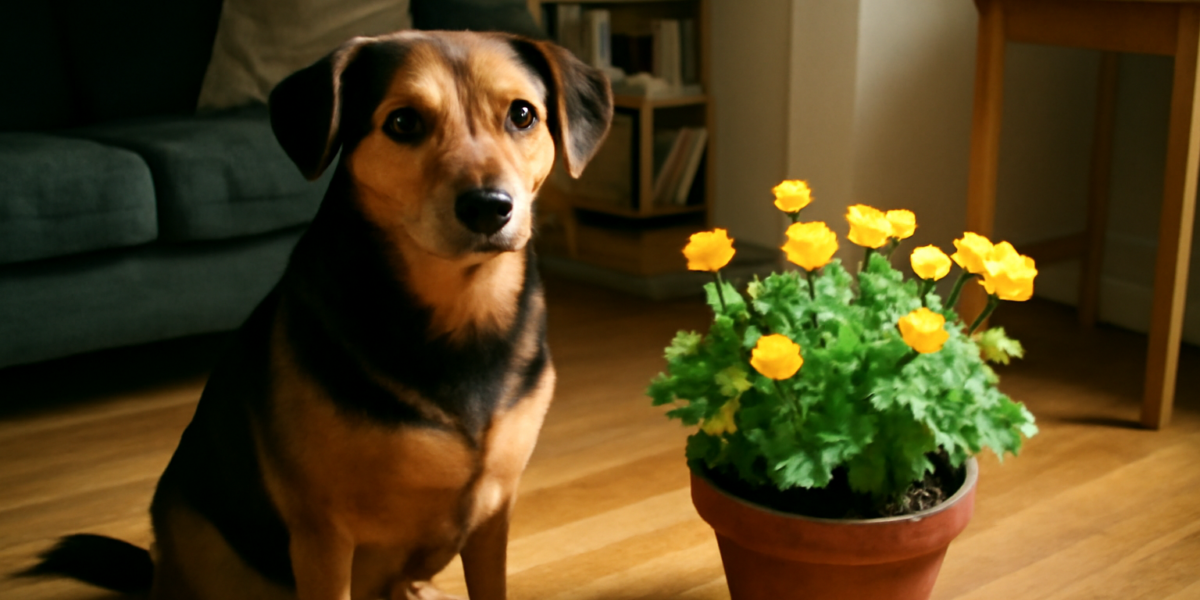
Buttercups Are Toxic to Dogs
Buttercups (Ranunculus spp.) are toxic to dogs. These cheerful yellow wildflowers contain a compound called protoanemonin that irritates the mouth, digestive tract, and skin on contact. The toxicity is rated as mild to moderate — while buttercup poisoning is rarely fatal, it can cause painful blistering of the mouth, significant gastrointestinal upset, and uncomfortable skin reactions.
In this article
Protoanemonin is present in all parts of the buttercup plant, including the flowers, stems, leaves, and roots. The fresh plant contains the highest concentration of this irritant. Interestingly, the toxicity decreases significantly when the plant dries — dried buttercups in hay, for example, are considerably less dangerous than fresh ones. However, the fresh plants found in fields, meadows, yards, and along walking paths are the primary risk for dogs.
Buttercups are extremely common wildflowers found across North America. They grow in meadows, pastures, lawns, along roadsides, and in damp woodland areas. During spring and summer, their bright yellow blooms carpet many outdoor spaces where dogs regularly walk and play, making exposure a realistic concern for any dog owner.
Understanding Protoanemonin: How Buttercup Poison Works
Protoanemonin is a volatile, oily compound produced by all plants in the Ranunculaceae (buttercup) family. It serves as a natural defense mechanism, deterring herbivores from eating the plant. When fresh buttercup plant tissue is crushed or chewed, an enzyme converts the precursor compound ranunculin into protoanemonin, which is the active irritant.
Protoanemonin works through direct chemical irritation. It causes blistering and inflammation wherever it contacts tissue — the mucous membranes of the mouth, the lining of the esophagus and stomach, and the skin. This is a contact toxin rather than a systemic poison, meaning the damage occurs primarily at the site of contact rather than through absorption into the bloodstream.
The good news about protoanemonin is that it is unstable. It breaks down relatively quickly when exposed to air and heat, converting into the much less toxic compound anemonin. This is why dried buttercup material (like hay containing buttercups) is far less irritating than fresh plants. It is also why the most severe symptoms occur when a dog chews on fresh, actively growing buttercup plants.
The amount of protoanemonin varies between buttercup species. The most common species in North America — common buttercup (Ranunculus acris), creeping buttercup (Ranunculus repens), and bulbous buttercup (Ranunculus bulbosus) — all contain enough protoanemonin to cause symptoms in dogs. The tall buttercup and celery-leaved buttercup tend to have slightly higher concentrations.
Symptoms of Buttercup Poisoning in Dogs
Symptoms of buttercup poisoning in dogs usually appear within minutes to a few hours of ingestion or contact. The most distinctive symptom is oral irritation and blistering, which sets buttercup poisoning apart from many other plant toxicities.
Oral and gastrointestinal symptoms:
- Drooling and excessive salivation (often the first sign)
- Pawing at the mouth or rubbing the face on the ground
- Blisters or ulcers on the lips, tongue, or inside the mouth
- Redness and swelling of the oral mucous membranes
- Vomiting
- Diarrhea
- Abdominal pain
- Loss of appetite (reluctance to eat due to mouth pain)
Skin symptoms (from direct contact):
- Redness and irritation on the skin, especially the belly, inner legs, and paws
- Blistering or small welts (contact dermatitis)
- Itching and scratching at affected areas
- Hair loss in areas of prolonged contact
Rare but serious symptoms (with very large ingestions):
- Bloody diarrhea
- Severe dehydration from persistent vomiting and diarrhea
- Lethargy and depression
- In extremely rare cases, kidney irritation
Most dogs who encounter buttercups experience mild to moderate symptoms that resolve within a few days. The oral blistering, while painful, typically heals on its own. However, dogs who consume a large quantity of fresh buttercup plants or who have preexisting gastrointestinal conditions may develop more concerning symptoms that need veterinary management.
A practical note: many dogs will take one bite of a buttercup and immediately stop because the protoanemonin causes instant burning and unpleasant taste. This self-limiting behavior means that most accidental exposures involve only a small amount of plant material.
What to Do If Your Dog Eats Buttercups
Contact your veterinarian for guidance, especially if your dog is showing symptoms of mouth irritation, persistent drooling, or repeated vomiting. While buttercup poisoning is typically not life-threatening, a vet can help manage your dog’s discomfort and prevent complications like dehydration.
Here is what to do immediately:
- Move your dog away from the buttercup plants.
- Rinse your dog’s mouth gently with clean water if they will allow it. This helps wash away protoanemonin residue and reduces ongoing irritation. You can use a syringe (without a needle) or a squeeze bottle to direct a gentle stream of water along the gums and tongue.
- Check the skin for irritation, especially on the belly, paws, and muzzle. If you see redness or blistering, rinse the affected area with cool water.
- Offer fresh water to drink, which helps dilute any irritants that were swallowed.
- Do not induce vomiting unless instructed by your vet. The protoanemonin has already caused irritation on the way down, and vomiting would re-expose the esophagus and mouth to the compound.
- Monitor your dog for the next 24 to 48 hours.
If your vet determines that a clinic visit is needed, treatment is supportive. It may include pain medication for oral blistering, anti-nausea medication for vomiting, subcutaneous or intravenous fluids for hydration, and gastroprotectant medication to soothe the stomach lining. For skin reactions, gentle cleaning and a soothing topical treatment may be prescribed.
Most dogs recover from buttercup exposure within 2 to 3 days. Oral blisters may take slightly longer to fully heal, and your dog may prefer soft food during the recovery period to avoid irritating the mouth.
Protecting Your Dog from Buttercups
Buttercups are so widespread that complete avoidance can be challenging, but you can significantly reduce your dog’s risk with some practical strategies.
Learn to identify buttercups. Buttercups are recognizable by their glossy, bright yellow flowers with five rounded petals. The flowers have a distinctive shiny or waxy appearance. Leaves are typically deeply lobed or divided. Once you can identify them, you will start noticing them everywhere — and can steer your dog away accordingly.
Manage buttercups in your yard. If buttercups grow in your lawn or garden, removing them reduces your dog’s home exposure. Hand-pulling before they flower and set seed is effective for small infestations. For larger areas, improving soil drainage (buttercups prefer damp soil) and maintaining thick, healthy turf grass can outcompete them over time.
Stay on paths during walks. When walking in meadows, parks, or along trails where buttercups grow, keep your dog on the path and away from flower-filled areas. A short leash gives you more control in areas with dense wildflower growth.
Use the “leave it” command. Training your dog to respond reliably to “leave it” is invaluable for preventing plant ingestion during walks. Practice regularly with high-value rewards so the command is strong when you need it.
Rinse paws after walks. If your dog has been walking through areas with buttercups, rinsing their paws and belly with clean water after the walk can remove any protoanemonin residue before your dog licks it off during grooming.
For information on other common plants that can harm dogs, read our articles on boxwood toxicity in dogs and dracaena poisoning symptoms in dogs. Our dog care blog has even more resources for keeping your pup safe and happy.
Buttercup Look-Alikes: Other Yellow Wildflowers to Watch
Several other yellow wildflowers can be confused with buttercups. Knowing the difference helps you assess risk accurately when your dog encounters plants in the field.
Marsh Marigold (Caltha palustris): Also in the Ranunculaceae family, marsh marigold contains protoanemonin and is similarly toxic to dogs. It grows in wet, marshy areas and has larger, rounder flowers and kidney-shaped leaves.
Lesser Celandine (Ficaria verna): Another Ranunculaceae family member, lesser celandine looks very similar to buttercup and contains protoanemonin. It blooms in early spring with glossy yellow flowers and heart-shaped leaves.
Dandelions (Taraxacum officinale): Dandelions are sometimes confused with buttercups but are actually non-toxic to dogs. Dandelion flowers are larger, fluffy, and multi-petaled (actually composed of many tiny ray flowers), and the plant produces distinctive puffy seed heads.
St. John’s Wort (Hypericum perforatum): This yellow-flowered plant is mildly toxic to dogs and can cause photosensitivity (sun sensitivity) if ingested. Its flowers have five petals like buttercup but are larger and grow in clusters at the top of the stem.
When in doubt about any plant your dog has eaten, contact your veterinarian with a photo or sample for identification. If you are welcoming a new dog into your home, our dog adoption hub offers comprehensive guidance on preparing a safe environment.
Frequently Asked Questions
Are buttercups equally toxic to all dog breeds and sizes?
The toxic compound (protoanemonin) affects all dogs regardless of breed. However, smaller dogs are at greater risk from any given amount because the dose-to-body-weight ratio is higher. A Chihuahua eating a few buttercup stems faces more risk than a Labrador eating the same amount. Large dogs may show milder symptoms from the same exposure.
Can dogs get buttercup dermatitis from walking through a field?
Yes. Protoanemonin can cause contact dermatitis on skin that comes into direct contact with crushed or bruised buttercup plants. Dogs who roll in, walk through, or lie down in buttercup patches may develop redness, irritation, or blistering on the belly, inner thighs, and between the toes. Rinsing your dog after exposure helps prevent this.
Are dried buttercups in hay still dangerous for dogs?
Dried buttercups are significantly less toxic than fresh ones because protoanemonin breaks down during the drying process. Dogs who eat hay containing dried buttercup material are at much lower risk than dogs who chew on fresh plants. However, it is still best to minimize exposure when possible.
My dog ate one buttercup flower. How serious is this?
A single flower contains a relatively small amount of protoanemonin. Your dog may experience mild drooling or a brief episode of stomach upset, or they may show no symptoms at all. Monitor your dog for the next few hours, offer water, and contact your vet if vomiting persists or you notice mouth blistering. One flower is unlikely to cause a serious problem.
Do buttercup-based herbal products pose a risk to dogs?
Processed herbal products containing buttercup extract should not be given to dogs. While processing may reduce protoanemonin levels, the products are not formulated or tested for canine safety. Keep all herbal supplements, tinctures, and remedies containing buttercup or ranunculus away from your dog.


