
Last updated: April 27, 2026
In this article
Dracaena Plants Are Toxic to Dogs
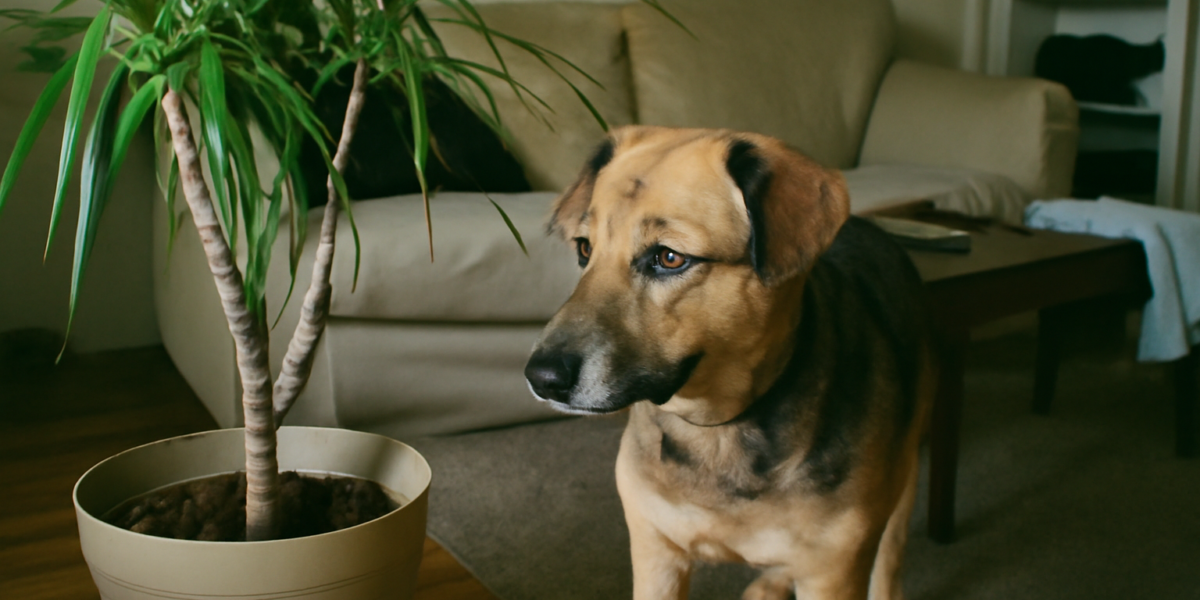
Dracaena plants are toxic to dogs. These popular houseplants — including varieties known as corn plant, dragon tree, lucky bamboo, and Janet Craig — contain saponins, naturally occurring compounds that cause gastrointestinal irritation and other symptoms when ingested. The toxicity of dracaena to dogs is rated as mild to moderate, meaning most cases are not life-threatening but can cause significant discomfort and require veterinary attention.
All species within the Dracaena genus are considered toxic to dogs. The ASPCA lists dracaena as toxic to dogs and cats, with saponins identified as the offending compounds. Symptoms typically include vomiting (sometimes with blood), drooling, dilated pupils, and depression. While fatalities from dracaena ingestion are extremely rare, the experience is unpleasant for your dog and avoidable with proper precautions.
Dracaena plants are among the most common houseplants in American homes. Their attractive foliage, low maintenance requirements, and tolerance of indoor conditions make them wildly popular. Unfortunately, this ubiquity means dogs encounter them frequently, and puppies in particular are drawn to chewing on the long, strap-like leaves.
Saponins: The Toxic Compounds in Dracaena
Saponins are the primary toxic compounds in dracaena plants. These are glycosides — naturally occurring chemicals that produce a soapy lather when mixed with water (the name “saponin” derives from the Latin word for soap). Saponins serve as a natural defense mechanism in many plant species, deterring herbivores and protecting against fungal infections.
When a dog chews on and swallows dracaena leaves or stem material, saponins interact with the mucous membranes of the mouth and the lining of the gastrointestinal tract. They cause direct irritation and inflammation of these tissues, leading to drooling, vomiting, and diarrhea. Saponins also have hemolytic properties — they can damage red blood cells — though this effect is typically only a concern with very large ingestions.
Saponins are present throughout the entire dracaena plant, including the leaves, stems, and bark. The concentration is relatively consistent across different plant parts, though younger, actively growing tissue may contain slightly higher levels. All commonly sold dracaena varieties contain these compounds:
- Corn Plant (Dracaena fragrans): One of the most popular houseplants, with broad, arching leaves often striped with yellow or lime green.
- Dragon Tree (Dracaena marginata): A dramatic plant with thin, spiky leaves edged in red. Very commonly found in homes and offices.
- Lucky Bamboo (Dracaena sanderiana): Despite its name, this is not true bamboo — it is a dracaena and contains saponins. Often grown in water in decorative vases.
- Janet Craig (Dracaena deremensis ‘Janet Craig’): A popular low-light houseplant with glossy, dark green leaves.
- Song of India (Dracaena reflexa): An attractive variety with variegated leaves.
None of these varieties are safe for dogs. If you have any dracaena in your home, treat it as a potential hazard.
Symptoms of Dracaena Poisoning in Dogs
Symptoms of dracaena poisoning in dogs typically develop within a few hours of ingestion. One distinctive symptom that helps identify dracaena as the culprit is dilated pupils, which is not commonly seen with many other plant toxicities.
Common symptoms:
- Vomiting — may be repeated and occasionally contains blood (hematemesis)
- Excessive drooling and salivation
- Dilated pupils (mydriasis) — a hallmark of dracaena poisoning
- Loss of appetite
- Diarrhea
- Depression or lethargy
Less common symptoms:
- Abdominal pain
- Weakness
- Incoordination (mild)
- Increased heart rate
The presence of blood in vomit can be alarming for dog owners, but it is usually the result of the saponins irritating and inflaming the stomach lining rather than a sign of a life-threatening internal bleed. Nevertheless, bloody vomiting warrants a vet visit to rule out more serious causes and to provide anti-nausea treatment.
Dilated pupils are worth paying special attention to. If you notice your dog’s pupils are noticeably larger than normal — especially in combination with drooling, vomiting, or lethargy — and you have dracaena plants in your home, the connection is likely. Mention this symptom to your vet, as it helps confirm the diagnosis.
In most cases, symptoms resolve within 12 to 24 hours with supportive care. Severe or prolonged symptoms are uncommon but can occur if a large amount of plant material was consumed. Puppies and small-breed dogs are more susceptible to significant symptoms from smaller amounts.
What to Do If Your Dog Eats Dracaena
Call your veterinarian or the ASPCA Animal Poison Control Center (888-426-4435) for guidance. Most dracaena ingestions can be managed with supportive care, but professional advice ensures you are handling the situation appropriately for your specific dog.
Take these steps immediately:
- Remove the dracaena plant from your dog’s reach or move your dog to another room.
- Inspect the plant for signs of chewing — this helps you estimate how much was consumed. Look for missing leaves, bite marks, and scattered leaf fragments.
- Check your dog’s mouth for plant material. Remove any visible pieces gently if your dog allows it.
- Do not induce vomiting unless your vet specifically instructs you to do so.
- Provide fresh water and encourage your dog to drink.
- Monitor symptoms and note their progression for your vet.
Veterinary treatment for dracaena poisoning is supportive and typically straightforward. Your vet may administer anti-emetic (anti-nausea) medication to stop vomiting, provide intravenous or subcutaneous fluids to maintain hydration, and prescribe a gastroprotectant to soothe the irritated stomach lining. If vomiting has been bloody, your vet may want to run bloodwork to check for anemia or other complications, though this is rarely necessary.
Recovery from dracaena poisoning is usually quick and complete. Most dogs are back to their normal selves within 24 hours of treatment. The dilated pupils may take slightly longer to return to normal but will resolve on their own.
Preventing Dracaena Poisoning in Your Home
Since dracaena plants are kept indoors, you have more control over your dog’s exposure than you do with outdoor plants. Here are effective strategies:
Move dracaena plants to dog-free rooms. The simplest solution is to keep your dracaena in a room your dog does not access — a home office with a closed door, a guest bedroom, or a high shelf in a bathroom. This eliminates the risk entirely without giving up the plant.
Elevate the plant. Place dracaena on tall plant stands, high shelves, or in hanging planters that your dog cannot reach. Keep in mind that some dogs (especially larger breeds) can reach surprisingly high surfaces, and puppies may jump or climb to reach tempting objects.
Use deterrent sprays. Bitter-tasting sprays applied to the plant’s leaves may discourage some dogs from chewing. However, deterrents are not foolproof — some dogs ignore them completely. Use deterrents as an additional layer of protection, not your sole strategy.
Replace dracaena with dog-safe plants. If keeping dracaena out of your dog’s reach is impractical, consider swapping it for a non-toxic alternative. Many attractive houseplants are completely safe for dogs:
- Boston Fern: Lush, cascading fronds with a similar tropical feel
- Spider Plant: Easy to grow, pet-safe, and produces appealing hanging plantlets
- Areca Palm: A tall, elegant palm that is non-toxic to dogs
- Calathea: Striking patterned leaves and completely dog-safe
- Peperomia: Compact, varied, and non-toxic
Puppy-proof during the chewing stage. Puppies are the most likely to chew on houseplants due to teething and curiosity. During the puppy stage (roughly up to 12-18 months), be extra vigilant about plant access. Crate training and puppy-gated areas keep your young dog safe when unsupervised.
Learn more about other household plants that pose risks to your dog in our articles on coleus plant toxicity for dogs and string of pearls safety for dogs. For general pet safety guidance, visit our dog adoption hub.
Dracaena and “Lucky Bamboo”: A Common Misconception
Many dog owners are surprised to learn that “lucky bamboo” is actually a dracaena species (Dracaena sanderiana) and not true bamboo at all. True bamboo (from the grass family Poaceae) is non-toxic to dogs, but lucky bamboo — which contains saponins just like all other dracaena — is toxic.
Lucky bamboo is widely sold in stores, often in small water-filled vases. Its compact size and accessibility make it easy for dogs to reach, and the water in the vase may also contain leached saponins that could cause mild stomach irritation if a dog drinks from it.
If you have lucky bamboo in your home, apply the same safety measures as you would for any other dracaena. Keep it on a high surface, in a closed room, or consider replacing it with actual bamboo or another dog-safe plant. The water should be changed frequently and kept inaccessible to your dog.
This naming confusion underscores an important principle of pet safety: always check the botanical (Latin) name of a plant, not just the common name. Common names can be wildly misleading, and a plant’s actual genus tells you far more about its safety profile. Our dog care blog has additional resources to help you navigate these kinds of pet safety questions.
Frequently Asked Questions
Why does dracaena cause dilated pupils in dogs?
The exact mechanism is not fully understood, but saponins and other compounds in dracaena appear to affect the nervous system in ways that influence pupil dilation. This mydriasis (pupil dilation) is a distinctive symptom of dracaena ingestion and typically resolves on its own within 24 to 48 hours as the compounds are metabolized and eliminated.
Is dracaena more dangerous to small dogs than large dogs?
Yes. Small dogs experience a higher dose-to-body-weight ratio from the same amount of plant material, which means they may develop more pronounced symptoms. A toy breed who eats several dracaena leaves may be more seriously affected than a large breed who eats the same amount. Always err on the side of caution with small dogs.
Can dogs have an allergic reaction to dracaena on top of the toxic effects?
While uncommon, some dogs may have individual sensitivities that amplify their reaction to dracaena. If your dog shows unusually severe symptoms or symptoms that seem disproportionate to the amount eaten, inform your veterinarian so they can provide appropriate treatment.
My dog chewed on a dracaena leaf yesterday and seems fine today. Should I still worry?
If your dog chewed on dracaena more than 24 hours ago and is eating, drinking, and behaving normally with no vomiting, diarrhea, or pupil changes, the risk has likely passed. Continue to monitor for another day and contact your vet if any symptoms emerge, but most dogs who will develop symptoms do so within the first few hours.
Is the soil from a dracaena pot dangerous if my dog eats it?
The soil itself is not toxic from dracaena compounds, though eating potting soil can cause gastrointestinal upset on its own. If the dracaena has been fertilized or treated with insecticides, the soil may contain those chemicals, which could be harmful. If your dog has eaten potting soil, contact your vet for advice.


