
Last updated: April 10, 2026
In this article
String of Pearls Is Toxic to Dogs
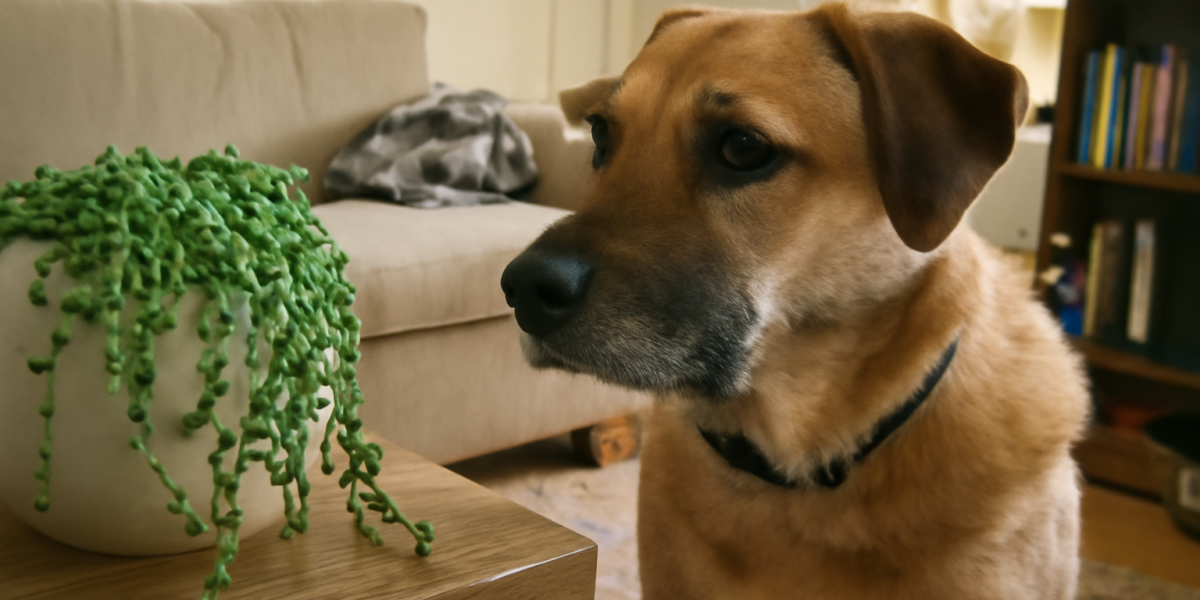
String of pearls (Curio rowleyanus, formerly Senecio rowleyanus) is toxic to dogs. This trendy trailing succulent, beloved for its bead-like leaves that cascade from hanging planters, contains irritating compounds that can cause vomiting, diarrhea, drooling, and lethargy if your dog chews on or swallows the plant. The toxicity is rated as mild to moderate.
The toxic compounds in string of pearls include pyrrolizidine alkaloids and other irritants found in many plants within the Senecio/Curio genus. These substances affect the gastrointestinal tract and, with larger or repeated ingestions, can potentially impact the liver. While a single mild exposure is unlikely to cause lasting harm, string of pearls toxic to dogs is a legitimate concern that every succulent-loving pet owner should be aware of.
String of pearls has surged in popularity thanks to social media and the broader succulent trend. It is sold in nearly every plant shop, garden center, and even grocery store floral section. Its dangling, pearl-shaped leaves can look like toys to a curious dog, especially puppies who mouth everything in their environment. This combination of widespread availability and eye-catching form makes prevention important.
Toxic Compounds in String of Pearls
String of pearls belongs to the Asteraceae (daisy) family and was long classified under the genus Senecio before being reclassified as Curio. Like many senecio-type plants, it contains pyrrolizidine alkaloids (PAs) — a class of naturally occurring compounds that serve as the plant’s chemical defense system.
Pyrrolizidine alkaloids are a serious concern in veterinary toxicology because of their effects on the liver. When PAs are metabolized in the liver, they can be converted into reactive compounds called pyrroles, which damage liver cells. This hepatotoxic (liver-damaging) effect is cumulative, meaning repeated small exposures over time can be as harmful as a single large exposure.
In addition to PAs, string of pearls contains sap that acts as a direct gastrointestinal irritant. The milky sap released when stems or leaves are broken can cause irritation to the mouth, tongue, and stomach lining, triggering the immediate symptoms of vomiting and drooling.
The pearl-shaped leaves contain the highest concentration of these compounds, followed by the stems. The sap is present throughout the plant. All parts of string of pearls should be considered toxic to dogs.
It is worth noting that the related species string of bananas (Curio radicans) and string of dolphins (Curio x peregrinus) belong to the same genus and contain similar toxic compounds. If you are a fan of trailing senecio-type succulents, treat the entire group as potentially harmful to your dog.
Symptoms of String of Pearls Poisoning in Dogs
Symptoms of string of pearls poisoning typically appear within a few hours of ingestion. The severity depends on how much was consumed and the size of your dog.
Common symptoms:
- Vomiting
- Drooling and excessive salivation
- Diarrhea
- Loss of appetite
- Lethargy or decreased energy
- Pawing at the mouth (if sap caused oral irritation)
Less common symptoms (with larger ingestions):
- Abdominal pain
- Weakness
- Skin irritation (if sap contacts the skin, especially around the muzzle)
Symptoms of concern (indicating possible liver involvement, typically with significant or repeated ingestion):
- Jaundice — yellowing of the gums, whites of the eyes, or inner ears
- Dark or discolored urine
- Persistent loss of appetite over multiple days
- Progressive lethargy and weakness
For most single, mild exposures — such as a dog who pulled a few pearls off a trailing stem — symptoms will be limited to brief gastrointestinal upset that resolves within 24 hours. The concern escalates if a dog has consumed a large amount or if a small or already-compromised dog is involved.
The liver toxicity from pyrrolizidine alkaloids is typically a concern with more significant or repeated exposures rather than a single nibble. However, it is important to be aware of this risk because early liver damage may not produce obvious symptoms until significant damage has occurred. This is one reason why any known ingestion should be reported to your veterinarian.
What to Do If Your Dog Eats String of Pearls
Contact your veterinarian or the ASPCA Animal Poison Control Center (888-426-4435) for advice. Even though the toxicity is usually mild, professional guidance helps you determine whether home monitoring is appropriate or a vet visit is needed.
Steps to take immediately:
- Remove the plant from your dog’s reach or move your dog to a different area.
- Assess how much was eaten. Look at the plant for missing sections, chewed stems, or scattered pearls. The hanging, dangling nature of string of pearls means dogs sometimes pull off a significant length of stem.
- Check your dog’s mouth for plant material and gently remove any visible pieces.
- Wipe sap from the muzzle and skin with a damp cloth if you notice any milky residue.
- Do not induce vomiting unless your veterinarian instructs you to.
- Offer fresh water and monitor for symptoms.
If your vet recommends a visit, treatment will include anti-nausea medication, fluid therapy, and gastroprotectants. For larger ingestions, your vet may recommend bloodwork to check liver enzymes — both immediately and as a follow-up a few days later to monitor for delayed liver effects from pyrrolizidine alkaloids.
Most dogs recover uneventfully from string of pearls ingestion. The immediate gastrointestinal symptoms resolve within a day, and long-term effects from a single exposure are uncommon. However, reporting the incident to your vet creates a record that could be important if your dog encounters toxic plants again in the future.
Keeping Your Dog Safe from String of Pearls
String of pearls is almost always grown indoors, giving you good control over your dog’s access. But the plant’s trailing habit creates specific challenges that are worth addressing.
Hang it high. The most common way to display string of pearls is in a hanging planter, which also happens to be the best way to keep it away from dogs. Ensure the hanging planter is high enough that the trailing stems do not dangle within your dog’s reach — including when they jump. A ceiling hook or high wall bracket is ideal.
Account for trailing length. String of pearls vines can grow several feet long. Even if the pot is out of reach, the dangling strands may hang low enough for your dog to grab. Regularly trim the vines to keep them well above your dog’s reach, and check periodically as the plant grows.
Collect fallen pearls. String of pearls occasionally drops individual leaves (the round “pearls”) as part of normal growth. These small, round objects rolling on the floor can look like toys or treats to a dog. Sweep or vacuum around the plant’s location regularly to remove fallen pearls before your dog finds them.
Use a closed room. If your dog is particularly determined or curious about plants, keeping string of pearls behind a closed door is the most reliable strategy. A bathroom with good natural light, a home office, or a guest room can serve as a dog-free plant zone.
Consider a swap. If keeping the plant safely away from your dog feels like a constant battle, swap string of pearls for a non-toxic trailing succulent or houseplant. String of hearts (Ceropegia woodii) is non-toxic to dogs and offers a similar trailing aesthetic with its chain of small, heart-shaped leaves. Burro’s tail (Sedum morganianum) is another dog-safe trailing succulent option.
For additional information on indoor plant toxicity for dogs, check out our articles on dracaena poisoning in dogs and cyclamen tuber toxicity. Our dog adoption hub is a helpful resource for anyone preparing their home for a new canine family member.
Other Succulents: Toxic vs. Safe for Dogs
The succulent craze has filled homes with an incredible variety of these water-storing plants. If you are a succulent collector and a dog owner, knowing which ones are safe matters.
Toxic succulents to avoid (or keep away from dogs):
- String of pearls, string of bananas, string of dolphins (Curio/Senecio genus)
- Aloe vera — causes vomiting and diarrhea
- Jade plant (Crassula ovata) — causes vomiting, depression, incoordination
- Kalanchoe — causes vomiting, diarrhea, and potentially cardiac effects
- Euphorbia (many species) — irritating sap that burns the mouth and skin
Dog-safe succulents you can enjoy freely:
- Echeveria — the classic rosette succulent, non-toxic to dogs
- Haworthia — compact, zebra-striped plants that are completely dog-safe
- Burro’s tail (Sedum morganianum) — a trailing succulent that is safe for dogs
- Hens and chicks (Sempervivum) — hardy, spreading, and non-toxic
- Christmas cactus (Schlumbergera) — non-toxic and produces festive blooms
Building a succulent collection with your dog’s safety in mind is absolutely possible. Many of the most popular and attractive succulents are perfectly safe, so you do not need to give up your plant hobby — just choose wisely. Visit our dog care blog for more pet safety tips.
Frequently Asked Questions
Are the individual “pearls” (leaves) more toxic than the stems?
The round leaves contain the same toxic compounds as the stems, though the leaves may have a slightly higher concentration of sap relative to their size. Both parts should be considered equally hazardous. The pearls are the more likely part to be ingested because they pop off easily and can end up on the floor.
My dog ate one or two pearls that fell on the floor. Is that an emergency?
One or two small pearls represent a very small dose, and a dog — especially a medium or large breed — is unlikely to develop significant symptoms from such a tiny amount. You may see no symptoms at all, or perhaps a brief episode of mild stomach upset. Monitor your dog for a few hours and call your vet if vomiting or diarrhea occurs. It is not typically an emergency, but reporting it to your vet is still wise.
Can string of pearls cause liver damage in dogs from a single exposure?
Significant liver damage from a single, small exposure is very unlikely. The pyrrolizidine alkaloid content in ornamental string of pearls is relatively low compared to some wild senecio species that are known to cause serious liver disease in livestock. However, larger ingestions or repeated exposures over time do carry a cumulative liver risk. Prevention is the best approach.
Is the sap from string of pearls irritating to a dog’s skin?
Yes, the milky sap can cause mild skin irritation, especially on sensitive areas like the muzzle, lips, and around the eyes. If you notice sap on your dog’s skin, wipe it off with a damp cloth promptly. The irritation is usually mild and resolves quickly once the sap is removed.
Are artificial or preserved string of pearls plants safe for dogs?
Artificial (fake) string of pearls plants are non-toxic since they contain no plant compounds. However, if a dog chews on and swallows artificial plant material, the plastic or fabric could cause a gastrointestinal obstruction, which is a different but serious risk. Preserved (dried and chemically treated) string of pearls may still contain residual toxic compounds and chemical preservatives that could be harmful if ingested.


