
Last updated: April 10, 2026
In this article
Cyclamen Are Toxic to Dogs — Tubers Are the Greatest Danger
Cyclamen (Cyclamen spp.) are toxic to dogs, and the toxicity can range from mild to severe depending on which part of the plant is consumed. The tubers (the thick, round underground root structures) are by far the most dangerous part, containing highly concentrated saponins called cyclamin that can cause serious symptoms including seizures, heart rhythm abnormalities, and in rare cases, death. The toxicity is rated as mild for leaves and flowers, severe for tubers.
All parts of the cyclamen plant contain triterpenoid saponins, but the concentration in the tuber can be many times higher than in the leaves and flowers. A dog that nibbles a leaf or petal may experience mild gastrointestinal upset, while a dog that digs up and chews on a tuber faces a potentially life-threatening poisoning event.
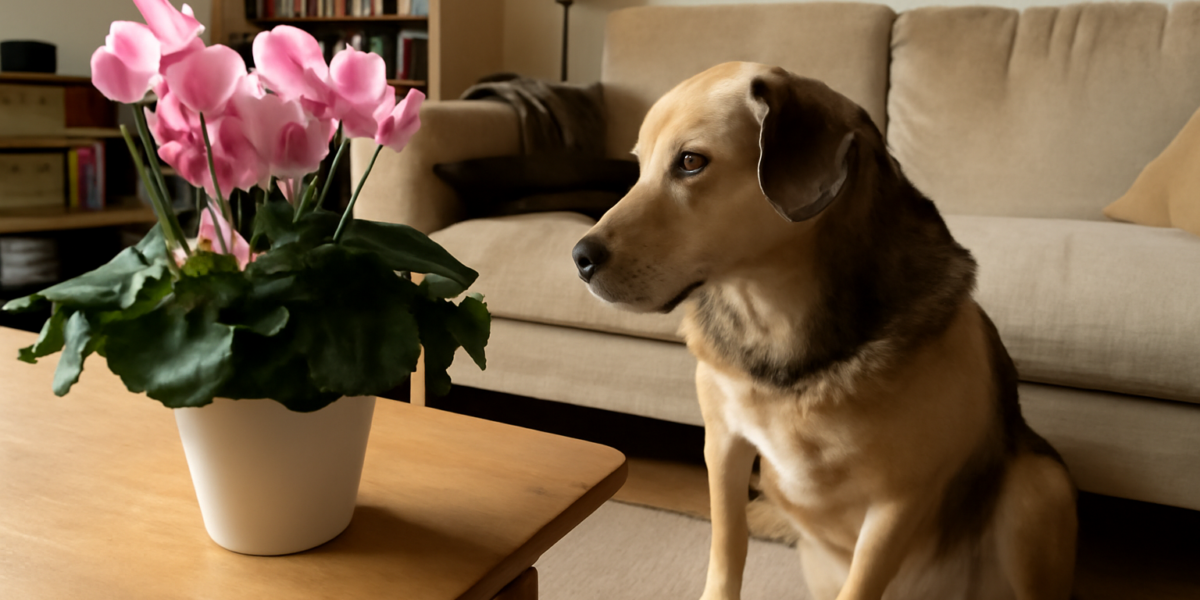
Cyclamen are popular houseplants, especially during fall and winter when their colorful blooms brighten indoor spaces. They are also grown outdoors as ground cover in milder climates. Because cyclamen tubers sit at or just below the soil surface and can become exposed in pots over time, dogs who like to dig in planters are particularly at risk.
Toxic Compounds in Cyclamen
The primary toxic compounds in cyclamen are triterpenoid saponins, with cyclamin being the most significant. Cyclamin is a powerful irritant and, at higher doses, a potent toxin that affects the gastrointestinal system, the nervous system, and the heart.
Like other saponins, cyclamin irritates the mucous membranes of the mouth and digestive tract, causing vomiting, drooling, and diarrhea. However, cyclamin goes beyond simple irritation. In larger doses — particularly from tuber ingestion — it can cross into systemic toxicity, affecting the central nervous system and cardiovascular system.
The concentration gradient within the plant is stark. Researchers have found that cyclamen tubers can contain 10 to 20 times more saponin than the leaves and flowers. This is why veterinary toxicologists pay close attention to which part of the plant was eaten when assessing a cyclamen poisoning case. A few chewed leaves are a very different situation from a partially eaten tuber.
Cyclamen tubers are round, flattened structures that sit at the soil surface. In potted cyclamen, they are often partially exposed and visible. Their firm, starchy texture may appeal to dogs who enjoy chewing, and the earthy smell may attract dogs who are drawn to digging in soil. These characteristics make the most toxic part of the plant also the most accessible in many situations.
Symptoms of Cyclamen Poisoning in Dogs
The symptoms of cyclamen poisoning in dogs depend heavily on whether the dog ate leaves and flowers (lower toxin concentration) or the tuber (much higher concentration).
Symptoms from leaf or flower ingestion (mild):
- Drooling and salivation
- Mild vomiting
- Mild diarrhea
- Loss of appetite
- Oral irritation
Symptoms from tuber ingestion (moderate to severe):
- Severe and persistent vomiting
- Profuse diarrhea (potentially bloody)
- Significant abdominal pain
- Dehydration
- Heart rhythm abnormalities (arrhythmia)
- Seizures
- Tremors
- Collapse
- In severe cases, death
Symptoms from leaf ingestion typically appear within 1 to 2 hours and resolve with basic supportive care. Symptoms from tuber ingestion may develop within the same timeframe but can escalate rapidly over the following hours.
The cardiac effects of cyclamin are particularly dangerous. Saponins from cyclamen tubers can cause changes in heart rhythm, including bradycardia (slowed heart rate) and other arrhythmias. Dogs showing signs of cardiovascular compromise — weakness, pale gums, collapse, or abnormal breathing — need emergency veterinary intervention immediately.
Seizures are another serious complication of tuber ingestion. They indicate that a significant dose of cyclamin has been absorbed and is affecting the central nervous system. Any seizure activity following plant ingestion is a red flag that demands immediate emergency care.
What to Do If Your Dog Eats Cyclamen
Call your veterinarian or the ASPCA Animal Poison Control Center (888-426-4435) immediately, especially if you suspect tuber ingestion. Even if only leaves or flowers were consumed, it is worth making the call to get professional guidance tailored to your dog’s size and the estimated amount eaten.
Steps to take right away:
- Remove your dog from the plant and prevent further access.
- Determine what was eaten. Inspect the plant carefully. Is the tuber intact, or does it show bite marks or missing sections? Are leaves torn or chewed? This distinction is critical for your vet to assess severity.
- Do not induce vomiting unless your veterinarian specifically directs you to. With tuber ingestion, the concentrated toxins can cause additional damage to the esophagus if vomited.
- Bring the plant or a sample to the vet so they can confirm identification and assess the damage to the plant.
- Transport to the veterinary hospital without delay if tuber ingestion is suspected.
At the veterinary hospital, treatment varies based on severity:
For mild cases (leaf/flower ingestion): Anti-nausea medication, fluids for hydration, gastroprotectants, and monitoring may be sufficient. Most dogs recover within 24 hours.
For severe cases (tuber ingestion): Aggressive treatment is needed. This may include activated charcoal (if ingestion was recent), aggressive IV fluid therapy, anti-seizure medication, cardiac monitoring and medication to manage arrhythmias, and extended hospitalization for observation. Blood work will be monitored to check for organ damage.
The prognosis for leaf or flower ingestion is excellent. For tuber ingestion, the prognosis depends on the amount consumed, the speed of treatment, and the individual dog’s response. Early, aggressive intervention provides the best outcome.
Keeping Your Dog Safe from Cyclamen
Prevention strategies for cyclamen depend on whether the plant is indoors or outdoors.
Indoor cyclamen safety:
- Keep potted cyclamen on high surfaces that your dog cannot reach — plant stands, wall-mounted shelves, or tall furniture.
- If your dog is a known plant digger or chewer, do not keep cyclamen in your home. Replace it with a non-toxic alternative.
- When repotting cyclamen, clean up all soil and tuber fragments thoroughly. Do not leave tuber trimmings in accessible trash bins.
- During cyclamen’s dormant period (typically summer), when the plant loses its leaves and the exposed tuber may be more visible and accessible, be extra cautious or store the plant in a closed room.
Outdoor cyclamen safety:
- If cyclamen grows in your garden as ground cover, fence off the area or supervise your dog when they are in the garden.
- Be particularly cautious with dogs who dig — a digging dog can unearth cyclamen tubers and expose themselves to the most toxic part of the plant.
- Consider removing outdoor cyclamen if you have a dog who regularly digs in garden beds.
General precautions:
- Teach your dog a reliable “leave it” command and practice it regularly.
- Provide appropriate chew toys and mental stimulation to reduce plant-chewing behavior.
- Educate everyone in your household about cyclamen toxicity, especially if someone receives a cyclamen as a gift (they are popular gift plants during the holidays).
For more about plants that can harm your dog, explore our articles on boxwood toxicity for dogs and coleus risks for dogs. Our dog adoption hub provides additional resources for creating a safe home for your canine companion.
Dog-Safe Flowering Houseplant Alternatives
If you love flowering houseplants but want to eliminate the cyclamen risk, consider these beautiful, dog-safe options:
African Violet (Saintpaulia): Compact, easy to care for, and available in a lovely range of purple, pink, and white shades. African violets are completely non-toxic to dogs and bloom repeatedly with proper care.
Orchids (Phalaenopsis and most other genera): Elegant and long-blooming, moth orchids are non-toxic to dogs. Their blooms can last for weeks, and they thrive in the same indoor conditions as cyclamen.
Christmas Cactus (Schlumbergera): A holiday-season bloomer that produces colorful flowers without any toxicity risk to dogs. It is a great replacement for cyclamen as a winter-flowering houseplant.
Gerbera Daisy (Gerbera jamesonii): Bright, cheerful blooms in many colors. Non-toxic and widely available.
These alternatives give you the beauty of indoor flowering plants while keeping your dog completely safe. Visit our dog care blog for more tips on pet-proofing your home.
Frequently Asked Questions
How much cyclamen tuber does a dog need to eat to be seriously poisoned?
There is no well-established toxic dose for dogs, as individual sensitivity varies. However, even a small amount of tuber can cause significant symptoms in a small dog. Veterinary toxicologists treat any tuber ingestion as potentially serious, regardless of the estimated amount. The safest approach is to seek veterinary care immediately for any known tuber consumption.
Are miniature cyclamen (florist’s cyclamen) as toxic as hardy garden cyclamen?
Both florist’s cyclamen (Cyclamen persicum) and hardy garden cyclamen (such as Cyclamen hederifolium and Cyclamen coum) contain the same class of toxic saponins. While exact concentrations may vary between species, all cyclamen should be considered toxic to dogs. Do not assume any variety is safe.
My dog dug up and sniffed a cyclamen tuber but I don’t think they ate any. Should I be concerned?
If your dog only sniffed the tuber without biting or chewing it, the risk is minimal. However, dogs often mouth objects briefly without their owner noticing, so monitor your dog for any symptoms over the next 12 hours. If you see drooling, vomiting, or lethargy, contact your vet. Wash your dog’s muzzle and paws with water to remove any residual soil or plant material.
Can cyclamen poisoning cause permanent damage to my dog?
In most cases, dogs recover fully from cyclamen poisoning with appropriate treatment. However, severe cases involving seizures or significant cardiac arrhythmias can potentially cause lasting effects if not treated promptly. This is why rapid veterinary intervention is so important, especially with tuber ingestion.
Is the water that drains from a cyclamen pot dangerous if my dog drinks it?
Water that drains through cyclamen soil may contain trace amounts of saponins leached from the tuber and roots. While the concentration is likely very low, it is best to prevent your dog from drinking this water. Use saucers or drip trays that your dog cannot access, and empty them promptly after watering.


