
Last updated: May 16, 2026
In this article
- The Short Answer on the Pinstripe Plant
- What Calathea Ornata Actually Is
- Why the Pinstripe Plant Is ASPCA Non-Toxic
- The Realistic Risks With a Chewed Pinstripe
- Symptoms to Watch After Ingestion
- What to Do if Your Pet Eats Calathea Ornata
- Family Cousins Worth Knowing
- Care That Reduces Brittle-Leaf Drop
- Pet-Friendly Placement Tips
- Adoption and Pet-Safe Living
- Frequently Asked Questions
The Short Answer on the Pinstripe Plant
If your dog or cat just sampled a leaf of your pinstripe Calathea, exhale. Calathea ornata safe for pets is well supported by the available data: the ASPCA lists Calathea / Goeppertia ornata as non-toxic to cats and dogs, and the wider Marantaceae (prayer plant) family carries the same non-toxic classification across the species that have been formally evaluated. A nibble or even a whole leaf is far more likely to produce mild stomach upset than a poisoning episode. The pinstripe plant is one of the more confidently pet-safe houseplants you can keep.
The honest caveats are real but limited. Any plant matter eaten in volume can cause vomiting or soft stool, the high-humidity Calathea love often crisps brittle leaf edges that snap off and end up on the floor, and pesticide residue on shop-bought specimens is sometimes a bigger problem than the plant chemistry itself. Call your veterinarian if your pet is very small, very young, very old, has chronic health concerns, or shows symptoms past a few hours. The ASPCA Animal Poison Control Center is at (888) 426-4435 and the Pet Poison Helpline is at (855) 764-7661.
What Calathea Ornata Actually Is
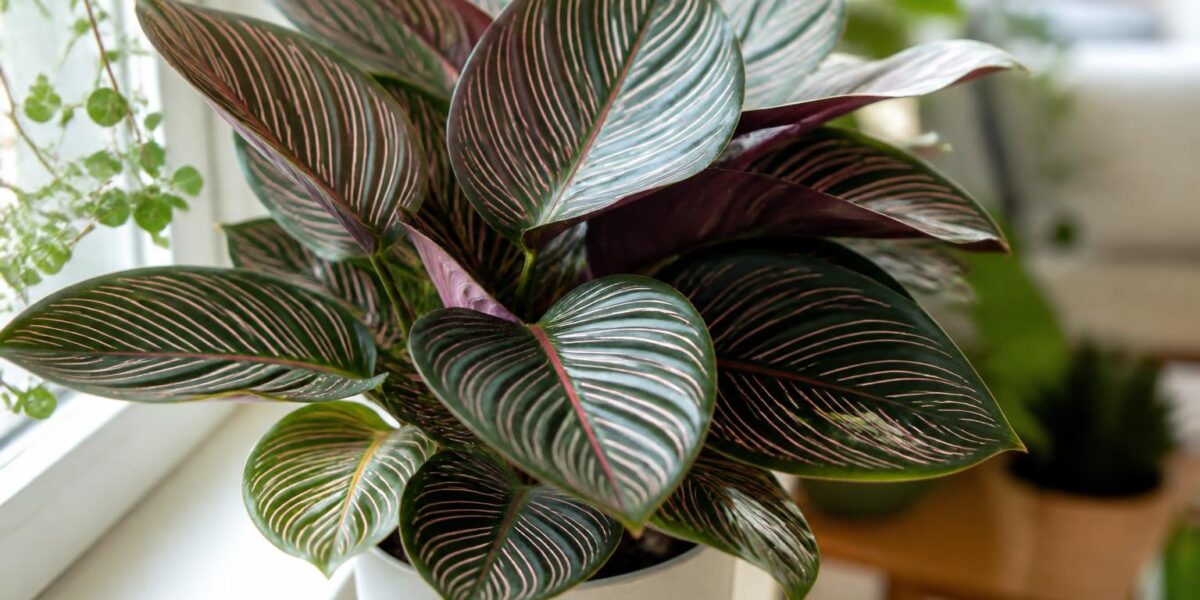
Calathea ornata is a tropical understory plant native to South America, where it grows on shaded rainforest floors in Colombia, Venezuela, and the surrounding region. The species earned its pinstripe nickname from the dramatic foliage pattern: each elongated dark-green leaf carries fine pink, white, or cream lines that radiate from the central vein out to the leaf edge, looking exactly like a tailored pinstripe shirt. The undersides are deep maroon-purple, which flashes briefly during the plant’s nightly prayer-plant leaf rise.
The species was reclassified from Calathea ornata to Goeppertia ornata in a 2012 taxonomic revision. Both names appear in current literature and on plant tags. For pet safety, the names are interchangeable; the plant is the same plant under either label, and the ASPCA non-toxic classification applies to both. Popular cultivars include ‘Sanderiana’ (the most common form, with multiple thin pink stripes) and ‘Roseolineata’ (often sold as a synonym), all of which share the species safety profile.
The pinstripe sits in a wider Marantaceae family of pet-safe relatives. Our cultivar deep dives on Calathea Medallion, Calathea Rattlesnake, Calathea Orbifolia, and Calathea White Star apply the same framework to each cousin cultivar.
Why the Pinstripe Plant Is ASPCA Non-Toxic
Calathea ornata is on the ASPCA’s non-toxic plant list for cats, dogs, and horses. The Marantaceae family as a whole, including the closely related Stromanthe, Ctenanthe, and Maranta genera, shares this classification across species formally evaluated. None of these plants produce calcium oxalate raphides, the needle-like crystals that make aroid family plants like philodendron, pothos, or dieffenbachia such painful chewing hazards. They do not contain cardiac glycosides, grayanotoxins, or any of the alkaloid groups that drive serious veterinary toxicology cases.
Our umbrella articles on Calathea safety for cats and Calathea safety for dogs walk through the published data and the long real-world track record. The companion piece on whether Calathea is toxic to cats rounds out the picture from the other direction. The conclusion is consistent: low-risk classification, mild GI signs in the worst realistic case, and no documented pattern of severe poisoning.
The Realistic Risks With a Chewed Pinstripe
What can actually go wrong falls into mechanical and mild GI categories rather than chemical poisoning. The most likely scenarios are:
- Generic plant-matter GI upset: Any volume of fibrous leaf material can cause vomiting or loose stool because cats and dogs are not built to digest a salad of leaves.
- Brittle leaf-edge fragments: Calathea love high humidity, and when it dips the leaf edges crisp, snap off, and end up on the floor as opportunistic chew targets.
- Pesticide residue: Shop-bought Calathea are often treated with miticides for spider mite control, and residue can cause more symptoms than the plant chemistry in newly purchased specimens.
- Soil and pot ingestion: A dog who tips a pot may swallow potting mix, perlite, fertilizer pellets, or pesticide residue, all of which deserve more attention than the leaf itself.
Cats are the more likely instigators with broad-leaved Calathea. The dramatic patterned foliage attracts attention, and a curious cat may chew one corner of a leaf to test it. Dogs usually ignore Calathea unless the pot is at accessible floor level.
Symptoms to Watch After Ingestion
Most pets that taste a Calathea ornata leaf will show no symptoms at all. When signs do appear, they tend to be mild and short. Common findings include drooling, lip licking, one or two episodes of vomiting, soft stool, brief reduced appetite, or a subdued mood for a few hours. Symptoms typically appear within an hour or two of ingestion and resolve on their own within a day.
What you should not see with this species is severe weakness, tremors, seizures, collapse, pale gums, breathing trouble, or blood in vomit or stool. Those signs are inconsistent with Calathea and suggest your pet got into a different plant or substance. Treat severe symptoms as a same-day veterinary emergency regardless of what you think your pet ate.
What to Do if Your Pet Eats Calathea Ornata
Move your pet away from the plant, pick up chewed fragments, and wipe the muzzle and paws with a damp cloth. Offer fresh water. Do not give milk, do not try to induce vomiting at home, and do not give activated charcoal or human medications without veterinary direction.
Call your veterinarian if your pet is very small, very young, very old, has chronic health issues, ate a large quantity, or shows symptoms that linger past a few hours. After-hours guidance is available from the ASPCA Animal Poison Control Center at (888) 426-4435 and the Pet Poison Helpline at (855) 764-7661. Both lines charge a consultation fee but provide species-specific advice and a case number your regular clinic can use as a follow-up.
Bring a leaf or photo to any in-clinic visit. Even with a non-toxic species, confirming the species rules out the less-friendly look-alikes that occasionally get mislabeled at retail and gives the veterinary team useful context.
Family Cousins Worth Knowing
The Marantaceae family is unusual in being almost universally non-toxic across the genera in common cultivation. That makes Calathea, Stromanthe, Ctenanthe, and Maranta a natural anchor collection for pet households who want sculptural foliage without the chemistry homework that aroids require. Our guides to prayer plants for cats and the related prayer plant for dogs cover the broader Maranta relatives, and the general Calathea cat-safety article is a useful companion read.
For households interested in mixing in pet-safe options outside the Marantaceae family, our cat-safe houseplants roundup pulls together more options. The dramatic foliage of a Calathea Ornata pairs beautifully with simpler greens like rubber plants and Pilea, and the contrast can make a single statement plant feel like a curated room rather than a single specimen.
Care That Reduces Brittle-Leaf Drop
Calathea ornata is famously fussy about humidity and water quality, and a stressed pinstripe plant produces brown crispy leaf edges in volumes that can litter the floor. Give the plant warm temperatures (sixty-five to eighty Fahrenheit), high humidity (fifty percent or more), filtered or distilled water, and bright indirect light. Tap water with high mineral content browns the delicate edges within weeks, so a humidifier and filtered water do more for plant tidiness than fertilizer ever will.
Sweep up any dropped leaf fragments the same day they fall. The thin papery pieces look enough like a chew toy to draw investigation from cats and dogs, and a clean floor is the cheapest pet-safety measure available. Wipe whole leaves gently with a damp cloth every few weeks to clear dust, since the dark green and pink contrast that makes the pinstripe famous only reads properly on clean foliage.
Repot every two to three years in fresh potting mix. Heavy ceramic pots resist tipping better than plastic nursery containers, which matters in households with energetic pets. The pinstripe likes to stay slightly root-bound, so resist the urge to upsize the pot too aggressively.
Pet-Friendly Placement Tips
Calathea ornata does best in bright indirect light, which usually means a few feet back from an east or north window. That placement also tends to be on a plant stand or shelf rather than a low coffee table, which incidentally keeps the plant away from casual chewing. Avoid placing the plant on a low side table or directly on the floor where a curious dog can reach it.
If you have a chronic chewer, a bathroom or kitchen with bright indirect light is often a good spot for Calathea. The high ambient humidity in those rooms suits the plant, and many households keep cats and dogs out of those spaces by habit at night. The plant gets the conditions it needs and the pets stay clear of temptation.
Adoption and Pet-Safe Living
If you are reading this because you are pet-proofing in advance of bringing home a new dog or cat, that level of preparation is exactly the kind of welcome a rescue animal deserves. The Walk Me Home Rescue adopt cats and adopt dogs hubs list animals waiting for a thoughtful, prepared home. A Calathea Ornata in a bright shaded corner, a few smart placements, and a clear plan for what to do if a pet does take a curious bite are almost always enough to make an existing plant collection compatible with a new arrival.
The pinstripe plant is one of the more confidently pet-safe statement species you can keep. The pink-striped foliage, the gentle nightly leaf movement, and the formal ASPCA non-toxic listing combine to make this a low-anxiety choice for households that want both sculptural greenery and a curious cat or dog at home.
Frequently Asked Questions
Is Calathea Ornata safe for cats specifically?
Yes. Calathea / Goeppertia ornata is listed by the ASPCA as non-toxic to cats. Mild GI upset is possible if a cat eats a meaningful quantity of leaves, but serious poisoning is not documented. Place the plant out of casual cat-leap range and call your veterinarian if symptoms last more than a few hours.
Is Calathea Ornata safe for dogs?
Yes. The ASPCA lists the species as non-toxic to dogs. Watch for mild stomach upset if your dog eats a quantity of foliage and call your veterinarian if symptoms persist or your dog is small, very young, or has existing health issues.
The pink stripes look almost painted on. Is the color a sign of anything toxic?
No. The pink and white pinstripes are simply pigment patterns in the leaf surface, similar to the patterning found across the Marantaceae family. The unusual coloring does not indicate any unusual chemistry, and the plant remains on the ASPCA non-toxic list regardless of the cultivar variation.
What if my pet ate a whole leaf?
One leaf is unlikely to cause more than mild stomach upset. Watch for vomiting, diarrhea, or reduced appetite over the next twelve hours, offer plenty of water, and call your veterinarian or the Pet Poison Helpline at (855) 764-7661 if symptoms persist or your pet is small, very young, very old, or has existing health issues.
Why is my pinstripe shedding crispy leaf edges?
Brown crispy edges usually indicate low humidity or mineral buildup from tap water rather than any toxicity issue. Switch to filtered or distilled water, run a humidifier, and trim the brown edges with clean scissors. Sweep up dropped fragments promptly so they do not become floor-level snacks for curious pets.


