
Last updated: April 9, 2026
In this article
Are Cyclamen Toxic to Cats? A Complete Guide to This Beautiful but Dangerous Plant
Cyclamen is a beloved flowering plant that brings splashes of vivid color to homes during the cooler months. With its elegant, butterfly-like blooms in shades of pink, red, white, and purple, and its attractive heart-shaped leaves often patterned with silver markings, it is easy to see why cyclamen is one of the most popular gift plants during the winter holiday season. But for cat owners, this charming plant harbors a hidden danger.
Cyclamen is toxic to cats. All parts of the plant contain toxic compounds called saponins, but the tuber, the thick, bulb-like root structure at the plant’s base, contains the highest concentration of these toxins. While a nibble on a leaf may cause mild symptoms, ingestion of the tuber can lead to serious, potentially life-threatening poisoning.
In this guide, we will explore the specific toxins in cyclamen, the symptoms of poisoning, what to do in an emergency, and how to enjoy beautiful flowering plants in your home without putting your cat at risk.
The Toxic Compounds in Cyclamen
Cyclamen plants (Cyclamen persicum and related species) contain a group of compounds called triterpenoid saponins, with the primary toxin being cyclamin. These saponins are naturally occurring chemical compounds that the plant produces as a defense mechanism against herbivores and pathogens.
Saponins get their name from the Latin word “sapo,” meaning soap, because they create a foamy, soap-like lather when mixed with water. In the body, they act as irritants and can disrupt cell membranes, which is what makes them dangerous when ingested.
The distribution of saponins in the cyclamen plant is not uniform. While all parts of the plant contain some level of these toxins, the concentration varies significantly. The leaves and flowers contain relatively lower concentrations, which is why a small nibble may cause only mild symptoms. The stems and roots contain moderate levels. The tuber, however, contains dramatically higher concentrations of cyclamin and other saponins, making it by far the most dangerous part of the plant.
This concentration gradient is important because it means the severity of poisoning depends heavily on which part of the plant a cat has eaten. A cat that chews on a leaf will likely experience a very different outcome than one that digs up and eats part of the tuber. Unfortunately, some cats are diggers, and the tuber sits right at the soil surface in most potted cyclamen, making it accessible to a curious feline who likes to dig in plant pots.
The saponins in cyclamen work by irritating the mucous membranes of the gastrointestinal tract and, in larger doses, affecting the heart and nervous system. This dual mechanism of action, local irritation plus systemic effects, is what makes severe cyclamen poisoning particularly dangerous compared to plants that only cause local irritation.
Symptoms of Cyclamen Poisoning in Cats
The symptoms of cyclamen poisoning in cats can range from mild to severe, depending on the amount ingested and which part of the plant was eaten. Symptoms typically begin within two to six hours of ingestion but can appear sooner with large exposures.
Mild exposure (small amount of leaves or flowers): The most common scenario involves a cat taking a few bites of cyclamen leaves or flowers. Symptoms in this case are usually limited to gastrointestinal irritation and may include drooling or excessive salivation, nausea (lip licking, repeated swallowing), vomiting, mild diarrhea, and temporary loss of appetite. These symptoms are caused by the saponins irritating the lining of the mouth, stomach, and intestines. In most cases, they resolve on their own within 24 hours.
Moderate exposure (larger amount of leaves or small amount of tuber): When a cat eats a more significant quantity of plant material, or a small amount of tuber, the symptoms become more pronounced and may include persistent or projectile vomiting, bloody diarrhea, abdominal pain (crying when the abdomen is touched, hunched posture), dehydration from fluid loss, and lethargy or depression. At this level of exposure, veterinary intervention is strongly recommended to manage symptoms and prevent complications.
Severe exposure (significant amount of tuber): Ingestion of a substantial amount of cyclamen tuber introduces large quantities of cyclamin into the system and can cause severe, potentially life-threatening symptoms. In addition to severe gastrointestinal symptoms, these may include abnormal heart rhythms (arrhythmias), seizures or tremors, collapse, and in the worst cases, death. Severe cyclamen poisoning is a veterinary emergency that requires immediate, aggressive treatment.
It is worth emphasizing that while severe poisoning from cyclamen is possible, it is not the most common outcome. Most cases involve cats that nibble on leaves or flowers and experience only mild gastrointestinal upset. However, because the potential for serious harm exists, any cyclamen ingestion by a cat should be taken seriously and evaluated by a veterinarian.
Emergency First Aid and Treatment
If you suspect or know that your cat has eaten any part of a cyclamen plant, take the following steps promptly.
Identify what was eaten. Try to determine which part of the plant your cat consumed and approximately how much. Check the plant for bite marks on leaves, chewed stems, or evidence of digging around the tuber. This information will be extremely valuable for your veterinarian in assessing the severity of the exposure.
Remove remaining plant access. Move the plant to a location your cat cannot reach, or better yet, remove it from the home entirely. If there are pieces of plant material in your cat’s mouth, gently remove them.
Do not induce vomiting at home. While vomiting is a natural response to cyclamen ingestion, do not attempt to induce vomiting in your cat without explicit veterinary guidance. Hydrogen peroxide, which is sometimes used to induce vomiting in dogs, is not safe for cats and can cause severe gastric irritation and even hemorrhagic gastritis.
Contact your veterinarian immediately or call the pet poisoning emergency hotline. The ASPCA Animal Poison Control Center (888-426-4435) and the Pet Poison Helpline (855-764-7661) are both excellent resources. Provide information about the plant species, the part consumed, the estimated amount, your cat’s weight, and any symptoms you are observing.
At the veterinary clinic, treatment will depend on the severity of the exposure. For mild cases, treatment may include anti-nausea medication to control vomiting, gastroprotective agents to soothe the irritated digestive tract, subcutaneous or intravenous fluids to prevent dehydration, and monitoring for worsening symptoms.
For moderate to severe cases, more intensive treatment may be necessary. This could include intravenous fluid therapy to combat dehydration and support organ function, activated charcoal administration if the ingestion is recent and vomiting has been controlled, cardiac monitoring for arrhythmias, anti-seizure medications if neurological symptoms develop, and hospitalization for observation and ongoing treatment.
The prognosis for mild cyclamen poisoning is excellent, with most cats recovering fully within 24 to 48 hours. Moderate cases generally respond well to veterinary treatment and resolve within a few days. Severe poisoning from large tuber ingestion carries a more guarded prognosis, but aggressive veterinary care significantly improves outcomes.
Why Cats Are Attracted to Cyclamen
Understanding why cats might be drawn to cyclamen can help you take more effective preventive measures. There are several reasons a cat might investigate or chew on this plant.
Dangling flowers. Cyclamen flowers are held on long, slender stems that sway and bounce with even slight air movement. To a cat, these moving targets can trigger the same predatory instincts that make them pounce on string, feather toys, and laser Pointer dots. The flowers themselves are not the most dangerous part of the plant, but a cat that starts by playing with the blooms may progress to chewing on leaves and even digging at the base.
Attractive leaves. The heart-shaped leaves of cyclamen, with their silver patterning, sit at a height that is often right at a tabletop cat’s eye level. The textural interest of the leaves can make them appealing to chew on, especially for cats that are drawn to plant material in general.
Boredom and under-stimulation. Cats that lack adequate environmental enrichment may turn to houseplants as a source of entertainment and oral stimulation. If your cat seems particularly interested in chewing on plants, it may be a sign that they need more interactive play, scratching surfaces, climbing opportunities, or food puzzles.
Digestive instinct. Some cats eat plant material as an instinctive attempt to aid digestion or induce vomiting to expel hairballs. Providing cat grass (wheatgrass or oat grass) gives cats a safe outlet for this behavior and may reduce their interest in other houseplants.
Soil digging. Many cats are attracted to potting soil and will dig in plant pots for entertainment or even use them as an alternative litter box. This behavior is particularly dangerous with cyclamen because it could expose the cat to the highly toxic tuber. If your cat is a digger, this adds an extra layer of risk that makes keeping cyclamen even more inadvisable.
Safe Flowering Plant Alternatives
You do not have to sacrifice beautiful blooms to keep your cat safe. Many gorgeous flowering plants are non-toxic to cats and can fill the same decorative role as cyclamen.
African violets (Saintpaulia) are perhaps the best direct substitute for cyclamen. They offer compact size, beautiful flowers in a wide range of colors, and long blooming periods. They thrive in similar conditions to cyclamen, preferring bright indirect light and moderate humidity, and they are completely non-toxic to cats.
Gerbera daisies provide bold, cheerful blooms in every color imaginable. They are non-toxic, readily available at garden centers, and make excellent tabletop plants when given bright light.
Orchids (Phalaenopsis) offer elegant, long-lasting blooms that can persist for months. They are safe for cats and add a touch of sophistication to any room. For more about their safety, see our guide on holiday plant safety for pets.
Visit our comprehensive guide to cat-safe houseplants for dozens more non-toxic options that can bring beauty and greenery to your home without putting your feline companion at risk.
Cyclamen in Outdoor Gardens and Cats
While most people encounter cyclamen as indoor potted plants, hardy cyclamen species (such as Cyclamen hederifolium and Cyclamen coum) are popular outdoor garden plants in temperate climates. These species naturalize beautifully under trees and in shaded garden beds, producing carpets of flowers in autumn or late winter.
Outdoor cyclamen poses a risk to cats that have access to the garden. While outdoor cats are less likely to eat garden plants than indoor cats are to eat houseplants, the risk is not zero. The tubers of hardy cyclamen sit at or just below the soil surface and can be exposed by rain, erosion, or digging animals.
If you have outdoor cyclamen and your cat has access to the garden, consider the following precautions. Plant cyclamen in areas that your cat does not frequent, such as a front garden when your cat uses the back yard. Use landscape fabric or decorative rock mulch over the planting area to discourage digging and cover exposed tubers. Monitor your cat’s behavior in the garden and redirect them if they show interest in the cyclamen plantings.
If you are designing a new garden or renovating an existing one, choosing pet-safe plants from the outset eliminates the need for ongoing management and worry. Many beautiful shade plants, including hostas (mildly toxic to cats, so avoid these too), coral bells (Heuchera, which are non-toxic), and ferns (most true ferns are non-toxic) can provide similar ground cover effects without the toxicity risk.
Frequently Asked Questions
How much cyclamen does a cat need to eat to get seriously ill?
The severity depends largely on which part of the plant is eaten. A few bites of leaves or flowers will typically cause only mild gastrointestinal upset. However, even a small amount of tuber can cause more serious symptoms because of its high saponin concentration. There is no established “safe” dose, and individual sensitivity varies among cats. Any cyclamen ingestion should be evaluated by a veterinarian, particularly if the tuber may have been consumed.
Can cyclamen be fatal to cats?
Yes, severe cyclamen poisoning can be fatal, particularly if a cat ingests a significant amount of the tuber. The high concentration of saponins in the tuber can cause cardiac arrhythmias and seizures in addition to severe gastrointestinal symptoms. However, fatal outcomes are uncommon because most cats are exposed to small amounts of leaves or flowers rather than the tuber. Prompt veterinary treatment dramatically improves the prognosis even in serious cases.
My cat just sniffed a cyclamen plant. Is that dangerous?
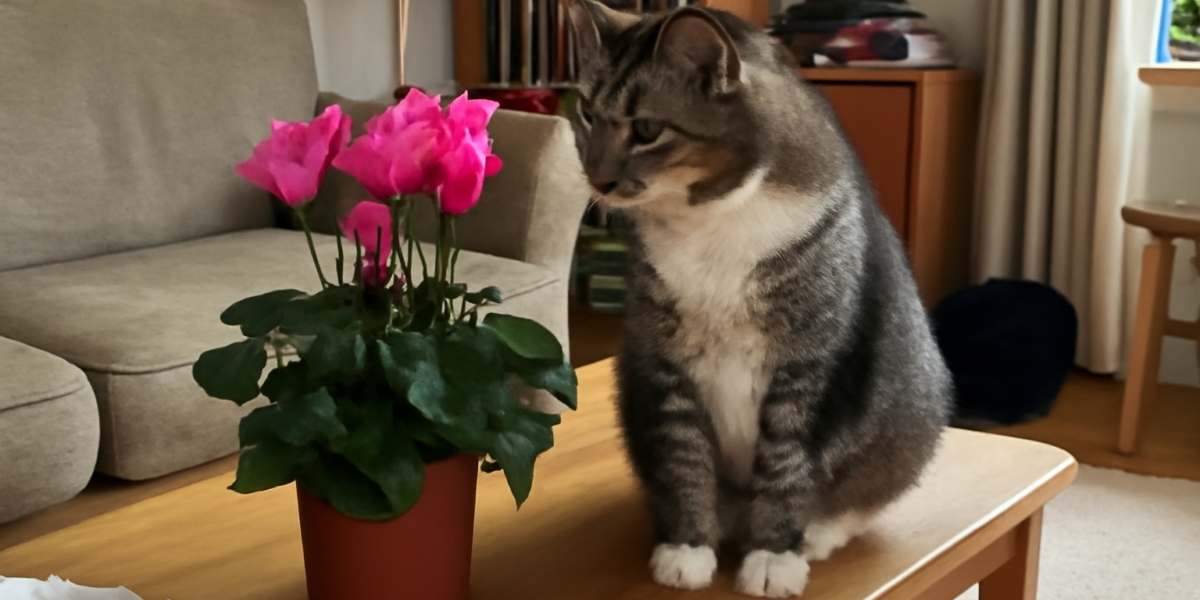
No, simply sniffing a cyclamen plant is not dangerous. The toxic saponins must be ingested to cause harm. Smelling the plant does not introduce a meaningful amount of toxin into your cat’s system. However, if your cat is showing interest in the plant by sniffing it, take this as a warning that they might progress to tasting or chewing it. Move the plant out of reach before curiosity escalates.
Are mini cyclamen less toxic than full-sized varieties?
Mini or dwarf cyclamen varieties contain the same toxic compounds as full-sized plants. While their smaller tubers contain less total saponin by volume, the concentration per gram of tissue is similar. A cat that eats the same proportion of a mini cyclamen tuber as a standard cyclamen tuber would be exposed to a similar relative dose. Do not assume that smaller plants are safer.
Cyclamen is a genuinely beautiful plant, and it is unfortunate that its toxicity makes it incompatible with feline-friendly homes. But with so many stunning, safe alternatives available, there is no need to take the risk. Your cat’s health and safety are infinitely more valuable than any flowering plant, no matter how pretty it may be.


