
Last updated: May 16, 2026
In this article
- Are Grapefruit Trees Toxic to Pets? The Quick Answer
- Meet Citrus Paradisi and the Grapefruit Family
- The Toxic Chemistry: Psoralens, Oils, and Drug Interactions
- What Happens If a Pet Chews a Leaf or Peel
- The Fruit Pulp Question: Is a Tiny Bit OK?
- Cats vs Dogs: The Essential Oil Sensitivity
- Photosensitivity and Skin Contact
- Living With a Grapefruit Tree and Pets
- The Drug Interaction Footnote
- Other Citrus and Rutaceae Neighbours
- What to Do If Your Pet Eats Part of a Grapefruit Tree
- Vet Routing and Final Reassurance
- Frequently Asked Questions
Are Grapefruit Trees Toxic to Pets? The Quick Answer
Yes, grapefruit trees are toxic to pets. The ASPCA lists the entire Citrus genus, including grapefruit (Citrus paradisi), pomelo (Citrus maxima), and the various pink, ruby, and white grapefruit cultivars, as toxic to dogs, cats, and horses. The toxic compounds are psoralens (furocoumarins concentrated in the peel and leaves), plus essential oils dominated by limonene and linalool. Ingestion or significant skin contact can cause vomiting, diarrhea, drooling, weakness, dermatitis, and in some cases photosensitivity skin reactions on sun-exposed areas.
Grapefruit also has a notable drug-interaction side that is worth knowing about even though it is mostly a human-medicine issue. The compounds in grapefruit (particularly furanocoumarins like bergamottin) inhibit a cytochrome P450 enzyme system that humans and many other mammals use to metabolize a long list of medications. For most pet households this is a curiosity, not a daily worry, but if you and your pet are on overlapping medications (some shared prescriptions exist between veterinary and human medicine), the grapefruit interaction is worth flagging to your vet. This guide walks through the chemistry, the realistic exposure scenarios, and the practical management steps for a household with a grapefruit tree.
Meet Citrus Paradisi and the Grapefruit Family
The standard backyard grapefruit is Citrus paradisi, an evergreen tree in the family Rutaceae believed to have arisen as a hybrid between a sweet orange and a pomelo in Barbados in the 18th century. Trees reach fifteen to thirty feet outdoors, with glossy oval leaves, fragrant white flowers, and large pale-yellow to pink-blushed fruit. Common cultivars include white grapefruit (Marsh, Duncan), pink grapefruit (Foster, Thompson), and ruby red grapefruit (Star Ruby, Rio Red).
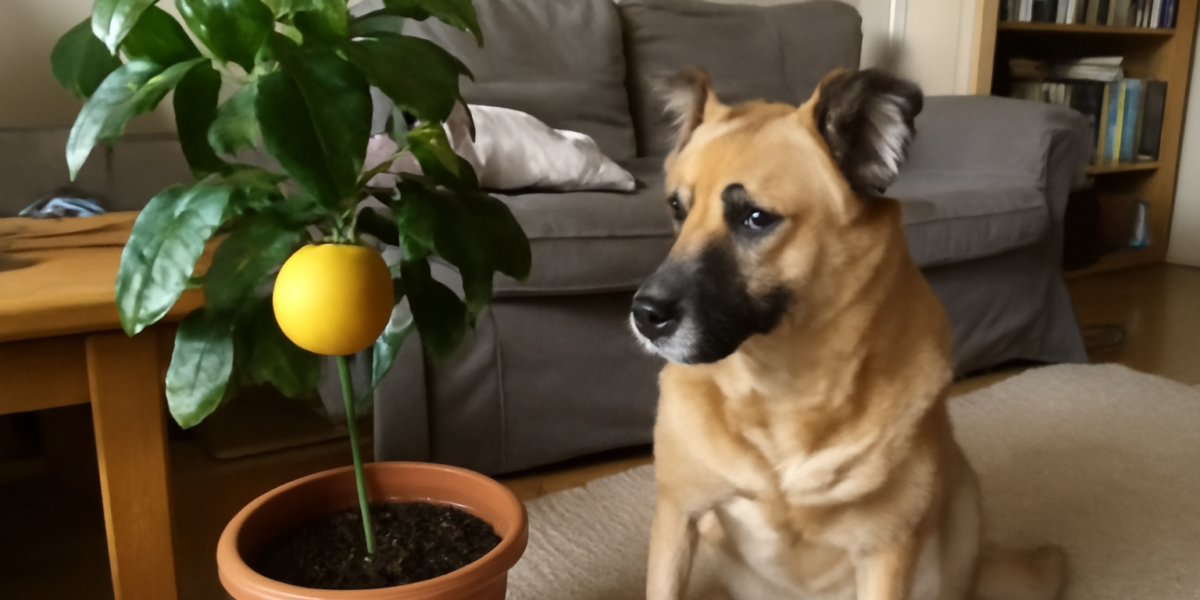
The ancestor pomelo (Citrus maxima) is a separate species with even larger fruit and thicker pith, and it shares the grapefruit chemistry. Indoor dwarf grapefruit trees in pots are essentially the same plant in miniature; same leaves, same peel chemistry, same essential oils. The pet-relevant point is that an indoor potted grapefruit at floor level may be more accessible to a curious cat than a tall outdoor specimen, and a fallen fruit at chewing height is the classic exposure scenario.
The Toxic Chemistry: Psoralens, Oils, and Drug Interactions
Three groups of compounds drive the direct toxicity story. Psoralens (furocoumarins like bergapten and 5-methoxypsoralen) are produced by grapefruit trees as natural defense chemistry, concentrating in the peel and leaves. Grapefruit psoralen content sits in the moderate-to-high range, lower than lime but comparable to lemon. They cause GI upset on ingestion (vomiting, diarrhea) and photosensitivity reactions on contacted skin areas.
Limonene is the dominant essential oil in grapefruit peel, similar to other citrus species. Linalool is also present. Both are concentrated in the peel oil glands and on leaf surfaces. At meaningful doses, limonene and linalool cause drooling, vomiting, and CNS depression, with cats specifically vulnerable because of limited liver glucuronidation. Our essential oils toxic to cats guide covers the broader essential-oil picture.
The third group is the drug-interaction compounds. Grapefruit contains bergamottin and other furanocoumarins that inhibit cytochrome P450 3A4, the same enzyme family that mammals use to metabolize many medications. The famous human grapefruit-juice interactions cover blood-pressure medications, statins, certain anti-anxiety drugs, and others. In pets, this interaction is less commonly discussed because pets are not typically eating grapefruit; but if your pet is on a medication metabolized through P450 3A4 and somehow ingests grapefruit, the medication levels could be altered. This is a niche concern, but worth mentioning for completeness.
What Happens If a Pet Chews a Leaf or Peel
The most common scenario is a curious dog or cat who tests a fallen leaf or grabs a piece of dropped peel from the kitchen counter. Most pets find the bitter pith and the strong essential-oil scent unpleasant and stop after one experimental chew. Grapefruit peel is particularly bitter (the same naringin compound that gives the fruit its distinctive flavor), which provides built-in deterrence for many pets. A pet who pushes past the taste barrier may show symptoms within a few hours: drooling, lip-licking, vomiting, soft stools, and sometimes lethargy.
Peel ingestion is more concerning per gram than leaf ingestion because peel concentrates the most essential oil. A dog who eats a whole grapefruit, peel and pulp and seeds together, is at higher risk than one who licks a leaf. Cats, with their essential-oil sensitivity, can show more pronounced reactions including unusual lethargy, ataxia, or rare tremors with significant exposure. Always call your veterinarian, the ASPCA Animal Poison Control Center at 888-426-4435, or the Pet Poison Helpline at 855-764-7661. Do not induce vomiting at home unless instructed.
The Fruit Pulp Question: Is a Tiny Bit OK?
The food-side question is whether a pet can have a small piece of grapefruit flesh as a treat. The honest answer is that grapefruit pulp without peel, even in small amounts, is more concerning than orange pulp because of the higher essential-oil and naringin content of the flesh. Most dogs reject the bitter taste; cats almost always do. There is no dietary benefit to feeding grapefruit, and the citric acid plus pith fragments can irritate sensitive stomachs.
The plant-side answer that this article addresses is firmer: do not let your pet chew on the tree itself, the leaves, the peel, or any meaningful amount of the fruit. The plant chemistry is documented as toxic. If you have a food-side question about pet ingestion of grapefruit, the dedicated food-side article on the site, where it exists, covers the nuance; the general consensus is that grapefruit is among the citrus species most worth keeping away from pet food bowls entirely.
Cats vs Dogs: The Essential Oil Sensitivity
Cats deserve specific attention because their sensitivity to limonene and linalool is more pronounced than that of dogs. The enzyme deficiency that limits cat liver glucuronidation slows the clearance of these citrus oils from the bloodstream, prolonging any exposure. A small exposure that a dog would shrug off may produce noticeable symptoms in a cat: more drooling, more lethargy, occasional incoordination, and rarely tremors at the higher end.
This is why grapefruit-scented cleaning products are flagged for cat households and why citrus aromatherapy diffusers, including grapefruit-oil blends, are not recommended in cat homes. The same logic carries to grapefruit tree households: a cat exposed to grapefruit leaves or peel is at higher per-gram risk than a dog. Most cats will not chew grapefruit voluntarily because they dislike the smell, but kittens and exploratory adolescents may try once.
Photosensitivity and Skin Contact
Grapefruit psoralen content is sufficient to cause photosensitivity reactions, similar to lemon and slightly less than lime. A dog who runs through a freshly pruned grapefruit tree, gets sap on lightly-furred skin (ear edges, muzzle, belly), and then spends an hour in bright sun may develop a red, irritated patch twenty-four to forty-eight hours later, particularly on areas of thinner fur or fair skin underneath.
For cats, the same reaction is theoretically possible but less commonly observed because cats groom thoroughly and remove sap with their tongues, which protects the skin while transferring more material to the mouth. If you see a localized rash on a pet who has been near a freshly pruned citrus tree, mention the citrus exposure to your vet. The diagnosis pattern is recognizable.
Living With a Grapefruit Tree and Pets
Most households with a grapefruit tree and pets coexist without incident. The practical steps are similar to any toxic-plant management. Sweep up fallen fruit and leaves promptly, especially after windy days. Avoid pruning when pets are loose in the garden, and bag prunings inside a closed yard waste bin rather than leaving them in an open pile. For indoor dwarf grapefruit trees in pots, elevate the tree on a stand or behind a baby gate.
If your dog is a chronic forager who eats anything off the ground, the grapefruit tree warrants more attention; fence off the tree or relocate it to an inaccessible part of the property. Cross-link our pet-safe garden plants guide for non-citrus alternatives. Avoid composting citrus prunings in an open dog-accessible compost pile, since dried prunings still contain essential oils and psoralens.
The Drug Interaction Footnote
A final note for households where pet and human medications might overlap. Grapefruit’s inhibition of cytochrome P450 3A4 is a well-documented effect that alters the metabolism of many drugs in humans. Some medications used in veterinary medicine are also metabolized through this pathway, including certain antifungals, some heart medications, and some chemotherapy drugs. If your pet is on a medication and you are unsure, mention any household grapefruit consumption (yours, theirs, anyone’s) to your vet during the next appointment.
This concern is unusual rather than common, but worth knowing. The realistic scenario is not “my dog ate grapefruit and his medication levels changed dangerously”; it is “my pet is on cyclosporine for a chronic condition, and I want to know if grapefruit in the household is a problem.” Your vet can answer specifically based on the medication.
Other Citrus and Rutaceae Neighbours
The chemistry that makes grapefruit trees toxic is shared across the Citrus genus. Lemon trees, lime trees, and orange trees all carry psoralens, limonene, and linalool, with concentrations varying by species. Lime is typically highest in psoralen, sweet orange lowest, with lemon and grapefruit in between. Grapefruit is the only common backyard citrus with the additional drug-interaction concern.
The culinary kaffir lime is covered separately because of its unusual leaf-as-ingredient context. The curry leaf plant, another Rutaceae family neighbour, has its own profile but shares some family-wide essential-oil concerns. If you keep multiple Rutaceae species in a kitchen garden or culinary herb collection, consider auditing the lot together.
What to Do If Your Pet Eats Part of a Grapefruit Tree
Call your veterinarian, the ASPCA Animal Poison Control Center at 888-426-4435, or the Pet Poison Helpline at 855-764-7661. Tell them what part of the tree was eaten (leaf, peel, whole fruit, seeds), how much, when, and the species or cultivar if known (white grapefruit, ruby red, pomelo). Mention any medications your pet is currently on, since the drug-interaction angle may matter. Do not induce vomiting at home unless instructed.
Treatment is usually supportive: anti-nausea medication, IV fluids if vomiting and diarrhea have caused dehydration, and monitoring for severe outcomes. Most pets recover within twenty-four to forty-eight hours. Severe outcomes are uncommon but possible with very large ingestions, with cats due to essential-oil sensitivity, or with pets on certain medications metabolized through P450 3A4 where the drug-interaction effect adds complexity.
Vet Routing and Final Reassurance
A grapefruit tree is a toxic plant by every common reference, but with thoughtful placement, prompt cleanup, and awareness of your pet’s foraging tendencies, it can coexist with cats and dogs in most homes. Keep your own veterinarian’s number, the ASPCA Animal Poison Control Center at 888-426-4435, and the Pet Poison Helpline at 855-764-7661 saved for general emergencies. The realistic event chain that leads to a grapefruit poisoning is unusual; most pets ignore the tree because they dislike the smell and bitter taste.
For cat households especially, mind the broader essential-oil picture covered in our essential oils toxic to cats guide. The adopt-a-cat hub and adopt-a-dog hub include household audit checklists for adopters who garden. Grapefruit trees are toxic, but they are toxic in the manageable sense rather than the panic sense.
Frequently Asked Questions
Is grapefruit more or less toxic to pets than orange or lemon?
Grapefruit sits in the middle of common backyard citrus for psoralen and essential-oil content, with lime usually highest and sweet orange usually lowest. Grapefruit is the only one with the notable drug-interaction concern via cytochrome P450 inhibition, which is more relevant for medicated pets than for the general population.
Can my dog eat a piece of grapefruit pulp without the peel?
Most dogs reject grapefruit because of the bitter naringin flavor. A small piece of pulp without peel is unlikely to cause acute harm, but there is no dietary benefit and the bitter compounds may irritate sensitive stomachs. Skip grapefruit treats and offer a safer fruit instead.
What if my pet is on cyclosporine and we have grapefruit in the kitchen?
Mention the household grapefruit to your vet. Some medications, including certain immunosuppressants and antifungals, are affected by grapefruit’s enzyme inhibition. Pets do not typically eat grapefruit voluntarily, but if exposure is plausible, the vet may want to check medication levels or adjust the dosing schedule.
Are pomelo trees the same as grapefruit trees for pet toxicity?
Yes. Pomelo (Citrus maxima) is the ancestor of grapefruit and shares the same chemistry, including psoralens, essential oils, and the drug-interaction compounds. Treat pomelo trees the same way you treat grapefruit trees for pet-access purposes.
Can the seeds of a grapefruit cause additional problems if my dog swallows them?
Citrus seeds are bitter and can cause additional GI irritation beyond the pulp itself. They are not extremely toxic in small numbers, but a dog who eats a whole grapefruit including all the seeds is at higher risk for vomiting and diarrhea than a dog who eats only the flesh. Call your vet for guidance on the specific volume.


