
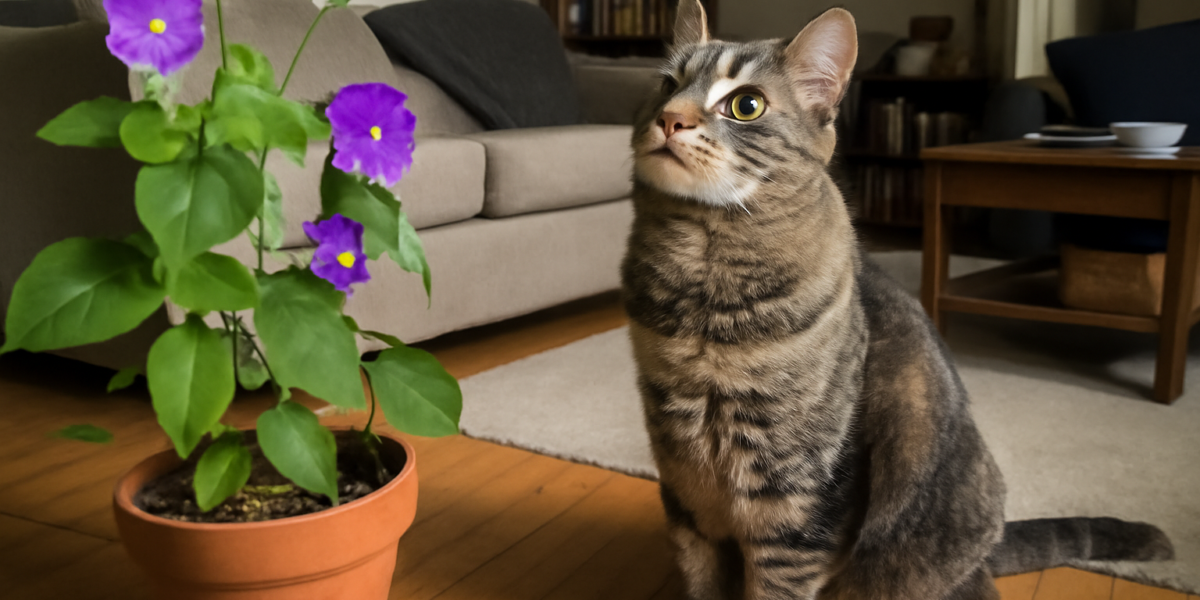
Are Morning Glories Toxic to Cats?
Yes, morning glory is toxic to cats. The entire plant contains harmful compounds, but the seeds are by far the most dangerous part. Morning glory seeds contain lysergic acid amide (LSA) and other ergot-related alkaloids that can cause serious neurological and gastrointestinal symptoms in cats. If your cat has ingested any part of a morning glory vine, contact your veterinarian or the ASPCA Animal Poison Control Center (888-426-4435) immediately.
In this article
The severity of morning glory toxicity ranges from mild to moderate, depending on the amount consumed and which part of the plant was eaten. Leaf and stem ingestion typically causes gastrointestinal upset, while seed ingestion can produce more alarming neurological symptoms. Cats are particularly vulnerable because of their small body size — even a few seeds can cause a significant reaction.
Morning glories (Ipomoea spp.) are popular garden vines and houseplants prized for their trumpet-shaped flowers in shades of blue, purple, pink, and white. They grow quickly, self-seed readily, and can appear in both cultivated gardens and wild spaces — making accidental exposure a realistic risk for cats with outdoor access or homes where the plant is grown indoors.
Toxic Compounds and Which Parts Are Dangerous
The primary toxic compounds in morning glory are lysergic acid amide (LSA), also called ergine, along with related ergot alkaloids including lysergol and chanoclavine. These compounds are concentrated most heavily in the seeds, though they are present in lower concentrations throughout the plant.
Seeds: The highest concentration of toxic alkaloids. Even a small number of seeds can cause symptoms in cats. Seeds are small, hard, and black or brown, making them easy for a curious cat to bat around and potentially swallow.
Leaves and stems: Contain lower levels of alkaloids. Ingestion typically causes mild to moderate gastrointestinal irritation rather than the neurological symptoms associated with seed ingestion.
Flowers: Contain the lowest concentration of toxic compounds. While not considered as dangerous as seeds, they can still cause gastrointestinal upset if eaten in significant quantities.
Roots: Some morning glory species have roots that contain higher alkaloid levels than the above-ground vegetation, though cats are less likely to access roots unless the plant is potted indoors and the cat digs in the soil.
The toxic dose is not precisely established for cats because variables like the specific species, growing conditions, and individual alkaloid content can vary. As a general rule, any ingestion of morning glory — particularly seeds — should be treated as a potential toxicosis event requiring veterinary evaluation.
Symptoms of Morning Glory Poisoning in Cats
Symptoms can appear within two to four hours of ingestion and vary depending on the amount and part of the plant consumed. Watch for the following signs:
Gastrointestinal symptoms (most common):
- Vomiting
- Diarrhea
- Drooling or excessive salivation
- Loss of appetite
- Abdominal pain or tenderness
Neurological symptoms (primarily from seed ingestion):
- Disorientation or confusion
- Agitation or restlessness
- Dilated pupils
- Tremors or muscle twitching
- Incoordination or stumbling
- Lethargy or sedation
Other possible symptoms:
- Elevated heart rate
- Changes in blood pressure
- Hallucination-like behavior (staring at walls, swatting at nothing)
Severity varies from mild (brief vomiting from leaf nibbling) to moderate (prolonged neurological symptoms from seed ingestion). Fatal outcomes are rare with prompt treatment, but any neurological symptoms warrant emergency veterinary care.
What to Do If Your Cat Eats Morning Glory
If you suspect your cat has eaten any part of a morning glory plant, follow these steps:
- Stay calm and assess. Remove your cat from access to the plant immediately. Try to determine which part of the plant was eaten and approximately how much. Save any chewed plant material for identification.
- Call your veterinarian or poison control. Contact your veterinarian or the ASPCA Animal Poison Control Center (888-426-4435) right away. Provide the species of plant, the part ingested, the estimated amount, your cat’s weight, and any symptoms you are observing. A consultation fee may apply for the poison control hotline.
- Do not induce vomiting at home unless specifically instructed by your veterinarian. Inducing vomiting in cats can be dangerous and should only be done under professional guidance.
- Monitor for symptoms. Watch for vomiting, diarrhea, disorientation, tremors, or any behavioral changes. Note the time symptoms appear and their severity.
- Transport to the vet if needed. If your veterinarian recommends an in-person evaluation, bring your cat in promptly. Carry a sample of the plant or a photo for identification.
Treatment is primarily supportive. Your veterinarian may administer activated charcoal to reduce absorption if the ingestion was recent, provide IV fluids for dehydration from vomiting or diarrhea, and prescribe anti-nausea medication. Cats with neurological symptoms may need monitoring and sedation in severe cases. Most cats recover fully with appropriate treatment.
Preventing Morning Glory Exposure
Prevention is always easier and safer than treatment. Here are practical steps to keep your cat safe from morning glory toxicity:
Remove morning glory from your home and garden. If you have cats with outdoor access, remove morning glory vines from your garden entirely. Indoor morning glory plants should be relocated to a room your cat cannot access, or replaced with cat-safe alternatives.
Be aware of seed dispersal. Morning glories self-seed aggressively. Even after removing the main plant, fallen seeds can persist in soil and sprout the following season. Monitor garden beds where morning glories previously grew and remove seedlings promptly.
Secure seed packets. If you garden, store seed packets — including morning glory seeds — in a sealed container out of your cat’s reach. Cats may be attracted to the texture and size of seeds as playthings.
Provide cat-safe alternatives. Offer cat grass, catnip, or silver vine as safe plants your cat can nibble. Many cats chew on plants out of boredom or instinct, and providing safe options reduces their interest in potentially toxic ones.
Know your outdoor risks. Morning glories grow wild in many parts of the United States. If your cat has outdoor access, familiarize yourself with the plants growing in your yard and surrounding area. For more on garden plant risks, read our article on wisteria toxicity in cats.
For a broader look at plants that threaten your cat’s safety, browse our cat care resources. If you want to create a cat-safe garden, start by consulting the ASPCA’s comprehensive toxic plant database and discuss landscaping options with your veterinarian.
Frequently Asked Questions
How many morning glory seeds does it take to make a cat sick?
There is no established safe threshold. Because cats are small and sensitive, even a few seeds can potentially cause symptoms. Any seed ingestion should be treated as a potential toxicosis event requiring veterinary consultation.
Are morning glory flowers less toxic than the seeds?
Yes. The flowers contain the lowest concentration of ergot alkaloids. However, they can still cause gastrointestinal upset if consumed. The seeds are the most dangerous part of the plant and should be considered the primary toxicity risk.
Can cats die from eating morning glory?
Fatalities are rare with prompt veterinary treatment, but severe seed ingestion without treatment could theoretically lead to dangerous complications, particularly in kittens, elderly cats, or cats with pre-existing health conditions. Always seek veterinary care promptly.
Are all morning glory species equally toxic?
Most Ipomoea species contain similar ergot alkaloids, though concentrations can vary. Ipomoea tricolor and Ipomoea violacea are among the species with higher seed alkaloid content. Treat all morning glory species as potentially toxic to cats. Consult your veterinarian with any specific plant identification questions.
Is morning glory toxic to dogs too?
Yes. Morning glory is also toxic to dogs, with similar symptoms. Dogs are more likely to ingest larger quantities due to their size and chewing behavior, but they also have a higher body weight that may moderate the effect. Any pet that ingests morning glory should receive veterinary evaluation. Visit our adoption page for more pet safety resources.


