
Last updated: May 16, 2026
In this article
Narcissus Are Toxic to Dogs — Bulbs Are the Greatest Danger
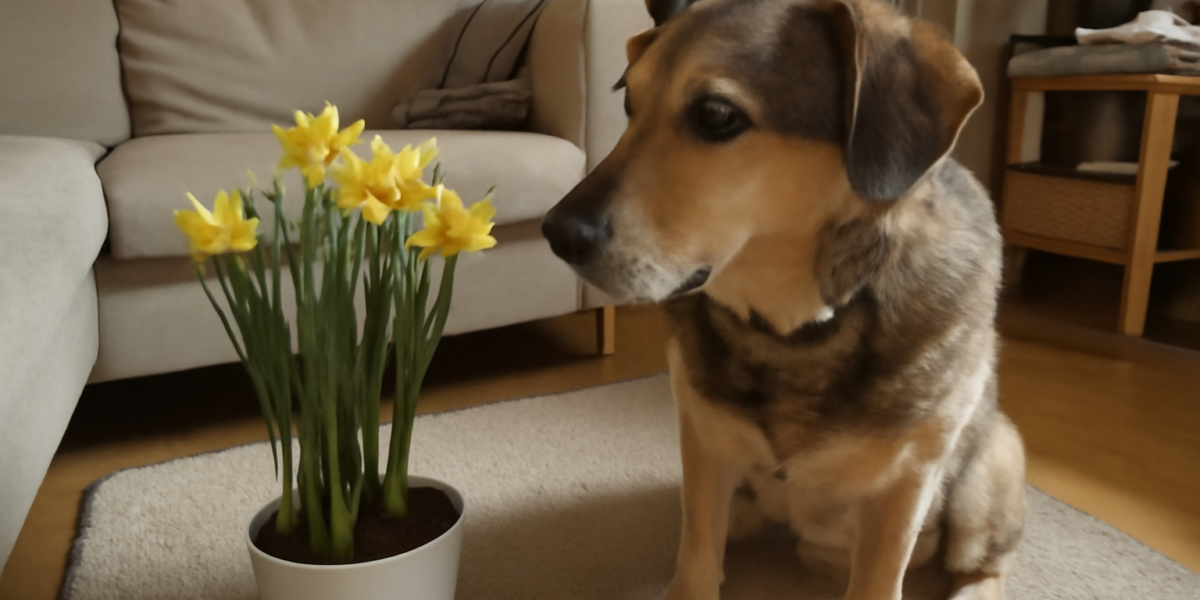
Narcissus are toxic to dogs. Every part of the narcissus plant — also commonly known as daffodils, jonquils, or paperwhites — contains toxic alkaloids, but the bulb holds the highest concentration and poses the most serious risk. If your dog digs up and chews on a narcissus bulb, the exposure can range from moderate gastrointestinal distress to severe poisoning requiring emergency veterinary care.
The primary toxic compound in narcissus is lycorine, an alkaloid that causes intense nausea, vomiting, diarrhea, and abdominal pain. The outer layer of the bulb also contains calcium oxalate crystals, which cause immediate burning and irritation in the mouth and throat. Together, these compounds make narcissus one of the more concerning common garden plants for dog owners, rated as moderate to severe in toxicity depending on the amount ingested.
Narcissus are among the most widely planted spring-flowering bulbs in the world, making narcissus toxic to dogs encounters a real risk during gardening season and in landscapes where these cheerful yellow flowers are abundant.
Understanding the Toxic Compounds
Lycorine
Lycorine is the principal toxic alkaloid in narcissus and is present throughout the plant, with the highest concentrations in the bulb. It acts primarily as a gastrointestinal irritant, triggering severe vomiting that serves as a natural defense mechanism — the body expels the toxin before it can cause systemic damage. In large doses, lycorine can cause more serious effects including tremors, low blood pressure, and cardiac irregularities, though these severe outcomes are uncommon in typical accidental ingestions.
Calcium Oxalate Crystals
The outer layers of narcissus bulbs contain needle-like calcium oxalate crystals that penetrate the soft tissues of the mouth, tongue, and throat upon chewing. This causes immediate pain, burning, swelling, and excessive drooling. The intense oral discomfort often (but not always) limits how much of the bulb a dog actually swallows, which can be somewhat protective.
Other Alkaloids
Narcissus contain additional alkaloids including galantamine and narciclasine, which contribute to the plant’s overall toxicity profile. Galantamine affects the nervous system, and narciclasine has cytotoxic properties. While individual exposures to these secondary compounds are typically small, they add to the cumulative toxic effect when a dog consumes a significant amount of plant material.
Symptoms of Narcissus Poisoning in Dogs
Symptoms can appear within minutes to hours after ingestion, depending on which part of the plant was eaten and how much.
Mild to Moderate Symptoms
- Excessive drooling and oral irritation (from oxalate crystals)
- Nausea and repeated vomiting
- Diarrhea, which may be watery or contain mucus
- Loss of appetite and refusal to eat
- Abdominal pain — your dog may whimper, guard their belly, or adopt a hunched posture
- Lethargy and reduced activity
Severe Symptoms (Large Ingestions, Especially Bulbs)
- Persistent, uncontrollable vomiting
- Bloody diarrhea
- Tremors or muscle twitching
- Low blood pressure leading to weakness and collapse
- Irregular heart rhythm (cardiac arrhythmia)
- Difficulty breathing
- Seizures (rare but possible with very large ingestions)
The severity of symptoms correlates directly with the amount ingested and which part of the plant was consumed. A dog who licks a flower is in a very different situation from a dog who digs up and eats an entire bulb. Bulb ingestion should always be treated as a potentially serious poisoning event.
What to Do If Your Dog Eats Narcissus
Time is important with narcissus poisoning, especially if bulb ingestion is suspected. Act quickly but calmly.
- Remove remaining plant material. Take away any accessible narcissus parts and move your dog away from the area. Check the mouth for plant fragments and gently remove what you can.
- Rinse the mouth. If your dog allows it, gently rinse the mouth with cool water to help flush out calcium oxalate crystals and reduce oral irritation. Use a syringe or a gentle stream of water directed at the side of the mouth — do not force water down the throat.
- Call your veterinarian immediately. Describe what was ingested, the estimated quantity, and any symptoms already present. If your regular vet is closed, contact an emergency veterinary clinic. You can also call the ASPCA Animal Poison Control Center at 888-426-4435 or the Pet Poison Helpline at 855-764-7661 (consultation fees may apply).
- Do not induce vomiting at home. Your vet may choose to induce vomiting in a clinical setting where they can manage complications, but home-induced vomiting can cause aspiration pneumonia or worsen esophageal irritation from the oxalate crystals. Wait for professional guidance.
- Bring a sample. If you can identify the plant or have a piece of the bulb, bring it to the vet. This confirms the identification and helps the vet determine the appropriate treatment intensity.
Veterinary Treatment for Narcissus Poisoning
Treatment depends on the severity of the exposure and the timing of presentation.
Decontamination: If the dog arrives within one to two hours of ingestion and is not already vomiting profusely, the vet may induce vomiting under controlled conditions. Activated charcoal may be given to bind remaining lycorine in the gastrointestinal tract.
IV fluid therapy: Intravenous fluids are critical for dogs with significant vomiting and diarrhea. Fluids correct dehydration, support blood pressure, and help the kidneys process and eliminate toxins.
Anti-emetics: Medications to control vomiting, such as maropitant (Cerenia), improve comfort and prevent further fluid loss.
Cardiac monitoring: For suspected large ingestions, your vet may monitor the heart rhythm with an ECG. If arrhythmias develop, specific cardiac medications can be administered.
Gastroprotectants: Sucralfate or similar medications protect the irritated stomach and intestinal lining, promoting healing and reducing discomfort.
Supportive care: Hospitalization for observation, temperature monitoring, and repeated assessment may be necessary for moderate to severe cases. Most dogs who receive prompt treatment recover within twenty-four to seventy-two hours.
The prognosis for narcissus poisoning is generally good with timely treatment. Severe outcomes, including death, are possible but rare and typically involve very large bulb ingestions in small dogs with delayed treatment. Early veterinary intervention is the key to a positive outcome.
Preventing Narcissus Exposure
Since narcissus are so common in gardens and floral arrangements, prevention requires proactive measures.
Garden design: If you keep narcissus in your garden, plant them in areas your dog cannot access — behind fencing, in raised planters, or in front-yard beds that your dog does not frequent. During fall planting season, never leave unplanted bulbs accessible to your dog. Bulbs that are sitting on the ground or in open bags are an attractive digging and chewing target.
Indoor arrangements: Daffodils are popular in spring bouquets. Place arrangements on high surfaces and clean up any fallen petals, leaves, or stem pieces promptly. The vase water absorbs plant toxins and should be inaccessible to your dog.
Supervise outdoor time during spring: When narcissus are blooming in the neighborhood or at parks, keep your dog on leash near flower beds. Dogs who are curious nibblers need extra attention during peak daffodil season.
Know your bulbs: Narcissus are not the only toxic bulb plant. Tulips, hyacinths, and autumn crocus also pose risks. If you are a gardener and a dog owner, a comprehensive knowledge of bulb toxicity protects your pet year-round. Explore our toxic plant guides for more information on keeping your dog safe around common plants.
If you are preparing your home for a new dog, auditing your garden for toxic plants is a smart step in the pet-proofing process.
Frequently Asked Questions
How much narcissus does a dog need to eat to be poisoned?
Even a small amount of bulb can cause significant gastrointestinal symptoms. There is no established safe threshold. A dog who chews on a single bulb may experience moderate vomiting and diarrhea, while consuming multiple bulbs increases the risk of severe systemic effects. Petal or leaf ingestion causes milder symptoms in most cases.
Are all types of daffodils equally toxic?
All narcissus species and cultivars contain lycorine and are considered toxic. Some varieties may have slightly higher or lower concentrations, but the difference is not clinically meaningful — treat all narcissus as toxic. Paperwhites, jonquils, and standard daffodils all carry the same risk.
My dog dug up a narcissus bulb but didn’t eat it. Should I still be concerned?
If your dog only handled the bulb without chewing or swallowing any pieces, the risk is minimal. The calcium oxalate crystals can cause mild oral irritation from contact, so check your dog’s mouth for drooling or discomfort. If your dog seems fine and shows no symptoms, monitor for a few hours but an emergency vet visit is likely unnecessary. If there is any doubt about whether pieces were swallowed, call your vet for guidance.
Is narcissus water (vase water) toxic to dogs?
Yes. Water that has held narcissus stems absorbs lycorine and other plant compounds. While the concentration is lower than in the plant itself, drinking narcissus-tainted water can cause mild gastrointestinal upset. Keep vase water inaccessible to pets.
What spring flowers are safe to plant in a dog-friendly garden?
Dog-safe spring-blooming alternatives include pansies, violets, snapdragons, sunflowers, and zinnias. Roses are also safe, though thorns can cause physical injuries. Always verify plant safety through the ASPCA’s toxic plant database before planting in areas your dog accesses.


