
Last updated: May 4, 2026
In this article
Are Peonies Toxic to Cats? What You Need to Know
Peonies are among the most beloved garden plants, famous for their lush, fragrant blooms that signal the arrival of late spring and early summer. Whether grown as perennial border plants or purchased as luxurious cut flowers, peonies hold a special place in the hearts of gardeners and floral enthusiasts. However, cat owners should be aware that these beautiful flowers harbor compounds that can make felines sick. Understanding the nature of peony toxicity, recognizing the warning signs, and knowing how to respond can help you keep your cat safe while still enjoying these gorgeous blooms.
Are Peonies Toxic to Cats?
Yes, peonies are toxic to cats. The ASPCA lists peonies (Paeonia species) as toxic to cats, dogs, and horses. The primary toxic compound in peonies is paeonol, a phenolic compound that is found throughout the plant but is most concentrated in the bark and roots. When a cat ingests peony plant material, paeonol and other associated compounds can cause gastrointestinal distress and, in larger amounts, more systemic effects.
Peony toxicity in cats is generally classified as mild to moderate. Most cases involve GI upset that resolves with supportive care, and fatal poisonings are exceedingly rare. However, the potential for illness is real, and the severity depends on how much plant material is consumed and which part of the plant the cat ate.
The risk is present with all common peony types, including herbaceous peonies (Paeonia lactiflora), tree peonies (Paeonia suffruticosa), and intersectional (Itoh) peonies. The bark of tree peonies, known as “moutan cortex” in traditional Chinese medicine, contains particularly high concentrations of paeonol and is the most potentially dangerous part for cats.
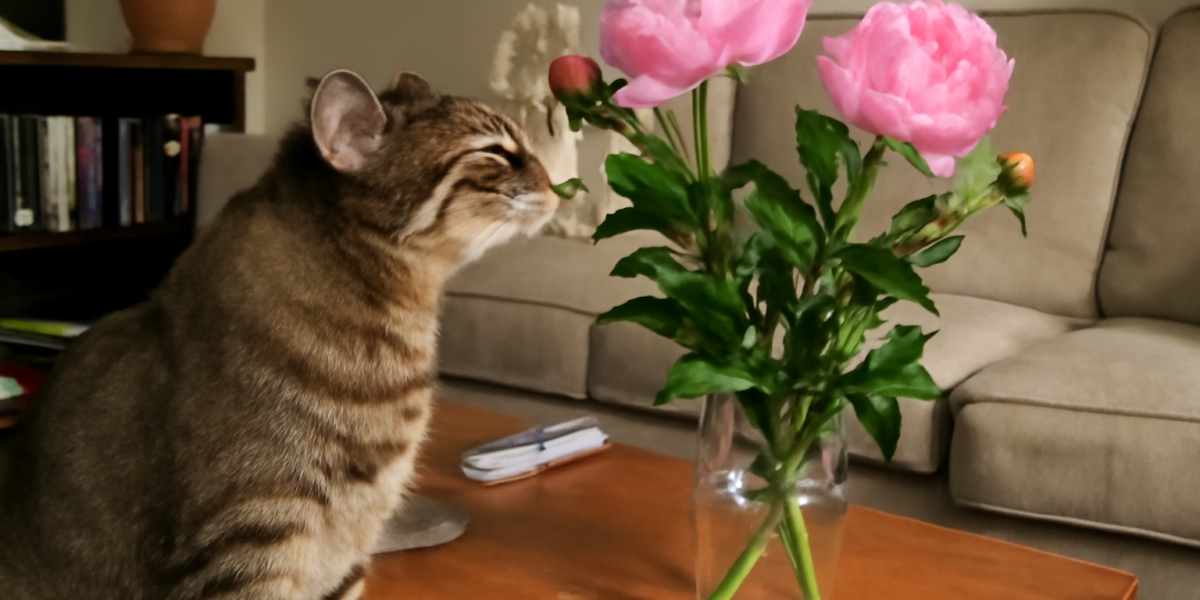
Cats may encounter peonies in the garden or in the home as cut flowers. The allure of dangling petals can make peony bouquets tempting for playful cats.
Toxic Compounds in Peonies
The toxicity of peonies is attributed to several chemical compounds, with paeonol being the most significant:
- Paeonol: This is the primary toxic compound in peonies. Paeonol is a phenolic compound present in all parts of the plant but most concentrated in the root bark. In uncontrolled doses, it acts as a gastrointestinal irritant and can have mild sedative-like effects, contributing to the depression and lethargy seen in poisoned animals.
- Paeoniflorin: A monoterpene glycoside found in peony roots and stems, paeoniflorin has anti-inflammatory and mild sedative properties. In cats, ingestion can contribute to lethargy and central nervous system depression, particularly if a significant amount of root material is consumed.
- Benzoic acid: Present in the flowers and other plant parts, benzoic acid can irritate the gastrointestinal tract and contribute to nausea and vomiting.
- Tannins: Peonies contain tannins that have astringent properties. Tannins irritate the stomach lining and can contribute to nausea, vomiting, and decreased appetite.
- Phenolic compounds: Various other phenolic compounds in peonies contribute to their overall irritant potential and bitter taste.
The distribution of these compounds within the plant is important for understanding risk:
- Bark and roots: Highest concentration of paeonol and paeoniflorin. This is the most dangerous part of the plant, but also the part cats are least likely to encounter unless they dig around the base of the plant.
- Stems: Moderate levels of toxic compounds. Cats may chew on stems from cut flower arrangements.
- Leaves: Lower concentrations of paeonol but still contain tannins and other irritant compounds.
- Flowers: Lowest concentration of the primary toxins, though they still contain benzoic acid and other irritants. Flowers are the most commonly ingested part since they are the most accessible and visually interesting to cats.
Symptoms of Peony Poisoning in Cats
The symptoms of peony poisoning in cats typically develop within a few hours of ingestion and reflect the irritant and mildly depressant effects of the plant’s toxic compounds. The severity of symptoms depends on the amount consumed and which part of the plant was eaten.
Common symptoms include:
- Vomiting: This is the most frequently observed symptom. The gastrointestinal irritation caused by paeonol, tannins, and other compounds triggers nausea and vomiting, often within the first one to two hours after ingestion. The vomit may contain identifiable plant material.
- Diarrhea: Loose stools or watery diarrhea may follow vomiting, as the irritant compounds move through the digestive tract. Diarrhea can range from mild to moderate.
- Depression and lethargy: Paeonol and paeoniflorin have mild sedative properties. Cats that have ingested a meaningful quantity of peony material may appear unusually quiet, withdrawn, and lethargic. They may sleep more than usual and show decreased interest in their surroundings.
- Loss of appetite: Nausea and GI discomfort typically lead to a temporary refusal to eat. Appetite usually returns as the irritant compounds clear the system.
- Drooling: Excessive salivation can occur, particularly if the plant material has irritated the mouth and throat.
Less common but more concerning symptoms (associated with larger ingestions):
- Abdominal pain: The cat may vocalize, resist being touched around the belly, or adopt a hunched, guarded posture.
- Dehydration: Prolonged vomiting and diarrhea without adequate fluid intake can lead to dehydration, which is a more serious concern requiring veterinary attention.
- Prolonged depression: If the sedative-like effects of paeonol are significant, the cat may remain lethargic for an extended period.
In most cases, symptoms are self-limiting and resolve within 24 to 48 hours. Cats that ate only a small amount of flower petal or leaf material will likely experience only mild, brief symptoms. Those that chewed on stems, bark, or roots — or consumed a larger quantity — may have more pronounced and prolonged effects.
What to Do If Your Cat Eats Peonies
If you discover that your cat has been chewing on peonies, whether from the garden or a cut flower arrangement, follow these steps to protect your cat’s health:
- Remove the plant material: Take the peonies away from your cat immediately. Move cut flower arrangements to a closed room or dispose of them. In the garden, block your cat’s access to the peony plants.
- Check your cat’s mouth: If your cat will allow it, look inside its mouth for any remaining plant material and gently remove it. Note any signs of oral irritation such as redness or swelling.
- Determine what was eaten: Try to assess which part of the peony your cat ingested and how much. Did it nibble on a petal, chew on a stem, or get into the root area? This information is valuable for your vet.
- Offer water: Encourage your cat to drink fresh water. Staying hydrated helps dilute ingested toxins and supports the body’s natural elimination processes.
- Do not induce vomiting: Never try to make your cat vomit without explicit instruction from a veterinarian. Forced vomiting can cause aspiration and additional esophageal irritation.
- Contact your veterinarian: Call your vet or an animal poison control hotline and provide details about what your cat ate, the estimated amount, the time of ingestion, and any symptoms you have observed. Your vet will advise whether home monitoring is appropriate or whether your cat should be examined.
- Monitor for 24 hours: Keep a close watch on your cat for any developing symptoms. Note any vomiting, diarrhea, changes in behavior, eating habits, or energy level.
Seek immediate veterinary care if your cat shows signs of severe vomiting, bloody stool, difficulty breathing, significant lethargy, or dehydration. While these outcomes are uncommon with peony ingestion, prompt treatment ensures the best outcome.
Treatment for Peony Poisoning
Treatment for peony poisoning in cats is primarily supportive, as there is no specific antidote for paeonol toxicity. Your veterinarian will focus on managing symptoms, preventing dehydration, and ensuring your cat’s comfort during recovery.
Standard treatment approaches may include:
- Gastrointestinal decontamination: If the cat is seen within one to two hours of a significant ingestion and has not yet vomited, the vet may induce vomiting to remove undigested plant material. Activated charcoal may be administered to absorb remaining toxins in the GI tract.
- Anti-nausea medication: Antiemetic drugs such as maropitant (Cerenia) may be given to control persistent vomiting and restore comfort.
- Fluid therapy: Subcutaneous or intravenous fluids are commonly administered to prevent or treat dehydration, especially if the cat has been vomiting or has diarrhea. Fluids also support kidney function and help flush absorbed toxins.
- GI protectants: Medications that coat and protect the stomach lining, such as sucralfate, may be given to reduce ongoing irritation.
- Pain management: If abdominal pain is evident, your vet may administer pain-relieving medication to keep your cat comfortable.
- Bland diet: Once vomiting has stopped, a temporary bland diet helps the digestive system recover without additional irritation.
- Monitoring: Vital signs, hydration status, and overall demeanor will be assessed to track recovery. Most cats improve rapidly with supportive care.
The prognosis for peony poisoning in cats is excellent. The vast majority of cats recover fully within 24 to 48 hours. Life-threatening complications are extremely rare and would require ingestion of a very large amount of highly concentrated plant material, particularly the bark or roots.
Safe Alternatives to Peonies
If you adore the lush, romantic look of peonies but want to protect your cat, consider these non-toxic alternatives for your garden and home:
- Roses (Rosa species): Roses are the classic non-toxic substitute for peonies. Garden roses, particularly the full, cabbage-style varieties like David Austin English roses, closely resemble peonies in form and fragrance. They are safe for cats, though you should remove thorns from cut stems to prevent scratches.
- Camellias (Camellia species): With their glossy, dark green foliage and perfectly formed blooms, camellias are often compared to peonies in appearance. They are non-toxic to cats and bloom in late winter through spring, complementing the peony season nicely.
- Snapdragons (Antirrhinum majus): While their flower form is different from peonies, snapdragons offer rich colors and interesting textures that can fill the same role in gardens and arrangements. They are completely safe for cats.
- Lisianthus (Eustoma grandiflorum): Also known as Texas bluebells, lisianthus produces double-flowered blooms that bear a striking resemblance to small peonies or roses. They are non-toxic and are becoming increasingly popular as cut flowers.
- Gerbera daisies (Gerbera jamesonii): Bright, cheerful, and safe for cats, gerbera daisies add a pop of color to any arrangement or garden bed.
- African violets (Saintpaulia): For indoor display, African violets are a safe, low-maintenance option that provides continuous bloom with minimal care.
When purchasing cut flower arrangements, always ask the florist about the contents. Peonies are popular in mixed bouquets. Request peony-free arrangements or substitute with garden roses for homes with cats.
Frequently Asked Questions
Q: Can peonies kill a cat?
A: Fatal peony poisoning in cats is extremely rare. Peonies are classified as mildly to moderately toxic, and the symptoms — primarily vomiting, diarrhea, and lethargy — are typically self-limiting. For a peony to cause life-threatening effects, a cat would need to ingest a very large amount of the most concentrated plant parts, particularly the bark and roots. However, any significant ingestion should be reported to your veterinarian to ensure appropriate monitoring and care.
Q: Are dried peonies safer than fresh ones for homes with cats?
A: Dried peonies still contain paeonol and other irritant compounds, though the drying process may reduce the concentration somewhat. They are not considered safe for cats and should be treated with the same caution as fresh peonies. Additionally, dried petals and leaves may crumble and fall to the floor, where they are easier for a cat to encounter and ingest.
Q: Which part of the peony is most dangerous to cats?
A: The bark and roots contain the highest concentration of paeonol, the primary toxic compound. These are the most dangerous parts of the peony plant. However, cats are more likely to encounter and chew on flowers, leaves, and stems from cut arrangements or garden plants. While these parts contain lower toxin concentrations, they can still cause GI upset and discomfort.
Q: My outdoor cat was near my peony bushes. Should I be concerned?
A: Simply being near peonies is not a risk. The concern only arises if your cat actually chews on or eats parts of the plant. If you see no evidence of chewing (no bite marks on the plant, no plant material in your cat’s mouth or vomit) and your cat is behaving normally, there is likely no cause for concern. However, if your cat shows any symptoms of GI upset, contact your vet and mention the peony exposure.
Q: How long should I monitor my cat after it eats peony material?
A: Monitor your cat closely for at least 24 hours after peony ingestion. Most symptoms appear within the first few hours and resolve within a day. If symptoms persist beyond 24 hours, worsen at any point, or include concerning signs like bloody vomit, bloody stool, or severe lethargy, contact your veterinarian immediately for further evaluation.


