
Last updated: April 9, 2026
In this article
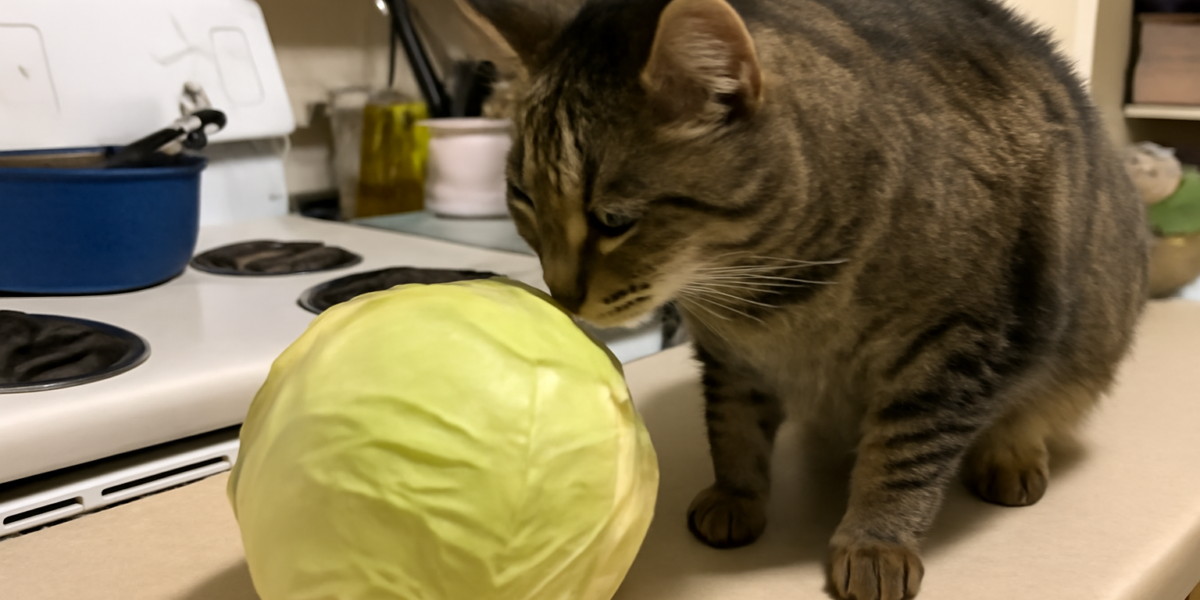
Cabbage is a staple vegetable in kitchens around the world, found in everything from coleslaw to stir-fries to fermented preparations like sauerkraut and kimchi. If your cat has sniffed at a cabbage leaf or tried to steal a bite from your plate, you may be curious about whether this leafy green is safe for felines. The good news is that cabbage is not toxic to cats, and small portions of plain, cooked cabbage can be offered as an occasional treat. However, like all cruciferous vegetables, cabbage can cause gas and digestive discomfort if given in excess, and preparation matters significantly.
Quick Answer: Yes, cats can eat cabbage in small amounts. Plain, cooked cabbage (steamed or boiled) is non-toxic and provides some fiber and vitamins. Avoid raw cabbage, which is harder to digest, and never offer cabbage prepared with seasonings, vinegar, salt, or other additives. Keep portions small to minimize gas and digestive upset.
Is Cabbage Safe for Cats?
Cabbage — including green, red, savoy, and napa varieties — is not listed as toxic to cats by the ASPCA. It belongs to the Brassica family of cruciferous vegetables, alongside broccoli, cauliflower, Brussels sprouts, and kale. None of these vegetables are poisonous to cats, though they share some common side effects related to their complex carbohydrate content.
As obligate carnivores, cats have no dietary requirement for vegetables. Their digestive systems are optimized for breaking down animal proteins and fats, not plant fiber and carbohydrates. Cabbage will not provide your cat with any nutrients they cannot get more efficiently from their regular meat-based diet. However, a small piece of cooked cabbage as an occasional treat will not cause harm in most healthy cats.
The key considerations are preparation and portion size. Raw cabbage is tough and fibrous, making it difficult for cats to chew and digest. Cooking softens the fibers and breaks down some of the complex sugars that cause gas, making it a much better option for felines.
Nutritional Profile of Cabbage
One cup (approximately 89 grams) of raw green cabbage contains:
- Calories: 22 kcal
- Protein: 1.1 g
- Carbohydrates: 5.2 g
- Fiber: 2.2 g
- Sugar: 2.8 g
- Vitamin C: 32.6 mg
- Vitamin K: 67.6 mcg
- Folate: 38 mcg
- Potassium: 151 mg
- Manganese: 0.15 mg
Cabbage is extremely low in calories, which makes it appealing as a treat for overweight cats on a calorie-restricted diet. It also contains glucosinolates — sulfur-containing compounds that break down into bioactive compounds during digestion. In humans, these compounds are associated with anti-cancer properties, though their effects in cats have not been studied.
Potential Benefits of Cabbage for Cats
Very low calorie: At only 22 calories per cup, cabbage is one of the lowest-calorie vegetables available. For cats that need to lose weight, a tiny piece of steamed cabbage can offer a sense of variety and a novel texture without adding meaningful calories to their daily intake.
Fiber content: The fiber in cabbage can support digestive regularity and may help with hairball management by promoting intestinal motility. Cats that struggle with chronic hairballs sometimes benefit from small amounts of fiber-rich foods alongside regular grooming and commercial hairball remedies.
Hydration: Cabbage is about 92% water, making it a hydrating food. Since many cats do not drink enough water — especially those fed primarily dry food — any additional moisture source can be marginally beneficial.
Antioxidant content: Red and purple cabbage varieties are particularly rich in anthocyanins, the same antioxidant pigments found in blueberries. While the clinical significance for cats is unproven, antioxidants may support overall cellular health.
Risks and Side Effects
Gas and flatulence: This is the most predictable side effect. Cabbage contains raffinose, a complex sugar that the mammalian digestive system cannot fully break down. Bacteria in the gut ferment raffinose, producing gas. Cats that eat too much cabbage may experience noticeable flatulence and abdominal discomfort. Cooking cabbage reduces but does not eliminate this effect.
Diarrhea: The combination of fiber and fermentable carbohydrates can cause loose stools, particularly in cats with sensitive digestive systems or those unaccustomed to plant matter in their diet.
Goitrogen content: Like all cruciferous vegetables, cabbage contains goitrogens — substances that can interfere with thyroid hormone production when consumed in large amounts. For cats eating tiny occasional portions, this is not a realistic concern. However, cats diagnosed with thyroid conditions — particularly hyperthyroidism, which is very common in older cats — should avoid cruciferous vegetables as a precaution. Always discuss dietary changes with your veterinarian if your cat has a thyroid condition.
Thiocyanate in raw cabbage: Raw cabbage produces thiocyanate during digestion, another compound that can affect thyroid function. Cooking significantly reduces thiocyanate levels, which is yet another reason to always serve cabbage cooked rather than raw.
Sauerkraut and fermented cabbage: While fermented foods have probiotic benefits for humans, sauerkraut and kimchi are not appropriate for cats. They are typically very high in sodium, and kimchi often contains garlic and chili — both of which are harmful to cats. The high salt content alone can cause excessive thirst, sodium ion poisoning, or kidney strain.
How to Feed Cabbage to Your Cat Safely
- Kittens: Avoid offering cabbage to kittens. Their developing digestive systems are best supported by nutrient-dense kitten food, and the gas-producing properties of cabbage can cause disproportionate discomfort in a small body.
- Adult cats (6–10 lbs): One to two small pieces of cooked cabbage (roughly thumbnail-sized) per serving, no more than once or twice a week.
- Large cats (over 10 lbs): Two to three small pieces of cooked cabbage per serving, with the same frequency limits.
Preparation tips: Steam or boil cabbage until it is soft and easy to tear apart. Do not add salt, butter, oil, vinegar, garlic, onion, or any seasoning. Cut or tear the cooked cabbage into small, bite-sized pieces that your cat can manage without choking. Let it cool to room temperature before serving. All cabbage varieties — green, red, savoy, and napa — are safe when prepared this way.
Signs Your Cat Is Having a Problem
- Excessive gas or flatulence — the most common and usually self-resolving issue
- Diarrhea or very loose stools
- Bloating or abdominal distension
- Vomiting — less common but possible, especially with raw cabbage
- Reduced appetite — the cat may feel uncomfortably full or gassy
If your cat experiences gas or mild digestive upset after eating cabbage, simply discontinue it. Symptoms should resolve within 24 hours. If they persist or worsen, contact your veterinarian.
Alternatives to Cabbage for Cats
- Green beans: A lower-gas alternative that still provides fiber and is very low in calories
- Pumpkin: Excellent for digestive support with less gas production than cruciferous vegetables
- Broccoli: A related cruciferous vegetable with similar benefits and precautions
- Cantaloupe: A hydrating fruit that many cats enjoy
- Chicken: Plain, cooked chicken is always the most species-appropriate treat option
Frequently Asked Questions
Can cats eat raw cabbage?
Raw cabbage is not toxic, but it is significantly harder for cats to digest than cooked cabbage. The tough, fibrous leaves can be difficult to chew and may cause more pronounced gas and digestive discomfort. Raw cabbage also contains higher levels of goitrogens and thiocyanate. For these reasons, always cook cabbage before offering it to your cat.
Is red cabbage better than green cabbage for cats?
Nutritionally, red (purple) cabbage contains more anthocyanin antioxidants than green cabbage, but this difference is not significant enough to matter for cats eating tiny occasional amounts. Both varieties are equally safe when cooked and unseasoned. Choose whichever you have on hand.
Can cats eat coleslaw?
No. Coleslaw is not appropriate for cats. It typically contains mayonnaise (high in fat), vinegar, sugar, salt, and often onion — which is toxic to cats. Even a “simple” coleslaw has too much fat and sodium for feline consumption. Only offer plain, cooked cabbage with no dressings or seasonings.
My cat ate a lot of cabbage — what should I do?
If your cat consumed a larger-than-recommended amount of plain cooked cabbage, the most likely outcome is gas and possibly diarrhea over the next 12 to 24 hours. Ensure fresh water is available and monitor your cat’s behavior and stool quality. If symptoms are severe, prolonged (more than 24 hours), or if the cabbage contained garlic, onion, or other seasonings, contact your veterinarian promptly.
Is cabbage good for overweight cats?
Cabbage’s extremely low calorie content makes it a reasonable occasional treat for cats on a weight loss program, provided your cat tolerates it without excessive gas. However, the cornerstone of feline weight management should be a veterinarian-guided reduction in calorie-dense food and an increase in activity — not supplementation with vegetables. Discuss any dietary changes with your vet before implementing them.
Whether you are managing a multi-cat household or considering adopting a cat for the first time, understanding which kitchen staples are safe for curious felines helps you create a safer home environment.


