
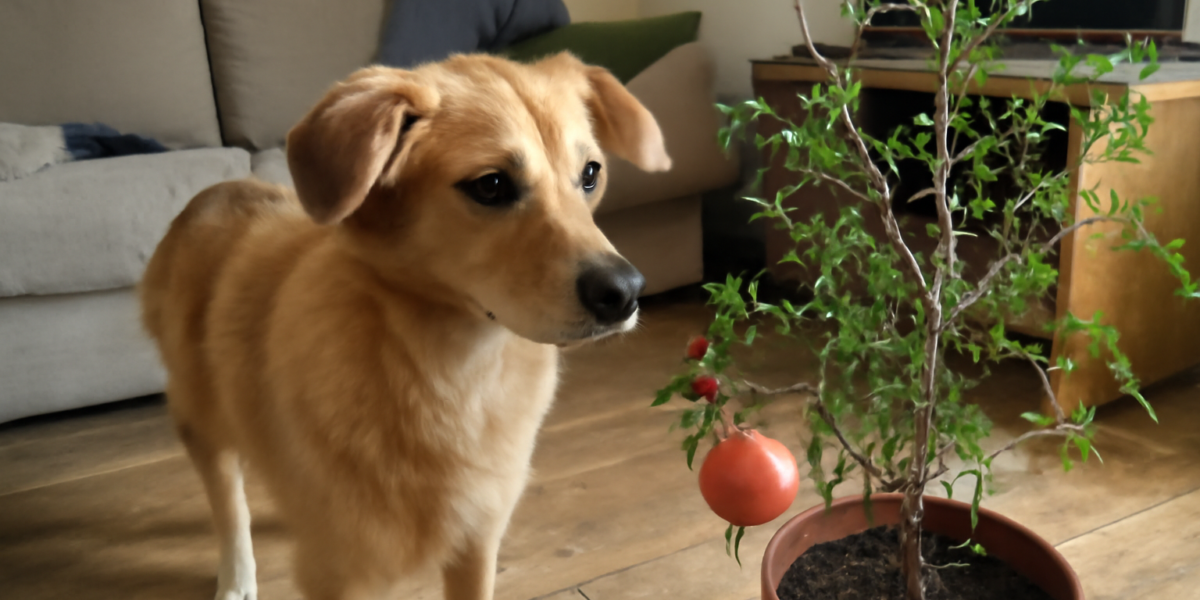
The Short Answer on Pomegranate Trees and Pets
Pomegranate trees (Punica granatum) are a mixed-message plant for pet households, and the pomegranate trees toxic pets question really has two answers depending on which part of the tree you are asking about. The fruit pulp and the small amount of skin a pet might lick are generally safe in modest quantity. The bark, root, and to a lesser extent the unripe rind contain alkaloids — pelletierine, isopelletierine, and pseudo-pelletierine — that have documented toxicity at meaningful doses. These compounds were used historically as anthelmintic (de-worming) agents in human medicine and were eventually abandoned because the dose required for parasite kill is uncomfortably close to the dose causing significant adverse effects.
In this article
- The Short Answer on Pomegranate Trees and Pets
- What Pomegranate Trees Actually Are
- The Toxic Compounds: Pelletierine and Friends
- Is the Fruit Itself Safe?
- The Realistic Dog Scenarios
- Cat Scenarios Look Different
- Symptoms of Pomegranate Tree Toxicity
- What to Do If Your Pet Eats Pomegranate Tree Material
- Comparing Pomegranate to Other Fruit-Tree Plants
- Pomegranate in the Kitchen: Sharing With Pets Safely
- When to Call the Vet
- Pet-Safe Yard Planning Around a Pomegranate Tree
- Frequently Asked Questions
For most pet owners, the realistic risk is dogs (and very rarely cats) chewing pomegranate bark, gnawing on prunings, digging up pomegranate root crowns, or eating large quantities of fallen fruit including whole skins. Cats are mostly uninterested in pomegranate. Healthy adult pets that nibble a fallen fruit are unlikely to face acute poisoning. Persistent bark or root chewing, ingestion of pruning waste, or a small dog eating multiple whole fruits represent the meaningful exposures.
What Pomegranate Trees Actually Are
Pomegranate (Punica granatum) is a small deciduous tree or large shrub, typically 3 to 8 metres tall, native to the Iranian plateau and the Mediterranean Levant but now grown worldwide. It is cultivated commercially for fruit in the Middle East, Mediterranean countries, India, parts of Africa, California, Arizona, Florida, parts of Australia, and the Caribbean. Backyard gardens in subtropical and Mediterranean climates frequently include a pomegranate.
The tree has glossy green leaves that turn yellow in autumn, distinctive flame-orange flowers in spring and summer, and the famous leathery-skinned fruit with hundreds of jewel-like arils (the seed-bearing edible pulp). Roots are extensive, and the bark is grey-brown, often a little flaky and chewable on younger trees. Older specimens become gnarled and woody. Many ornamental pomegranates produce flowers but do not set substantial fruit.
Pomegranate fruit has become a popular health food in recent decades for its juice and seed antioxidants. As a result, more pet households have a pomegranate tree in the yard, fresh fruit in the kitchen, and dried pomegranate skins or rinds in compost or trash. Each of these represents a different pet exposure pathway.
The Toxic Compounds: Pelletierine and Friends
The bark, root, and root bark of Punica granatum contain a group of alkaloids known collectively as pelletierine alkaloids: pelletierine, isopelletierine, methyl pelletierine, and pseudo-pelletierine. Total alkaloid concentration is highest in root bark, lower in stem bark, and present at low levels in the unripe rind and the leaves. Ripe fruit pulp does not contain meaningful pelletierine alkaloids.
The compounds are GI irritants and have effects on the central nervous system at higher doses. In nineteenth and early twentieth century medicine, pomegranate root bark was used to expel intestinal tapeworms in humans because the alkaloids paralyzed the worm. The same dose range, however, regularly produced vomiting, diarrhea, dizziness, weakness, and occasionally severe symptoms in patients. The treatment was eventually replaced by safer drugs.
For pets, the realistic poisoning scenario involves chewing on bark or roots over time or ingestion of pruning material. Single mouthfuls of fruit pulp are nowhere near this exposure level. The honest framing of the pomegranate trees toxic pets question is: yes, the woody parts of the tree are toxic, but typical fruit consumption is not the risk path.
Is the Fruit Itself Safe?
Ripe pomegranate fruit pulp (the arils — the edible seed sacs) is generally considered safe for dogs and cats in small amounts. The fruit is high in fibre, antioxidants, and natural sugars. Pet owners sometimes share a few arils as a treat. ASPCA-style consumer plant references do not list ripe pomegranate fruit pulp as a toxic food.
The caveats:
- Large amounts of fruit can cause GI upset (vomiting, diarrhea) from the unfamiliar fibre, sugar, and acidity load. Pet GI tracts are not adapted for big servings of human fruit.
- The whole seed (the hard kernel inside the aril) is small but indigestible for many dogs. Large volumes of seeds can theoretically cause GI obstruction in small dogs.
- The leathery rind is not edible and large pieces can cause obstruction or be a chewing irritant.
- Fallen, fermenting fruit on the ground may have started yeast fermentation, which adds an alcohol exposure risk to the picture.
- Whole intact fruits can be a foreign-body hazard if a small dog swallows one.
Practical guidance: a few arils as an occasional treat is fine for most healthy adult pets. Whole fruits, peels, and large servings are not appropriate. Diabetic pets, pets with pancreatitis history, and pets on prescription diets should not get fruit treats without veterinary clearance.
The Realistic Dog Scenarios
The dogs that get into pomegranate trouble usually fit one of three patterns:
The bark chewer. Some dogs habitually chew tree bark — boredom, anxiety, mineral deficiency theories aside, it is a behaviour vets see regularly. A dog that chews pomegranate bark daily over weeks is exposed to pelletierine alkaloids cumulatively. Symptoms in this pattern include chronic vomiting, loose stools, weight loss, and reduced appetite.
The yard scavenger. A dog with access to a fruiting pomegranate tree may eat fallen fruit in volume during the harvest season. Whole fruits with skin can cause obstruction, fermenting fruit can cause alcohol exposure, and large fruit volumes cause GI upset. The pelletierine angle is less critical here than the volume and fermentation issues.
The pruning-waste dog. After a homeowner prunes a pomegranate, the cut branches and bark accumulate in a yard pile. Dogs investigate fresh-cut wood. Chewed pruning material exposes the dog to higher alkaloid concentrations than a single bark nibble would, especially because cut surfaces release more sap.
Cat Scenarios Look Different
Cats are generally uninterested in pomegranate. They are obligate carnivores, do not seek fruit, and rarely chew tree bark unless boredom-driven. The realistic cat exposures are:
- An indoor cat playing with fallen pomegranate arils or peel scraps from the kitchen counter
- An outdoor cat brushing past or stepping on fallen fruit, with sticky juice on paws that gets licked off during grooming
- Rare cases where a cat tastes pomegranate juice from a kitchen surface or human glass
None of these typically produce serious clinical disease. Cats with sweet juice on their paws or coat may develop mild stomach upset; the more significant concern with sweetened pomegranate products is xylitol contamination if the product is a sugar-free formulation, since xylitol is severely toxic to dogs and concerning for cats. Always check labels of pomegranate juice or syrup products before any pet exposure.
Symptoms of Pomegranate Tree Toxicity
For pelletierine-alkaloid exposure (bark, root, large pruning ingestion):
- Vomiting (sometimes repeated)
- Diarrhea, sometimes with blood
- Drooling, lip-licking
- Reduced appetite
- Lethargy, weakness, unsteadiness
- In severe cases, dilated pupils, tremors, or rapid heart rate
For excessive fruit ingestion or whole-fruit obstruction:
- Vomiting (sometimes repeated, sometimes with fruit fragments)
- Diarrhea
- Abdominal pain, hunched posture, or unwillingness to lie down comfortably
- Constipation or straining without producing stool (suggests obstruction)
- Reduced appetite
If symptoms include profound weakness, collapse, persistent neurological signs, or repeated vomiting that does not settle, the pet needs a vet visit promptly. These indicate either significant alkaloid exposure or a complication like obstruction.
What to Do If Your Pet Eats Pomegranate Tree Material
For a small ingestion of fruit pulp or a single bite of bark: stop further access, offer water, and observe. Most pets will be fine.
For ingestion of larger volumes of bark, root, prunings, or whole fruits:
- Stop further access. Move the pet inside or away from the tree. Bag up pruning waste promptly.
- Note what was ingested, how much, and when. Take a photo or sample of the plant material.
- Call your veterinarian, the ASPCA APCC at 888-426-4435 (consultation fee), or the Pet Poison Helpline at 855-764-7661 (consultation fee). Give them the dog’s weight, the volume estimated, and any symptoms present.
- Do not induce vomiting at home. Decontamination decisions belong to the vet, especially when alkaloids are involved or when whole-fruit obstruction risk exists.
- Plan immediate prevention: identify how the pet got access and block it.
The vet may recommend induced vomiting at the clinic, activated charcoal, IV fluids, anti-nausea medication, and supportive monitoring. For obstruction concerns, abdominal imaging (X-ray or ultrasound) may be needed. Activated charcoal for dogs is a useful tool when given correctly by professionals; it is not appropriate as a home remedy.
Comparing Pomegranate to Other Fruit-Tree Plants
Pomegranate sits in a middle tier among backyard fruit trees from a pet-safety standpoint. Cherry pits, which release cyanide on chewing, are a more acute concern. Pecan trees, where the moldy hulls and husks carry tremorgenic mycotoxins, are similarly dangerous. Black walnut, with juglone and tremorgenic mycotoxin risks, is a known dog problem.
Pomegranate is less acutely dangerous than these, but the same general advice applies: plant choice, yard hygiene, and active prevention matter more than first aid. If you have a fruit tree on the property, walk under it weekly, clear fallen fruit, manage prunings, and discourage bark chewing. Our roundup of pet-safe garden plants covers low-risk landscape options for households where this kind of vigilance is impractical.
Pomegranate in the Kitchen: Sharing With Pets Safely
If you want to share pomegranate fruit with your dog or cat as an occasional treat:
- Stick to the fresh ripe arils only. Remove from the rind first.
- Offer only a small amount — a few arils for a small dog, up to a tablespoon for a large dog. Cats rarely accept fruit treats but a single aril is the upper limit.
- Do not give pomegranate juice products without checking the label. Many commercial juices contain added sweeteners, citric acid, or preservatives. Sugar-free formulations may contain xylitol, which is severely toxic to dogs.
- Skip the rind, the seeds-only fraction, and any fermenting or moldy fruit.
- Do not introduce fruit treats to pets with diabetes, pancreatitis, kidney disease, or food-restricted prescription diets without veterinary clearance.
For a broader look at safe foods for cats and dogs, our food-category articles cover what is safe in moderation versus what should be avoided entirely.
When to Call the Vet
Call the clinic if you see any of the following after pomegranate exposure:
- Repeated vomiting beyond one or two episodes
- Diarrhea with blood, or diarrhea lasting beyond 24 hours
- Refusal to eat for more than a meal or two
- Lethargy, weakness, unsteadiness, or stumbling
- Tremors, dilated pupils, rapid breathing, or rapid heart rate
- Abdominal pain, hunched posture, or signs of obstruction
- Suspected ingestion of bark, root, large pruning material, or whole intact fruits
- Any pre-existing health condition that makes a more cautious approach sensible
For after-hours questions, the ASPCA APCC at 888-426-4435 and the Pet Poison Helpline at 855-764-7661 are 24-hour services. Both charge consultation fees but can help you decide whether home monitoring is appropriate or whether you should drive in.
Pet-Safe Yard Planning Around a Pomegranate Tree
You do not have to remove a pomegranate tree if you have pets, but a few habits make life safer:
- Walk the yard once a week during fruiting season and pick up fallen fruit
- Bag and bin pruning waste promptly; do not leave brush piles accessible
- Train puppies early to leave woody plant material alone
- Provide shade options away from the tree so dogs do not lie under it during fruit drop
- For habitual bark chewers, consult your vet — the behaviour can have medical or behavioural causes worth addressing
If you are bringing home a new pet, walk through the yard before the pet arrives and identify any fruit trees, ornamental hazards, and pruning piles. Our dog adoption guide and cat adoption resources include yard-prep checklists that cover plant hazards alongside fence integrity, water access, and supervision basics.
Frequently Asked Questions
Can dogs eat pomegranate fruit?
A few ripe pomegranate arils as an occasional treat are generally fine for healthy adult dogs. Avoid the rind, avoid large servings, and do not give commercial pomegranate juice products without checking for xylitol or other added ingredients. Diabetic and pancreatitis-prone dogs should skip fruit treats.
What part of the pomegranate tree is most dangerous?
The root and root bark contain the highest concentration of pelletierine alkaloids, with stem bark next. The unripe rind contains lower levels. The ripe fruit pulp does not contain meaningful pelletierine alkaloids. Bark and root chewing is the most concerning realistic pet exposure.
My dog ate a whole pomegranate fruit. What should I do?
Call your vet. The chemical risk is modest, but a whole fruit including the rind can be a foreign-body or obstruction hazard, especially in small dogs. Watch for vomiting, abdominal pain, or constipation, and bring the dog in if any signs develop.
Is pomegranate juice safe for cats?
Plain, unsweetened pomegranate juice in tiny amounts is unlikely to harm a cat, but most commercial juices contain added ingredients. Sugar-free formulations may contain xylitol, which is concerning for cats. Cats are obligate carnivores and do not need fruit; we would not actively offer pomegranate juice as a treat.
Are ornamental pomegranates as toxic as fruiting ones?
The same alkaloid chemistry is present in ornamental Punica granatum cultivars because they are the same species. Ornamental varieties may not produce edible fruit but the bark and root carry the same risk. Treat them the same way for pet-safety planning.


