
Last updated: April 10, 2026
In this article
Can Cats Eat Prunes? Safety Guide and Tips
Prunes — dried plums — are well-known for their digestive benefits in humans, often recommended as a natural remedy for constipation. If your cat is experiencing digestive difficulties, you might wonder whether a prune could provide the same gentle relief. After all, a natural food solution sounds preferable to medication.
However, prunes are not a safe or appropriate choice for cats. While they are not acutely toxic in the way that grapes or raisins are, prunes present multiple problems for felines. Their extremely high sugar content, potent laxative effect, and concentrated fiber can cause serious digestive distress in cats. As obligate carnivores with sensitive digestive systems, cats need species-appropriate solutions for any digestive concerns — and prunes are not among them.
Quick Answer: Can Cats Eat Prunes?
No, cats should not eat prunes. While prunes are not classified as toxic to cats (unlike grapes and raisins, which are in a separate fruit category and are toxic), they are problematic for several reasons. The concentrated sugar content, intense laxative properties, and high fiber load can overwhelm a cat’s small digestive system.
A single prune contains approximately 4-5 grams of sugar — a substantial amount for a cat that weighs only 8-10 pounds and has limited ability to process sugars. Prunes also contain sorbitol, a natural sugar alcohol with powerful laxative effects. What serves as gentle relief for a 150-pound human can cause severe diarrhea in a 10-pound cat.
It is important to note that while prunes (dried plums) are not considered toxic like grapes and raisins, some veterinary professionals still advise caution with any dried fruit due to the concentrated sugar and the fact that the safety of many dried fruits has not been extensively studied in cats. If your cat is constipated or having digestive issues, consult your veterinarian for safe, effective treatment options rather than reaching for human remedies.
Nutritional Profile of Prunes
Prunes are nutrient-dense dried fruit for humans, but their nutritional profile creates problems for cats. A single pitted prune (approximately 10 grams) contains:
- Calories: About 23 calories per prune — significant when a cat needs only 200-250 calories per day.
- Sugar: Approximately 4-5 grams, concentrated by the drying process. This includes both glucose and fructose.
- Sorbitol: A natural sugar alcohol with well-known laxative properties. This is the primary compound responsible for prunes’ digestive effects.
- Fiber: About 0.7 grams per prune, including both soluble and insoluble fiber.
- Potassium: Moderate amounts.
- Vitamin K: Small amounts.
- Vitamin A: As beta-carotene, which cats cannot convert to active vitamin A.
- Iron: Trace amounts.
- Phenolic compounds: Antioxidants including chlorogenic acid and neochlorogenic acid that contribute to the laxative effect.
The combination of sorbitol, high fiber, and phenolic compounds is what makes prunes so effective as a human digestive aid. In cats, this same combination can cause explosive diarrhea, dehydration, and electrolyte imbalances. The sugar content compounds the problem by providing empty calories that can spike blood sugar in cats with limited glucose-processing ability.
Benefits and Risks of Prunes for Cats
Benefits
- Not acutely toxic: Unlike grapes and raisins, prunes are not known to cause acute kidney failure in cats. Accidental consumption of a small piece is not a medical emergency in the way raisin ingestion would be.
- Fiber content: The fiber in prunes can theoretically support digestive motility, but far safer fiber sources are available for cats.
- Natural food: Prunes are a whole food without artificial additives, though this does not make them appropriate for cats.
- Potassium content: Prunes contain potassium, though cats obtain adequate potassium from their regular diet.
Risks
- Severe diarrhea: The sorbitol and phenolic compounds in prunes have a powerful laxative effect. What provides gentle relief for humans can cause watery diarrhea in cats, leading to rapid dehydration — a serious concern for small animals.
- Extremely high sugar content: The concentrated sugars in prunes can cause blood sugar spikes and contribute to obesity. Cats with diabetes or pre-diabetic conditions are especially vulnerable. Cats cannot taste sweetness and gain no enjoyment from the sugar content.
- Dehydration risk: The combination of diarrhea and the hygroscopic (water-absorbing) nature of dried fruit can lead to significant fluid loss, which is dangerous for cats and may require veterinary intervention.
- Gastrointestinal distress: Beyond diarrhea, prunes can cause cramping, gas, bloating, and abdominal pain in cats whose digestive systems are not designed to process concentrated dried fruit.
- Choking hazard: The sticky, dense texture of prunes can pose a choking risk, and if a pit is present, it can cause intestinal obstruction — a surgical emergency.
- Electrolyte imbalance: Severe diarrhea from prunes can lead to loss of important electrolytes, potentially causing weakness, lethargy, and in extreme cases, cardiac complications.
How to Serve Prunes Safely to Your Cat
The safest approach is to not serve prunes to your cat at all. There is no nutritional or health reason to do so, and the risks clearly outweigh any potential benefits. If your cat is constipated, there are much safer and more effective remedies available.
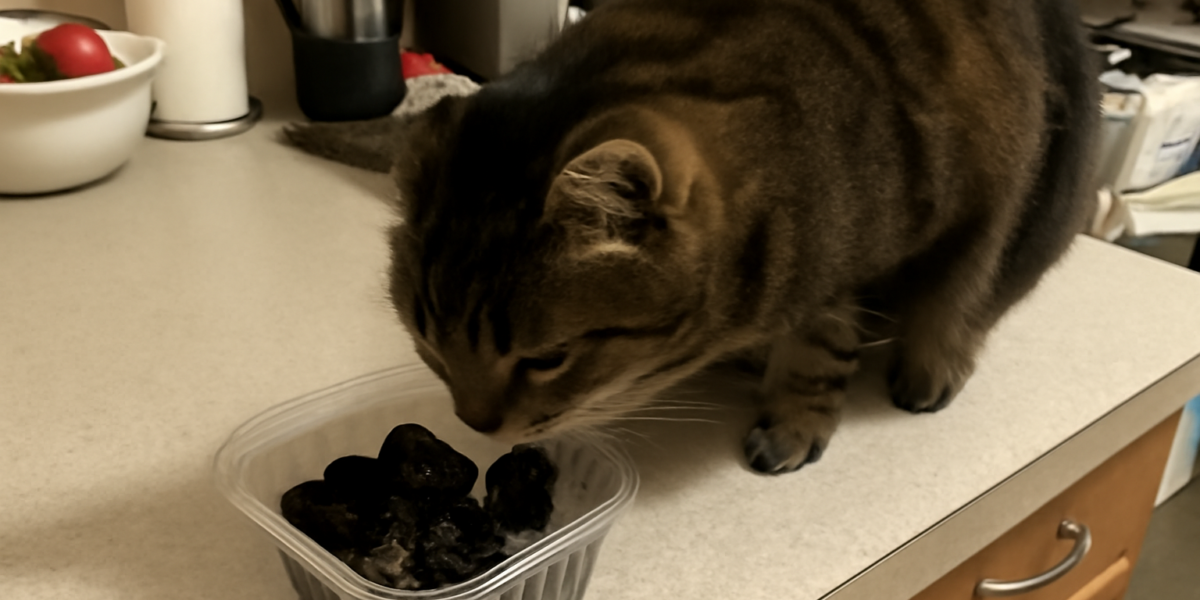
Keep prunes stored in sealed containers or bags in a location your cat cannot access. Be particularly careful with prunes left out on counters or tables, as their sweet, chewy texture might attract a curious cat. If you use prunes in cooking or baking, ensure that any leftover bits are cleaned up promptly.
Watch out for prune pits (stones), which pose a serious hazard. Prune pits contain trace amounts of amygdalin, which can convert to cyanide in the body. More importantly, a swallowed pit can cause intestinal obstruction in a cat, requiring emergency surgery. Always dispose of prune pits securely.
For constipation relief in cats, consult your veterinarian rather than using human food remedies. Safe options they may recommend include a small amount of plain canned pumpkin (not pie filling), increased water intake through wet food or water fountains, veterinary-formulated stool softeners, or specialized high-fiber cat food.
Signs of Problems After Eating Prunes
If your cat ate prune material, watch for these symptoms, which may appear within a few hours:
- Diarrhea, potentially severe and watery
- Vomiting
- Abdominal cramping or pain (hunching, reluctance to be touched)
- Gas and bloating
- Loss of appetite
- Increased thirst (from dehydration)
- Lethargy or weakness
- Sticky residue around the mouth
If diarrhea is severe or lasts more than 24 hours, contact your veterinarian. Dehydration can develop quickly in cats, especially small or senior cats. Signs of dehydration include dry gums, skin that does not spring back when gently pinched at the scruff, sunken eyes, and decreased urination. Dehydrated cats may need intravenous or subcutaneous fluid therapy.
If your cat swallowed a prune pit, watch for signs of intestinal obstruction: persistent vomiting, complete loss of appetite, straining to defecate with no results, lethargy, and abdominal swelling. This is a veterinary emergency requiring immediate professional attention.
Healthy Alternatives to Prunes
For digestive support or as treats, these options are far safer for cats:
- Plain canned pumpkin: One to two teaspoons of plain canned pumpkin (not pie filling) is the gold standard for feline constipation relief. Its soluble fiber gently supports bowel regularity without the extreme laxative effect of prunes.
- Increased wet food: Simply increasing the proportion of wet food in your cat’s diet adds moisture that supports healthy digestion and can help with mild constipation.
- Olive oil: A quarter teaspoon of olive oil mixed into food can provide mild lubricating relief for occasional constipation.
- Cat water fountains: Many cats drink more from flowing water sources, and better hydration naturally supports digestive health.
- Cooked chicken: For a treat that is actually nutritious for cats, plain cooked chicken provides species-appropriate protein.
- Veterinary fiber supplements: If your cat needs regular fiber supplementation, your vet can recommend products specifically formulated for feline digestive systems.
Want to welcome a cat into your home? Visit our adoption page at Walk Me Home Rescue to find cats looking for loving families.
Frequently Asked Questions
Are prunes as dangerous as raisins for cats?
Prunes (dried plums) and raisins (dried grapes) are different fruits with different risk profiles. Raisins are acutely toxic to dogs and potentially cats, capable of causing kidney failure even in small amounts. Prunes are not known to cause this type of acute toxicity. However, prunes are still problematic due to their high sugar content and powerful laxative effect. Neither should be given to cats, but raisin ingestion is generally considered a more urgent emergency.
Can I give my constipated cat a piece of prune?
No, prunes are not a safe or effective remedy for feline constipation. The laxative effect in cats is unpredictable and can easily cause severe diarrhea rather than gentle relief. Use veterinarian-approved constipation remedies instead: plain canned pumpkin, increased water intake, prescription stool softeners, or lactulose as prescribed by your vet. If your cat is frequently constipated, a veterinary examination is important to rule out underlying causes.
What if my cat ate a prune pit?
A swallowed prune pit is a potential emergency. The pit can cause intestinal obstruction, which is life-threatening without treatment. Monitor your cat closely for vomiting, loss of appetite, straining to defecate, abdominal pain, and lethargy. Contact your veterinarian immediately for guidance — they may want to take X-rays to determine the pit’s location and whether intervention is needed.
Are dried plums the same as prunes for cat safety purposes?
Yes, prunes are simply dried plums. The safety concerns are identical regardless of which name is used on the packaging. Both terms refer to plums that have been dehydrated, concentrating their sugar, fiber, and sorbitol content. Neither should be offered to cats.
Can cats eat fresh plums instead of dried prunes?
Fresh plums are slightly less concerning than prunes because the drying process concentrates sugars and sorbitol. However, fresh plums still contain sugar and potentially irritating plant compounds. The pit poses a choking and obstruction hazard and contains amygdalin. Fresh plums are not recommended for cats either. If a cat nibbles a tiny piece of plum flesh, it is not an emergency, but plums should not be offered deliberately.
How much prune is dangerous for a cat?
Even a single prune can cause noticeable digestive upset in a cat due to the concentrated sorbitol and sugar content. There is no established “safe” dose. The severity of the reaction depends on the cat’s size, individual sensitivity, and whether they have underlying health conditions. For a small cat, even half a prune could trigger significant diarrhea. It is best to avoid prunes entirely rather than try to determine a safe amount.
Prunes belong in the category of human health foods that do not translate to feline safety. Your cat’s digestive health is best supported through species-appropriate diet and veterinary guidance. For more food safety guides, check out our articles on goji berries and grapefruit. If you are looking to add a cat to your family, visit our adoption page at Walk Me Home Rescue.


