Last updated: May 4, 2026
In this article
What Makes a Good Quiet Cat
The best quiet cat is a breed whose temperament defaults to low vocalization, calm interaction, and reserved behavior — without crossing into aloofness or anxiety. Quiet-cat seekers often live in apartments, work from home, share walls with neighbors, or simply prefer a peaceful household ambiance. They want a cat whose presence is felt rather than heard, who communicates through proximity and gesture rather than persistent meowing.
Five criteria define a good quiet cat: low baseline vocalization across daily interaction, calm temperament that does not vocalize through stress, soft voice when the cat does speak, low-demand personality that does not require constant attention-seeking, and tolerance for predictable household routines. Bonus criteria include reserved-but-affectionate disposition with their household and minimal nighttime vocalization.
The Russian Blue vs Chartreux comparison is one of the strongest quiet-cat decisions available. Both are blue-coated, plush-furred, reserved breeds with naturally soft voices and dignified dispositions. The differences come down to temperament style — Russian Blues lean shy with strangers, Chartreux lean calm-and-dog-like — and a few physical and care nuances. Both are excellent quiet-cat candidates, but for different households.
Russian Blue for Quiet Living
The Russian Blue is among the quietest mainstream cat breeds. Their temperament is gentle, reserved, and routine-loving. They form strong bonds with their immediate household but typically retreat from strangers — disappearing under furniture or behind doors when guests arrive. With their chosen people, they are affectionate, playful in moderation, and steadily companionable.
For quiet-living criteria, Russian Blues score at the top. Vocalization is low and soft when it occurs. They prefer routine and rarely demand attention through persistent meowing. They are dignified rather than performative, content to perch nearby and watch their humans rather than narrate every moment. They tolerate working-day solitude well and rarely vocalize through nighttime hours.
The double coat is short but exceptionally dense — plush and silvery-blue with silver-tipped guard hairs that produce the breed’s signature shimmer. Bright green eyes contrast strikingly with the coat. Care is straightforward — weekly brushing handles the coat. Score Russian Blues strongly across quiet-cat criteria, with the only meaningful caveat being their reserve with strangers.
Chartreux for Quiet Living
The Chartreux is similarly quiet but expresses calm differently. Their temperament is described as “smiling and silent” — calm, dog-like, devoted to their humans, and largely non-vocal. Some Chartreux are reportedly nearly mute, communicating with chirps and trills rather than full meows. They tend to be more outgoing with strangers than Russian Blues, while still maintaining a dignified reserve.
For quiet-living criteria, Chartreux score equally well. Vocalization is low and soft, often chirpy when it occurs. They prefer routine, tolerate solitude well, and bond strongly with their core household. The dog-like temperament — following people, learning names, greeting at the door — adds an interactive layer that many adopters appreciate.
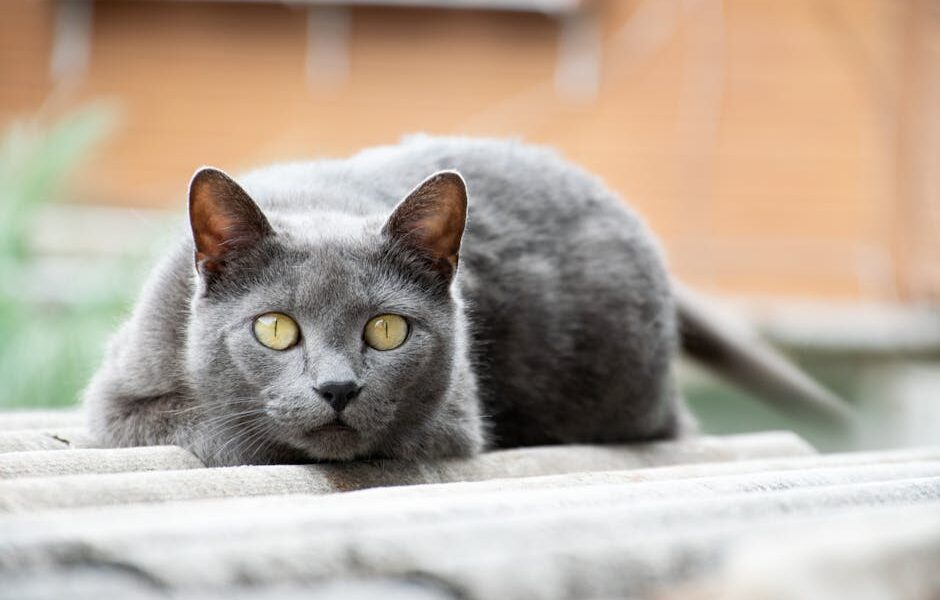
The double coat is medium-short, dense, and water-resistant, in shades of blue-gray with copper or gold eyes. The breed has a distinctive smiling expression caused by the structure of the muzzle. Care is straightforward, with weekly brushing during most of the year and more frequent attention during seasonal coat changes. Score Chartreux strongly across quiet-cat criteria, with the more outgoing temperament being a feature for adopters who want a relaxed but social cat.
Side-by-Side Comparison
Both breeds qualify as exceptionally quiet, with low vocalization and calm dispositions. The differences come down to personality style, social behavior, and physical details.
Vocalization: Both are quiet. Chartreux may be slightly quieter — some are nearly silent. Russian Blues use soft conversational meows occasionally; Chartreux use chirps and trills.
Temperament with strangers: Russian Blues are notably shy with strangers. Chartreux are more outgoing while still calm — closer to “dog-like calm” than “shy reserved.”
Temperament with household: Both bond strongly. Russian Blues choose one or two favorites; Chartreux often distribute affection across the household.
Activity level: Both are moderate-energy. Chartreux may be slightly more interactive in daily routines; Russian Blues prefer quieter independent play.
Coat: Both blue-gray with double coats. Russian Blue has silver-tipped shimmer; Chartreux has water-resistant texture. Russian Blue eyes are green; Chartreux eyes are copper or gold.
Cost and availability: Russian Blues are more widely available across North America. Chartreux are scarcer, with smaller breeder networks.
Care Differences
Russian Blue care is minimal-to-moderate. Weekly brushing during most of the year, with twice-weekly brushing during seasonal shedding. Standard nail care, dental brushing, and ear checks complete the basics. They tolerate vet visits well, useful for owners managing routine wellness. They are also notable for tolerating mild allergic owners better than many breeds (lower Fel d 1 production reportedly), though they are not hypoallergenic.
Chartreux care is similar. Weekly brushing, with extra attention during seasonal coat changes. The water-resistant texture means baths are infrequent — the coat resists wetness even in light rain. Standard nail care, dental brushing, and ear checks apply. Chartreux tolerate handling well and adapt to vet visits with calm dignity.
Both breeds benefit from indoor enrichment — perches, scratchers, light puzzle feeders. Neither breed needs the elaborate climbing systems that high-energy breeds require. Both prefer routine and benefit from consistent feeding times.
Quiet-Home Practical Tips
Both breeds reward owners who respect their quiet preferences. Avoid loud household activities near their resting areas — vacuum sessions, blender use, and television at high volume can disrupt the calm temperament both breeds prefer. Establishing a quiet retreat zone — a bedroom corner, a cat condo in a low-traffic area, or a window perch in a quiet room — gives either breed a sanctuary that supports their disposition.
Visitor management matters more for Russian Blues than for Chartreux. Russian Blues often disappear when guests arrive, and forcing interaction backfires. Provide an accessible hiding spot the cat can retreat to when overwhelmed. Chartreux are more visitor-tolerant but still appreciate the option to step away. Feliway pheromone diffusers can help either breed stay calm during higher-stress household events like guests, parties, or moves.
Routine consistency benefits both breeds. Predictable feeding times, predictable play sessions, and predictable bedtime hours support their preference for stable household rhythms. Sudden schedule changes, frequent travel, or chaotic household routines tend to stress reserved breeds more than they stress outgoing breeds.
Listen for the subtle signals both breeds send. Quiet cats communicate through proximity, posture, and gesture more than vocalization. A Russian Blue who follows you into a room and settles nearby is asking for company. A Chartreux who taps your hand with a paw is requesting attention. Reading these signals deepens the relationship and prevents the cat from needing to escalate to vocalization to be understood. Owners who learn their quiet cat’s communication style often describe the relationship as more nuanced than louder breeds offer.
Health Considerations
Both breeds are generally healthy with reasonable lifespans for medium-sized domestic cats. Russian Blues are screened for hypertrophic cardiomyopathy and standard hereditary concerns. Reputable breeders test parents and provide documentation. The breed’s narrow gene pool benefits from breeder attention to genetic diversity.
Chartreux are also screened for HCM and the genetic conditions documented in the breed. Patellar luxation has been reported occasionally, and reputable Chartreux breeders examine parents. The breed’s small global population means breeders work hard to maintain genetic diversity.
Annual wellness exams catch issues early in either breed. The adult cat wellness checklist applies to both. Both breeds tend to be long-lived when well-maintained.
Cost & Availability
Pet-quality Russian Blues typically run in the moderate range, with show-quality lines costing more. They are widely available across North America, the United Kingdom, and Europe. Chartreux are scarcer — with smaller breeder networks — and pet-quality kittens often run in the moderate-to-higher range. Waiting lists are common for Chartreux at established breeders.
Adoption is possible for both. The rescue Russian Blue adoption guide walks through breed-specific rescues. Chartreux are uncommon in rescue but occasionally surrender to all-breed cat rescues. Browse adoptable cats for current options. Lifetime costs track standard medium-cat budgets — see the first-year cost of owning a cat.
Decision Framework: When to Choose Each
Choose the Russian Blue for quiet living if: you want a reserved, dignified, deeply loyal companion who bonds with one or two people and prefers calm households. The Russian Blue is the better choice for adopters who appreciate earning a cat’s trust, single-adult or two-adult households without frequent guests, and homes that value peaceful predictable routines. They are also the easier breed to find through reputable breeders in most regions.
Choose the Chartreux for quiet living if: you want a calm-but-dog-like companion who follows you through daily life, greets visitors with composure, and bonds with the entire household. The Chartreux is the better choice for adopters who want quiet without shyness, families with respectful children, and homes where the cat will participate in daily activities without being demanding. Be prepared for a longer breeder search.
For broader quiet-cat context, browse the calmest cat breeds roundup and the best cats for apartments. Sibling B108 articles like Korat vs Chartreux, Korat vs Russian Blue, and Nebelung vs Russian Blue add comparison points. For breed-specific deep dives, see the Russian Blue profile and the Chartreux profile.
Frequently Asked Questions
Are Russian Blues hypoallergenic?
No, but they are sometimes anecdotally tolerated better by people with mild cat allergies. They reportedly produce less Fel d 1 than some breeds, though research is limited. They are not a guaranteed allergy-friendly choice.
Do Chartreux really not meow?
Many Chartreux are very quiet, using chirps and trills instead of meows. Some are described as nearly silent. Individual cats vary, and not every Chartreux is mute, but the breed average is at the low end of cat vocalization.
Which breed is better for working households?
Both tolerate working-day solitude well. Russian Blues are particularly suited to single-adult or two-adult homes with routine schedules. Chartreux do equally well and may slightly prefer the dog-like family routine.
Are these breeds good with children?
Chartreux are typically excellent with respectful children due to their relaxed temperament. Russian Blues do well with calm older children who can give a cat space when needed; toddler chaos may stress them.
How can I tell a Russian Blue from a Chartreux?
Eye color is the quickest tell — Russian Blues have green eyes, Chartreux have copper or gold. Coat texture differs too — Russian Blue is silver-tipped and shimmery, Chartreux is denser and water-resistant. Body type is similar, with the Chartreux slightly more rounded.
Looking to adopt a Best Quiet Cat?
Browse Best Quiet Cat cats and mixes available for adoption from shelters and rescues near you.
Find Best Quiet Cat Cats for Adoption