
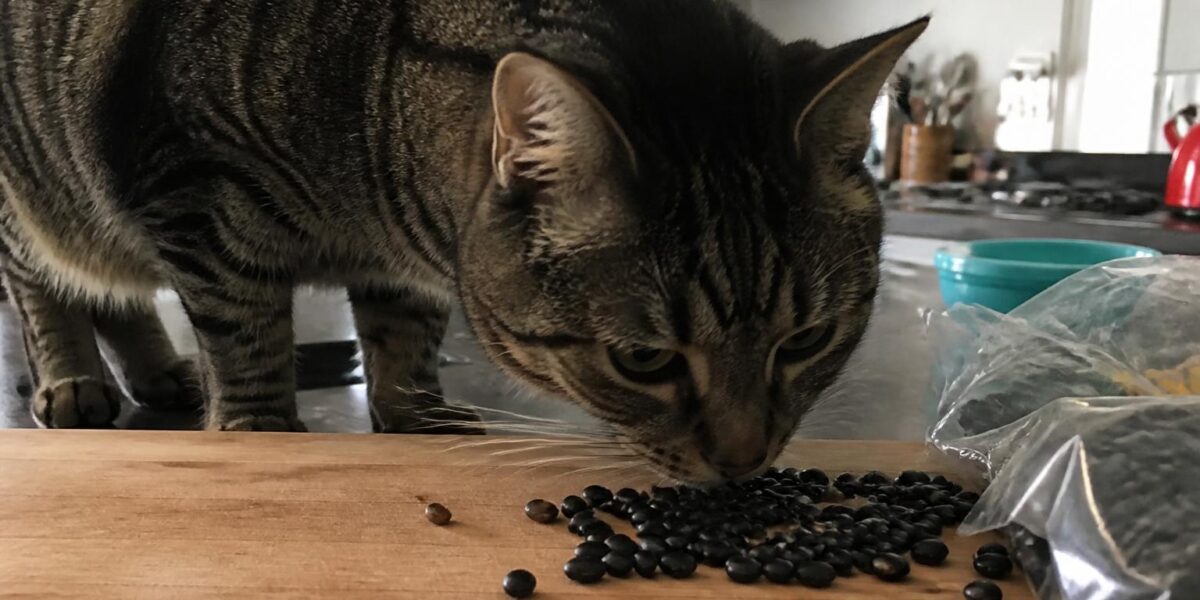
The Short Answer on Black Beans for Cats
Can cats eat black beans? Yes, small amounts of plain, cooked black beans are generally safe for cats, but they are not necessary and offer little to an obligate carnivore. Black beans are not toxic, so a tiny taste of a plain cooked bean won’t hurt most healthy cats, but they should never be a regular part of the diet.
In this article
Cats are built to thrive on animal protein, not plant-based foods. While black beans contain protein and fiber that benefit humans, a cat’s body cannot use plant protein efficiently, so the nutritional value is minimal for them.
If your cat shows interest in a black bean off your plate, a tiny plain piece is fine as a rare novelty. The key rules are plain, cooked, and minimal, with no seasonings, sauces, or canned additives. Here is what you need to know.
You may have noticed beans, including black beans, listed among the ingredients on some cat food labels. This sometimes leads owners to assume beans must be a beneficial food for cats. In reality, beans show up in pet foods mainly as a plant-based source of fiber and bulk, used in carefully measured, processed amounts. That is quite different from feeding your cat plain beans from your own plate, and it does not mean beans are a food cats need.
Are Black Beans Good for Cats?
Black beans are a nutritious food for people, packed with plant protein, fiber, and minerals. For cats, though, the picture is different. As obligate carnivores, cats cannot make good use of plant protein and do not require the carbohydrates and fiber that beans provide.
The small amount of fiber in black beans could, in theory, offer minor digestive support, but cats get everything they need from a balanced, meat-based diet. There is no nutrient in a black bean that your cat needs from that source.
So while black beans are not harmful in tiny plain amounts, they are not a health food for cats. Think of them as a harmless curiosity rather than a beneficial addition. Your cat’s protein should come from animal sources.
If you follow a plant-based diet yourself, you may feel drawn to share beans and other legumes with your cat, but this is one area where feline needs differ sharply from human ones. Cats cannot thrive on a vegetarian or vegan diet the way some people can, because they require nutrients found only in animal tissue. Beans cannot bridge that gap. The most loving choice for an obligate carnivore is a complete, meat-based diet, and any decisions about your cat’s nutrition should always be made with your veterinarian rather than modeled on human eating patterns.
The Risks to Watch For
Black beans are gentle compared to truly toxic foods, but a few cautions still apply.
Digestive upset and gas. Beans are well known for causing gas and bloating, and a cat’s digestive system is not designed to process them. Too many can lead to flatulence, stomach discomfort, vomiting, or diarrhea.
Undercooked or raw beans. Raw or undercooked beans are hard to digest and can cause more significant upset. Always serve beans fully cooked and plain.
Seasonings and additives. Canned and seasoned black beans often contain salt, garlic, and onion. Garlic and onion are toxic to cats, so seasoned beans are off-limits.
Empty calories. Beans can fill a small cat up without providing the animal protein they actually need, so they should never replace any part of a meal.
How to Serve Black Beans Safely
If you want to let your cat try a black bean, here is the safe way to do it.
- Cook the beans fully in plain water with no salt, oil, or seasoning.
- Avoid canned beans unless they are plain and well rinsed to remove sodium.
- Mash or break a single bean into a small piece.
- Offer just a tiny amount and watch for any stomach upset.
For serving size, one or two plain cooked beans is the absolute maximum, given only occasionally. Beans and all treats together should stay within about 10 percent of your cat’s daily calories, and since most cats need little, a tiny taste is plenty.
Never serve refried beans, baked beans, or any beans cooked with garlic, onion, salt, or sauce. If your cat ignores the bean entirely, that is perfectly normal, since most cats are not interested in plant foods.
Baked beans deserve a special warning because they seem harmless but are actually one of the worst bean dishes for a cat. They are typically simmered in a sauce heavy with sugar, salt, and often onion and garlic powder, which combine to make them genuinely unsafe rather than merely unhelpful. The same goes for chili, bean burritos, and most canned bean products that come pre-seasoned. When in doubt, remember that only plain beans you have cooked yourself, with nothing added, belong anywhere near your cat.
Black Beans and Other Vegetables for Cats
Black beans are one of several plant foods cat owners ask about, and many vegetables are safe in tiny plain amounts even though cats do not need them. If your cat is curious, a few options are gentler than beans.
For related foods, see our guides on whether cats can eat peas, plus green beans and pumpkin. Pumpkin in particular is sometimes used in small amounts to support digestion under a vet’s guidance.
Whatever plant food you offer, keep it plain, cooked where appropriate, and minimal, and always introduce one new food at a time. Because cats are carnivores, these foods are extras at most. When in doubt, your veterinarian can advise what fits your cat.
When to Contact Your Vet
If your cat eats a tiny amount of plain cooked black beans and seems fine, there is no cause for concern. Mild gas or a single soft stool usually clears up on its own within a day, with fresh water available.
Call your veterinarian if your cat ate beans cooked with garlic or onion, since these are toxic, and watch for vomiting, weakness, pale gums, or lethargy. Also reach out if your cat has persistent vomiting, diarrhea, or signs of belly discomfort after eating beans.
For any ongoing diet questions, especially if your cat has a sensitive stomach or a health condition, your veterinarian can tell you whether the occasional bean is fine or best skipped entirely for your cat.
Why Plant Protein Doesn’t Work for Cats
The most common reason owners consider beans for their cat is the protein, so it is worth understanding why feline biology makes plant protein a poor fit. Cats are obligate carnivores in the truest sense, meaning they must obtain certain nutrients from animal tissue and cannot manufacture or efficiently extract them from plants.
A clear example is taurine, an amino acid found abundantly in meat but essentially absent from beans. Cats cannot make enough taurine on their own, and a deficiency can lead to serious heart and eye problems. Beans simply do not supply it. The same goes for certain forms of vitamin A and specific fatty acids that cats can only readily use from animal sources.
Beyond the missing nutrients, the protein in beans is also less complete and less digestible for a cat than animal protein. A cat’s digestive tract is short and built to process meat quickly, not to ferment and break down large amounts of plant fiber and starch. This is why beans can leave cats gassy or uncomfortable while delivering little usable nourishment.
None of this makes a stray plain bean dangerous, but it explains why beans should never be relied upon as a protein source for a cat. If you are ever tempted to lean on plant foods to round out your cat’s diet, talk to your veterinarian first. A complete commercial cat food is formulated precisely to supply the animal-based nutrients your cat truly needs.
Frequently Asked Questions
Are black beans toxic to cats?
Plain cooked black beans are not toxic to cats, and a tiny amount is generally safe. However, beans cooked with garlic, onion, or heavy salt are unsafe, so only plain, unseasoned beans should be offered.
Can cats get protein from black beans?
Not effectively. Cats are obligate carnivores and cannot use plant protein well, so their protein should come from animal sources. Black beans provide little usable nutrition for a cat.
How many black beans can my cat eat?
One or two plain cooked beans is the maximum, offered only occasionally. Beans and all treats together should stay within about 10 percent of your cat’s daily calories.
Why does my cat ignore black beans?
Most cats have little interest in plant foods because they are carnivores and cannot taste sweetness. It is completely normal for a cat to sniff a bean and walk away, and there is no need to encourage it.


