
Last updated: April 10, 2026
In this article
Yes, Cats Can Eat Blackberries in Moderation
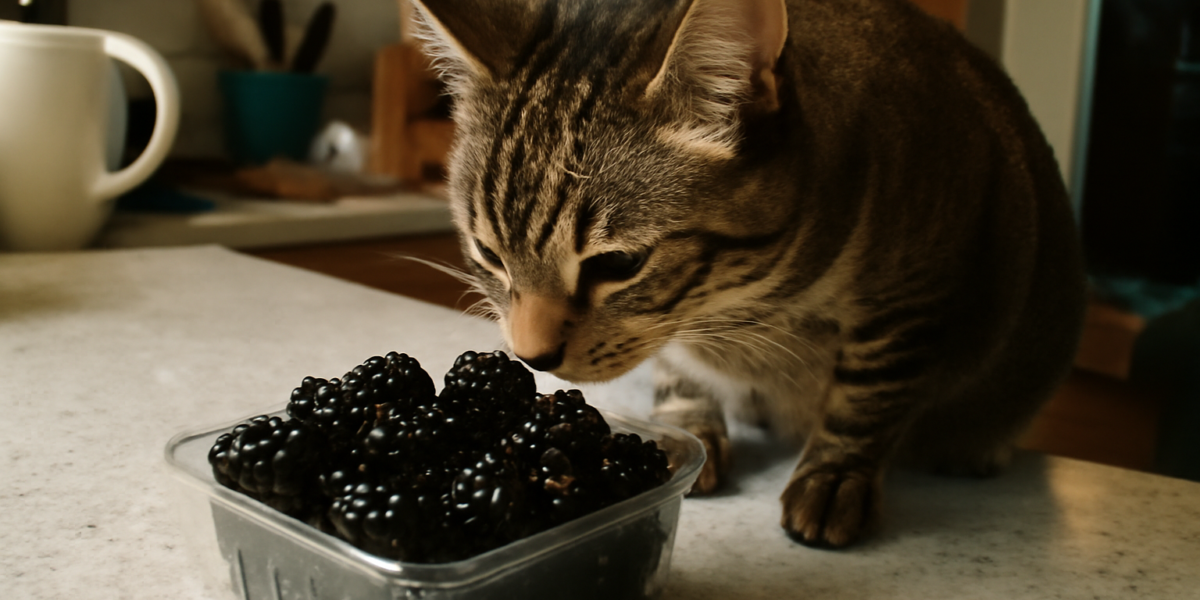
Cats can eat blackberries safely. These small, dark berries are non-toxic to cats and can be offered as an occasional treat in small amounts. Blackberries are packed with antioxidants, vitamins, and fiber that provide modest health benefits even for obligate carnivores. However, because cats derive the vast majority of their nutrition from animal protein, blackberries should be treated as a rare snack — not a dietary staple.
If your cat has shown interest in blackberries — maybe by batting one across the kitchen floor or sniffing at your bowl — you can feel comfortable letting them try a small piece. Most cats are indifferent to fruit due to their inability to taste sweetness, but some cats genuinely enjoy the texture and moisture of berries. As long as you keep portions small and infrequent, blackberries are a perfectly safe treat option.
That said, there are a few things to know about portion size, preparation, and potential digestive reactions before you start sharing your berry stash with your feline friend.
Nutritional Profile of Blackberries for Cats
Blackberries are nutritionally dense for their size, offering a range of vitamins, minerals, and plant compounds. While cats do not need plant-based nutrients in the same way humans do, some of these compounds can still provide modest benefits.
Antioxidants: Blackberries are rich in anthocyanins — the pigments that give them their deep purple-black color. These antioxidants help combat oxidative stress and free radical damage at the cellular level. While research on antioxidant benefits in cats specifically is limited, the general principle of reducing oxidative stress applies across species.
Vitamin C: Blackberries contain vitamin C, which supports immune function. Cats actually produce their own vitamin C (unlike humans), so they do not require dietary supplementation. However, small amounts from food are not harmful and may offer supplementary immune support, particularly for older or stressed cats.
Vitamin K: Important for blood clotting, vitamin K is present in blackberries in small amounts. Cats with normal diets receive adequate vitamin K from their regular food, but the additional trace amount from a blackberry is harmless.
Fiber: Blackberries contain both soluble and insoluble fiber. In small amounts, fiber can support digestive health. However, cats have short digestive tracts designed for processing meat, and too much fiber can cause gastrointestinal upset — which is one reason portion control matters.
Low calorie count: With roughly 62 calories per cup, blackberries are a low-calorie treat. For cats watching their weight, a blackberry or two is a far better snack option than many commercial cat treats that are calorie-dense.
While these nutrients are beneficial, it is important to remember that cats are obligate carnivores. Their bodies are optimized to extract nutrients from animal tissue. The nutritional benefits of blackberries for cats are supplementary at best and should never replace a complete, balanced cat food as the foundation of your cat’s diet.
How Many Blackberries Can a Cat Eat?
Portion control is essential when offering blackberries to your cat. The general guideline is that treats (including fruits, vegetables, and commercial treats) should make up no more than 10% of your cat’s daily caloric intake. For a typical 10-pound indoor cat consuming around 200 calories per day, that means treats should stay under 20 calories.
Safe portion size: One to two blackberries per serving is appropriate for most cats. This amounts to roughly 5 to 10 calories and a small amount of fiber — enough for your cat to enjoy without risking digestive upset.
Frequency: Offer blackberries no more than once or twice a week. This is a treat, not a regular part of the diet. Frequent fruit consumption can contribute excess sugar and fiber to your cat’s diet, both of which can cause problems over time.
Preparation tips:
- Wash blackberries thoroughly to remove any pesticide residue, dirt, or contaminants.
- Cut larger blackberries in half to reduce choking risk, especially for smaller cats or kittens.
- Serve at room temperature — very cold berries straight from the refrigerator may be unappealing to some cats.
- Offer plain, fresh blackberries only. Do not give your cat blackberries that are part of a jam, pie, dessert, or any preparation containing added sugar, sweeteners (especially xylitol, which is toxic to pets), or other ingredients.
Start with a small piece of one blackberry the first time to see how your cat reacts. Some cats may not be interested at all — and that is perfectly normal. Cats lack sweet taste receptors, so the primary appeal (if any) will be the texture and moisture rather than the flavor.
Potential Risks and Side Effects
While blackberries are safe for cats, there are a few risks to be aware of that are easily managed with proper portion control and observation.
Digestive upset: The fiber content in blackberries can cause loose stools or mild diarrhea if your cat eats too many. Cats’ digestive systems are not designed to process large amounts of plant fiber. Stick to the recommended one to two berries per serving to avoid this issue.
Sugar content: Although blackberries are relatively low in sugar compared to many fruits, they do contain natural sugars (fructose). Cats with diabetes or cats who are overweight should either avoid fruit treats entirely or receive them only with veterinary approval. The sugar content of one or two blackberries is minimal, but it is a consideration for cats with metabolic conditions.
Choking hazard: Whole blackberries are small but can still pose a choking risk for cats, especially kittens or cats who tend to gulp food without chewing. Cutting berries in half reduces this risk.
Pesticide residue: Commercially grown blackberries may carry pesticide residue on their surface. Always wash berries thoroughly before offering them to your cat. Organic blackberries are a good option if available, though they should still be washed.
Allergic reactions: While rare, individual cats can have sensitivities to any food. The first time you offer blackberries, give just a tiny piece and watch for any unusual reactions — vomiting, diarrhea, swelling around the face or mouth, or changes in behavior. If you notice any adverse reaction, discontinue and consult your veterinarian.
Signs of Trouble After Eating Blackberries
If your cat has eaten blackberries and you are wondering whether to be concerned, here is what to watch for and when to call the vet.
Normal reactions (no concern needed):
- Your cat sniffs the blackberry and walks away — many cats are simply not interested
- Your cat eats a piece and shows no symptoms whatsoever
- A single soft stool following blackberry consumption — the fiber may have a mild laxative effect
Mild reactions (monitor at home):
- One episode of vomiting after eating several blackberries (the stomach may be mildly irritated)
- Loose stools for one bowel movement
- Temporary decrease in appetite
Reactions that warrant a vet call:
- Repeated vomiting
- Persistent diarrhea lasting more than 24 hours
- Signs of abdominal pain — crying, hunching, or reluctance to be touched
- Swelling of the face, lips, or tongue (possible allergic reaction)
- Lethargy lasting more than a few hours
In the vast majority of cases, cats who eat a normal portion of blackberries (one to two berries) experience no adverse effects at all. The situations above are more likely to occur if a cat ate a large quantity or if the berries were contaminated with something harmful. If your cat somehow got into an entire container of blackberries, contact your vet for guidance even if symptoms have not appeared yet.
Other Berry Options for Cats
If your cat enjoys blackberries, you might wonder about other berries. Here is a quick safety rundown of common berries and whether cats can eat them.
Blueberries: Safe for cats in moderation. Like blackberries, they are rich in antioxidants and low in calories. One to two blueberries is an appropriate serving.
Strawberries: Safe for cats in small amounts. Remove the stem and leaves first, and cut into small pieces. Slightly higher in sugar than blackberries.
Raspberries: Safe in small quantities. They contain trace amounts of xylitol (a natural sugar alcohol), but the amount in a few raspberries is far too small to be harmful to a cat. Limit to one or two berries.
Cranberries: Safe for cats, though their tart flavor means most cats will not eat them voluntarily. Avoid sweetened, dried cranberries, which contain too much added sugar.
Grapes and raisins: Toxic to cats (and dogs). Never offer grapes or raisins to your cat, as they can cause kidney failure. This is one fruit to strictly avoid.
For more information on safe and unsafe foods for your feline friend, explore our articles on brussels sprouts for cats and cilantro safety for cats. Our cat adoption hub has additional resources for new and experienced cat owners alike.
Frequently Asked Questions
Can kittens eat blackberries?
Kittens over 12 weeks old can try a tiny piece of blackberry, but it is best to wait until they are fully weaned and eating solid kitten food confidently. Kittens have very sensitive digestive systems, and their nutritional needs are best met by high-quality kitten food. A small taste for curiosity is fine, but blackberries should not be a regular treat for kittens.
Can cats eat frozen blackberries?
Frozen blackberries are safe as long as they are plain (no added sugar or syrup). Thaw them to room temperature or slightly cool before offering to your cat, as very cold food can be unappealing and may cause mild stomach discomfort. Frozen berries also become mushy when thawed, which some cats may find less appealing.
My cat ate a large number of blackberries. What should I do?
If your cat ate significantly more than a couple of blackberries — for example, they got into an entire container — monitor them closely for vomiting and diarrhea. The excess fiber and sugar may cause digestive upset. Offer plenty of water and contact your veterinarian if symptoms develop or if your cat seems lethargic or in pain.
Do blackberries stain a cat’s fur?
Yes, blackberry juice can stain light-colored fur, especially around the mouth and paws. The staining is harmless and typically wears off with normal grooming over a day or two. If you have a white or cream-colored cat and want to avoid staining, you can offer the blackberry in small, cut pieces on a plate rather than letting your cat play with a whole berry.
Are blackberry leaves or stems safe for cats?
Blackberry leaves are not considered toxic to cats, but they are not particularly palatable or beneficial either. The thorny stems of blackberry bushes pose a physical injury risk — scratches to the mouth, paws, or eyes. Keep cats away from blackberry bushes in the garden to avoid thorn injuries. Stick to offering the ripe berries only, washed and prepared as described above.


