
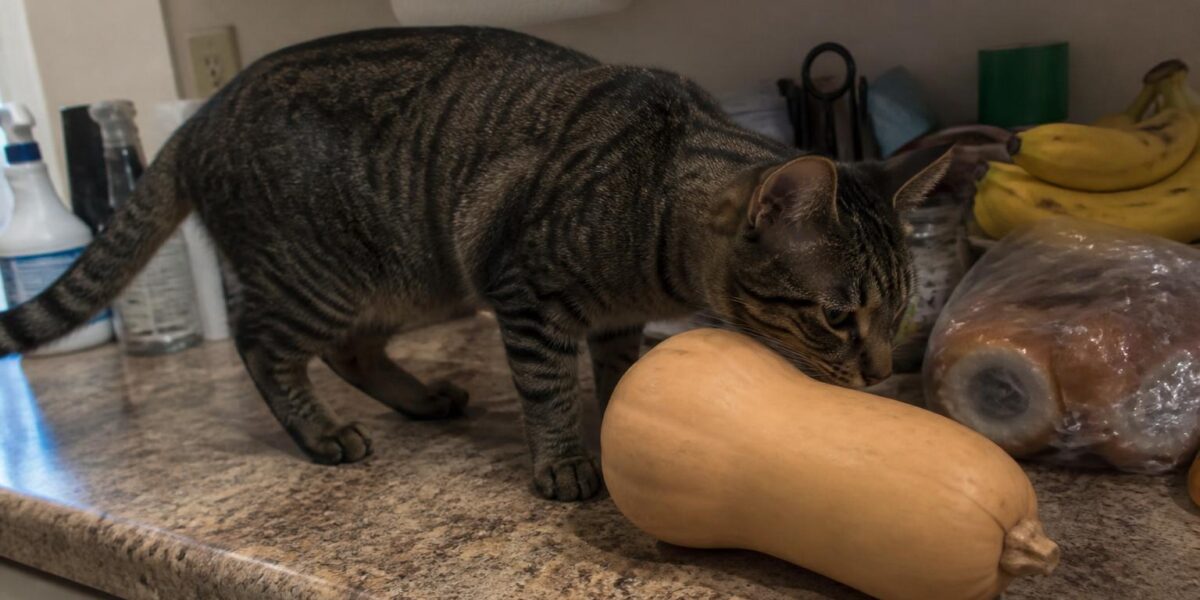
The Short Answer on Butternut Squash for Cats
Can cats eat butternut squash? Yes, small amounts of plain, cooked butternut squash are safe for cats, making it a “safe in moderation” food. Butternut squash is not toxic, and its soft, mild flesh is easy to digest. Some cat owners even use a little plain cooked squash to help with mild digestive issues.
In this article
That said, cats are obligate carnivores, so butternut squash is not a necessary part of their diet. It is a gentle extra rather than a staple, and your cat’s nutrition should come from a complete, balanced, meat-based food.
The keys to serving it safely are simple: cook it plain, remove the skin and seeds, and keep the portion small. A spoonful of mashed cooked squash makes a harmless occasional treat for most healthy cats. Here is everything you need to know.
Butternut squash is one of the more cat-friendly vegetables precisely because it is so mild, soft, and easy to digest once cooked. Its smooth, creamy texture is gentle on a cat’s stomach, and it lacks the sharp flavors that make many vegetables unappealing or irritating to cats. That is why it sometimes appears in homemade or commercial recipes as a gentle source of fiber, always in small, measured amounts.
Is Butternut Squash Good for Cats?
Butternut squash offers a few gentle benefits. It is high in fiber, which can support healthy digestion and may help with both mild constipation and loose stool when used in small amounts. It also contains vitamins A and C and antioxidants, along with a high water content that adds a little hydration.
The fiber is the main reason squash sometimes comes up as a digestive aid, similar to how pumpkin is used. A small amount can help move things along gently in a cat with minor tummy troubles, though you should check with your vet first.
Still, these benefits are modest for an obligate carnivore. Cats get everything they need from a balanced cat food, so butternut squash is best seen as a soothing extra rather than a nutritional necessity.
The vitamin A point is worth a brief note, since butternut squash is rich in beta-carotene, which the human body converts into vitamin A. Cats, however, cannot perform that conversion efficiently and instead need preformed vitamin A from animal sources. This means the impressive vitamin A content that makes squash so healthy for people does very little for a cat. It is a good illustration of why feeding by human nutrition logic does not work for cats, and why squash remains a gentle extra rather than a meaningful source of nutrients for them.
The Risks to Watch For
Butternut squash is one of the gentler human foods for cats, but a few cautions still apply.
Too much fiber. While a little fiber can help digestion, too much can cause diarrhea, gas, or stomach upset. Keep portions small.
Skin and seeds. The tough skin and seeds are hard to digest and can pose a choking or obstruction risk. Always remove them and serve only the soft cooked flesh.
Seasonings and additives. Squash prepared for people is often cooked with butter, salt, sugar, or spices. Butter and salt are unhealthy, and some seasonings like garlic or onion are toxic, so serve squash completely plain.
Calorie creep. Squash adds calories that can fill a small cat up, so it should never replace any part of a balanced meal.
How to Serve Butternut Squash Safely
Preparing butternut squash for your cat is easy when you keep it simple. Follow these steps.
- Peel the squash and remove all seeds.
- Cook it plain by steaming, boiling, or baking with no butter, salt, sugar, or seasoning.
- Let it cool, then mash a small amount into a smooth, soft consistency.
- Offer a small spoonful and watch for any digestive upset.
For serving size, a teaspoon of plain mashed squash is plenty for a cat, given occasionally. Squash and all treats together should stay within about 10 percent of your cat’s daily calories.
Plain canned squash or pumpkin-style purees are acceptable as long as they contain no added sugar, salt, or spices, so always read the label. Never offer raw squash, squash with skin or seeds, or any version cooked with seasonings. If your cat is uninterested, that is normal for a carnivore.
A practical tip is to cook a larger batch and freeze the extra mashed squash in an ice cube tray. Once frozen, you can pop out a single small portion whenever you want it, which prevents waste and makes it easy to keep servings tiny. Thaw a piece in the refrigerator and serve it at room temperature, since cats often turn up their noses at food that is too cold. This little bit of prep makes the occasional squash treat convenient without tempting you to overfeed from a big open container.
Butternut Squash and Other Vegetables for Cats
Butternut squash is one of several plant foods cat owners ask about, and a number of vegetables are safe for cats in small plain amounts even though they are not dietary necessities. If your cat enjoys a veggie taste, you have gentle options.
For related foods, see our guides on whether cats can eat squash in general, plus pumpkin and sweet potato. Pumpkin and butternut squash are both commonly used in tiny amounts to support digestion.
Whatever vegetable you offer, keep it plain, cooked, and minimal, and introduce one food at a time so you can spot any sensitivity. Because cats are carnivores, vegetables are always extras. Your veterinarian can advise what suits your cat best.
When to Contact Your Vet
If your cat eats a small amount of plain cooked butternut squash and seems fine, there is no need to worry. Mild gas or a single soft stool after a larger amount usually resolves on its own within a day, with fresh water available.
Call your veterinarian if your cat ate squash cooked with garlic or onion, which are toxic, and watch for vomiting, weakness, or lethargy. Also reach out if your cat has persistent diarrhea, repeated vomiting, or signs of belly discomfort after eating squash.
Before using butternut squash or pumpkin as a digestive aid for constipation or loose stool, check with your vet, since ongoing digestive issues need proper evaluation. Your veterinarian can confirm the right amount and rule out any underlying problem.
How Fiber Supports a Cat’s Digestion
The main reason squash earns a spot among cat-friendly vegetables is its fiber, so it is worth understanding how fiber actually helps. Fiber adds bulk and moisture to the stool and helps regulate how quickly food moves through the digestive tract. In small amounts, this can gently support a cat dealing with mild constipation or, at the other end, mild loose stool.
This is the same principle behind the well-known use of plain pumpkin for cats, and butternut squash works in a very similar way. A teaspoon of plain mashed squash stirred into food can sometimes help nudge a sluggish system along or firm up a slightly loose stool. The key word is mild, since squash is a supportive measure, not a treatment for significant digestive problems.
It is important not to overdo it, though. Too much fiber can swing things in the wrong direction, causing gas, cramping, or diarrhea. More is not better here, and a tiny amount is genuinely all a cat needs to feel any benefit. If you find yourself needing to give squash regularly to manage a digestive issue, that is a signal to involve your veterinarian.
Persistent constipation or diarrhea in a cat is never something to manage with vegetables alone. These symptoms can point to underlying conditions that need proper diagnosis, from dietary problems to more serious illness. Squash can be a gentle helper for the occasional minor hiccup, but your veterinarian is the right partner for anything ongoing.
Frequently Asked Questions
Can butternut squash help my cat’s digestion?
A small amount of plain cooked squash provides fiber that may gently support digestion, similar to pumpkin. Check with your vet first, though, since ongoing digestive issues need proper evaluation.
Can cats eat raw butternut squash?
No, raw squash is hard for cats to digest and the firm texture can be a choking risk. Always serve it peeled, deseeded, cooked until soft, and plain with no seasonings.
How much butternut squash can my cat have?
About a teaspoon of plain mashed squash, given occasionally, is plenty. Keep squash and all treats within about 10 percent of your cat’s daily calories.
Is canned butternut squash okay for cats?
Plain canned squash or pumpkin-style puree is fine as long as it has no added sugar, salt, or spices. Always read the label, and avoid pie filling, which is heavily sweetened and spiced.


