
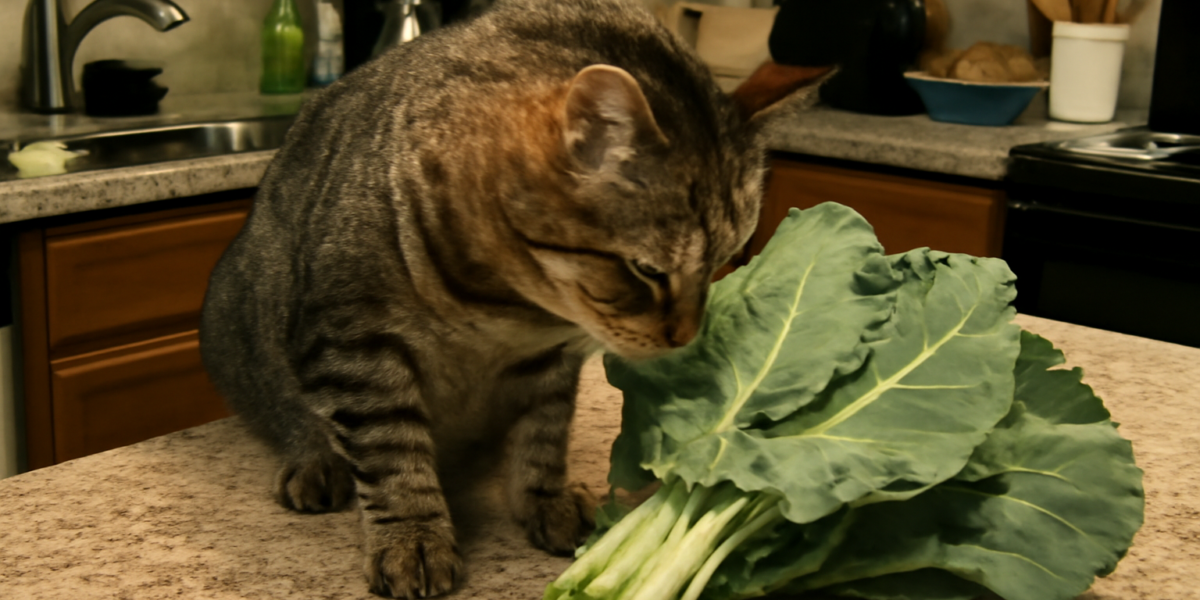
Can Cats Eat Collard Greens? The Verdict
Collard greens are a nutritional powerhouse for humans, but can cats eat collard greens safely? Yes, cats can eat small amounts of plain, cooked collard greens without toxic risk. Collard greens are not poisonous to cats, and an occasional nibble offered as a treat is perfectly acceptable for most healthy felines.
In this article
However, collard greens come with some nuances that cat owners should understand. The calcium and oxalate content, the fibrous texture, and the preparation method all affect how well your cat tolerates this leafy green. Like all vegetables, collard greens are a supplemental treat for cats — never a dietary staple. Your obligate carnivore gets their essential nutrition from animal protein, not from the produce aisle.
If you enjoy collard greens as part of your own diet and want to share a taste with your cat, the key lies in proper preparation, appropriate portion size, and knowing when to skip the green altogether. Let’s dig into the specifics.
Nutritional Breakdown: What Collard Greens Offer Cats
Collard greens are packed with nutrients that make them a superfood for humans. One cup of cooked collard greens delivers significant amounts of vitamins A, C, and K, along with calcium, manganese, and folate. For cats, the picture is considerably different.
The calcium content in collard greens is noteworthy — approximately 268 milligrams per cooked cup. This is actually one of the highest calcium levels among common leafy greens. For cats, who need about 180 milligrams of calcium per day depending on size and age, this concentration matters. In the small portions appropriate for cats (one to two teaspoons), the calcium contribution is modest and generally safe. But for cats already consuming calcium-rich diets or those with a history of calcium oxalate bladder stones, this is worth considering.
Vitamin K is abundant in collard greens, and cats do benefit from dietary vitamin K for proper blood clotting. However, cats on blood-thinning medications could be affected by sudden increases in vitamin K intake, so consult your vet if this applies to your cat.
The fiber in collard greens — about 8 grams per cooked cup — can have a mild beneficial effect on digestion in small amounts. For cats prone to hairballs or mild constipation, a tiny bit of fiber from cooked greens may help move things along. Too much, however, leads to the opposite problem: gas, bloating, and loose stools.
Collard greens also provide water content of around 90 percent, contributing to hydration. For cats who are reluctant drinkers, water-rich treats like cooked greens can supplement their fluid intake, though a water fountain or wet food remains a more reliable hydration strategy.
The Calcium and Oxalate Factor
One of the most important considerations with collard greens and cats is the relationship between calcium and oxalates. Oxalates are naturally occurring compounds found in many leafy greens that can bind with calcium to form calcium oxalate crystals — the same crystals that make up a common type of bladder stone in cats.
The good news is that collard greens have a relatively favorable calcium-to-oxalate ratio compared to some other greens. Spinach, for example, is extremely high in oxalates and is generally considered a poor choice for cats. Collard greens contain significantly less oxalate than spinach while still providing substantial calcium.
Cooking reduces oxalate content, which is one more reason to always offer cooked rather than raw collard greens to your cat. Boiling is particularly effective at reducing oxalates, as much of the compound leaches into the cooking water. If oxalates are a concern for your cat, boiling collard greens and discarding the water before serving provides the lowest-oxalate option.
Cats with a history of urinary issues, bladder stones, or kidney disease should not be given collard greens without veterinary approval. Calcium oxalate stones are a serious and painful condition that may require surgical removal, and dietary management plays an important role in prevention. If your cat has been diagnosed with urinary crystals or stones of any type, stick strictly to the diet your veterinarian recommends.
Preparing Collard Greens for Your Cat
Proper preparation is essential to make collard greens safe and palatable for your cat. The way many people prepare collard greens for themselves — with ham hock, bacon fat, garlic, onion, vinegar, and spices — is completely inappropriate for feline consumption. Garlic and onion are toxic to cats, and the fat, salt, and acidity of traditional preparations can cause significant digestive problems.
Follow these steps for cat-safe collard greens:
- Wash the leaves thoroughly under running water to remove dirt, pesticides, and bacteria
- Remove the thick central stems, which are very fibrous and difficult for cats to chew and digest
- Chop or tear the leaves into small pieces
- Steam or boil in plain water for three to five minutes until wilted and tender
- Drain thoroughly and let cool to room temperature
- Chop into very small pieces suitable for your cat’s mouth size
Do not add any salt, oil, butter, seasoning, vinegar, or other ingredients. The collard greens should be completely plain. If you are cooking greens for both yourself and your cat, remove your cat’s portion before adding any seasonings to the pot.
Serve the prepared collard greens as a small side alongside your cat’s regular food, or offer a few pieces as a standalone treat. Many cats enjoy the slightly bitter, earthy flavor of plain cooked greens, while others will show no interest whatsoever. Do not force the issue if your cat declines — they know what they want.
How Much Collard Greens Can Cats Eat?
Portion control matters with can cats eat collard greens. Even though collard greens are safe, overfeeding any vegetable to an obligate carnivore creates avoidable problems.
For an average adult cat (8 to 10 pounds), one to two teaspoons of finely chopped, cooked collard greens is an appropriate serving. This provides a taste of something different and a small fiber boost without overwhelming your cat’s digestive system.
Frequency should be limited to once or twice per week. The ten percent rule applies here as with all treats: no more than ten percent of your cat’s daily calories should come from sources outside their complete and balanced cat food. Collard greens are very low in calories, so exceeding the caloric threshold is unlikely, but the fiber and mineral content become the limiting factor at higher quantities.
Kittens under 12 months should not be given collard greens or other vegetables. Their developing digestive systems are sensitive, and they need every calorie to come from kitten-formulated food that supports proper growth. Senior cats with chronic health conditions should also avoid novel foods unless cleared by their veterinarian.
If you are interested in offering your cat a variety of safe plant-based treats, you might also want to check whether cats can eat bok choy or explore our article on brown rice as a cat treat.
When to Avoid Collard Greens
While collard greens are safe for most healthy adult cats, certain situations call for keeping this vegetable off the menu entirely.
Cats with a history of calcium oxalate bladder stones or urinary crystals should avoid collard greens due to the calcium and oxalate content. Even though collard greens have a favorable ratio compared to some greens, the risk is not worth taking when urinary health is already compromised.
Cats with thyroid conditions, particularly hyperthyroidism, should avoid cruciferous vegetables like collard greens. These vegetables contain goitrogens that can interfere with thyroid hormone production. While the small amounts offered as treats may not cause significant effects, it is best to avoid the variable when managing a chronic condition.
Cats on prescription diets for kidney disease, urinary issues, or other chronic conditions should not receive any supplemental foods without veterinary approval. These diets are carefully formulated, and even seemingly harmless additions can disrupt the intended nutritional balance.
Cats with inflammatory bowel disease or chronic gastrointestinal sensitivity may not tolerate the fiber in collard greens well. The added plant fiber can trigger flare-ups in susceptible individuals, leading to vomiting, diarrhea, or abdominal pain.
If your cat shows any adverse reaction after eating collard greens — vomiting, diarrhea, bloating, gas, or loss of appetite — discontinue offering them and return to your cat’s regular diet. Monitor for 24 hours and contact your veterinarian if symptoms persist or worsen.
Understanding what foods are safe for your cat is an important part of responsible pet ownership. If you are considering adopting a cat, take the time to learn about feline nutrition and establish healthy feeding habits from the start. Our cat care blog is a great resource for ongoing guidance.
Frequently Asked Questions
Can cats eat raw collard greens?
Raw collard greens are not toxic to cats, but they are much harder to digest than cooked greens. The tough, fibrous texture can be difficult for cats to chew and may cause gastrointestinal irritation. Raw collard greens also contain higher levels of goitrogens and oxalates than cooked greens. Steaming or boiling is strongly recommended before offering any to your cat.
Are collard greens better for cats than spinach?
Yes, collard greens are generally a better choice than spinach for cats. Spinach is extremely high in oxalates, which can contribute to the formation of calcium oxalate crystals and bladder stones. Collard greens contain significantly lower oxalate levels and have a more favorable calcium-to-oxalate ratio. That said, neither vegetable is a necessary part of a cat’s diet.
Can collard greens help with my cat’s hairballs?
The fiber in a small amount of cooked collard greens may help move hair through the digestive tract, potentially reducing hairball formation. However, there are more effective hairball remedies available, including specialized hairball-control cat foods, petroleum-based hairball gels, and regular brushing. Consult your veterinarian for the best approach to managing hairballs in your specific cat.
Will collard greens give my cat gas?
They might. Collard greens belong to the cruciferous vegetable family, which is known for causing gas in both humans and animals. The complex sugars in these vegetables can ferment in the digestive tract, producing gas. Keeping portions very small and cooking the greens thoroughly minimizes this effect, but some cats may still experience mild flatulence or bloating.
Can I mix collard greens into my cat’s regular food?
Yes, mixing a small amount of finely chopped, cooked collard greens into your cat’s regular food is a good way to introduce them. Some cats are more willing to try new foods when they are combined with familiar flavors. Just make sure the total amount does not exceed one to two teaspoons, and monitor your cat’s response to ensure they tolerate the addition well.


