
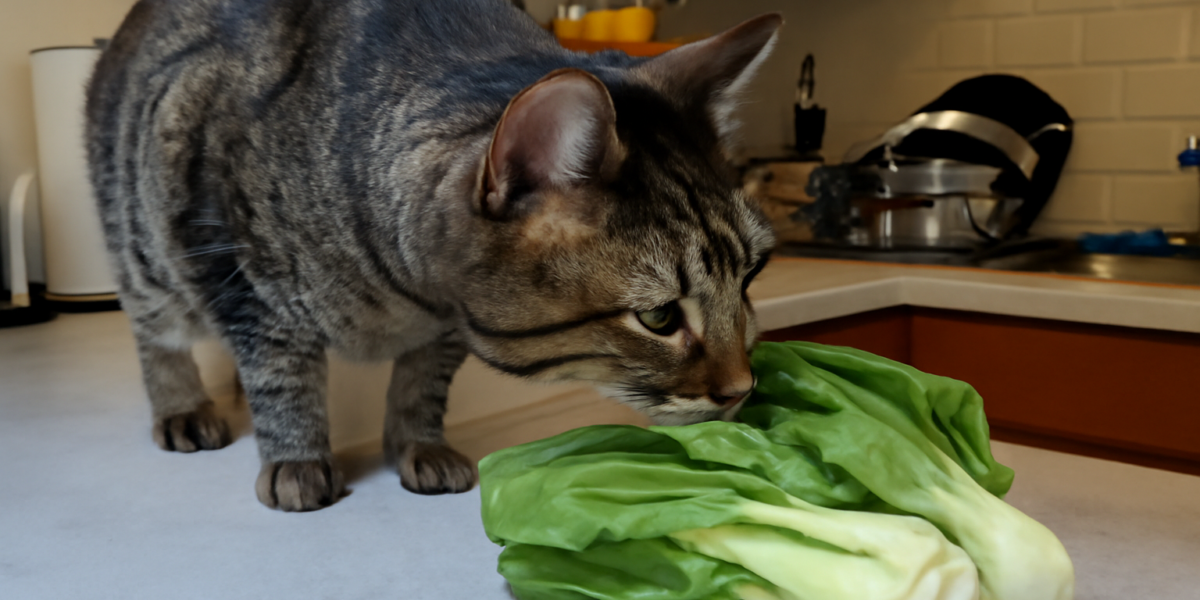
Can Cats Eat Bok Choy? A Quick Answer
If you have spotted your cat sniffing around your stir-fry ingredients, you might be wondering whether bok choy is safe for felines. The good news is that yes, cats can eat bok choy in small amounts. This mild-flavored Asian leafy green is not toxic to cats, and a small bite offered occasionally as a treat is perfectly fine for most felines.
In this article
That said, bok choy is not a natural part of a cat’s diet. Cats are obligate carnivores whose nutritional needs are met through animal protein, not leafy greens. While bok choy contains vitamins and minerals that benefit humans, your cat’s body is not designed to extract much value from plant material. Any bok choy you offer should be a tiny supplement to — never a replacement for — a complete and balanced cat food.
The key considerations with bok choy and cats involve preparation, portion size, and understanding your individual cat’s tolerance. Some cats will happily nibble on a piece of cooked bok choy, while others will sniff it once and walk away with complete disdain. Either reaction is perfectly normal.
Nutritional Value of Bok Choy for Cats
Bok choy belongs to the cruciferous vegetable family, alongside broccoli, cabbage, and Brussels sprouts. It is rich in vitamins A, C, and K, and provides calcium, potassium, and folate. For humans, these nutrients make bok choy an excellent dietary choice. For cats, the benefits are more limited.
Vitamin A is essential for cats, supporting vision, immune function, and skin health. However, cats require preformed vitamin A (retinol) found in animal tissue, not the beta-carotene form found in plants like bok choy. Cats lack the enzyme to efficiently convert beta-carotene into usable vitamin A, so the vitamin A in bok choy passes through without much benefit.
Vitamin C is another nutrient abundant in bok choy, but cats synthesize their own vitamin C internally and do not require dietary supplementation. The calcium in bok choy is present in a form that is reasonably bioavailable, but a cat eating a balanced diet already receives adequate calcium from their food.
The fiber content of bok choy may offer a minor benefit for some cats. A small amount of dietary fiber can support digestive regularity and help with hairball management. However, too much fiber can cause gas, bloating, and loose stools in cats, whose short digestive tracts are not built for processing large amounts of plant material.
The water content of bok choy is high — about 95 percent — which can provide a small hydration boost. This is particularly relevant for cats who primarily eat dry kibble and may not drink enough water independently. A water-rich treat like bok choy can contribute to overall fluid intake, though it should not replace a proper water bowl or fountain.
How to Safely Prepare Bok Choy for Your Cat
If you want to offer your cat a taste of bok choy, proper preparation is important. Raw bok choy is harder for cats to digest than cooked, and the preparation method can significantly affect both safety and palatability.
Start by washing the bok choy thoroughly under running water. Like all leafy greens, bok choy can harbor pesticide residues, dirt, and bacteria. Organic bok choy is preferable if you plan to share with your cat, but thorough washing is essential regardless of the source.
Lightly steaming or boiling the bok choy is the best preparation method for cats. Steaming softens the fibrous structure, making it easier for your cat to chew and digest. Cook it until it is wilted and tender but not mushy — roughly two to three minutes of steaming. Avoid overcooking, which destroys nutrients and creates an unappealing texture.
Do not add any seasonings, oils, salt, garlic, or onion. Garlic and onion are toxic to cats in all forms and even small amounts can damage red blood cells over time. Plain, unseasoned bok choy is the only safe option. If you are preparing bok choy as part of your own meal, set aside your cat’s portion before adding any seasonings or sauce.
Chop the cooked bok choy into very small pieces before offering it to your cat. Large leaves or thick stem pieces can be a choking hazard, especially for cats who tend to gulp rather than chew their food carefully. Pieces about the size of your thumbnail are appropriate for most adult cats.
Portion Size and Feeding Guidelines
When it comes to can cats eat bok choy, portion control is essential. Even safe foods can cause problems when offered in excessive amounts, and vegetables should always be a very small part of a cat’s overall diet.
For an average adult cat weighing 8 to 10 pounds, offer no more than one to two teaspoons of chopped, cooked bok choy at a time. This is enough to satisfy curiosity and provide a novel texture experience without overloading your cat’s digestive system with plant fiber.
Limit bok choy to an occasional treat — once or twice a week at most. Treats and supplemental foods should account for no more than ten percent of your cat’s daily caloric intake. Bok choy is very low in calories, so the caloric impact is minimal, but the fiber content is the bigger concern. Too much too often can disrupt normal digestion.
If your cat has never eaten bok choy before, start with an even smaller amount — just a tiny piece — and observe their reaction over 24 hours. Watch for any signs of digestive upset such as vomiting, diarrhea, gas, or decreased appetite. If your cat tolerates the initial taste well, you can gradually increase to the recommended portion.
Cats are individuals, and some may have sensitivities to cruciferous vegetables that others do not share. If you notice any adverse reactions, simply stop offering bok choy. There are plenty of other safe treat options available. If you are curious about other greens, our article on whether cats can eat collard greens covers another popular leafy vegetable.
Potential Concerns With Bok Choy and Cats
While bok choy is generally safe for cats, a few concerns are worth understanding before you make it a regular treat.
Goitrogens
Like all cruciferous vegetables, bok choy contains goitrogens — naturally occurring compounds that can interfere with thyroid function by inhibiting iodine uptake. For humans eating varied diets, this is rarely a concern. For cats, particularly those with existing thyroid conditions, it is worth noting. Hyperthyroidism is common in older cats, and feeding goitrogen-containing foods to a cat with thyroid disease could theoretically complicate their condition.
Cooking significantly reduces goitrogen content, which is another reason to offer steamed or boiled bok choy rather than raw. The small amounts recommended as treats are unlikely to affect thyroid function in healthy cats, but if your cat has a thyroid condition, consult your veterinarian before offering any cruciferous vegetables.
Gas and Digestive Upset
Cruciferous vegetables are notorious for causing gas in humans, and the same applies to cats. The complex sugars (raffinose) in bok choy can be difficult for cats to break down, leading to flatulence, bloating, and abdominal discomfort. Keeping portions small minimizes this risk, but some cats may be more sensitive than others.
Pesticide Residue
Conventionally grown bok choy may carry pesticide residues that are more concerning for a small animal like a cat than for a human. Wash all bok choy thoroughly before cooking, and consider choosing organic when possible. Peeling away the outermost leaves, which tend to have the most residue exposure, is another practical step.
Signs Your Cat Is Not Tolerating Bok Choy Well
After introducing bok choy to your cat, monitor them for any adverse reactions over the following 24 hours. While serious reactions are rare, knowing what to look for allows you to respond quickly if problems arise.
Common signs of digestive intolerance include:
- Vomiting or dry heaving
- Diarrhea or loose stools
- Excessive gas or bloating
- Abdominal pain (your cat may hunch, avoid being touched, or vocalize)
- Decreased appetite at the next meal
- Lethargy or decreased activity
If symptoms are mild and resolve within 24 hours, your cat likely just has a sensitivity to cruciferous vegetables. Simply avoid offering bok choy in the future. If symptoms are severe, persistent, or accompanied by blood in the vomit or stool, contact your veterinarian promptly.
Cats with pre-existing digestive conditions such as inflammatory bowel disease, pancreatitis, or chronic gastrointestinal issues should generally avoid new foods unless approved by their veterinarian. The added fiber and novel plant compounds could exacerbate their condition.
If you are looking to broaden your cat’s treat repertoire safely, protein-based options are always the most natural fit. Small pieces of cooked chicken, turkey, or fish align with your cat’s carnivorous biology and are less likely to cause digestive issues than plant-based foods. For more guidance on feline nutrition, explore our cat care resources or learn about safe food options if you are adopting a new cat.
Frequently Asked Questions
Can cats eat raw bok choy?
While raw bok choy is not toxic, it is harder for cats to digest than cooked bok choy. Raw cruciferous vegetables contain higher levels of goitrogens and are more likely to cause gas and bloating. Lightly steaming bok choy before offering it to your cat makes it softer, easier to chew, and gentler on their digestive system. Always chop it into small pieces regardless of whether it is raw or cooked.
How much bok choy can I give my cat?
For an average adult cat, one to two teaspoons of chopped, cooked bok choy is an appropriate serving. Offer it no more than once or twice per week. Start with a smaller amount when introducing it for the first time and monitor for any adverse reactions. Remember that treats should not exceed ten percent of your cat’s daily caloric intake.
Is bok choy better for cats than other greens?
Bok choy is a reasonable choice among leafy greens for cats. It is milder in flavor than many cruciferous vegetables, relatively low in oxalates compared to spinach, and has a soft texture when cooked. However, no leafy green provides essential nutrition for cats beyond what their regular food offers. The best treat choices for cats are always protein-based.
Can bok choy help with my cat’s constipation?
The fiber and water content in bok choy may provide mild relief for occasional constipation. However, chronic constipation in cats can indicate underlying health issues such as dehydration, megacolon, or kidney disease. If your cat is frequently constipated, consult your veterinarian rather than trying to manage it with dietary changes alone.
My cat ate a large piece of bok choy from my plate. Is this an emergency?
A single incident of eating a larger-than-ideal portion of plain bok choy is not an emergency. However, if the bok choy was cooked with garlic, onion, soy sauce, or other seasonings, the situation may be more concerning. Garlic and onion are toxic to cats and warrant a veterinary call. For plain bok choy, monitor for digestive upset and provide access to fresh water.


