
Last updated: April 27, 2026
In this article
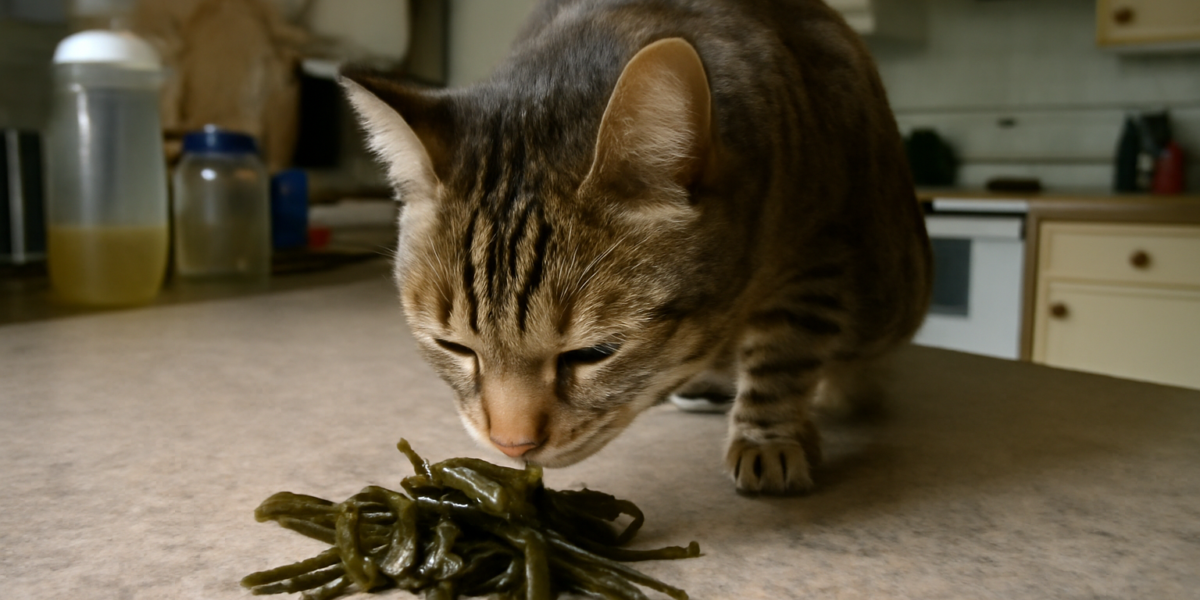
Can Cats Have Kelp?
Cats can eat kelp in very small, carefully controlled amounts, but it must be approached with caution. Kelp is a nutrient-dense seaweed rich in iodine, vitamins, and minerals, but its extremely high iodine concentration makes it a double-edged sword for cats. Too much iodine can disrupt thyroid function, potentially triggering or worsening hyperthyroidism, one of the most common endocrine disorders in cats.
The verdict on kelp for cats is: safe in moderation, but only in very tiny quantities. A small pinch of kelp powder added to food occasionally can provide trace mineral benefits, but regular or excessive supplementation poses real health risks. This is not a food to offer freely or without veterinary guidance.
If you are considering adding kelp to your cat’s diet for its mineral benefits, talk to your veterinarian first. They can evaluate whether your cat would benefit from the supplementation and recommend a safe dosage based on your cat’s weight, age, and thyroid health.
Nutritional Benefits of Kelp for Cats
When given in appropriate amounts, kelp can offer several nutritional advantages:
Trace minerals. Kelp is a natural source of over 60 trace minerals, including iron, zinc, manganese, copper, and selenium. These minerals support enzyme function, immune health, and cellular processes that commercial cat foods may provide in synthetic form.
Iodine. In the right amount, iodine is essential for healthy thyroid function. The thyroid gland uses iodine to produce hormones that regulate metabolism, energy, and growth. Cats with healthy thyroid function may benefit from small amounts of natural iodine.
Vitamins. Kelp provides vitamins A, B1, B2, C, D, and E. While cats synthesize some vitamins differently than humans and produce vitamin C on their own, the B vitamins in kelp support energy metabolism and nervous system function.
Antioxidants. The fucoidans and other polysaccharides in kelp have antioxidant properties that may support immune function and help combat oxidative stress.
Dental health. Some pet supplement manufacturers claim that the specific type of kelp called Ascophyllum nodosum can help reduce tartar buildup on teeth. While some studies support this in dogs, the evidence for cats is limited. It should not replace regular dental care.
The Iodine Risk: Thyroid Concerns
The most significant concern with feeding kelp to cats is its exceptionally high iodine content. A single gram of kelp can contain anywhere from 500 to 8,000 micrograms of iodine, depending on the species and source. For context, the recommended daily iodine intake for an adult cat is approximately 100 to 200 micrograms.
Excess iodine intake can cause:
- Hyperthyroidism. While the primary cause of feline hyperthyroidism is debated, excessive dietary iodine may contribute to thyroid dysfunction. Cats over 10 years old are already at elevated risk, and unnecessary iodine supplementation could be harmful.
- Thyroid gland inflammation. High iodine levels can cause thyroiditis, an inflammatory condition that disrupts normal thyroid hormone production.
- Digestive upset. Excess iodine can cause nausea, vomiting, and diarrhea.
- Paradoxical hypothyroidism. In some cases, excessive iodine can actually suppress thyroid function, leading to the opposite problem of an underactive thyroid.
Cats who are already being treated for hyperthyroidism or who are on an iodine-restricted diet (like Hill’s y/d) should absolutely not be given kelp. Even a small amount could interfere with their treatment protocol and destabilize their thyroid levels.
Safe Portions and Feeding Guidelines
If your veterinarian approves kelp supplementation for your cat, follow these strict portion guidelines:
- Form: Use kelp powder specifically formulated for pets, not kelp supplements designed for humans or raw kelp sheets. Pet-formulated products have standardized iodine levels and appropriate dosing instructions.
- Amount: A tiny pinch (approximately 1/16 to 1/8 teaspoon) of kelp powder mixed into food is a typical dose for cats. Never exceed the amount recommended on the pet supplement label.
- Frequency: Two to three times per week maximum, not daily. This prevents iodine accumulation and gives your cat’s thyroid time to regulate.
- Monitoring: If supplementing regularly, your vet should check your cat’s thyroid levels (T4) during annual or semi-annual wellness exams to ensure they remain in the normal range.
Do not feed your cat kelp snacks, sushi nori, or seaweed products intended for human consumption. These products may contain added salt, seasonings, or unpredictable iodine concentrations that are unsafe for cats.
Signs of Too Much Iodine in Cats
If your cat consumes too much kelp or any high-iodine food, watch for these warning signs:
- Increased thirst and urination
- Weight loss despite a normal or increased appetite
- Hyperactivity, restlessness, or irritability
- Vomiting or diarrhea
- Rapid heart rate or heart palpitations
- Unkempt or greasy coat
- Increased vocalization, especially at night
These symptoms overlap with hyperthyroidism, which is exactly the concern with excessive iodine intake. If you notice any of these signs, stop the kelp supplementation immediately and contact your veterinarian. A simple blood test can check your cat’s thyroid hormone levels and determine whether the symptoms are related to iodine excess.
Acute iodine toxicity from a one-time large ingestion is rare in cats because they are unlikely to consume large amounts of kelp voluntarily. The greater risk is chronic low-level over-supplementation over weeks or months. For more on keeping your cat’s nutrition balanced, check out our article on sardines for cats.
Kelp vs. Other Seaweed for Cats
Not all seaweed is created equal when it comes to cats. Here is how kelp compares to other seaweed products:
- Kelp (Laminaria, Ascophyllum): Extremely high in iodine. Use only in very small, controlled amounts. Requires veterinary guidance.
- Nori: The seaweed used in sushi rolls. Lower in iodine than kelp but still contains significant amounts. Unseasoned nori is safer than kelp but should still be limited to tiny amounts. Avoid seasoned or salted nori entirely.
- Spirulina: A freshwater blue-green algae (not technically seaweed) that is lower in iodine than kelp. Spirulina is sometimes added to pet foods for its protein and antioxidant content. It is generally safer for cats in small amounts.
- Dulse: A red seaweed with moderate iodine levels. Less commonly used in pet supplements but occasionally found in marine-based cat food formulations.
Regardless of the type, any seaweed should be given to cats in controlled amounts and never as a free-feed item. The iodine content is simply too high in most seaweed varieties for a cat’s small body to process safely on a regular basis.
When to Consult Your Veterinarian
Always consult your vet before adding kelp or any supplement to your cat’s diet. This is especially important if:
- Your cat is over 10 years old, as older cats are at higher risk for hyperthyroidism.
- Your cat has been diagnosed with hyperthyroidism or is on thyroid medication.
- Your cat is on an iodine-restricted therapeutic diet.
- Your cat has kidney disease, as thyroid and kidney function are closely linked in cats.
- Your cat is taking any medications that could interact with iodine supplementation.
If your cat accidentally consumes a large amount of kelp or a kelp supplement, contact your veterinarian or the ASPCA Animal Poison Control Center (888-426-4435) for guidance. While a one-time exposure is unlikely to cause severe toxicity, it is worth documenting and monitoring for symptoms. For more feline nutrition advice, visit our cat care blog and read about other foods like coconut oil for cats.
Frequently Asked Questions
Is kelp a good supplement for cats?
Kelp can provide beneficial trace minerals, but its extremely high iodine content makes it risky if not dosed precisely. Most cats eating a complete and balanced commercial diet do not need kelp supplementation. Consult your vet before adding it.
Can kelp cause hyperthyroidism in cats?
The relationship between dietary iodine and feline hyperthyroidism is complex and still being researched. While kelp alone is unlikely to cause hyperthyroidism, excessive iodine from any source may contribute to thyroid dysfunction, especially in older cats already predisposed to the condition.
How much kelp is safe for a cat per day?
If your vet approves, a tiny pinch (1/16 to 1/8 teaspoon) of pet-formulated kelp powder two to three times per week is generally the recommended range. Do not give kelp daily, and never exceed the dosing instructions on the supplement label.
Can I give my cat dried seaweed snacks?
Most commercial seaweed snacks are seasoned with salt, soy sauce, or other flavorings that are unhealthy for cats. Plain, unseasoned nori in very small pieces (a quarter-sheet or less) is a safer option, but even plain seaweed should be given sparingly due to iodine content.
My cat’s food already contains kelp. Should I be concerned?
No. Reputable cat food manufacturers include kelp in carefully calculated amounts that fall within safe iodine levels for cats. The concern arises when additional kelp supplementation is added on top of a complete diet, potentially pushing iodine intake above safe thresholds.


