
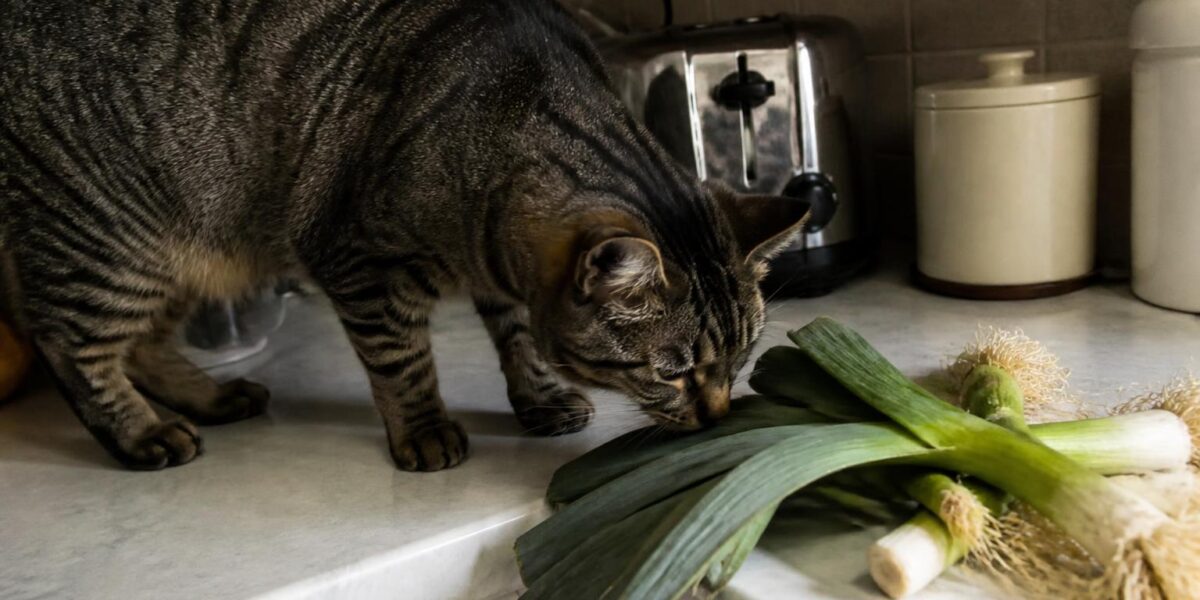
The Short Answer on Leeks for Cats
Can cats eat leeks? No. Leeks are toxic to cats and must be avoided completely. Leeks belong to the allium family, the same group as onions and garlic, and these plants damage a cat’s red blood cells and can cause a serious condition called Heinz-body hemolytic anemia. There is no safe amount, so leeks should never be given to your cat.
In this article
This is one of the clear-cut cases where the answer is a firm no, not a “maybe in moderation.” Both raw and cooked leeks are dangerous, and so are leek powder and any dish or broth made with leeks. Cooking does not remove the toxic compounds.
If your cat has eaten leeks or a food containing them, contact your veterinarian right away. Below we explain why leeks are toxic, the symptoms to watch for, and how to keep your cat safe.
Leeks can be especially easy to overlook as a hazard because they seem so mild and wholesome compared to obvious dangers. They lack the sharp bite of raw onion and are often cooked down into soft, sweet pieces in soups and quiches. That gentleness is deceptive. From your cat’s standpoint, a leek is just as dangerous as an onion, and the cooked, blended forms that hide in everyday dishes are arguably the sneakiest way a cat gets exposed.
Why Leeks Are Toxic to Cats
Leeks contain compounds called organosulfides, the same family of toxins found in onions and garlic. When a cat eats them, these compounds damage red blood cells, causing them to rupture and form structures called Heinz bodies.
The result is hemolytic anemia, a condition in which the cat does not have enough healthy red blood cells to carry oxygen through the body. Cats are especially sensitive to allium toxicity, even more so than dogs, because their red blood cells are more easily damaged by these compounds.
What makes leeks particularly dangerous is that the toxic effect can build up. Repeated small exposures, such as bits of leek in leftovers over time, can be just as harmful as one large meal. Concentrated forms like leek powder, sometimes found in seasoning blends and baby foods, are even more potent.
The cumulative nature of allium toxicity is one of its most underappreciated features. Owners sometimes assume that since their cat ate a little leek last week with no obvious effect, a little more must be fine. In reality, each exposure can add to the damage on the red blood cells before the body has fully recovered. This is why there is no such thing as a routinely safe small serving, and why even foods that contain leeks as a minor ingredient should be kept off your cat’s menu entirely rather than offered now and then.
Symptoms of Leek Poisoning in Cats
Signs of allium toxicity may not appear immediately and can take a few days to develop as the red blood cell damage progresses. This delay is one reason leek poisoning can be so dangerous, so do not wait for symptoms before calling your vet.
Watch for these signs:
- Lethargy, weakness, or reluctance to move
- Pale or yellowish gums
- Rapid breathing or elevated heart rate
- Vomiting or diarrhea
- Loss of appetite
- Reddish or brown urine
- Collapse in severe cases
Pale gums, weakness, and discolored urine are red flags for anemia and require emergency veterinary care. If you notice any of these, treat it as urgent.
What to Do If Your Cat Eats Leeks
If you know or suspect your cat has eaten leeks, call your veterinarian or an animal poison control line immediately, even if your cat seems fine. Because symptoms can be delayed, early intervention is critical.
Try to estimate how much was eaten and in what form, such as raw leek, cooked leek in a dish, or a soup or broth containing leeks. Bring any packaging or recipe details with you, since seasoning blends and prepared foods often hide allium ingredients.
Do not attempt home remedies or try to make your cat vomit unless a veterinary professional instructs you to. Your vet may recommend monitoring, blood tests to check for anemia, or supportive treatment depending on the amount eaten. The sooner your cat is assessed, the better the outcome.
Because the red blood cell damage from alliums can develop over several days, your veterinarian may want to recheck your cat’s bloodwork a few days after the exposure, even if the first tests looked normal. This follow-up is an important part of catching delayed anemia before it becomes severe. Try not to skip it if it is recommended, since a cat can appear perfectly fine in the early hours and only show the effects of the toxin once enough red blood cells have been affected.
Hidden Sources of Leeks and Alliums
Leeks and other alliums hide in many everyday foods, which is why accidental exposure is more common than owners expect. Being aware of these sources helps you protect your cat.
Common hidden sources include soups and broths, baby food, gravies, savory sauces, seasoning mixes, and many leftovers and table scraps. Even a small amount of these can be harmful, so never share human food that may contain leeks, onions, or garlic.
Other allium foods to keep far away from cats include onions and garlic, which are toxic for the very same reason. While you are reviewing your cat’s safety, it is worth knowing that chocolate and grapes are also dangerous foods to avoid entirely.
Safe Foods for Cats Instead
Cats are obligate carnivores who thrive on animal protein, so the best treats are meat-based rather than vegetables from the allium family. If you want to share a little something, choose cat-safe options.
Good choices include small amounts of plain cooked chicken or plain cooked salmon. These give your cat a protein-rich treat with no toxic risk, unlike leeks and other alliums.
Keep all treats to no more than about 10 percent of your cat’s daily calories, with the rest from a complete, balanced cat food. If you ever suspect your cat has eaten an allium or any toxic food, your veterinarian should be your first call.
Keeping a Leek-Safe Kitchen
Prevention is far easier than treating allium poisoning, so a few kitchen habits go a long way toward keeping your cat safe. Because leeks and other alliums are staples in so much cooking, the goal is to build routines that keep curious cats away from both the raw vegetables and the finished dishes.
Start with the obvious: never intentionally share table scraps that could contain leeks, onions, or garlic, and let family members and guests know the rule too. Many accidental poisonings happen when a well-meaning visitor slips the cat a bite of soup or a piece of a savory pastry, not realizing the danger hidden inside.
Be mindful during food prep as well. Cats love to investigate countertops, and a dropped scrap of leek or a pan left cooling within reach is an easy target. Wipe up trimmings promptly, store leeks in a closed drawer or the fridge rather than an open basket, and cover or put away leftovers as soon as the meal is done.
It also helps to be aware of less obvious allium sources around the home, such as homemade broths, baby food given to other family members, and certain savory snacks. If you cook with leeks often, keeping your cat out of the kitchen during prep and cleanup is a simple, reliable safeguard. A little vigilance prevents a frightening and potentially serious emergency.
Frequently Asked Questions
Are cooked leeks safe for cats?
No. Cooking does not destroy the toxic organosulfide compounds in leeks, so cooked leeks are just as dangerous as raw ones. All forms of leek, including powder and broth, must be avoided.
How much leek is toxic to a cat?
There is no established safe amount, and cats are very sensitive to allium toxicity. Even small repeated exposures can build up and cause harm, so any amount of leek should be treated as a concern.
How quickly do symptoms appear after a cat eats leeks?
Symptoms of anemia can be delayed by a few days as red blood cell damage develops. Because of this delay, contact your vet right away rather than waiting for signs to appear.
My cat ate soup with leeks in it. What should I do?
Call your veterinarian or a pet poison control line immediately, even if your cat seems normal. Many soups and broths contain leeks, onions, or garlic, all of which are toxic to cats.


