
Last updated: April 1, 2026
In this article
Can Cats Eat Parsley? What’s Safe
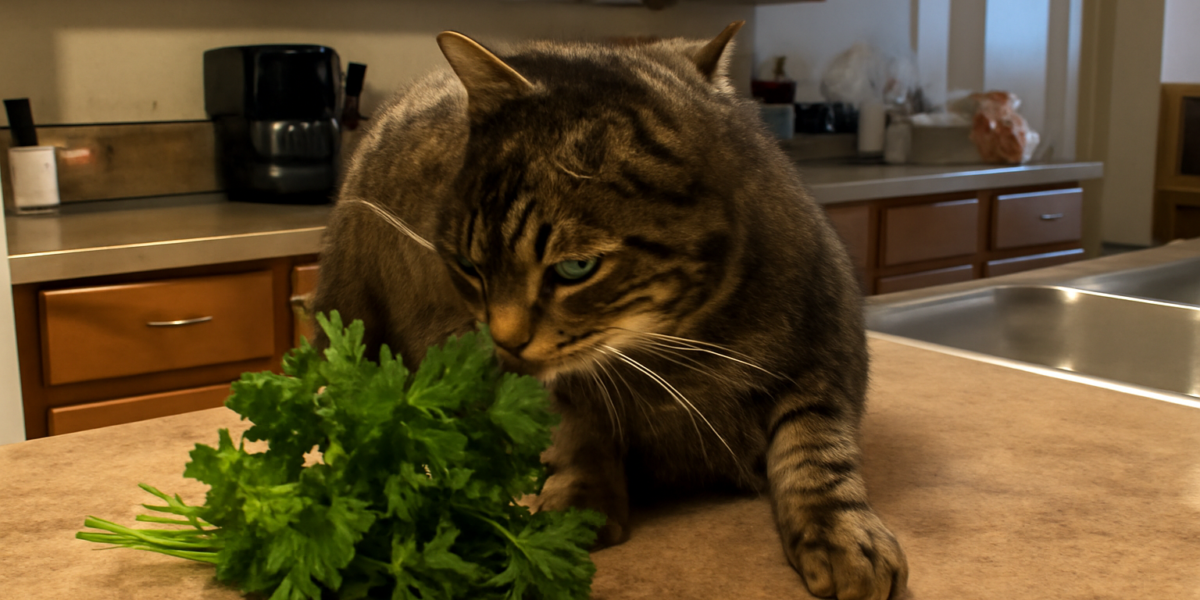
When it comes to feeding your feline friends, you might wonder, “Can cats eat parsley?” The quick answer is yes, but with some important considerations. While parsley can be safe for cats in small amounts, it’s essential to understand the details to ensure your cat’s health and safety.
Is Parsley Safe for Cats?
Parsley is generally considered safe for cats when consumed in moderation. However, it’s crucial to distinguish between the common culinary herb, true parsley (Petroselinum crispum), and the toxic variety known as spring parsley (Cymopterus watsonii). True parsley, the type you find in grocery stores, is not toxic to cats and can even offer some health benefits when given in small amounts. On the other hand, spring parsley contains compounds that can be harmful to your cat.
Nutritional Benefits of Parsley for Cats
Parsley offers several nutritional benefits that can be advantageous for your cat. It is rich in vitamins A, C, and K, which support various bodily functions. Vitamin A is essential for healthy vision, vitamin C acts as an antioxidant, and vitamin K plays a role in blood clotting. Additionally, parsley contains folic acid and iron, which are beneficial for maintaining your cat’s overall health. The herb is also known for its anti-inflammatory properties, which can help support a healthy immune system.
Risks and Side Effects
While parsley can be beneficial, there are risks and potential side effects to be aware of. Excessive consumption of parsley can lead to digestive issues such as vomiting and diarrhea. Cats with existing kidney problems should avoid parsley as it can exacerbate their condition. Additionally, if your cat is pregnant, it is best to avoid feeding her parsley, as it may have uterotonic effects that could complicate pregnancy.
How to Serve Parsley to Your Cat
If you decide to offer parsley to your cat, it’s important to do so correctly. Start by washing the parsley thoroughly to remove any pesticides or chemicals. You can chop the leaves finely and sprinkle a small amount over your cat’s regular food. Alternatively, you can mix it into homemade cat treats or a bland chicken broth for added flavor. Always introduce new foods gradually and observe your cat for any adverse reactions.
How Much Parsley Can Cats Eat?
Moderation is key when it comes to feeding parsley to your cat. A small sprinkle of fresh parsley leaves, roughly half a teaspoon, is sufficient for most cats. This amount is enough to offer the nutritional benefits without risking any negative side effects. It’s always a good idea to consult with your veterinarian before introducing any new food into your cat’s diet, especially if your cat has underlying health conditions.
Signs of an Adverse Reaction
It’s important to monitor your cat for any signs of an adverse reaction after consuming parsley. Symptoms may include vomiting, diarrhea, or a decrease in appetite. If your cat exhibits any of these symptoms or any other unusual behavior, discontinue feeding parsley immediately and consult your veterinarian for guidance.
Frequently Asked Questions
Can parsley improve my cat’s breath?
Yes, parsley is known for its breath-freshening properties. The natural chlorophyll in parsley can help neutralize odors in the mouth, making it a useful addition to your cat’s diet if you’re looking to improve their breath.
Is dried parsley safe for cats?
Dried parsley is generally safe for cats in moderation. However, it is more concentrated than fresh parsley, so you should use a smaller amount. As always, monitor your cat for any adverse reactions when introducing dried parsley into their diet.
Can I grow parsley at home for my cat?
Yes, growing parsley at home is a great way to ensure you have a fresh supply of this herb. Just ensure that it is true parsley and not the toxic spring parsley variety. Home-grown parsley can be a safe and convenient option for adding a touch of green to your cat’s meals.
Are there other herbs safe for cats?
Several herbs are safe for cats, including catnip, cat thyme, and valerian root. These herbs can offer various benefits and enrich your cat’s environment. For more information on safe herbs and foods, you can visit our articles on cilantro and mint here on walkmehomerescue.org.


