
Last updated: May 4, 2026
In this article
Can Cats Eat Thyme? Safety Guide and Tips
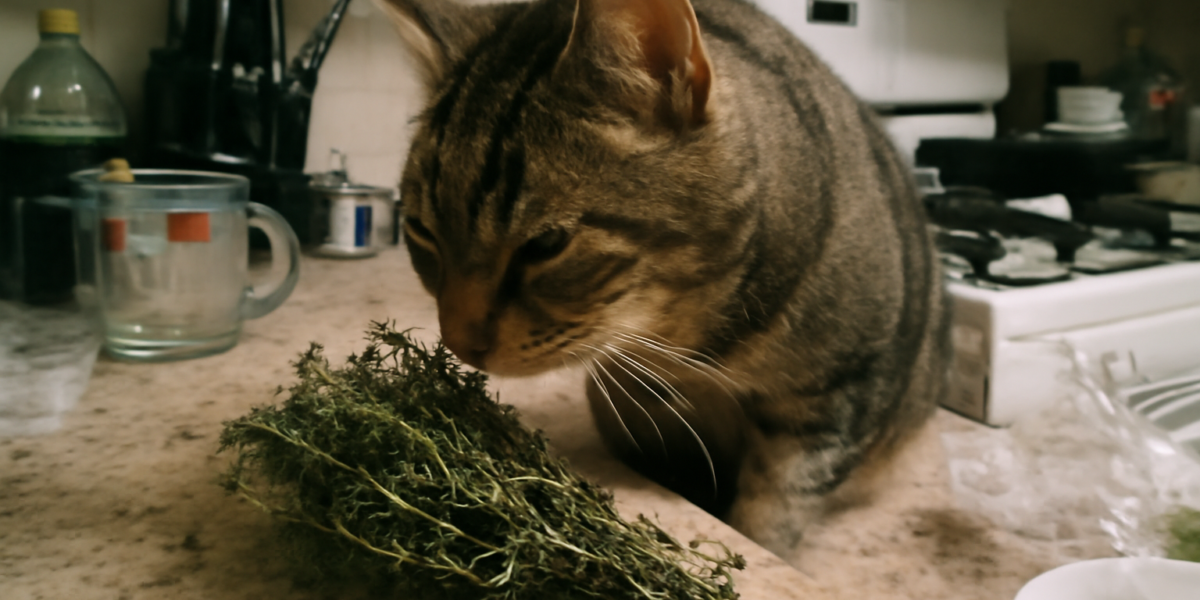
Thyme is one of the most widely used culinary herbs, adding earthy, slightly minty flavor to soups, roasts, sauces, and countless other dishes. This Mediterranean herb grows readily in gardens and on kitchen windowsills, making it easily accessible to curious cats. If you have caught your cat sniffing or nibbling at your thyme plant, you may be wondering whether this common herb poses any risk.
The reassuring answer is that common garden thyme (Thymus vulgaris) is considered non-toxic to cats. It is one of several culinary herbs that cat owners can feel comfortable growing at home without worrying about feline safety. However, there is an important distinction to make between fresh thyme herb and thyme essential oil — while the herb is safe, the concentrated essential oil is not. Let us explore the full picture so you can make informed decisions about thyme and your cat.
Quick Answer: Can Cats Eat Thyme?
Yes, common garden thyme is safe for cats. The ASPCA does not list Thymus vulgaris as toxic to cats, and a small nibble of fresh thyme leaves will not cause harm. Many cats are actually attracted to aromatic herbs and may enjoy investigating thyme plants, and this behavior is generally harmless.
That said, thyme provides no meaningful nutritional benefit to cats. As obligate carnivores, cats do not need herbs in their diet, and the vitamins and minerals in thyme are present in quantities too small to matter, even for human consumption of the herb. The primary value of thyme for cat owners is the peace of mind that it is a safe plant to have in the home.
The critical exception is thyme essential oil. Concentrated essential oils are vastly different from fresh herbs — they contain highly concentrated volatile compounds that cats cannot safely metabolize. Thyme essential oil should never be applied to cats, ingested by cats, or diffused in areas where cats spend time. This distinction between the herb and the oil is crucial for cat safety.
Nutritional Profile of Thyme
Fresh thyme is nutrient-dense relative to its weight in human nutrition, but the tiny amounts a cat might consume are nutritionally insignificant. A teaspoon of fresh thyme leaves contains approximately:
- Calories: Less than 1 calorie per teaspoon.
- Vitamin C: Small amounts, though cats produce their own vitamin C and need no supplementation.
- Vitamin A: Trace amounts in the form of beta-carotene, which cats cannot convert to active vitamin A.
- Iron: Minimal amounts.
- Manganese: Trace levels.
- Thymol: A phenolic compound with antimicrobial properties, present in the volatile oil of thyme. In the small amounts found in fresh herb, it is not harmful to cats.
- Carvacrol: Another phenolic compound with antimicrobial activity found in thyme’s essential oil.
- Fiber: Negligible amounts.
- Flavonoids: Various antioxidant compounds present in small quantities.
The thymol and carvacrol in fresh thyme are what give the herb its characteristic aroma and flavor. In the dilute concentrations found in fresh herb leaves, these compounds are safe for cats. However, in the concentrated form found in thyme essential oil, they become potentially toxic — this is why the distinction between herb and oil matters so much. Cats lack the glucuronyl transferase enzyme that helps metabolize and safely excrete many plant-based volatile compounds.
Benefits and Risks of Thyme for Cats
Benefits
- Non-toxic houseplant: Thyme is a safe plant to grow in homes with cats, making it an excellent choice for cat-owning herb gardeners. You can grow it on your windowsill without worry.
- Sensory enrichment: The aromatic compounds in fresh thyme can provide mild sensory stimulation for cats. Some cats enjoy sniffing herbs, and this exploration is a form of environmental enrichment.
- Mild antimicrobial properties: The thymol in thyme has natural antimicrobial qualities. While not clinically significant from a small nibble, it is a positive characteristic of the herb.
- Cat thyme connection: There is a plant called “cat thyme” (Teucrium marum) that, despite its name, is not true thyme. It produces a response similar to catnip in some cats. While different from common thyme, this association means cats may be naturally curious about thyme-scented plants.
- Calorie-free nibble: If your cat occasionally nibbles thyme, it adds essentially zero calories — a neutral snack that satisfies curiosity without any dietary impact.
Risks
- Thyme essential oil toxicity: This is the most important risk to understand. Concentrated thyme essential oil contains high levels of thymol and carvacrol that are dangerous to cats. Ingestion, skin contact, or inhalation of diffused thyme essential oil can cause drooling, vomiting, difficulty breathing, liver damage, and central nervous system depression.
- Digestive upset from large quantities: While a nibble is fine, eating a large quantity of thyme (or any plant material) can cause vomiting, diarrhea, or stomach discomfort in cats due to their inability to efficiently process significant plant fiber.
- Dried thyme concentration: Dried thyme has more concentrated volatile compounds than fresh thyme. While still much less potent than essential oil, large amounts of dried thyme could cause more irritation than the same volume of fresh herb.
- Pesticide residue: Non-organic thyme may carry pesticide residues. If your cat nibbles your herb plants, growing organic or washing thoroughly is advisable.
- Confusion with other plants: Not all plants called “thyme” are the same species. Ensure what you are growing is actual common thyme (Thymus vulgaris) and not a different, potentially toxic plant.
- Choking on stems: Woody thyme stems could potentially pose a mild choking risk. If offering thyme, provide only the soft leaves.
How to Serve Thyme Safely to Your Cat
There is no need to deliberately serve thyme to your cat, but if your cat shows interest in your thyme plant, allowing them to sniff and occasionally nibble a leaf or two is perfectly safe. Here are some guidelines for managing thyme around cats.
If you grow thyme at home, place it where your cat can investigate if they choose. A windowsill herb garden with thyme, basil, and other cat-safe herbs can provide ongoing sensory enrichment. If your cat tends to eat large quantities of any plant, you may want to limit access to prevent digestive upset — a few nibbled leaves is very different from consuming an entire plant.
Only use fresh thyme leaves — not dried thyme from a spice jar and definitely not thyme essential oil. If you are cooking with thyme and a small leaf falls to the floor, there is no need to rush to grab it before your cat does.
Never apply thyme essential oil to your cat’s fur, add it to their food or water, or use it in a diffuser in an enclosed room where your cat stays. Essential oils are hundreds of times more concentrated than fresh herbs and pose genuine health risks to cats. If you use essential oil diffusers, do so only in well-ventilated rooms that your cat can freely leave.
Signs of Problems After Eating Thyme
Problems from nibbling fresh thyme are extremely unlikely, but if your cat consumed a large amount or was exposed to thyme essential oil, watch for:
- Vomiting or nausea (from eating too much plant material)
- Diarrhea
- Drooling (especially if exposed to essential oil)
- Coughing or respiratory distress (from essential oil inhalation)
- Lethargy or weakness
- Loss of appetite
- Skin redness or irritation (from essential oil contact)
If your cat was exposed to thyme essential oil — through ingestion, skin contact, or prolonged inhalation — the situation is more serious. Move your cat to fresh air immediately if essential oil diffusion is the source. If oil was ingested or applied to the skin, do not try to wash it off with water (which can increase absorption of some oils) — contact your veterinarian or the ASPCA Animal Poison Control Center immediately for specific instructions.
For mild digestive upset from eating fresh thyme, symptoms should resolve within 24 hours with access to fresh water and a return to normal diet.
Healthy Alternatives to Thyme
If your cat enjoys herbs and plants, these cat-safe alternatives provide enrichment:
- Catnip (Nepeta cataria): The classic cat herb, producing a well-known euphoric response in 50-70% of cats. Completely safe and available fresh, dried, or in toys.
- Cat grass: Wheat grass, oat grass, or barley grass grown specifically for cats. It satisfies the desire to nibble greens and may aid digestion.
- Valerian: Some cats respond enthusiastically to valerian root, similar to their reaction to catnip. The dried root can be placed in toys.
- Silver vine: A plant from East Asia that produces a catnip-like response in many cats, including some who do not respond to catnip.
- Fresh basil: Another non-toxic culinary herb safe for cats to investigate and nibble.
- Cooked chicken: For a nutritionally beneficial treat rather than an herb, plain cooked chicken provides the animal protein cats actually need.
Looking for a cat to share your herb garden with? Visit our adoption page at Walk Me Home Rescue to find cats ready for loving homes.
Frequently Asked Questions
Is cat thyme the same as regular thyme?
No, “cat thyme” (Teucrium marum) is a completely different plant from common garden thyme (Thymus vulgaris). Cat thyme is in the mint family and is known to produce a catnip-like response in some cats. Both are non-toxic to cats, but they are distinct species. When we talk about thyme in cooking, we mean Thymus vulgaris — the common culinary herb.
Can I diffuse thyme essential oil around my cat?
No, you should not diffuse thyme essential oil in enclosed spaces where your cat lives. Cats are highly sensitive to essential oil vapors because they lack the liver enzymes needed to metabolize volatile organic compounds safely. Diffusing thyme essential oil can cause respiratory irritation, drooling, coughing, and in prolonged exposure, more serious systemic effects. If you use essential oil diffusers, do so only in rooms your cat does not access.
Can cats eat dried thyme from a spice jar?
A tiny pinch of dried thyme is not toxic, but dried herbs are more concentrated in volatile oils than fresh herbs, and the fine, powdery texture can cause sneezing or mild respiratory irritation if inhaled. There is no reason to offer dried thyme to your cat. If a small amount accidentally gets into their food, it is not a cause for concern, but it should not be done intentionally.
Is lemon thyme safe for cats?
Lemon thyme (Thymus citriodorus) is generally considered non-toxic to cats, similar to common thyme. However, the “lemon” component comes from citral, a compound also found in lemon and other citrus plants. While lemon thyme herb is safe, most cats dislike citrus scents and will avoid it naturally. The herb form is not harmful, but as with all thyme varieties, the essential oil should be kept away from cats.
My cat keeps eating my thyme plant — should I stop them?
An occasional nibble is fine, but if your cat is consuming large amounts of thyme regularly, you should limit access. Eating excessive plant material can cause chronic digestive upset, and it may indicate that your cat has an underlying desire for greens that would be better satisfied with purpose-grown cat grass. Offer cat grass as an alternative, which is specifically designed for feline nibbling.
Can thyme help with fleas or parasites on cats?
While thymol (the active compound in thyme) does have natural insecticidal properties, using thyme or thyme-based products as a flea treatment on cats is not recommended. The concentrations needed for effective pest control would be too high for feline safety, particularly in essential oil form. Use only veterinary-approved flea treatments for your cat. Many natural flea remedies marketed online are ineffective at best and dangerous at worst.
Thyme is one of the safer herbs to have around cats, and growing it at home can provide your feline friend with gentle sensory enrichment. Just remember the critical distinction between the herb and the essential oil. For more herb and food safety guides, explore our articles on dill and bean sprouts. If you are ready to welcome a cat into your home, visit our adoption page at Walk Me Home Rescue.


