
Last updated: April 9, 2026
In this article
Can Cats Eat Dill? Safety Guide and Tips
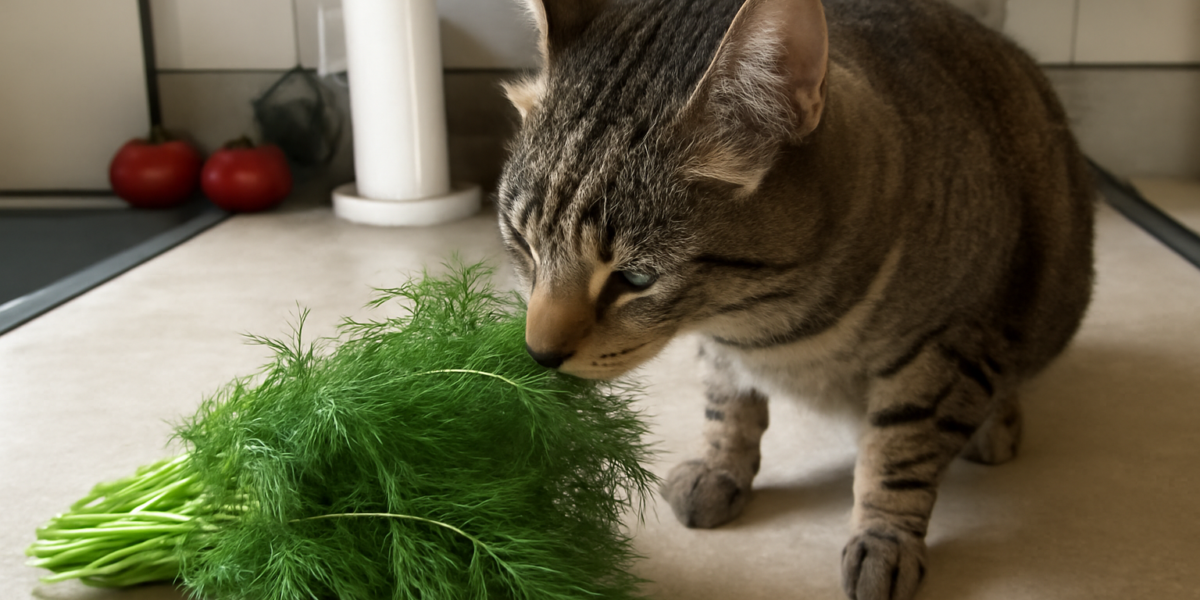
Dill is a fragrant herb used widely in cooking, from pickles and fish dishes to salads and sauces. Its distinctive feathery fronds and aromatic scent can attract the attention of curious cats, especially if you grow dill in your kitchen garden or have fresh bunches on your countertop. You may have caught your cat sniffing or even nibbling at the delicate green leaves.
The good news for cat owners is that dill is one of the safer herbs when it comes to feline exposure. Unlike many common household plants and herbs that can pose serious risks to cats, dill is recognized as non-toxic to felines. However, “safe” does not necessarily mean “beneficial,” and understanding the full picture will help you make the best decisions about sharing herbs with your cat.
Quick Answer: Can Cats Eat Dill?
Yes, dill is safe for cats. The ASPCA lists dill (Anethum graveolens) as non-toxic to cats, dogs, and horses. If your cat nibbles on a frond of fresh dill, there is no cause for alarm. The herb does not contain any compounds known to be poisonous to felines, and occasional exposure is completely harmless.
That said, dill provides essentially no nutritional benefit to cats. As obligate carnivores, cats have no dietary requirement for herbs or plant matter. While dill contains various vitamins and minerals beneficial to humans, cats cannot efficiently extract or utilize these nutrients from plant sources. Their bodies are designed to obtain nutrition from animal-based foods.
A small amount of fresh dill — a leaf or two — is perfectly fine as an occasional curiosity. Some cats are actually attracted to the scent of dill, which belongs to the same plant family (Apiaceae) as some herbs cats naturally show interest in. However, large quantities of any plant material can cause mild digestive upset in cats, so moderation remains important even with non-toxic herbs.
Nutritional Profile of Dill
Fresh dill is a nutrient-dense herb from a human perspective, though these nutrients are largely inaccessible to cats. A tablespoon of fresh dill weed contains:
- Calories: Less than 1 calorie per tablespoon, making it essentially calorie-free.
- Vitamin A: Small amounts, though cats require preformed vitamin A from animal sources and cannot convert the plant-based precursors found in dill.
- Vitamin C: Present in small amounts, but cats produce their own vitamin C and do not need dietary supplementation.
- Manganese: Trace amounts of this mineral involved in bone health and metabolism.
- Iron: Very small amounts contributing to red blood cell function.
- Folate: Traces of this B vitamin important for cell division.
- Volatile oils: Dill contains aromatic compounds including carvone, limonene, and dill ether that give it its characteristic scent. These are present in very low concentrations in fresh dill leaves and are generally safe for cats.
- Flavonoids: Small amounts of antioxidant compounds.
While these nutrients are valuable in human nutrition, they do not meaningfully contribute to feline health. Cats cannot convert beta-carotene to vitamin A, do not need vitamin C from food, and obtain minerals most efficiently from animal tissue. The primary interaction your cat will have with dill is sensory — the aroma — rather than nutritional.
Benefits and Risks of Dill for Cats
Benefits
- Non-toxic safety: Dill is confirmed non-toxic by the ASPCA, providing peace of mind for cat owners who grow this herb at home or use it regularly in cooking.
- Sensory enrichment: The aromatic compounds in dill can provide mild sensory stimulation for cats. Some cats enjoy sniffing herbs, and offering a small sprig of dill can serve as brief environmental enrichment.
- Traditional digestive support: In herbal medicine traditions, dill has been associated with soothing digestive discomfort. While clinical evidence in cats is lacking, the herb is unlikely to cause harm and may have very mild calming effects on the stomach.
- Safe garden plant: For cat owners who garden, dill is a safe choice that will not pose a risk if your cat decides to investigate or nibble the plants.
- Fresh breath: Anecdotally, some cat owners report that a small amount of fresh herbs like dill can mildly freshen a cat’s breath, though this effect is minor and temporary.
Risks
- Digestive upset from large quantities: While a nibble of dill is fine, eating a large amount of any plant material can cause vomiting, diarrhea, or stomach discomfort in cats. Their short digestive tracts are not designed to process significant plant fiber.
- Dill essential oil concentration: Concentrated dill essential oil is very different from fresh dill herb. Essential oils should never be applied to cats or used in diffusers around them, as the concentrated volatile compounds can cause respiratory irritation, liver damage, or toxicity.
- Pesticide exposure: Non-organic dill may carry pesticide residues that could be harmful to cats. If offering dill to your cat, use organic herbs or thoroughly wash conventionally grown dill.
- Confusion with toxic plants: Dill belongs to the Apiaceae family, which also includes some toxic plants. Ensure you are offering actual dill and not a potentially dangerous look-alike herb.
- Allergic reactions: Though rare, individual cats may show sensitivity to dill, manifesting as skin irritation, sneezing, or gastrointestinal upset. Discontinue if any adverse reaction occurs.
- Dill pickles and prepared foods: Dill-flavored foods like pickles, dill sauce, or dill-seasoned dishes contain salt, vinegar, garlic, and other ingredients that are problematic for cats. Only fresh, plain dill herb is safe.
How to Serve Dill Safely to Your Cat
If your cat shows interest in dill, there is no harm in allowing a small interaction. Offer a single fresh dill frond for your cat to sniff and, if they choose, nibble. Do not force the herb on your cat — many felines will sniff it and walk away, which is perfectly normal.
Use only fresh dill weed (the feathery green leaves), not dill seeds. Dill seeds are more concentrated in volatile oils and pose a potential choking hazard for cats. Fresh dill is softer, easier to chew, and contains lower concentrations of essential oils.
Wash the dill thoroughly to remove any pesticide residues, dirt, or potential contaminants. Organic dill is preferable. A small leaf or two is an appropriate amount — there is no reason to offer more, as there is no nutritional benefit to pursue.
Do not serve dill that has been prepared with any other ingredients. Dill butter, dill sauce, dill pickles, and any cooked preparations containing dill alongside garlic, onion, salt, or other seasonings are not safe for cats. The dill itself may be fine, but the accompanying ingredients often are not.
If you grow dill in a home garden, your cat may enjoy occasionally visiting the plants. This is safe and can provide mild enrichment. Just ensure that other plants in the garden are also cat-safe, as cats may not discriminate between different herbs and plants.
Signs of Problems After Eating Dill
Problems after eating a small amount of fresh dill are very unlikely, but if your cat consumed a large quantity or had an unusual reaction, watch for:
- Vomiting, which may contain plant material
- Diarrhea or loose stools
- Drooling or excessive salivation
- Loss of appetite
- Sneezing or nasal irritation from the aromatic compounds
- Skin irritation if the cat rubbed against crushed dill extensively
These symptoms, if they occur at all, should be mild and resolve within 24 hours. If your cat shows severe or prolonged symptoms, contact your veterinarian. This is more likely if the cat consumed a dill-containing prepared food (with garlic, onion, or excess salt) rather than the plain herb itself.
If your cat was exposed to concentrated dill essential oil — either through skin contact, ingestion, or inhalation from a diffuser — the situation is more serious. Watch for difficulty breathing, coughing, drooling, tremors, or lethargy, and contact your vet immediately. Essential oils are far more potent than fresh herbs and require different handling around cats.
Healthy Alternatives to Dill
If you are looking for safe herbs and plants to enrich your cat’s environment, consider these options:
- Cat grass: The gold standard for cats who like to nibble greens. Wheat grass, oat grass, and barley grass are all safe and specifically grown for feline enjoyment.
- Catnip: The classic cat herb. Nepeta cataria produces a well-known euphoric response in approximately 50-70% of cats. It is completely safe and can provide excellent enrichment.
- Cat thyme (Teucrium marum): Despite its name, this is not true thyme. Many cats enjoy its scent, and it can be an alternative for cats that do not respond to catnip.
- Valerian root: Some cats have a strong positive response to valerian, similar to catnip. The dried root can be used in toys or offered for sniffing.
- Basil: Another non-toxic herb that some cats find interesting. Fresh basil is safe for curious nibbling.
- Cooked plain fish: For an actual nutritional treat, a small piece of plain cooked fish provides far more benefit than any herb while satisfying your cat’s carnivorous nature.
Want to share your herb garden with a feline companion? Visit our adoption page at Walk Me Home Rescue to find cats in need of forever homes.
Frequently Asked Questions
Can cats eat dill pickles?
No, dill pickles are not safe for cats. While the dill herb itself is non-toxic, pickles contain high amounts of salt, vinegar, and often garlic — all of which can be harmful to cats. The sodium content alone in a single pickle far exceeds what is appropriate for a cat. If your cat takes a tiny lick of pickle juice, it is unlikely to cause serious harm, but pickles should not be offered intentionally.
Is dried dill safe for cats?
Dried dill weed is not toxic to cats, but it is more concentrated than fresh dill. The aromatic compounds are stronger in dried form, and the dry texture can cause coughing or irritation if inhaled. A tiny pinch of dried dill sprinkled on food is unlikely to cause problems, but fresh dill is the gentler option. There is no nutritional reason to add dried dill to your cat’s food.
Can dill essential oil be used around cats?
No. Concentrated essential oils, including dill essential oil, should not be diffused, applied topically, or used around cats. Cats lack certain liver enzymes needed to metabolize concentrated essential oil compounds, making them susceptible to toxicity from oils that are safe for humans. Keep all essential oils stored securely away from cats.
Why does my cat like the smell of dill?
Cats have an extremely sensitive sense of smell and may find the aromatic compounds in dill interesting or stimulating. Dill belongs to the Apiaceae family, which includes several plants with strong scent profiles. Some cats are attracted to various herbs the way others are drawn to catnip — it is a form of sensory exploration. If your cat enjoys sniffing dill, it is a harmless behavior to allow.
Can I grow dill as a cat-safe houseplant?
Yes, dill is a safe herb to grow in a home with cats. It is non-toxic, and if your cat nibbles on it occasionally, no harm will come of it. However, dill is an annual herb that requires good light and may not thrive as a permanent indoor plant. If you want a reliable, long-term green for your cat to enjoy, dedicated cat grass kits are a better option.
What other herbs are safe for cats?
Several common culinary herbs are considered non-toxic to cats, including basil, rosemary, sage, cilantro, and thyme. However, some herbs are dangerous — for example, chives, garlic chives, and lemongrass can be toxic. Always verify a specific herb’s safety before allowing your cat access to it. The ASPCA maintains a comprehensive database of toxic and non-toxic plants that is a valuable reference for cat owners.
Dill is one of the safer herbs to have around cats, offering peace of mind for cat owners who cook with fresh herbs regularly. While it provides no nutritional value for your feline friend, an occasional sniff or nibble is perfectly harmless. For more herb and food safety guides, check out our articles on thyme and bean sprouts. Ready to add a cat to your family? Visit our adoption page at Walk Me Home Rescue.


