
Last updated: May 4, 2026
In this article
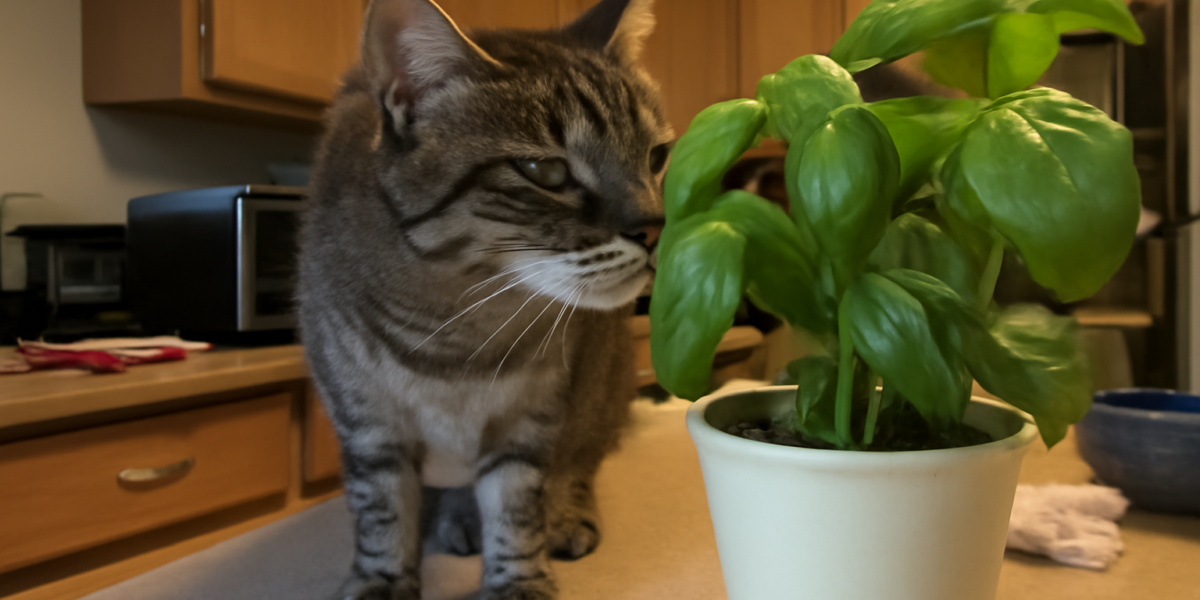
If you grow basil on your windowsill or in your garden, you may have noticed your cat sniffing, pawing at, or even nibbling on the fragrant leaves. Cats are attracted to many aromatic plants, and the strong scent of basil can pique their curiosity. The good news for herb-loving cat owners is that basil is one of the safer plants your cat might encounter in your kitchen garden. But as with any food outside of a cat’s normal diet, there are some important considerations to keep in mind before letting your cat graze freely.
Quick Answer: Yes, basil is non-toxic to cats and is generally safe if your cat nibbles a small amount. The ASPCA lists basil (Ocimum basilicum) as non-toxic to cats. However, it provides no nutritional benefit for obligate carnivores and should not be fed in large quantities, as it can cause mild digestive upset.
Is Basil Safe for Cats?
Basil (Ocimum basilicum) is classified as non-toxic to cats by the ASPCA, making it one of the safer herbs your cat might encounter. Common varieties including sweet basil, Thai basil, lemon basil, and purple basil are all considered non-toxic to felines.
This does not mean basil is a recommended food for cats. As obligate carnivores, cats have no dietary need for herbs or plant material. Their digestive systems are optimized for animal protein and fat, not the compounds found in plant leaves. However, if your cat nibbles a leaf or two out of curiosity, there is no cause for concern.
The safety assessment applies to fresh basil leaves and, to a lesser extent, dried basil. It does not extend to basil essential oil, which is concentrated and can be harmful to cats if ingested, applied topically, or inhaled from a diffuser. Always distinguish between the plant itself and its extracted essential oil when assessing safety for your cat.
Nutritional Profile of Basil for Cats
Fresh basil contains several compounds that are beneficial to humans but have limited relevance to feline nutrition:
- Vitamin K: Basil is rich in vitamin K, which supports blood clotting. Cats produce some vitamin K through gut bacteria and obtain the rest from their commercial food, so dietary supplementation through basil is unnecessary.
- Vitamin A: Present in basil as beta-carotene, which humans convert to vitamin A. Cats have limited ability to convert beta-carotene and instead rely on preformed vitamin A from animal sources like liver.
- Antioxidants: Basil contains flavonoids and polyphenols with antioxidant properties. While antioxidants are generally beneficial, cats obtain what they need from their balanced commercial diet.
- Essential oils: Basil contains eugenol, linalool, and other volatile compounds that give it its distinctive aroma. In the small amounts present in a leaf or two, these are not harmful. In concentrated essential oil form, they can be toxic.
- Fiber: A small amount of plant fiber is present, which most cats do not need from supplemental sources.
In summary, while basil is nutritious for humans, cats cannot effectively utilize most of its beneficial compounds. The quantities a cat might consume are too small to have any meaningful positive or negative nutritional impact.
Benefits of Basil for Cats
The benefits of basil for cats are minimal from a nutritional standpoint, but there are some indirect advantages worth mentioning.
Safe plant interaction: Cats have a natural instinct to interact with plants. Providing access to non-toxic plants like basil can satisfy this instinct without the risks posed by toxic houseplants such as lilies, sago palms, or philodendrons.
Enrichment: The aromatic quality of basil can provide sensory enrichment for indoor cats. Sniffing and investigating aromatic plants stimulates a cat’s keen sense of smell and provides mental engagement.
Digestive aid (anecdotal): Some holistic veterinary practitioners suggest that cats may instinctively seek out certain plants to aid digestion or induce vomiting to clear hairballs. While there is limited scientific evidence for this, the behavior is commonly observed and basil is a safe plant for this purpose.
Anti-inflammatory properties: Basil contains eugenol, which has natural anti-inflammatory properties. While the amount a cat might ingest from a leaf is far too small to have a therapeutic effect, it is at least not harmful in these trace quantities.
Risks and Side Effects of Basil for Cats
While basil is non-toxic, there are a few risks to be aware of:
Gastrointestinal upset: If a cat eats more than a few leaves, the unfamiliar plant material can cause mild vomiting, diarrhea, or reduced appetite. This is not a toxicity reaction but rather the cat’s digestive system responding to food it is not designed to process in quantity.
Essential oil concentration: Basil essential oil is much more concentrated than the essential oils present in fresh leaves. Never apply basil essential oil to your cat, add it to their food, or use it in diffusers in enclosed spaces with cats. Cats lack the liver enzyme glucuronyl transferase needed to metabolize many essential oil compounds.
Pesticide exposure: Basil from gardens or stores may have been treated with pesticides that are harmful to cats. If your cat nibbles basil, ensure it was grown organically or wash it thoroughly. Better yet, grow your own pesticide-free basil if you know your cat is inclined to sample it.
Allergic reactions: Though rare, some cats may have individual sensitivities to basil. Signs include excessive drooling, pawing at the mouth, swelling around the face, or skin irritation at the point of contact.
Overconsumption: Cats that develop a taste for basil might eat enough to cause more significant digestive distress. If your cat is persistently eating large amounts of basil, move the plant out of reach and consider providing cat grass as an alternative.
How to Safely Allow Your Cat Around Basil
If you want to grow basil and have a curious cat, here are some practical guidelines:
Allow your cat to sniff and occasionally nibble a leaf, but discourage sustained grazing. One or two small leaves once in a while is perfectly fine. If your cat seems overly interested in your basil plant and is eating it aggressively, relocate the plant to a spot your cat cannot access.
Ensure your basil has not been treated with any pesticides, herbicides, or fertilizers that could be harmful if ingested by your cat. Organic, home-grown basil is the safest option.
Do not offer basil-containing human foods to your cat. Pesto, for instance, contains garlic (toxic to cats), pine nuts, Parmesan cheese, and olive oil — none of which are appropriate for feline consumption. Similarly, tomato-basil sauces often contain onion and garlic.
- Kittens: A small nibble of a basil leaf is not harmful, but kittens should be eating kitten food to support their rapid growth. Discourage regular plant nibbling to avoid establishing a habit.
- Adult cats (6–10 lbs): One to two small basil leaves occasionally is safe. Monitor for any digestive upset the first time your cat tries basil.
- Large cats (over 10 lbs): Same guidelines. A couple of leaves are fine; more than that increases the chance of mild stomach upset.
Signs of Problems After Eating Basil
While serious reactions to basil are uncommon, watch for these signs if your cat has eaten more than a small amount:
- Vomiting (usually occurs within a few hours if it is going to happen)
- Diarrhea or soft stools
- Reduced appetite for the next meal
- Drooling or lip-licking
- Lethargy (uncommon and usually mild)
These symptoms, if they occur at all, are typically self-limiting and resolve within 12 to 24 hours. If symptoms are severe, persistent, or accompanied by any unusual behavior, contact your veterinarian. If you suspect your cat was exposed to basil essential oil rather than the fresh plant, seek veterinary advice promptly, as essential oils are significantly more concentrated and potentially harmful.
Other Safe and Unsafe Herbs for Cats
If you grow a variety of herbs, it helps to know which ones are safe and which are dangerous for your cat:
Generally safe herbs:
- Basil (the subject of this article)
- Catnip
- Thyme (in small amounts)
- Cilantro or coriander
- Rosemary (in very small amounts)
- Dill
Herbs to use with caution or avoid:
- Oregano — mildly toxic to cats due to essential oil content. See can cats eat oregano.
- Mint varieties (except catnip and catmint) — mildly to severely toxic. Learn more at can cats eat mint.
- Chives — toxic, causes oxidative damage to red blood cells (allium family).
- Garlic — highly toxic to cats.
Thinking about bringing a cat home? Browse our adoption page to find felines ready for their forever families.
Frequently Asked Questions
Can cats eat dried basil?
Dried basil is not toxic to cats, but the concentration of essential oils is slightly higher per gram than in fresh leaves due to the removal of water. A sprinkle of dried basil is unlikely to cause any issues, but there is no reason to add it to your cat’s food. If a small amount accidentally ends up in your cat’s dish, it is not a cause for concern.
Is basil essential oil safe for cats?
No. Basil essential oil is a highly concentrated extract that contains eugenol and linalool at levels much higher than those found in fresh leaves. Cats are particularly sensitive to essential oils because they lack certain liver enzymes needed for detoxification. Never apply basil essential oil to your cat, add it to their food or water, or use it in a diffuser in an enclosed room where your cat spends time.
My cat keeps eating my basil plant — how do I stop this?
If your cat is persistently eating your basil, the simplest solution is to move the plant to a location your cat cannot access — a high shelf, a closed room, or a hanging planter. You can also provide cat grass (wheatgrass or oat grass) as a safe alternative. Many cats that nibble on household plants are satisfying a natural urge for plant fiber, and cat grass can redirect this behavior away from your herbs.
Can cats eat pesto?
No. While the basil in pesto is non-toxic, pesto also contains garlic (toxic to cats), Parmesan cheese (high in sodium and lactose), pine nuts (high in fat), and olive oil. Garlic alone is enough to make pesto dangerous for cats, as it causes oxidative damage to red blood cells that can lead to hemolytic anemia. Never offer pesto to your cat.
Is Thai basil safer or more dangerous than sweet basil for cats?
All common culinary basil varieties, including sweet basil, Thai basil, lemon basil, and purple basil, are classified as non-toxic to cats by the ASPCA. The essential oil profiles differ slightly between varieties, but none are considered dangerous to cats when consumed in small amounts as the fresh plant. The same safety guidelines apply to all varieties: small amounts occasionally are fine, large amounts are not recommended.
Will basil interact with my cat’s medication?
In the tiny amounts a cat might consume from nibbling a leaf, basil is extremely unlikely to interact with any medication. However, if your cat is on medication for any health condition, it is always best practice to mention any dietary changes or unusual consumption to your veterinarian. This applies to all supplemental foods, not just basil.


