
Last updated: May 16, 2026
In this article
- Thyme and Cats: Mostly Reassuring, with One Important Caveat
- What “Thyme” Means in Different Contexts
- Why Fresh Thyme Is Generally Safe for Cats
- Where Thyme Becomes Dangerous: Essential Oils
- Symptoms After Fresh Thyme Ingestion
- What to Do If Your Cat Eats Thyme
- Thyme Compared with Other Common Kitchen Herbs
- Building a Cat-Friendly Herb Garden
- When Thyme Is Part of a Bigger Plant Question
- Frequently Asked Questions
Thyme and Cats: Mostly Reassuring, with One Important Caveat
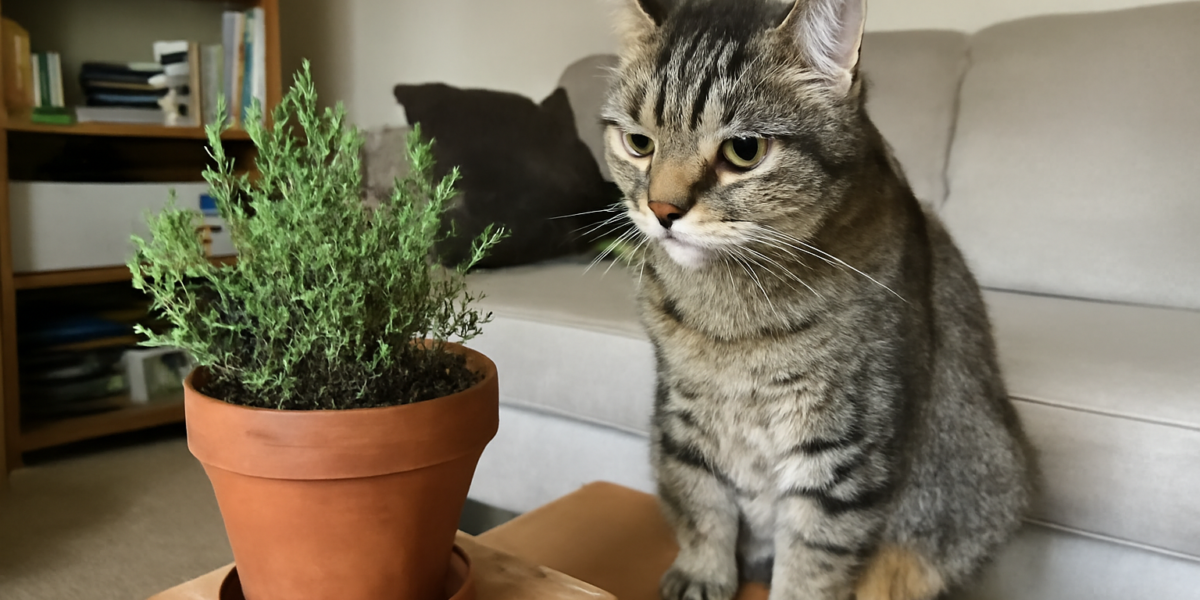
Common garden thyme (Thymus vulgaris) is listed as non-toxic to cats by the ASPCA, and a curious cat that chews a stem from your kitchen herb garden is very unlikely to come to harm. The fresh herb in small amounts is one of the more cat-friendly entries in the Mediterranean herb family, sitting at the mild end of the toxicity spectrum even when ingested in larger quantities.
The important caveat is concentrated thyme essential oil, which is a different and significantly more dangerous product than the fresh plant. Cats have limited ability to metabolize the phenolic compounds (especially thymol) found in concentrated essential oils because they lack adequate hepatic glucuronyl transferase enzymes. Diffused thyme oil, undiluted thyme oil applied to skin, or large ingestions of essential oil can cause serious illness. So if your question is “did my cat just nibble a fresh leaf in the windowsill pot,” exhale and read on. If your question involves any essential oil exposure, call your veterinarian or ASPCA Animal Poison Control at 888-426-4435 right away.
What “Thyme” Means in Different Contexts
The word “thyme” usually refers to common thyme, Thymus vulgaris, the small woody-stemmed perennial herb used in Mediterranean cooking. There are also lemon thyme (Thymus citriodorus), creeping thyme (Thymus serpyllum) used as a ground cover, and a number of ornamental cultivars. From a cat-toxicity perspective, the fresh herbs across the Thymus genus are broadly similar.
Thyme essential oil is steam-distilled from the leaves and flowering tops, and the resulting product is hugely more concentrated than the original plant. A few drops of essential oil represent the volatile compounds from many ounces of leaf material. That concentration is exactly why diffusers, room sprays, and topical “natural” pet products with essential oils are a hidden risk for cats even when the original plant is benign.
Wild thyme growing in lawns or gardens, dried thyme in the spice rack, and the sprigs that come on a sprig garnish are all the fresh-herb category for cats. Concentrated thyme oils, neat or in carrier blends, are a separate conversation.
Why Fresh Thyme Is Generally Safe for Cats
The ASPCA toxic plant database lists Thymus vulgaris as non-toxic for cats, dogs, and horses. This means the fresh plant has not been associated with significant toxicity at the levels a household pet would encounter. Cats that chew a leaf, sniff at a sprig, or steal a piece of seasoned chicken with a bit of thyme on it are generally fine.
That does not mean unlimited thyme is a great idea. Most cats are obligate carnivores and do not need vegetable matter at all. Large or repeated ingestions of any herb can cause minor gastrointestinal upset just from the sheer volume of plant fiber, even when the plant itself is non-toxic. Vomiting after eating a mouthful of any houseplant is a common, mostly self-limiting outcome.
If your cat is grazing on the windowsill thyme regularly, that is more of a behavior question than a toxicity question. Cat grass, lemongrass alternatives, and other deliberately offered safe greenery can redirect that interest. Our piece on cat-safe houseplants covers the broader landscape.
Where Thyme Becomes Dangerous: Essential Oils
Cats metabolize many compounds differently from dogs and humans, and one of the most significant gaps is in the liver enzyme system that processes phenolic compounds. Compounds like thymol (the principal aromatic in thyme) are processed through this pathway, and cats are slower to clear them than other species. Repeated or high-dose exposure can lead to toxic accumulation.
Practical examples of risky exposures include diffusing thyme essential oil in a closed room with a cat present, applying topical natural-pest-control products containing concentrated thyme oil to a cat’s coat, allowing a cat to lick or groom a surface that has been wiped with undiluted thyme oil, and ingestion of essential oil bottles or oil-soaked materials.
Symptoms of essential oil toxicity in cats can include drooling, vomiting, tremors, ataxia (drunken-looking walking), low body temperature, weakness, breathing difficulty, and changes in liver function on bloodwork. Onset can be rapid with skin or oral exposure to undiluted oil. Read more in our companion piece on essential oils that are toxic to cats.
Symptoms After Fresh Thyme Ingestion
Most cats that nibble fresh thyme show no symptoms at all. A small minority may have mild, self-limiting signs:
- One or two episodes of vomiting (often containing chewed leaf material)
- Mild, transient diarrhea
- Brief loss of appetite
- Salivation if the leaf was particularly fibrous
These mild signs typically resolve on their own within several hours and rarely require veterinary intervention. If symptoms persist beyond 24 hours, worsen, or are accompanied by lethargy, weakness, or other concerning behavior, call your veterinarian. As always, call rather than guess if you are unsure.
The picture changes if the cat got into something other than fresh thyme. If you find your cat near an open essential oil bottle, a thyme-oil cleaning product, or a topical pet product containing concentrated thyme oil, treat the situation as a potential emergency and call a veterinary professional immediately.
What to Do If Your Cat Eats Thyme
For a small fresh-leaf nibble in a healthy adult cat without underlying medical conditions, you can usually monitor at home. Watch for vomiting or diarrhea over the next several hours. Provide fresh water and avoid offering food right away if the cat seems queasy. Contact your veterinarian if signs persist, worsen, or if your cat seems unwell.
For ingestions that are larger or that involve products with concentrated thyme (essential oils, oil-containing pet sprays, herbal supplement capsules), call your veterinarian or one of the poison control hotlines. ASPCA Animal Poison Control is at 888-426-4435 and Pet Poison Helpline is at 855-764-7661, both with consultation fees.
If skin or fur exposure to essential oil has occurred, a gentle bath with mild dish soap (under veterinary direction) can help reduce continued absorption. Do not wipe with alcohol or other solvents, and do not use undiluted dish soap directly on a cat’s eyes or face.
Thyme Compared with Other Common Kitchen Herbs
For context, our other guides on Mediterranean kitchen herbs and cats are useful to read alongside this one. The cat-specific picture for oregano is somewhat more cautious because oregano is rated as toxic by the ASPCA — see that article for the contrast. Sage is similar to oregano (read more in our piece on sage and cats).
Other herbs in the cat-safe-or-mild category include rosemary, although you should still read our piece on rosemary safety in cats for the essential oil distinction. Mint is more nuanced — see mint and cats for details. Lavender deserves its own caution because of the essential oil concern, covered in lavender and cats.
If you cook with thyme regularly and your cat is interested in the kitchen, the practical message is reassuring: a small fresh-leaf encounter or a stolen piece of seasoned chicken is not a reason to panic. The bigger question is what other herbs and products are within reach.
Building a Cat-Friendly Herb Garden
An herb garden can be a lovely shared space for a cat and a cook. The basic principles are: lean toward fresh plants over essential oils, use windowsill pots for the cat-safe options and keep concentrated oils on a high shelf, and watch for ornamental plants in the same beds that may be more concerning than the culinary herbs.
Fresh thyme, basil, rosemary (in moderation), parsley (in small amounts; avoid spring parsley which is different), and lemon balm are all generally cat-tolerable in fresh form. Cat grass and catnip can be deliberately offered for grazing. The Mediterranean garden picture starts to look quite welcoming once you remove the concentrated oils from the equation.
For inspiration on safer plantings overall, browse pet-safe garden plants. If you are also setting up a household around a new cat, our cat adoption hub includes plant safety preparation resources alongside the rest of the bring-them-home checklist.
When Thyme Is Part of a Bigger Plant Question
Sometimes the call we get at the rescue is “my cat is in the herb pot — is she going to be okay?” and the answer depends on what else is in the pot. A mixed herb planter that contains thyme and oregano is mostly thyme-safe and oregano-mildly-toxic. A planter with thyme and chives is a different situation entirely because chives (and onions and garlic) are seriously toxic to cats.
If you are not sure what is in a pot, photograph everything growing there and look up each plant individually. The labels that come on nursery pots are useful but not always present, and “Italian seasoning blend” containers in stores often combine several species in one pot.
The general rule for any unfamiliar herb encounter is: identify the species first, look up the toxicity, and call your vet if the species is unfamiliar or if your cat is showing any symptoms. Mistaken identifications cause more vet emergencies than the herbs themselves.
Frequently Asked Questions
Is thyme really safe for cats?
The fresh herb (Thymus vulgaris) is listed as non-toxic by the ASPCA. Most cats can encounter fresh thyme without harm. Concentrated thyme essential oil is a different product and is significantly more dangerous, especially for cats, due to their limited ability to metabolize phenolic compounds.
Can I diffuse thyme essential oil if I have a cat?
Generally not recommended. Cats can be exposed through inhalation and through grooming oil residue from their fur. If you must use a diffuser, run it only in rooms your cat cannot access, with adequate ventilation, and watch for any signs of respiratory or neurological symptoms.
What should I do if my cat ate a sprig of thyme?
For a healthy adult cat with no underlying medical conditions, monitor at home. Mild vomiting or transient diarrhea is possible but usually self-limiting. If symptoms persist beyond 24 hours, worsen, or are accompanied by lethargy or other concerning signs, call your veterinarian.
Are dried thyme and ground thyme as safe as fresh thyme?
Dried thyme in normal culinary amounts is similar to fresh in toxicity profile and is generally considered low-risk for cats. The concern again is concentrated forms (essential oil), not the dried herb on your spice rack.
What about thyme tea or thyme supplements?
Herbal teas and supplements vary widely in concentration and may contain extracts closer to essential oil concentrations than to fresh herb. Do not give thyme supplements to cats without veterinary guidance, and keep capsules and bottles out of reach.


