
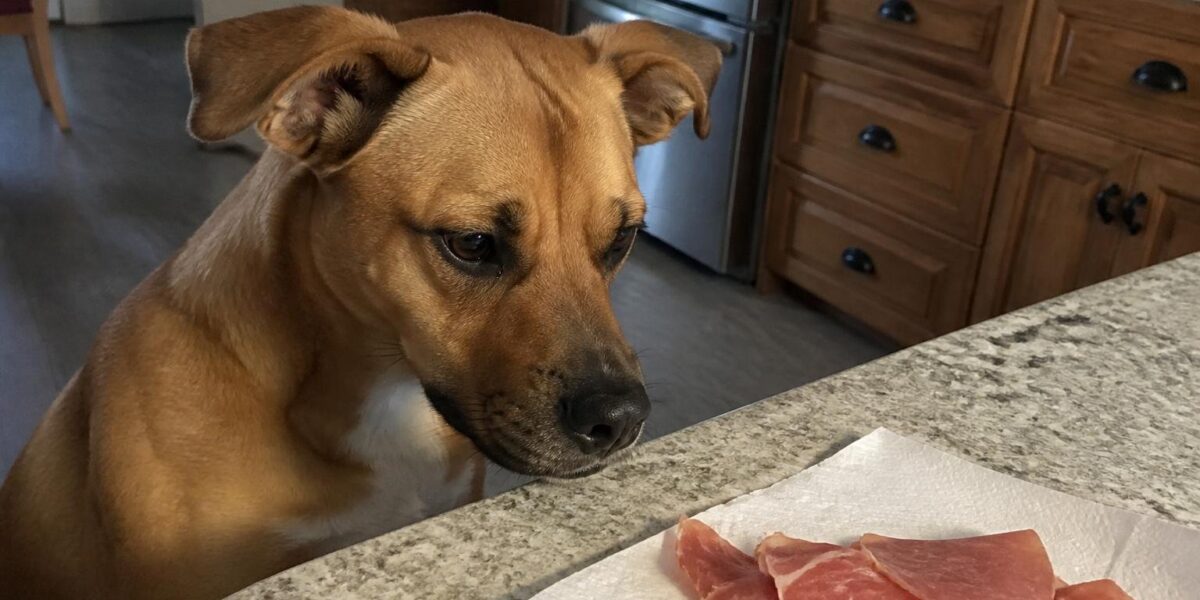
Can Dogs Eat Prosciutto? The Short Answer
It is best to avoid giving dogs prosciutto. This Italian cured ham is extremely high in salt and contains nitrates and other curing agents that are not good for dogs. While a single tiny scrap will not poison a healthy dog, prosciutto is one of the least dog-friendly meats out there, so it should be a rare, tiny exception at most — and ideally skipped altogether.
In this article
- Can Dogs Eat Prosciutto? The Short Answer
- Why Prosciutto Is Risky for Dogs
- Safer Protein Treats Instead
- What If My Dog Already Ate Prosciutto?
- Understanding the Salt and Nitrate Problem
- Prosciutto at Holidays and Gatherings
- Keeping Cured Meats Out of Reach
- How Much Salt Is Too Much for a Dog?
- Reading Labels on Cured and Deli Meats
- Frequently Asked Questions
The problem is not the pork itself but how prosciutto is made. The curing process loads it with sodium and preservatives, and the high fat content adds the risk of digestive upset and pancreatitis. There are far better ways to treat your dog with meat.
If your dog has a heart condition, kidney disease, or a history of pancreatitis, prosciutto should be completely off-limits. Always talk to your veterinarian about appropriate treats.
Why Prosciutto Is Risky for Dogs
Prosciutto carries several stacked risks that make it a poor choice:
- Extremely high salt. Curing relies on heavy salting. Too much sodium can cause excessive thirst, vomiting, and, in large amounts, dangerous salt poisoning.
- Nitrates and nitrites. These curing preservatives are not ideal for dogs and offer no benefit.
- High fat. Rich, fatty cured meats can trigger pancreatitis, a painful and potentially serious condition.
- Possible seasonings. Some cured meats include garlic or other additives that are toxic to dogs.
For these reasons, prosciutto belongs in the same risky category as other cured and processed meats like bacon, ham, and salami — all salty, fatty, and best avoided.
Safer Protein Treats Instead
The good news is your dog does not need cured meat to enjoy a tasty protein treat. Much better options include:
- Plain cooked, unseasoned chicken breast.
- Lean cooked beef with the fat trimmed.
- Plain cooked turkey or other lean meats.
These deliver the protein and flavor dogs love without the heavy salt, nitrates, and fat of prosciutto. Cooking your own plain meat means you control exactly what goes into your dog’s treat.
What If My Dog Already Ate Prosciutto?
If your dog snagged a small piece of prosciutto, do not panic — a tiny amount usually causes nothing worse than mild stomach upset. Offer plenty of fresh water to help flush the extra salt, and watch them over the next several hours.
However, if your dog ate a large amount, the salt and fat become a real concern. Watch for these symptoms:
- Excessive thirst or urination
- Vomiting or diarrhea
- Lethargy or weakness
- Tremors, disorientation, or seizures (signs of salt poisoning)
- Abdominal pain or a hunched posture (possible pancreatitis)
If you notice any of these signs, or if your dog ate prosciutto seasoned with garlic, contact your veterinarian or an emergency clinic promptly.
Understanding the Salt and Nitrate Problem
To appreciate why prosciutto is such a poor choice, it helps to understand what curing does. Prosciutto is made by salting raw pork and air-drying it for months. That long cure draws out moisture and concentrates everything, including the salt.
The result is a meat that is intensely salty by design. For a small dog, even a single slice can deliver more sodium than they should have in a day. Too much salt strains the kidneys and heart and, in large amounts, can cause life-threatening salt poisoning.
Nitrates and nitrites are added during curing to preserve color and prevent bacterial growth. While they serve a purpose in food preservation, they offer no benefit to your dog and are best avoided. This combination of heavy salt and curing agents is exactly why cured meats like pepperoni and prosciutto sit firmly on the avoid list.
Prosciutto at Holidays and Gatherings
Prosciutto tends to appear at exactly the moments when it is hardest to watch your dog — holiday spreads, dinner parties, and antipasto platters. These occasions are when accidental ingestion is most likely.
During gatherings, food is often left at dog height on coffee tables and low counters, and well-meaning guests love to share scraps. A determined dog can polish off a plate of cured meat in seconds while everyone is chatting. That is a recipe for an upset stomach at best and a salt or pancreatitis emergency at worst.
Plan ahead for these events. Feed your dog beforehand so they are less tempted, keep platters well out of reach, and let guests know the rules. If you want your dog to join the festivities, set aside a few pieces of plain cooked turkey or a special dog treat just for them.
Keeping Cured Meats Out of Reach
Because prosciutto and similar cured meats are so tempting and so salty, prevention is the best approach. Keep charcuterie boards, deli platters, and antipasto plates well out of your dog’s reach, especially during gatherings when food is left out.
Let guests know not to slip your dog cured meats, no matter how much your pup begs. A consistent rule across the household keeps your dog safe and avoids accidental salt overload. If you want to include your dog in the fun, set aside a few pieces of plain cooked meat or a dog-safe treat just for them.
How Much Salt Is Too Much for a Dog?
Since salt is the headline problem with prosciutto, it helps to understand how much sodium a dog can safely handle. Dogs need only a modest amount of salt in their diet, and a complete commercial food already provides what they require.
Cured meats like prosciutto can contain enormous amounts of sodium relative to a dog’s needs. A small dog in particular can exceed a healthy daily sodium intake from just a slice or two. This is why even a “little taste” of prosciutto is more impactful than it seems, especially for tiny breeds.
Watch for early signs of too much salt, such as excessive thirst and frequent urination as the body works to flush it out. In larger amounts, salt can cause vomiting, diarrhea, and eventually the tremors and disorientation of salt poisoning. Always keep fresh water available, and call your veterinarian if you suspect your dog has had a large dose of salt.
Reading Labels on Cured and Deli Meats
Prosciutto is just one of many cured meats that can tempt a dog, and they share similar problems. Learning to spot the warning signs on a label helps you protect your dog from the whole category.
Be cautious with any meat that lists:
- High sodium — common in all cured and deli meats.
- Nitrates and nitrites — curing agents with no benefit for dogs.
- Garlic and onion — frequently used in cured meats and toxic to dogs.
- Added sugars and spices — unnecessary and sometimes harmful.
If a meat is cured, smoked, or heavily seasoned, it is best kept away from your dog. Instead, reach for plain cooked meats you prepare yourself, where you control every ingredient. Your veterinarian can also suggest healthy, dog-appropriate treats so your dog never has to miss out on something special.
Frequently Asked Questions
Is prosciutto toxic to dogs?
Prosciutto is not toxic in the way chocolate is, but it is extremely salty and high in fat and nitrates, making it a poor and risky choice. It is best avoided.
My dog ate a piece of prosciutto — should I worry?
A small piece usually just causes mild stomach upset. Provide fresh water and monitor your dog. Call your vet if they ate a lot or show concerning symptoms.
Why is prosciutto bad for dogs?
It is cured with large amounts of salt and contains nitrates and fat, which can lead to salt poisoning, digestive upset, or pancreatitis.
What meat can I give my dog instead?
Plain, cooked, unseasoned chicken, lean beef, or turkey are far safer and healthier protein treats than cured meats like prosciutto. You control the salt, fat, and seasonings, so your dog gets the flavor and protein they love without the curing agents.
How much prosciutto is dangerous for a dog?
It depends on your dog’s size, but even a slice or two can push a small dog past a healthy daily salt intake. A single tiny scrap is unlikely to cause harm in a healthy dog, but larger amounts risk salt poisoning and pancreatitis, so prosciutto is best avoided altogether.
Can puppies eat prosciutto?
No. Puppies are small and especially sensitive to excess salt and fat, so cured meats like prosciutto are a poor and risky choice. Stick to puppy-appropriate treats and check with your veterinarian about suitable options for your puppy.


