
Last updated: May 4, 2026
In this article
Can Dogs Eat Smoked Salmon? No, It Is Not Safe
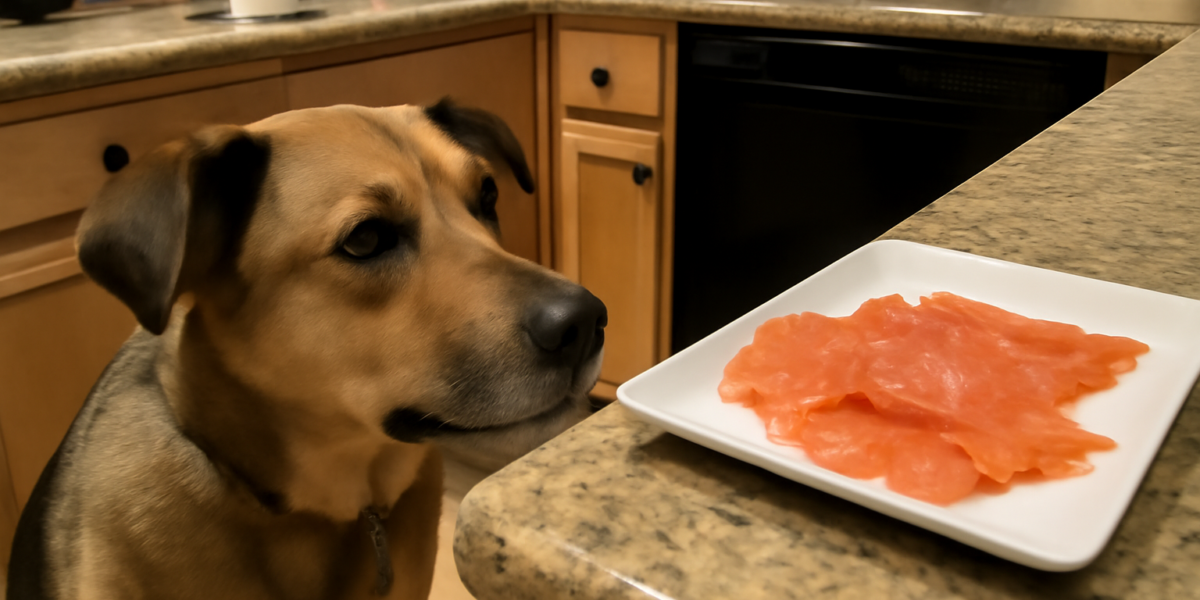
Dogs should not eat smoked salmon. While fully cooked salmon is a healthy treat for dogs, smoked salmon carries two serious risks: salmon poisoning disease caused by the Neorickettsia helminthoeca parasite, and dangerously high sodium levels from the curing process. Both hot-smoked and cold-smoked salmon can be problematic, and the consequences of salmon poisoning disease can be fatal if left untreated.
This is one of those foods where the answer is clear-cut. No matter how much your dog begs for a piece of your smoked salmon bagel, the risks far outweigh any nutritional benefits. Let’s break down exactly why smoked salmon is dangerous and what safer alternatives you can offer instead.
What Is Salmon Poisoning Disease?
Salmon poisoning disease (SPD) is a potentially fatal condition that affects dogs (but not cats or humans). It is caused by a rickettsial organism called Neorickettsia helminthoeca, which is carried by a parasitic fluke (Nanophyetus salmincola) found in certain fish — primarily salmon and other anadromous fish from the Pacific Northwest.
The chain of infection works like this: the fluke infests freshwater snails, which infect fish. When a dog eats raw or undercooked infected fish, the fluke releases the bacteria in the dog’s intestinal tract. The bacteria then spread throughout the body, causing severe illness.
Salmon poisoning disease is most common in the Pacific Northwest region of the United States, where the specific fluke is prevalent. However, with salmon being shipped worldwide, the risk exists anywhere you purchase Pacific salmon. The disease is not found in Atlantic salmon.
Why Smoking Does Not Make Salmon Safe
The critical issue is that smoking does not reliably kill the Neorickettsia parasite. Cold-smoked salmon, the type most commonly found in stores (think lox), is cured at temperatures well below what is needed to destroy the parasite. Even hot-smoked salmon may not reach internal temperatures high enough throughout the fish to guarantee safety. Only thorough cooking to an internal temperature of at least 145 degrees Fahrenheit, sustained throughout the entire piece, reliably kills the organisms.
The Sodium Problem
Even setting aside the salmon poisoning risk, smoked salmon contains far too much sodium for dogs. The smoking and curing process involves heavy salt brining, resulting in sodium levels that can be dangerous for dogs.
A typical 3-ounce serving of smoked salmon contains approximately 600-900 milligrams of sodium. To put that in perspective, a 30-pound dog’s total daily sodium requirement is only about 100-200 milligrams. A single serving of smoked salmon could deliver three to nine times a medium dog’s daily sodium needs.
Excessive sodium intake in dogs can cause:
- Excessive thirst and urination
- Vomiting and diarrhea
- Sodium ion poisoning in severe cases, leading to tremors, seizures, and potentially death
- Kidney strain over time with repeated exposure
- Elevated blood pressure, which is particularly dangerous for dogs with heart conditions
Dogs with heart disease, kidney disease, or those on sodium-restricted diets are at especially high risk from smoked salmon’s salt content.
Symptoms of Salmon Poisoning Disease
If your dog has eaten smoked salmon — or any raw or undercooked salmon — watch closely for symptoms. Salmon poisoning disease typically appears within 5-7 days of ingestion, though it can take up to 14 days. The disease progresses quickly, so early recognition and veterinary intervention are critical.
Symptoms to watch for include:
- Fever (often 104 degrees Fahrenheit or higher)
- Vomiting
- Bloody diarrhea
- Loss of appetite
- Lethargy and weakness
- Swollen lymph nodes
- Nasal and eye discharge
- Dehydration
- Weight loss
Without treatment, salmon poisoning disease has a mortality rate of up to 90 percent. With prompt veterinary care — including antibiotics and anti-parasitic medication — most dogs recover fully. If your dog has eaten smoked, raw, or undercooked salmon and shows any of these symptoms, treat it as a veterinary emergency.
What to Do If Your Dog Ate Smoked Salmon
If your dog snagged a piece of smoked salmon off the counter or ate some that fell on the floor, stay calm but take action:
- Note how much they ate. A tiny taste carries less risk than a full serving, but any amount warrants monitoring.
- Check the source. If it was Atlantic salmon, the salmon poisoning risk is lower (the specific fluke is primarily found in Pacific salmon). Sodium toxicity risk remains regardless of the source.
- Monitor for symptoms. Watch your dog closely for the next 5-14 days for any signs of illness, especially fever, vomiting, or diarrhea.
- Call your veterinarian. Even if your dog seems fine, a quick call to your vet to report the incident is wise. They may recommend monitoring at home or a precautionary visit depending on the amount consumed.
- Provide fresh water. The high sodium content will make your dog thirsty. Ensure clean water is readily available.
Do not induce vomiting unless your veterinarian specifically instructs you to do so. The fish has likely already reached the stomach by the time you notice, and inducing vomiting may cause additional issues.
Safe Fish Alternatives for Dogs
The good news is that dogs can absolutely enjoy fish — it just needs to be prepared properly. Thoroughly cooked salmon (baked or poached with no seasoning, cooked to 145 degrees Fahrenheit internal temperature) is safe and delivers all the omega-3 benefits without the risks.
Other safe fish options for dogs include:
- Sardines — Low in mercury, high in omega-3s, and the canning process makes them safe. Read our full guide on sardines for dogs.
- Whitefish — Cod, haddock, and tilapia are lean, mild options that most dogs tolerate well
- Herring — Another omega-3-rich small fish with low mercury concerns
- Cooked shrimp — Low calorie and high in protein, safe in moderation
When preparing any fish for your dog, keep it plain — no butter, oil, lemon, garlic, onion, or seasoning. Baking, steaming, or poaching are the safest cooking methods. Always remove large bones, though the small pin bones in sardines and salmon fillets are generally safe once cooked. For non-fish protein options, explore chicken feet or turkey necks as healthy alternatives.
Frequently Asked Questions
Can dogs eat hot-smoked salmon?
Hot-smoked salmon is less risky than cold-smoked (lox) because it reaches higher internal temperatures during processing. However, it still contains extremely high sodium levels and may not reach temperatures sufficient to guarantee parasite destruction throughout the entire piece. It is safest to avoid all smoked salmon for dogs and offer fully cooked, unseasoned salmon instead.
Is canned salmon safe for dogs?
Yes, canned salmon is generally safe for dogs because the canning process involves cooking at high temperatures and pressures that destroy parasites and bacteria. Choose canned salmon packed in water with no added salt. Drain well before serving. The soft bones in canned salmon are safe and provide calcium.
Can a small amount of smoked salmon hurt my dog?
A tiny nibble is unlikely to cause salmon poisoning disease or sodium toxicity in a medium to large dog, but it is not risk-free. The sodium content is disproportionately high even in small amounts for small dogs. As a general rule, it is better to avoid smoked salmon altogether rather than trying to determine a “safe” amount.
Does freezing salmon kill the parasites that cause salmon poisoning?
Freezing salmon at -4 degrees Fahrenheit for at least seven days can kill the flukes that carry the Neorickettsia organism. However, most home freezers do not reach or maintain this temperature consistently. Commercial flash-freezing is more reliable. Cooking remains the most effective way to ensure safety. Visit our dog adoption hub for more health and safety resources.
My dog ate smoked salmon and seems fine. Should I still worry?
Salmon poisoning disease has an incubation period of 5-14 days, so your dog may appear perfectly healthy for several days before symptoms emerge. Continue monitoring for at least two weeks after ingestion. If any symptoms develop — particularly fever, vomiting, or diarrhea — contact your veterinarian immediately. Early treatment dramatically improves outcomes.


