
Last updated: May 6, 2026
In this article
Cat Weight Chart: Ideal Weight by Breed, Age & Body Condition
Knowing your cat’s ideal weight is one of the most important things you can do for their long-term health. An overweight cat faces higher risks of diabetes, joint disease, and a shorter lifespan, while an underweight cat may be battling illness, parasites, or nutritional deficiency. Yet many cat owners have no clear idea whether their cat falls within a healthy range. This comprehensive cat weight chart breaks down ideal weights by breed, explains the body condition scoring system veterinarians use, tracks kitten growth milestones, and helps you recognise when a change in weight could signal something serious. Whether you have a dainty Siamese or a hulking Maine Coon, this guide will give you the numbers and the knowledge to keep your cat at their healthiest.
Why Your Cat’s Weight Matters
Weight is far more than a number on a scale — it is one of the most reliable indicators of your cat’s overall well-being. Studies consistently show that cats maintained at a healthy weight live an average of two years longer than their overweight counterparts. Excess weight places additional strain on joints, increases the workload on the heart, and dramatically raises the risk of type 2 diabetes, hepatic lipidosis (fatty liver disease), and urinary tract problems.
On the other end of the spectrum, cats that are underweight may be struggling with chronic illness, dental pain that prevents eating, hyperthyroidism, intestinal parasites, or inadequate nutrition. Sudden weight loss in cats is considered a veterinary emergency because cats are uniquely susceptible to hepatic lipidosis when they stop eating — a condition that can become life-threatening within days.
Monitoring your cat’s weight regularly — ideally once a month — allows you to catch gradual changes that might otherwise go unnoticed beneath a fluffy coat. Even a loss or gain of half a pound in a ten-pound cat represents a five percent change in body weight, which is significant enough to warrant a closer look. If you are thinking about adopting a cat, understanding healthy weight ranges from the start puts you in the best position to provide excellent lifelong care.
Ideal Weight Ranges by Breed
One of the most common questions cat owners ask is whether their cat weighs the right amount. The truth is that “ideal weight” varies enormously between breeds. A healthy Singapura might weigh just four pounds, while a fit Maine Coon could tip the scales at twenty-five pounds without carrying any excess fat. The following cat weight chart provides general ranges for popular breeds. Keep in mind that individual variation exists within every breed, and mixed-breed cats should be assessed primarily by body condition rather than a number on a scale.
| Breed | Male Weight (lbs) | Female Weight (lbs) |
|---|---|---|
| Abyssinian | 8 – 12 | 6 – 9 |
| American Shorthair | 11 – 15 | 8 – 12 |
| Bengal | 10 – 15 | 8 – 12 |
| Birman | 10 – 15 | 7 – 10 |
| British Shorthair | 12 – 18 | 8 – 14 |
| Burmese | 8 – 12 | 6 – 10 |
| Devon Rex | 6 – 9 | 5 – 8 |
| Domestic Shorthair (mixed) | 8 – 12 | 6 – 10 |
| Maine Coon | 15 – 25 | 10 – 18 |
| Norwegian Forest Cat | 12 – 16 | 8 – 12 |
| Persian | 9 – 14 | 7 – 11 |
| Ragdoll | 15 – 20 | 10 – 15 |
| Russian Blue | 7 – 12 | 5 – 8 |
| Scottish Fold | 9 – 13 | 6 – 9 |
| Siamese | 8 – 12 | 6 – 10 |
| Singapura | 4 – 8 | 4 – 6 |
| Sphynx | 8 – 12 | 6 – 9 |
| Tonkinese | 8 – 12 | 6 – 8 |
For a deeper look at the physical traits and temperaments of these breeds, explore our cat breeds directory, which includes detailed profiles with size, coat, and care information for every breed listed above and many more.
Body Condition Score Explained
Numbers on a scale only tell part of the story. Two cats that weigh exactly the same can have very different body compositions — one lean and muscular, the other carrying too much fat. That is why veterinarians rely on the Body Condition Score (BCS), a standardised visual and tactile assessment system that evaluates your cat’s body fat and muscle mass regardless of the number on the scale.
The most widely used BCS system runs on a nine-point scale, where one represents severely emaciated and nine represents morbidly obese. The ideal score for most cats falls between four and five. Here is how to interpret each range:
BCS 1 – 3 (Underweight): Ribs, spine, and hip bones are easily visible. There is minimal fat covering, and the cat appears bony with a pronounced waist when viewed from above and a severe abdominal tuck from the side. At a score of one, muscle wasting is also apparent.
BCS 4 – 5 (Ideal): Ribs can be felt with light pressure but are not prominently visible. The cat has a noticeable waist when viewed from above and a slight abdominal tuck from the side. There is a thin layer of fat over the ribs and belly, and overall muscle tone is good. This is where you want your cat to be.
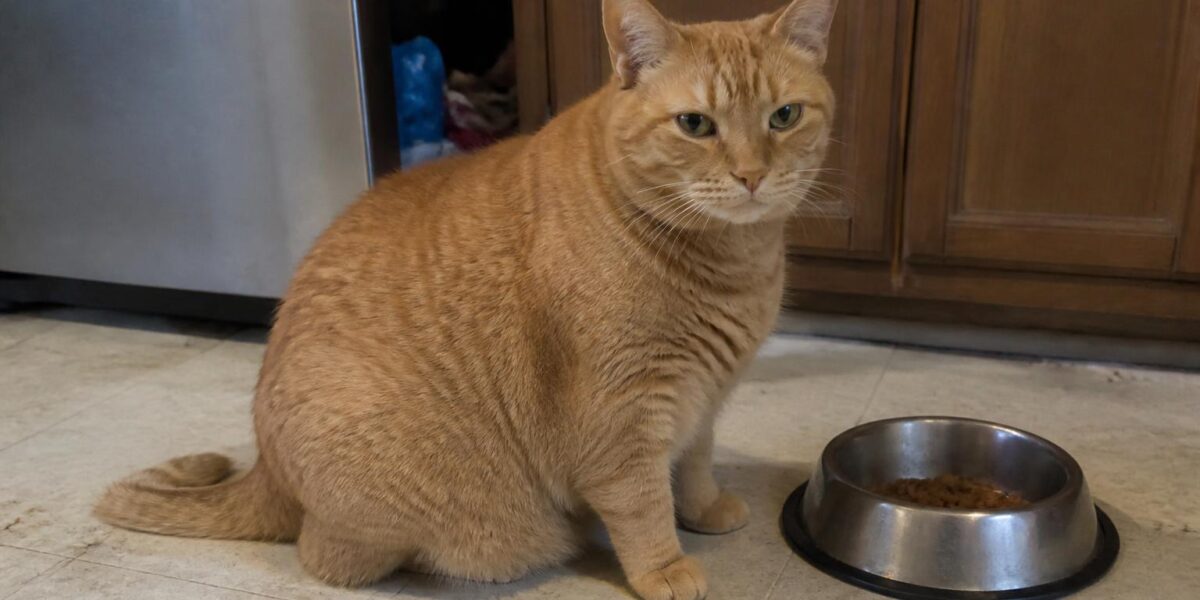
BCS 6 – 7 (Overweight): Ribs are difficult to feel under a moderate layer of fat. The waist is barely distinguishable or absent when viewed from above, and the belly may appear rounded. Fat deposits may be visible along the spine and at the base of the tail.
BCS 8 – 9 (Obese): Ribs cannot be felt under a thick layer of fat. There is no visible waist, the belly is distended, and noticeable fat deposits are present around the face, limbs, and abdomen. The cat may have difficulty grooming certain areas of the body.
You can perform a basic BCS check at home. Run your hands along your cat’s sides — you should be able to feel individual ribs without pressing hard, similar to the feel of running your fingers across the back of your hand. If the ribs feel more like the knuckles on a clenched fist, your cat may be too thin. If they feel more like pressing on the palm of your hand, your cat is likely carrying excess weight.
Kitten Growth Chart
Kittens grow at a remarkable pace during their first year of life, and tracking their weight gain is one of the best ways to ensure they are developing properly. A healthy kitten gains weight steadily — roughly 100 grams (about 3.5 ounces) per week during the first several months. Kittens that fail to gain weight or lose weight unexpectedly should be seen by a veterinarian promptly, as this can indicate illness, parasites, or inadequate nutrition.
The following chart provides approximate weight milestones for a typical Domestic Shorthair kitten. Larger breeds such as Maine Coons and Ragdolls will exceed these numbers, while smaller breeds like the Singapura may weigh slightly less.
| Age | Average Weight (lbs) | Average Weight (kg) |
|---|---|---|
| Birth | 0.2 – 0.3 | 0.09 – 0.13 |
| 1 week | 0.3 – 0.5 | 0.13 – 0.23 |
| 2 weeks | 0.5 – 0.7 | 0.23 – 0.32 |
| 4 weeks | 0.8 – 1.1 | 0.36 – 0.50 |
| 8 weeks | 1.4 – 2.2 | 0.64 – 1.00 |
| 12 weeks | 2.2 – 4.0 | 1.00 – 1.80 |
| 4 months | 3.0 – 5.0 | 1.36 – 2.27 |
| 6 months | 4.5 – 7.0 | 2.04 – 3.18 |
| 9 months | 6.0 – 9.0 | 2.72 – 4.08 |
| 12 months | 7.0 – 11.0 | 3.18 – 4.99 |
Most domestic cats reach their full adult weight between twelve and eighteen months of age. Large breeds, however, can continue filling out until they are three to five years old. Weighing kittens weekly — at the same time of day, before a meal — is the most reliable way to track their progress.
Adult Cat Weight Maintenance
Once your cat reaches their ideal adult weight, the goal shifts from growth to maintenance. This is where many owners run into trouble, because it is surprisingly easy to overfeed a cat. Indoor cats in particular tend to be less active than their outdoor counterparts, yet many are fed as if they were burning far more calories than they actually are.
An average ten-pound indoor cat needs roughly 200 to 250 calories per day to maintain their weight, though this varies based on age, activity level, and whether the cat is spayed or neutered. Neutered cats have a lower metabolic rate and typically require about twenty percent fewer calories than intact cats of the same size. Free-feeding — leaving a bowl of dry food out all day — is one of the most common contributors to feline obesity because it makes it impossible to track how much your cat is actually consuming.
Portion-controlled meals, fed two to three times daily, give you far better control over your cat’s caloric intake. Use a kitchen scale or measuring cup to portion out food according to the manufacturer’s guidelines, then adjust based on your cat’s body condition over time. If your cat’s ribs are becoming harder to feel, reduce their daily intake slightly. If ribs are becoming more prominent, increase it. Regular weigh-ins — monthly for adults, weekly for kittens — keep you informed and ahead of any gradual trends.
Play and enrichment also play a crucial role. Interactive toys, puzzle feeders, climbing structures, and daily play sessions help your cat burn calories, maintain muscle mass, and stay mentally stimulated. Even fifteen minutes of active play per day can make a meaningful difference for an indoor cat’s weight management.
Overweight vs Underweight: How to Tell the Difference
Distinguishing between an overweight cat and an underweight cat is not always as straightforward as it seems, especially with long-haired breeds whose coats can mask their true body shape. Using a combination of the body condition score and actual weight measurements gives you the clearest picture.
Signs your cat may be overweight:
- Ribs are difficult to feel without pressing firmly
- No visible waist when viewed from above — the body appears oval or rectangular
- Belly hangs low or swings when the cat walks (the “primordial pouch” is normal in many cats, but a large, firm belly is not)
- Difficulty jumping onto furniture they could previously reach easily
- Reluctance to play or increased time spent sleeping
- Inability to groom their back end properly
Signs your cat may be underweight:
- Ribs, spine, and hip bones are visible or easily felt with no fat covering
- Pronounced waist and deep abdominal tuck
- Visible muscle wasting, particularly along the spine and hind legs
- Dull, dry, or thinning coat
- Low energy or lethargy
- Eating voraciously but still losing weight (may indicate parasites, hyperthyroidism, or diabetes)
If your cat falls clearly outside the ideal range in either direction, schedule a veterinary appointment. Weight issues are often symptoms of underlying conditions that benefit from early diagnosis and treatment.
How to Weigh Your Cat at Home
You do not need a veterinary scale to keep track of your cat’s weight — a standard bathroom scale works perfectly well with a simple technique. Step onto the scale holding your cat, note the combined weight, then step on again without your cat and subtract. The difference is your cat’s weight. For greater accuracy, repeat this process two or three times and take the average.
If you want more precise readings, consider purchasing a digital baby scale or a small pet scale. These typically measure in increments as small as one ounce or ten grams, which makes it much easier to detect subtle changes — especially important for kittens, senior cats, and cats with chronic health conditions.
For the most consistent results, weigh your cat at the same time of day, ideally before a meal. Keep a simple log — a notebook, a spreadsheet, or a note on your phone — so you can track trends over weeks and months. Bring this log to your cat’s annual wellness exam; your veterinarian will appreciate the data and it can help with early detection of potential issues.
Most cats are not thrilled about being picked up and placed on a scale. Make the process as low-stress as possible. Place the scale on a stable, flat surface. Use treats or a favourite toy to lure your cat onto a pet scale, or use the pick-up-and-subtract method described above if your cat is calmer when held. Over time, most cats come to tolerate the routine without fuss.
When Weight Changes Signal Illness
Gradual weight fluctuations of a few ounces are normal and usually tied to minor changes in activity or appetite. However, certain patterns of weight change should prompt a veterinary visit sooner rather than later. As a general rule, any unexplained weight change of more than ten percent of body weight — in either direction — warrants investigation.
Conditions associated with unexplained weight loss in cats:
- Hyperthyroidism: One of the most common endocrine disorders in cats over ten years old. Cats eat voraciously but lose weight steadily. Other signs include increased thirst, hyperactivity, and a rapid heart rate.
- Diabetes mellitus: Cats with diabetes often lose weight despite a normal or increased appetite. Increased thirst and urination are hallmark signs.
- Chronic kidney disease: Progressive weight loss, increased water consumption, decreased appetite, and vomiting are common in cats with declining kidney function.
- Dental disease: Painful teeth or gums can make eating difficult, leading to gradual weight loss. Watch for drooling, pawing at the mouth, or dropping food.
- Cancer: Unexplained weight loss is sometimes the first noticeable sign of an internal tumour, particularly in older cats.
- Intestinal parasites: Especially common in kittens and outdoor cats. A pot-bellied appearance combined with weight loss can indicate a heavy worm burden.
Conditions associated with unexplained weight gain in cats:
- Hypothyroidism: Rare in cats but possible, particularly after treatment for hyperthyroidism. Leads to sluggishness and weight gain.
- Fluid retention: A rapidly expanding abdomen may indicate fluid accumulation (ascites) rather than fat. This can be associated with heart disease, liver disease, or feline infectious peritonitis (FIP).
- Cushing’s disease: Uncommon in cats but causes weight gain, increased appetite, and a pot-bellied appearance.
- Pregnancy: An unspayed female cat that gains weight suddenly and whose nipples appear enlarged may be pregnant.
Senior cats — those over the age of seven — should have their weight monitored especially closely, as many of the conditions listed above become significantly more common with age. Twice-yearly veterinary check-ups are recommended for senior cats, and bringing a weight log to each visit gives your veterinarian valuable trend data that a single weigh-in cannot provide.
If you are considering bringing a new cat into your home, understanding healthy weight from the start helps you provide the best possible care. Browse adoptable cats on our adoption page and find the perfect companion to welcome into your family.
Frequently Asked Questions
How much should a house cat weigh?
The average domestic house cat should weigh between eight and eleven pounds, though this varies by breed and sex. Males tend to be heavier than females. The most reliable way to determine your specific cat’s ideal weight is through a body condition score assessment, which accounts for individual frame size and muscle mass rather than relying solely on breed averages.
How can I tell if my cat is overweight without a scale?
Use the rib test. Place your hands on your cat’s sides and feel for the ribs. If you can feel them with light pressure, your cat is likely at a healthy weight. If you need to press firmly to find them, your cat may be overweight. Also look at your cat from above — a healthy cat should have a visible waist behind the ribs, while an overweight cat will appear oval-shaped with no waist definition.
At what age do cats stop growing?
Most domestic cats reach their full adult size between twelve and eighteen months of age. However, larger breeds such as Maine Coons, Ragdolls, and Norwegian Forest Cats can continue growing and filling out until they are three to five years old. Regardless of breed, a cat’s weight should stabilise once they reach maturity, and any significant changes after that point should be monitored carefully.
How often should I weigh my cat?
For healthy adult cats, once a month is sufficient. Kittens should be weighed weekly to ensure they are gaining weight at the expected rate. Senior cats (over seven years) and cats with chronic health conditions benefit from more frequent monitoring — every two to three weeks is ideal. Always weigh at the same time of day and before meals for consistency.
Is my cat’s primordial pouch a sign of obesity?
No. The primordial pouch is a loose flap of skin and fat on the lower belly that is completely normal in cats. It exists across all breeds and serves to protect the abdomen during fights and to allow greater flexibility when running. The pouch can swing or sway when your cat walks, which owners sometimes mistake for excess belly fat. An overweight cat will have a firm, rounded belly overall — not just a loose flap of skin.
Should I put my cat on a diet if they are overweight?
Yes, but do it gradually and ideally under veterinary guidance. Cats should never lose weight too rapidly — a safe rate is about one to two percent of body weight per week. Crash dieting in cats can trigger hepatic lipidosis, a potentially fatal liver condition. Your veterinarian can help you calculate an appropriate daily calorie target and may recommend a prescription weight-management diet for cats that need to lose a significant amount of weight.
What breed of cat is the largest?
The Maine Coon is the largest domestic cat breed, with males commonly weighing between fifteen and twenty-five pounds and measuring up to forty inches in length. Ragdolls and Norwegian Forest Cats are also among the largest breeds. You can compare sizes, temperaments, and care needs for all popular breeds in our cat breeds directory.


