Last updated: May 4, 2026
In this article
Quick Comparison: Two Different Semi-Longhair Lineages
The Chantilly-Tiffany and the Somali are sometimes shopped against each other because both produce striking semi-longhair coats with chocolate or warm brown coloring. They are genetically and visually distinct breeds despite the surface similarity. The Chantilly-Tiffany is an American development with a solid chocolate (or other solid color) silky semi-long coat. The Somali is the long-coated variety of the Abyssinian, with the same ticked tabby coat in a flowing semi-long form. The Chantilly’s solid chocolate appearance is sometimes mistaken at first glance for a dark Somali, but the texture and pattern of the coats differ noticeably on close inspection.
If you are weighing both, the practical question is whether you want a solid silky chocolate or a ticked tabby plume. Personality also differs. Chantilly-Tiffanies are typically calmer and more lap-oriented. Somalis carry Abyssinian energy and tend to be more active and playful into adulthood.
This guide treats both with equal weight and is honest about the rarity and ongoing breed-revival challenges around the Chantilly-Tiffany.
Origin and History
The Chantilly-Tiffany has a complicated history. Some breeders trace the foundation to two chocolate semi-longhaired cats acquired in New York in 1967, originally registered as “Foreign Longhair” then later as “Tiffany.” The breed nearly went extinct in the 1980s and 1990s before a small revival effort using crossbreeding to preserve the look. Recognition is limited; the breed is not currently accepted by major North American registries, and ongoing breeding programs are small and concentrated. The name has changed several times across decades, which adds to the difficulty of tracing the breed’s lineage clearly.
The Somali emerged in the 1960s as the longhaired variety of the Abyssinian. Long-coated kittens occasionally appeared in Abyssinian litters, and breeders led by Evelyn Mague and Mary Mailing established the Somali as a separate breed. The Cat Fanciers’ Association recognized the Somali in 1979, and the breed remains widely available worldwide. The recessive longhair gene that produces Somalis is still occasionally expressed in pure Abyssinian litters.
The Somali has a stable, well-documented breed history. The Chantilly-Tiffany is rare, contested, and dependent on small breeder networks for survival. Choose accordingly based on your comfort with breed-revival uncertainty.
Appearance and Build
Chantilly-Tiffanies are medium, semi-cobby cats with a moderately long body. Adult males commonly reach eight to twelve pounds, females six to ten. The coat is silky, semi-long, and lies smooth without a heavy undercoat. Recognized colors are chocolate, blue, lilac, fawn, and cinnamon, all in solid form. The signature look is a rich solid chocolate cat with golden eyes and a flowing tail plume. The breed standard emphasizes a rounded head and gentle expression that distinguishes the breed from sleeker oriental-type semi-longhairs.
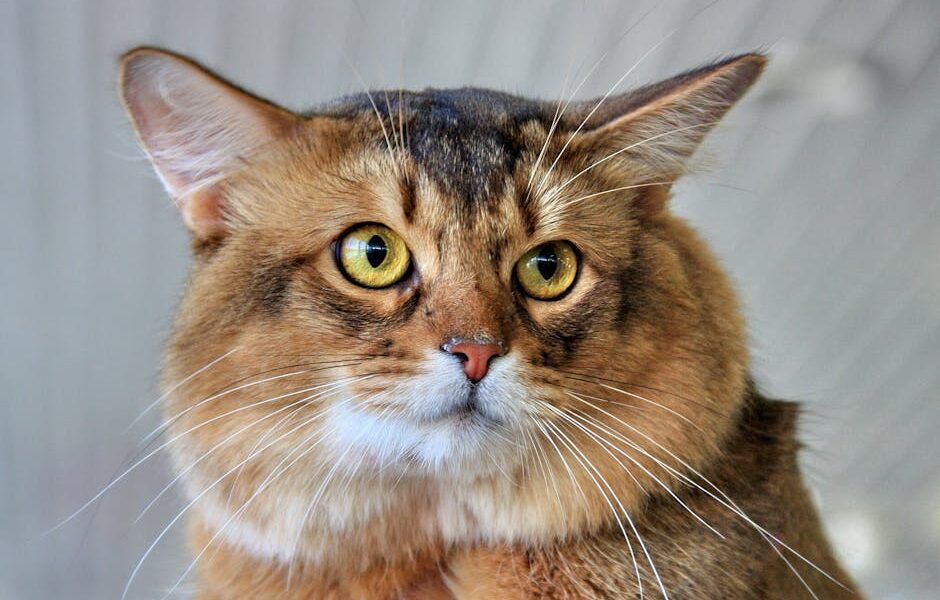
Somalis are medium, lithe, and athletic with the Abyssinian body type elongated by the longer coat. Males commonly reach nine to twelve pounds, females seven to ten. The coat is fine, soft, and semi-long with the ticked tabby pattern that gives Abyssinian breeds their signature wild-look effect. Recognized colors include ruddy, red (sorrel), blue, and fawn. The tail plume is dramatic and resembles a fox brush.
If you want a solid silky chocolate, the Chantilly-Tiffany wins. If you want a ticked semi-long tabby, the Somali wins. Both have visually striking coats but differ in nearly every other appearance dimension.
Temperament and Personality
Chantilly-Tiffanies are typically calm, affectionate, and lap-oriented. They tolerate handling well and tend to bond strongly with one or two family members. They are vocal but soft-voiced and are content with structured play sessions rather than constant activity. They are sometimes described as quieter and gentler than the Somali. Many enjoy quiet companionship in shared workspaces and tolerate solo time better than most semi-longhaired breeds.
Somalis are intelligent, active, and playful well into adulthood. They climb constantly, hunt toys aggressively, and need significant interactive play. They are vocal and use a wide range of trills and chirps. They are affectionate but not as lap-oriented as the Chantilly-Tiffany; they prefer to be near you on the move rather than draped on you. Many Somalis figure out lever handles, drawers, and food storage containers within months of moving in.
For broader temperament context, see most affectionate cat breeds, most playful cat breeds, and calmest cat breeds. Both breeds get along with children and other pets when introductions are gradual; the Chantilly-Tiffany tolerates younger children better, the Somali matches older children’s energy.
Care, Grooming, and Activity Needs
Both breeds have semi-long coats that require regular grooming. Chantilly-Tiffany coats lack a heavy undercoat, so weekly brushing with a soft-bristle brush is usually sufficient. The silky texture resists matting, but checking behind the ears and around the rear during seasonal shedding prevents problems. Acclimating kittens to brushing routines early makes adult grooming straightforward.
Somali coats need brushing two to three times a week, with daily attention during seasonal shedding. The fine, semi-long texture mats less than many longhaired breeds but the dramatic tail plume needs occasional finger-combing. Bathing is rarely needed for either breed. The Somali coat takes time to fully mature; many young Somalis appear shorter-coated until two or three years of age.
Activity needs differ. Chantilly-Tiffanies are content with moderate daily play. Somalis demand high-engagement enrichment; plan for two structured play sessions daily, climbing furniture, and rotating puzzle feeders. Both benefit from indoor enrichment and puzzle feeders. Somalis also do well with simple trick training and harness-walking when introduced gradually as kittens.
Health and Lifespan
Chantilly-Tiffanies have limited published health data because of the breed’s rarity. Reputable breeders should screen for cardiac and dental issues; ask for documentation. The narrow gene pool of revival programs is a real concern; breeders who outcross to preserve genetic diversity reduce inbreeding-related risks. Choose breeders willing to discuss their outcrossing history openly.
Somalis share Abyssinian health risks. Reported concerns include some hereditary eye conditions in certain lines, gingivitis, and a metabolic concern called pyruvate kinase deficiency that has DNA testing available. Reputable breeders test for these and discuss them openly. Read gingivitis in cats and hypertrophic cardiomyopathy in cats for cardiac screening expectations. The pyruvate kinase deficiency DNA test is widely available and inexpensive; reputable Somali breeders should provide test results for sires and dams.
Both breeds typically live well into their teens with attentive care. Use the adult wellness checklist for ongoing monitoring and the senior cat care checklist as your cat enters its later years. Vaccination is part of the foundation; review the cat vaccination schedule for what core vaccines kittens and adults need.
Living Situation Fit
Chantilly-Tiffanies suit households with steady routines, lap time, and gentle handling. They tolerate periods alone reasonably well and are content with structured play. They handle children of all ages and other pets when introductions are gradual. The breed’s calm temperament makes it a good fit for senior households and dual-income families.
Somalis suit active households with time for daily play. Apartment living works if vertical space is generous and play time is consistent. They are not for owners who travel frequently or work long days without a sitter. They tolerate children well and benefit from a feline companion if the household is regularly absent. Pairing two Somalis from the same litter or adopting two Somalis together typically works better than pairing with a calm resident senior.
For broader fit guidance, see best cats for families, best lap cat breeds, and cuddliest cat breeds. Chantilly-Tiffanies appear in lap-cat shortlists more often than Somalis, who appear in active-cat shortlists.
Cost and Availability
Chantilly-Tiffanies are rare. Breeder availability is limited to a small number of programs, primarily in North America. Expect long waiting lists and meaningful upfront cost. The breed’s contested registry status means pedigree documentation varies; ask about lineage history and outcrossing practices. Some breeders maintain their own informal registries; ask whether the breeder is willing to share full lineage records.
Somalis are widely available through reputable breeders and breed-specific rescues. Adoption is possible; check adopt-a-cat listings and consider that Abyssinian-type cats sometimes turn up in shelters with semi-long coats. Working with a cat-only rescue can shorten the path to a suitable adoption candidate.
Lifetime cost for both breeds is moderate, dominated by routine veterinary care and grooming supplies. Use first-year cat costs and the pet emergency fund target as planning anchors. Senior cat care often runs slightly higher; review senior cat monthly care cost to plan for later years.
Decision Framework: When to Choose Each
Choose a Chantilly-Tiffany if you want a calm, lap-oriented semi-longhair in a solid silky chocolate (or other solid color); you can wait through long breeder waiting lists; and you accept the breed’s contested registry status. Chantilly-Tiffanies fit households with steady routines and gentle handling, and the breed appeals to owners who appreciate quiet companionship over high energy.
Choose a Somali if you want an active, playful semi-longhair in a ticked tabby pattern with a dramatic tail plume; you can deliver structured daily play; and you have access to mainstream breeders. Somalis fit dedicated owners who enjoy interactive cats and have time for daily engagement.
For deeper profiles, see the Chantilly-Tiffany profile and the Somali profile. Compare also with Somali vs Balinese for another semi-longhair comparison, the Abyssinian profile for the parent breed, and Abyssinian vs Egyptian Mau for related ticked-coat options.
Frequently Asked Questions
Are the Chantilly-Tiffany and Somali related?
No. They are unrelated breeds with different lineages. The Chantilly-Tiffany has American foundation cats of unclear early origin. The Somali is the long-coated Abyssinian variety. The visual similarity is coincidence.
Which has the easier coat?
Both are easier than many longhaired breeds because neither has a heavy undercoat. The Chantilly-Tiffany silky coat resists matting slightly better than the Somali coat, but both need regular brushing.
Is the Chantilly-Tiffany a recognized breed?
Recognition is limited. The breed is not currently accepted by major North American registries, although small breeder programs maintain pedigree records. Ask any breeder for documented lineage and outcrossing history.
Which is more active?
The Somali is significantly more active. Chantilly-Tiffanies are calm and lap-oriented; Somalis are athletic and demand daily interactive play.
Are these breeds good with children?
Yes, both can be excellent with children when introductions are gradual. The Chantilly-Tiffany suits younger children because of its calmer temperament. The Somali suits older children who can match its energy.
Looking to adopt a Chantilly?
Browse Chantilly cats and mixes available for adoption from shelters and rescues near you.
Find Chantilly Cats for Adoption