
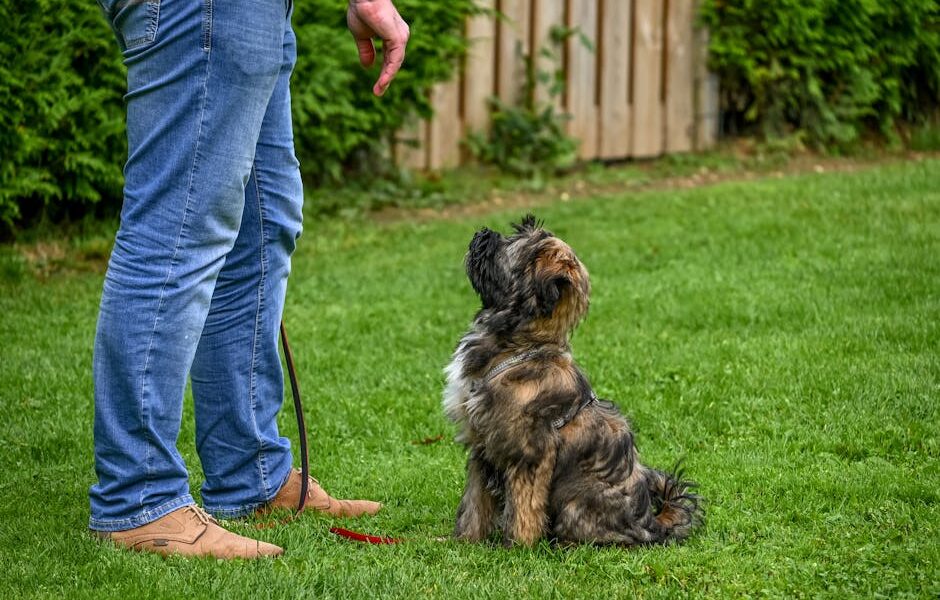
What Dog House Training Regression Means
Dog house training regression is the term for a previously house-trained dog suddenly soiling in the home. It is one of the most common reasons dogs are surrendered to shelters, and one of the most fixable — provided handlers approach it correctly. The single most important principle is that house training regression is a symptom, not a diagnosis. Before assuming the dog has “forgotten its training,” rule out medical causes.
In this article
Studies of house-training regression in adult dogs consistently find that a large fraction of cases are driven by undiagnosed medical conditions. The dog is not being disobedient. The dog cannot physically hold it, or is signaling distress through inappropriate elimination, or is experiencing cognitive decline. Punishing the dog for these accidents worsens outcomes and damages the relationship.
This article walks through the medical rule-outs first, then the behavioral causes, then the structured behavioral reboot for dogs whose medical workup is clear. Read it in order — handlers who jump straight to the behavioral reboot without ruling out medical causes typically fail.
Medical Rule-Outs: Where to Start
Before any behavioral intervention, schedule a vet visit. A baseline workup for house training regression should include urinalysis with culture, full blood panel, and a thorough physical exam. Additional testing depends on signalment and findings.
Urinary tract infection. The single most common medical cause of urinary house-training regression. Dogs with UTIs feel sudden urgency, cannot hold their bladder, and may also leak small amounts inadvertently. See our urinary tract infections in dogs and dog UTI resources. Diagnosis is via urinalysis with culture and sensitivity.
Urinary incontinence. Often hormonal in spayed females (urethral sphincter mechanism incompetence), but also seen in neutered males and various neurologic conditions. The dog leaks while sleeping or lying down. See urinary incontinence in dogs for the workup and treatment.
Bladder or kidney disease. Polyuria from kidney disease, diabetes mellitus, Cushing’s, or diabetes insipidus all cause increased urine production that overwhelms the dog’s holding capacity. See chronic kidney disease, diabetes mellitus, Cushing’s syndrome, and diabetes insipidus.
Gastrointestinal disease. Diarrhea, urgency, and frank incontinence can all be GI in origin. See dog diarrhea causes and chronic enteropathy in dogs. Dogs with chronic GI disease may not be able to hold bowel movements through the night or through a workday.
Cognitive decline in seniors. Senior dogs with canine cognitive dysfunction often lose house-training as one of the early signs. See sundowning protocol for senior pets for the comprehensive cognitive support approach.
Mobility impairment. A dog with hip pain, knee pain, or back pain may be unable to physically get to the door in time. Senior dogs and dogs with orthopedic disease are particularly vulnerable. Pain assessment using the Glasgow or Helsinki pain scales is essential.
Endocrine causes. Hypothyroidism and adrenal disease can both contribute. See hypothyroidism in dogs and Addison’s disease in dogs.
Behavioral Causes Once Medical Is Cleared
If the medical workup is unremarkable, turn to the behavioral differentials.
Anxiety, especially separation anxiety. Dogs with separation distress often urinate or defecate during owner absences. See our dog separation anxiety and treatment resources. If accidents only happen when the dog is alone, separation anxiety jumps to the top of the list.
Submissive or excitement urination. Common in young dogs and confident adults greeting visitors. The dog releases a small amount of urine during greetings or when scolded. The trigger is social interaction, not bladder filling.
Marking. Small volumes deposited on vertical surfaces (furniture legs, door frames, walls). Often intact male dogs but can occur in females and neutered males. Often increases with new household members (humans or animals) or perceived territorial threats.
Environmental changes. Move to a new home, schedule changes, new pet introduction, new family member, household stress. The disruption itself can cause regression.
Surface preference issues. A dog may regress when household flooring changes, when grass type changes, or when the elimination area is unavailable (closed off, blocked, occupied by another animal).
Punishment-induced learning. A dog punished for accidents often learns to hide elimination rather than to hold it. They eliminate behind furniture, in unused rooms, or when the handler is not watching. The cure is removing punishment, not increasing it.
The Behavioral Reboot Protocol
For dogs with clear medical workup, the structured behavioral reboot protocol works for most cases.
Step 1: Restart house training from the beginning. Treat the dog as if it were a new puppy for two to four weeks. Take the dog outside on a fixed schedule — first thing in the morning, after every meal, after every nap, after every play session, and before bed. For most adult dogs, every two to three hours during awake time during the reboot. See our puppy house training schedule for the scheduling principles.
Step 2: Reinforce outdoor elimination heavily. The moment the dog eliminates outside, deliver high-value food immediately — within two seconds. Praise warmly. The window for forming the association is brief. Reinforce every successful outdoor elimination for the first two weeks.
Step 3: Active supervision indoors. The dog should not be unsupervised in the house during the reboot. Use a long leash tethered to your waist, an exercise pen, or close visual supervision. If you cannot supervise, the dog goes in a crate, on a tether, or outside with you. Accidents during unsupervised time are the dog’s signal that supervision lapsed.
Step 4: Clean accidents with enzymatic cleaner. Ordinary cleaners do not break down the protein residues that signal “this is a toilet location” to a dog’s nose. Enzymatic cleaners (designed for pet urine) do. Clean every accident thoroughly the same day.
Step 5: Never punish accidents. Punishment teaches the dog to hide elimination, not to hold it. If you catch the dog in the act, calmly interrupt (a soft “ah-ah” or quick hand clap) and immediately take them outside. Reinforce when they finish outside. If you find an accident after the fact, clean it up without comment.
Step 6: Watch for the “tell.” Most dogs have an idiosyncratic signal that they need to eliminate — sniffing in circles, going to a specific door, whining, returning to a previously soiled spot. Learn the signal and respond promptly. Over time, you can shape it into a clearer cue (a doorbell, a bell on the door handle).
Adjustments for Specific Causes
For dogs whose regression appears to be anxiety-driven, the reboot must be paired with anxiety treatment. The dog cannot succeed at house training while flooded with cortisol. See the protocols on separation anxiety desensitization and consider medication options like sertraline or paroxetine.
For senior dogs with cognitive decline, expect a slower reboot with more accidents and consider medication for CCD. See sundowning protocol and discuss selegiline (Anipryl) and cognitive support diets with your vet. The reboot is still worth doing — it usually reduces accident frequency even when full continence cannot be regained.
For dogs with new environmental triggers (move, new pet, new schedule), pair the reboot with proactive environmental support — a designated safe space, predictable routines, and time for the dog to settle into the new context.
Crate Training as a Tool, Not a Punishment
Crates support house training because dogs naturally avoid soiling their sleeping area. A properly sized and conditioned crate (large enough to stand, turn, lie down, but not so large the dog can soil one corner and sleep in another) is a tool for the reboot, not a punishment.
See puppy crate training step-by-step for the conditioning protocol. For adult dogs new to crating, allow a week or two of positive crate conditioning (high-value food in the crate, calm rest periods, gradual duration increase) before using it for house-training management.
If the dog is soiling in the crate, the crate is either too large, the duration is too long, the dog has a medical issue (re-evaluate medical workup), or the dog has crate-related anxiety. Each of these is solvable but requires the right diagnosis.
When to Escalate to a Professional
Consult a veterinarian if a medical workup has not been done in the last six months. Consult a certified behavior professional (IAABC CDBC, CAAB, or DACVB) if the reboot has been consistently applied for four to six weeks without improvement, if the dog has persistent anxiety driving the regression, or if punishment-related fear of elimination is part of the picture. For complex cases, especially in seniors, a board-certified veterinary behaviorist can prescribe combined medication and behavior plans.
Frequently Asked Questions
My adult dog was perfectly house-trained for years and suddenly started having accidents — is this medical?
Almost certainly worth ruling out medical first. Sudden regression in a previously reliable adult dog has a high prior probability of medical cause — UTI, urinary incontinence, kidney disease, diabetes, GI disease, or cognitive change in seniors. Schedule a vet visit with urinalysis as your first step.
Should I rub my dog’s nose in the accident?
Absolutely not. Punishment of any kind for accidents teaches the dog to hide elimination, often makes them fearful of you, and does not improve house training. Modern evidence-based protocols are punishment-free.
How long does the behavioral reboot take?
For most adult dogs with clear medical workup, two to four weeks of consistent reboot resolves most cases. Complex anxiety-driven or senior cognitive cases may take longer and require medication.
My dog only has accidents when I am at work — is that house training regression or separation anxiety?
Likely separation-related. If accidents only happen when the dog is alone, and the dog also shows other separation distress signs (vocalization, destruction, drooling, pacing), treat the separation anxiety first. House training regression resolves once the underlying anxiety is addressed.
Is marking different from house training regression?
Yes. Marking is small volumes on vertical surfaces, often with a different motivation (territorial, social, sexual). House training regression is full elimination from inability or unwillingness to wait. Both deserve workup, but the treatment plans differ.


