
Last updated: May 6, 2026
In this article
How to Exercise an Indoor Cat: Keeping Your Feline Fit and Happy
Indoor cats live longer, safer lives than their outdoor counterparts. They are protected from traffic, predators, diseases, and harsh weather. But life indoors comes with a significant trade-off: reduced physical activity. Without the natural stimulation of hunting, climbing, and exploring that outdoor cats enjoy, indoor cats are at a much higher risk of obesity, muscle loss, behavioral problems, and chronic boredom.
Studies estimate that more than half of domestic cats are overweight or obese, and indoor-only cats are disproportionately affected. Excess weight puts cats at risk for diabetes, joint disease, urinary tract problems, and a shortened lifespan. Beyond physical health, a sedentary lifestyle can lead to anxiety, aggression, destructive behavior, and depression in cats who are understimulated.
The solution is not to let your cat outside but to bring the outdoors to them through daily exercise and enrichment. With a bit of creativity and commitment, you can keep your indoor cat as active, engaged, and physically fit as any barn cat. This guide shows you how.
Understanding Your Cat’s Exercise Needs
Cats are not built for endurance. Unlike dogs, who can jog for miles, cats are sprinters and ambush predators. Their natural activity pattern consists of short, intense bursts of energy followed by rest. In the wild, a cat might spend only a few minutes actively hunting, followed by long periods of resting, grooming, and observing their territory.
This means that exercising your indoor cat does not require marathon play sessions. Instead, aim for multiple short play sessions throughout the day, each lasting about ten to fifteen minutes. Two to three sessions per day is a good baseline for most adult cats, though kittens and younger cats may need more.
The timing of play sessions matters as well. Cats are crepuscular, meaning they are most active at dawn and dusk. Scheduling play sessions during these natural activity peaks makes it easier to engage your cat and gives them an outlet for the energy surges they would naturally experience.
Every cat is different, and the right amount of exercise depends on your cat’s age, health, weight, and temperament. A young, healthy cat may need 30 to 45 minutes of active play per day, while a senior cat or one with health limitations may do well with shorter, gentler sessions. Consult your veterinarian if you are unsure about the appropriate level of activity for your cat.
Interactive Play: The Foundation of Cat Exercise
Interactive play, where you actively engage with your cat using a toy, is the single most effective way to exercise an indoor cat. It mimics the predatory sequence that cats are hardwired to perform: stalk, chase, pounce, and capture. This sequence provides both physical exercise and mental stimulation, making it far more satisfying for your cat than simply leaving toys out for them to play with alone.
Wand toys and fishing rod toys are the gold standard of interactive cat play. These toys consist of a rod with a string and an attachment, such as feathers, a fabric mouse, or a crinkly insect, that you drag, flutter, and bounce across the floor or through the air. The unpredictable movement triggers your cat’s hunting instinct, encouraging them to run, leap, twist, and pounce.
When using wand toys, mimic the movement of real prey. Do not simply wave the toy back and forth in front of your cat’s face. Instead, make the toy dart away, hide behind furniture, freeze and then sprint, and gradually slow down as if tiring. Let your cat catch the toy frequently enough to stay motivated, but keep the challenge high enough to sustain interest. Understanding the different ways cats like to play can help you fine-tune your sessions. Our guide on cat play types explores this in detail.
Laser pointers can provide excellent aerobic exercise, as most cats will enthusiastically chase the red dot across floors and up walls. However, laser play should always end with a physical toy that your cat can catch and “kill.” Chasing something they can never capture can lead to frustration and anxiety over time. After a laser session, redirect the dot to a treat or a small toy that your cat can pounce on and grab.
Fetch is not just for dogs. Many cats, particularly breeds like Siamese, Abyssinian, and Bengal, enjoy chasing and retrieving small toys. Lightweight balls, crinkle balls, and small plush mice work well for feline fetch. If your cat brings the toy back, reward them with praise and throw it again. If they do not return it, walk over, pick it up, and throw it in a different direction to keep the game going.
Environmental Enrichment for Active Living
Beyond structured play sessions, the physical environment of your home plays a major role in how active your indoor cat is throughout the day. By designing a cat-friendly environment, you encourage natural movement and exploration even when you are not actively playing with your cat.
Vertical space is essential. Cats are natural climbers, and providing vertical options like cat trees, wall-mounted shelves, and window perches encourages them to jump, climb, and navigate their environment in three dimensions. A tall cat tree placed near a window gives your cat a climbing workout, a vantage point for bird watching, and a cozy resting spot all in one.
Cat shelves and walkways mounted on walls create elevated pathways that allow your cat to traverse the room without touching the floor. These installations encourage daily climbing and jumping and appeal to cats’ instinct to survey their territory from above. Start with a few shelves and expand as your cat becomes comfortable using them.
Scratching posts and pads provide exercise for the muscles of the forelegs, shoulders, and back. Place scratching posts in multiple locations, including near your cat’s favorite resting spots. Both vertical posts and horizontal scratching pads should be available, as individual cats often have preferences.
Window perches with views of bird feeders, squirrels, or neighborhood activity give your cat hours of visual stimulation. While bird watching is not aerobic exercise, it keeps your cat mentally engaged and can inspire spontaneous play behavior. Some cats become so excited watching birds that they chirp, chatter, and leap at the window.
For a comprehensive approach to creating a stimulating home environment, our article on cat enrichment activities is packed with ideas you can implement right away. You may also enjoy our guide to cat indoor enrichment ideas for even more creative solutions.
Puzzle Feeders and Food-Based Exercise
One of the simplest ways to add activity to your cat’s day is to make them work for their food. In the wild, cats spend a significant portion of their waking hours hunting for food. Domestic cats who eat from a bowl expend virtually no energy obtaining their meals, which contributes to both weight gain and boredom.
Puzzle feeders are devices that require your cat to manipulate, paw, or solve a mechanism to access their food. They come in a wide range of difficulty levels, from simple treat balls that dispense kibble as they roll to complex multi-stage puzzles that challenge even the cleverest cats. Start with an easy puzzle and gradually increase the difficulty as your cat learns.
Scatter feeding involves hiding small portions of your cat’s daily food allowance in different locations around the house. This encourages your cat to hunt for their food, engaging their sense of smell and providing gentle exercise as they move from room to room. You can place kibble on cat shelves, inside paper bags, behind furniture, or on window perches.
Food-dispensing toys such as treat balls and wobble feeders turn mealtime into an activity. Your cat must bat, roll, or push the toy to release food, which combines physical movement with problem-solving. These toys are especially useful for overweight cats on portion-controlled diets, as they slow down eating and add activity to the feeding process.
DIY puzzle feeders can be made from household items. Cut holes in a cardboard box and place treats inside. Use a muffin tin with tennis balls covering each cup to create a simple puzzle. Crumple paper around kibble and let your cat dig through it. These homemade options are free, easy to replace, and endlessly customizable.
Exercise Ideas for Cats Who Seem Uninterested in Play
Not all cats are eager players, and some may seem completely indifferent to toys and games. Before concluding that your cat simply does not like to play, consider whether you have found the right approach for their personality and preferences.
Try different toy types. Some cats go wild for feather toys but ignore mice. Others love crinkly textures but are indifferent to bells. Some prefer ground-level play while others are most engaged by toys in the air. Experiment broadly before deciding your cat is not interested.
Use catnip or silver vine. About 60 to 70 percent of cats respond to catnip, and many of those who do not are responsive to silver vine, an alternative plant that triggers a similar euphoric response. Rubbing these substances on toys can dramatically increase your cat’s interest in play.
Start slow with shy or older cats. A cat who has not played in years may need time to rediscover their hunting instincts. Begin with gentle, slow movements of a wand toy and allow the cat to observe without pressure. Even watching a toy move can be stimulating for a sedentary cat, and curiosity often eventually overcomes hesitation.
Consider a companion. Some solo cats become more active when they have a feline companion to wrestle, chase, and play with. If your lifestyle and home support it, adopting a second cat can provide built-in exercise and socialization for both animals. However, introductions must be done carefully to ensure a positive outcome for both cats.
Rotate toys regularly. Cats become bored with toys they see every day. Put away most of your cat’s toys and rotate them weekly, bringing out “new” toys while storing others. This keeps the novelty factor high and maintains your cat’s interest in play over time.
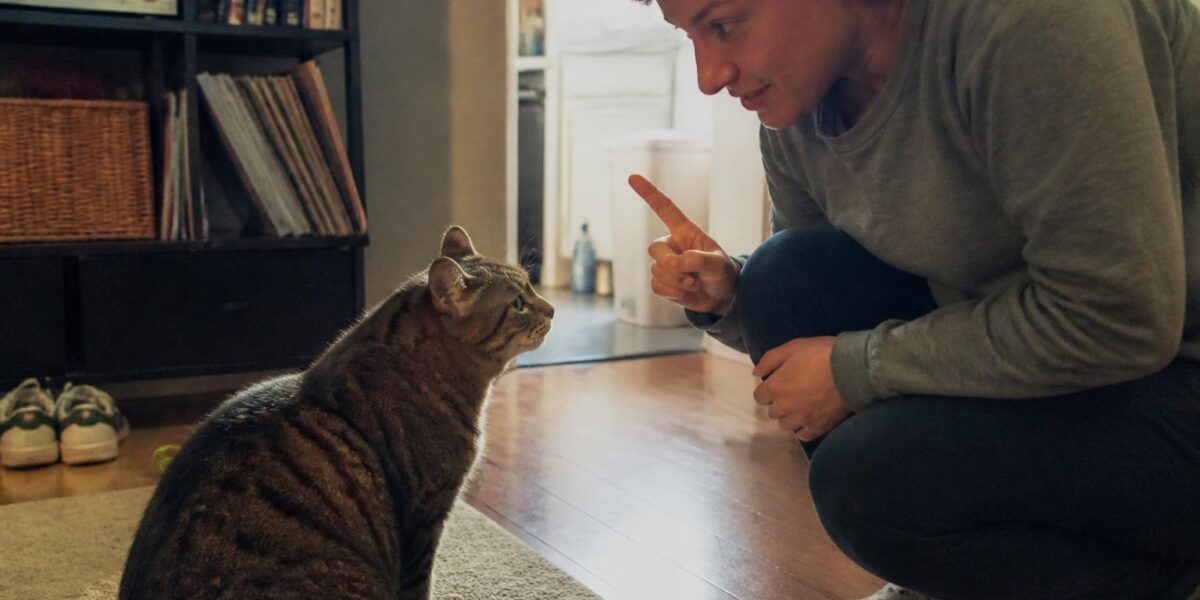
Incorporate training. Yes, cats can be trained. Teaching your cat to sit, high-five, spin, or come when called provides mental stimulation and can include physical movement. Use positive reinforcement with treats and keep training sessions very short, around two to five minutes, to match your cat’s attention span.
Building a Daily Exercise Routine
Consistency is the key to keeping your indoor cat fit. Just as humans benefit from a regular exercise schedule, cats thrive with predictable daily activity. Here is a sample routine that you can adapt to your schedule and your cat’s preferences.
Morning session (10 to 15 minutes): Take advantage of your cat’s natural dawn activity spike with an interactive wand toy session. Get them running, jumping, and pouncing to burn off morning energy. End the session with a small meal or treat to complete the hunt-catch-eat cycle.
Midday enrichment: Before you leave for work or settle into your day, set up a puzzle feeder with a portion of your cat’s daily food. Place it in a different location than yesterday. This gives your cat an activity to focus on during the quieter hours of the day.
Evening session (10 to 15 minutes): Another interactive play session during the dusk activity peak helps prevent nighttime zoomies and restlessness. Gradually wind down the play session by slowing the toy’s movement, mimicking prey that is tiring out. Follow with dinner to complete the natural cycle.
Throughout the day: Leave a few solo toys available, such as crinkle balls, springs, or a track-and-ball toy, for self-directed play. Open curtains or blinds so your cat can watch outdoor activity. Ensure vertical spaces and scratching posts are accessible for spontaneous climbing and stretching.
This routine provides approximately 30 minutes of active play plus ongoing environmental enrichment, which meets the exercise needs of most adult indoor cats. Adjust the duration and intensity based on your cat’s age, fitness level, and enthusiasm.
Frequently Asked Questions
How much exercise does an indoor cat need each day?
Most adult indoor cats benefit from 20 to 40 minutes of active play per day, broken into two or three sessions. Kittens and young cats may need more, while senior cats or those with health conditions may do well with shorter, gentler sessions. The key is consistency. Short daily sessions are far more effective than occasional long play marathons. Pay attention to your cat’s cues. When they lose interest, walk away, or start grooming, the session is over.
My cat is overweight. Is it safe to start an exercise program?
Yes, but start slowly and consult your veterinarian first, especially if your cat is significantly overweight. Overweight cats may have reduced stamina and could be at risk for joint stress or respiratory difficulty during vigorous activity. Begin with short, low-intensity play sessions and gradually increase the duration and intensity as your cat’s fitness improves. Combine exercise with a vet-approved weight management diet for the best results. Rapid weight loss in cats can be dangerous, so aim for a slow, steady approach.
Can I use a cat wheel or treadmill for exercise?
Cat exercise wheels, sometimes called cat wheels, are large hamster-wheel-like devices that some cats take to enthusiastically. They provide an excellent cardiovascular workout and are especially popular with high-energy breeds like Bengals and Savannahs. However, not all cats will use a wheel, and they can be expensive. If you are considering one, look for a model with a large diameter, a solid running surface, and a quiet motor or manual design. Be prepared for the possibility that your cat may ignore it entirely.
Are there any exercises I should avoid for my cat?
Avoid activities that could cause injury or distress. Never use string, yarn, ribbon, or rubber bands as toys, as they can be swallowed and cause life-threatening intestinal blockages. Avoid forcing a cat who is panting, limping, or showing signs of distress to continue playing. Do not use laser pointers without ending the session with a tangible “catch,” as chronic frustration from uncatchable prey can lead to anxiety. And always supervise play with small toys or toys with detachable parts that could be swallowed.
Exercising your indoor cat is one of the most loving things you can do for them. It prevents disease, reduces behavioral problems, strengthens your bond, and gives your cat the physical and mental stimulation they need to live a full, happy life inside your home. Walk Me Home Rescue encourages every cat owner to make daily play a non-negotiable part of their routine. Your cat will thank you for it, probably with a head bump and a purr.


