Overview of the Safari Cat
The Safari cat is one of the rarest hybrid breeds in the world, created by crossing the South American Geoffroy’s cat (Leopardus geoffroyi) with a domestic cat. Patrick Kelley and a small group of breeders began the work in the late 1970s as part of feline leukemia research, after researchers noticed Geoffroy’s cats had natural resistance to FeLV. The hybrid emerged from those crosses, and a handful of breeders have continued the program since.
In this article
- Overview of the Safari Cat
- Origin and History
- Legality and Ownership Restrictions
- Appearance and Distinct Features
- Temperament and Personality
- Living Environment and Enrichment
- Grooming and Coat Care
- Health Considerations and Honest Risks
- Daily Routine and Enrichment
- Multi-Pet Households and Children
- Cost of Ownership Considerations
- Adopting a Safari Cat
- Is the Safari Right for You?
- Kitten Care and Early Months
- Frequently Asked Questions
You should approach this breed with a clear understanding that the Safari is not an ordinary house cat. Early-generation Safari cats carry strong wild-cat traits, ownership legality varies widely by state and country, and even later-generation Safaris demand more space, enrichment, and behavioral patience than a standard pedigree breed.
Origin and History
The Safari originated in the United States, where domestic cats were crossed with Geoffroy’s cats — a small spotted wild cat species native to South America. The original goal was scientific rather than ornamental, but breeders recognized the hybrid offspring had a striking spotted appearance and continued breeding them as companion animals. The chromosome difference between the parent species (Geoffroy’s cats have 36 chromosomes; domestic cats have 38) makes hybridization difficult and litters small.
The breed has remained extremely rare. Total population worldwide is small, and confirmed pedigree Safari cats are uncommon enough that most cat fanciers have never seen one in person. The rarest cat breeds roundup places the Safari among the smallest-population pedigrees globally.
Generation Notation and What It Means
Safari cats are described using filial generation notation:
- F1 — direct cross between Geoffroy’s cat and domestic cat (50 percent wild blood)
- F2 — F1 bred to a domestic cat (25 percent wild blood)
- F3 — F2 bred to a domestic cat (12.5 percent wild blood)
- F4 and later — typically considered domestic in temperament
Earlier-generation Safaris (F1, F2) carry stronger wild traits — territorial spraying, intense prey drive, less tolerance for handling, and demanding enrichment requirements. F4 and later tend to behave like domestic cats while keeping the spotted look. This distinction matters for ownership and is a common point where prospective adopters underestimate what they are taking on.
Legality and Ownership Restrictions
This is the section to read carefully. Ownership of F1, F2, and sometimes F3 Safari cats is restricted or prohibited in many US states, as well as in certain countries. Permit requirements, generation cutoffs, and exemptions vary by state — verify locally before pursuing this breed. Do not assume that because a breeder will ship to you, ownership is legal where you live. Contact your state department of agriculture or equivalent fish and wildlife authority for the current rules.
If you live in an apartment, Safari cats are typically not permitted by lease agreements regardless of state law. International adopters should verify import rules — many countries either prohibit or heavily restrict wild-domestic hybrids.
Appearance and Distinct Features
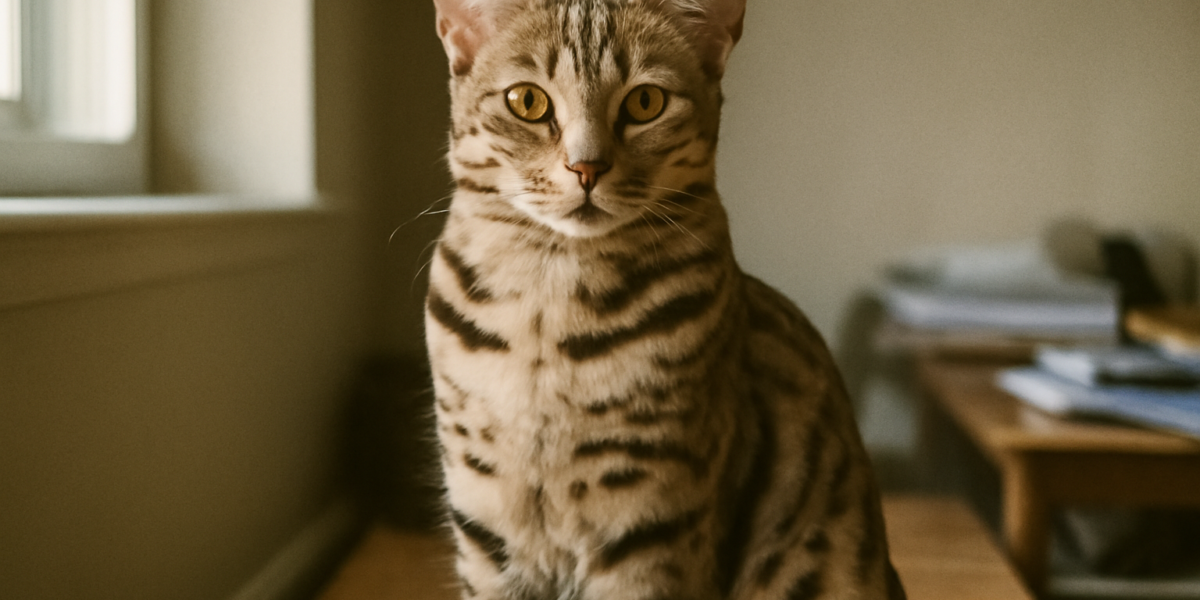
The Safari is large for a domestic-leaning cat — typically 10 to 25 pounds depending on generation and parent line. The body is muscular and athletic, with long legs, a substantial tail, and a deeply spotted coat that mirrors the Geoffroy’s cat’s pattern. Coats are usually golden, silver, or charcoal-based with bold dark spots. Eyes are large, round, and typically gold or green. The face has a slightly wild, alert quality that distinguishes Safari cats from purely domestic spotted breeds.
For visual comparison with other wild-look hybrid and spotted breeds, see the cat breeds with spotted coats roundup and the Bengal versus Savannah comparison, which discusses two more accessible wild-look hybrids.
Temperament and Personality
Temperament varies significantly by generation. F1 and F2 Safari cats tend to be intense, territorial, and reserved with strangers. They form deep bonds with one or two people but may not enjoy handling from anyone else. They have strong prey drive, athletic energy, and can be vocal in distinctive trill-and-chirp patterns rather than typical meows.
F4 and later generations behave largely like domestic cats — affectionate, playful, and adaptable — while retaining the wild look. If your goal is the spotted appearance with manageable temperament, focus on later-generation Safaris. If you want the genuine wild-cat presence, an F1 or F2 will deliver it, but you will need a setup and skill level beyond standard cat ownership.
Living Environment and Enrichment
Safari cats need substantial space, enrichment, and routine. A large home with secure outdoor catio access is the realistic minimum. They climb, jump, and run more than typical domestic cats, and a cluttered apartment will not satisfy them. Vertical enrichment, water features (many Safaris love water), large puzzle feeders, and rotating toy sets are all important.
Litter box habits in earlier generations can be inconsistent — territorial spraying in unneutered or stressed F1 and F2 cats is common. Multiple oversized litter boxes, very clean conditions, and stable household routines reduce but do not always eliminate this. Plan for at least two daily play sessions and avoid leaving the cat alone for extended trips.
Grooming and Coat Care
The short, dense, spotted coat needs minimal grooming — a weekly comb-through and standard nail trims. Earlier-generation Safaris may not tolerate handling for grooming, so habituate kittens from a young age. Bathing is rarely needed; most Safari cats keep themselves clean efficiently.
Pay closer attention to environmental health than coat work. The breed’s high-energy, high-prey-drive lifestyle means injuries and digestive issues from chasing or eating non-food items appear more often than in typical domestic cats.
Health Considerations and Honest Risks
Safari cats are generally hardy because hybrid vigor tends to favor early generations. The chromosome mismatch between parent species causes reduced fertility (especially in F1 males, who are typically sterile), and litter sizes are small. From a pet-owner perspective, the practical health considerations are:
Diet: Safari cats need a higher-protein, more meat-heavy diet than typical kibble provides. Many breeders recommend raw or fresh-prepared diets supervised by a vet experienced with hybrid cats.
Vaccines and anesthesia: Some hybrid cats respond differently to standard vaccines and anesthesia protocols. Find a vet experienced with Bengals, Savannahs, and other hybrids before bringing the cat home. Routine wellness through the adult cat wellness checklist still applies but the vet should know the cat’s hybrid background.
FIP: Stress in early-generation hybrids has been associated with elevated FIP risk in some lines, though direct evidence is mixed. Stable households reduce stress.
Daily Routine and Enrichment
A satisfied Safari cat’s day looks more like a small dog’s than a typical house cat’s. Morning hunt-play, breakfast, mid-morning enrichment session, midday rest, afternoon training and puzzle work, dinner with food puzzles, and evening connection time. Skipping any of these does not produce a calmer cat — it produces a frustrated one whose territorial and prey behaviors escalate.
Plan for at least three meaningful enrichment sessions daily. Rotate between wand-style hunting toys, water play (many Safaris love it), large-scale puzzle feeders, and clicker-trained skill work. Vertical space — tall trees, secured high shelves, window perches — allows the cat to express its observational instincts. A secured outdoor catio is the closest thing to a guaranteed quality-of-life upgrade for this breed.
Multi-Pet Households and Children
Multi-pet integration with Safari cats depends heavily on generation. Later-generation Safaris (F4+) can integrate with calm cats and dogs through the standard slow protocol. Earlier generations have prey drive strong enough that small dogs, small mammals, and birds are not safe co-residents, and territorial behavior with other cats can be intense.
Households with young children should not adopt early-generation Safari cats. The combination of unpredictable wild-cat behavior and small humans is a setup for injury and stress on both sides. Older children who can read cat body language and respect boundaries may be fine with later-generation cats. The introducing a new cat to a resident dog guide covers the standard protocol but assumes a domestic temperament; for early-generation Safaris, plan on a much longer integration timeline and consult with your breeder.
Cost of Ownership Considerations
Safari cats are among the most expensive cats in the world, both at acquisition and over the lifetime. F1 cats command top-tier prices, with later generations falling progressively. Ongoing costs run high because of the larger size, premium diet requirements, larger enrichment infrastructure (custom catios, enrichment toys), and the need for a hybrid-experienced veterinarian who may charge more than a standard practice.
The first-year cost of owning a cat guide is a useful baseline; budget significantly higher for a Safari. The pet emergency fund savings target page is essential reading — emergency veterinary costs for a hybrid cat can be substantial and routine.
Adopting a Safari Cat
Adoption paths are limited. Active Safari breeders are few, waiting lists are long, and prices are among the highest in the cat world. The realistic adoption flow:
- Verify legality in your state or country (this is non-negotiable)
- Contact registered breeders through TICA and confirm pedigree paperwork
- Consider whether an F4 or later generation meets your goals — these are often easier to source and live with
- Look at related but more accessible breeds like the Savannah, Bengal, or Chausie
Before contacting any source, work through the reputable rescue red flags guide and the finding a reputable rescue in your state resource. Anyone offering an F1 Safari at a low price or shipping without paperwork is operating outside the ethical standard. If you are open to a hybrid surrender, the cat-only rescues overview can sometimes connect you to retired breeding cats.
Is the Safari Right for You?
The Safari suits experienced hybrid-cat owners with space, time, financial resources, and verified legal status. It suits households without small children or other small pets the cat may treat as prey, and households where someone is home most days.
It is a poor fit for first-time cat owners, apartment renters, families with young children, or households with significant travel. If the spotted wild look appeals but the legal and behavioral demands do not, the Bengal, Savannah, or domestic spotted breeds will deliver a similar visual experience with far fewer caveats.
Kitten Care and Early Months
Safari kittens require experienced handling from the moment they leave the breeder. Early-generation Safari kittens in particular need carefully managed exposure to household sounds, handling by multiple people, carrier training, and gentle introduction to typical pet routines. The breeder should have begun this process; your job is to continue it consistently.
Maintain the existing food (often raw or fresh-prepared) for at least the first two weeks. Plan for four small meals daily until about four months, then taper. The kitten feeding schedule by age guide covers the standard schedule, though hybrid kittens may need higher-protein meals than standard kibble provides. The kitten vaccination schedule covers early veterinary visits, and the kitten parasite prevention guide covers prophylaxis. Find a hybrid-experienced veterinarian before bringing the kitten home.
Senior Care for Safari Cats
Senior Safari cats (from about ten years onward) need close monitoring. The breed’s high activity level may mask early age-related changes, and a slowdown that looks like normal aging may signal kidney, thyroid, or cardiac changes worth screening for. Twice-yearly veterinary exams, regular bloodwork, and ongoing cardiac follow-up keep problems from compounding. The senior cat care checklist and annual bloodwork for cats guide cover the standard senior protocols.
Watch for changes in territorial behavior, litter box habits, water intake, and willingness to engage in play. The breed’s distinctive vocalizations may shift in subtle ways as the cat ages — a change worth mentioning to your vet at the next visit. Adjust enrichment to match reduced energy, but do not eliminate it entirely; senior Safaris still need mental stimulation, just at lower intensity.
Frequently Asked Questions
Is it legal to own a Safari cat?
Legality varies by state and country. F1 and F2 Safaris are restricted or prohibited in many US states. Verify with your state agriculture or fish and wildlife department before pursuing this breed.
Are Safari cats dangerous?
F1 and F2 Safaris carry strong wild-cat instincts but are not “dangerous” in the predatory-large-cat sense. They are not, however, drop-in pets — they need experienced owners. F4 and later generations behave like domestic cats.
How much does a Safari cat cost?
Prices vary widely by generation and breeder. F1 Safaris are among the most expensive cats in the world; later-generation Safaris are still high-priced compared to standard pedigree breeds.
Do Safari cats get along with other pets?
Later-generation Safaris can integrate with calm cats and dogs. Earlier generations may have strong prey drive that makes small-pet households unsafe.
What is the difference between a Safari and a Savannah cat?
The Safari uses Geoffroy’s cat as the wild parent; the Savannah uses the Serval. Both are wild-domestic hybrids but the parent species, appearance, and temperament differ. The Savannah is more widely available and more widely legal.
Looking to adopt a Safari Cat Breed Profile?
Browse Safari Cat Breed Profile cats and mixes available for adoption from shelters and rescues near you.
Find Safari Cat Breed Profile Cats for Adoption