Last updated: May 4, 2026
In this article
Quick Comparison
The Snow Bengal vs Marble Bengal comparison highlights two coat varieties within the same breed that come from completely different mutations. Snow Bengal refers to a color produced by one of three colorpoint-related genes (Siamese cs/cs, Burmese cb/cb, or mink cb/cs) inherited from foundation outcrosses. Marble refers to a recessive pattern gene producing horizontal flowing swirls instead of spots or rosettes. Both are TICA-recognized within the Bengal breed standard.
An important detail: snow describes color, not pattern. A snow Bengal can be spotted, rosetted, or marble. So “snow marble” is a real combination, and the comparison here is more accurately framed as “snow color” versus “marble pattern.” Many buyers use these labels as if they were mutually exclusive, but the genetics allow for overlap and the marketplace reflects that.
Both varieties share the full Bengal personality: high energy, strong prey drive, water curiosity, and Bengal-specific glitter coat trait. Choosing between them is a matter of visual preference and breeder availability rather than temperament. If you love a wild-looking spotted or rosetted look on a lighter base, snow is your pick. If you love a swirling, marble-cake-like pattern, marble is your pick. Both can be combined for a snow marble.
Genetics and Pattern
Snow color in Bengals comes from colorpoint-related genes inherited from foundation outcrosses to Siamese and Burmese cats early in the breed’s development. The three snow varieties are: seal lynx point (cs/cs), produced by the Siamese gene and showing the lightest, almost white background; seal sepia (cb/cb), produced by the Burmese gene and showing a warmer, deeper background; and seal mink (cb/cs), the heterozygous combination producing intermediate color and aqua eye color. The pattern (spotted, rosetted, or marble) is independent of the snow color.
Marble pattern is governed by a recessive gene at a separate locus. Two copies of the marble allele produce horizontal flowing swirls on the body, with three contrasting shades creating the marble-cake look the pattern is named for. Marble Bengals can be brown, snow, silver, or charcoal at the color level. The recessive nature means two parents must each carry at least one marble allele to produce marble kittens.
Both varieties carry the Bengal-breed-specific glitter trait, where each guard hair has a small reflective shaft producing a distinctive shimmer in light. Glitter is a desirable but optional trait in the breed standard. For more on Bengal genetics specifically, see our Bengal cat breed profile.
Origin and History
The Bengal breed was developed by Jean Mill and others starting in the 1960s and 1970s, with foundation crosses between Domestic Shorthair cats and the Asian Leopard Cat (Prionailurus bengalensis). Domestic outcrosses included Egyptian Mau, Abyssinian, Ocicat, and several other shorthair breeds. The Siamese and Burmese genes that produce snow Bengal color entered the breed through these foundation crosses and became established as a distinct color class.
Marble pattern emerged early in Bengal breeding as breeders worked through the available pattern genes. While the spotted and rosetted patterns were the breed’s primary visual goal because they evoke the wild parent species, the marble pattern was retained and formalized as a recognized variety. TICA accepted the marble pattern in the Bengal standard alongside spotted and rosetted patterns.
Both color and pattern varieties are part of the modern TICA Bengal standard. Show eligibility for both is established within Bengal championship classes, with judges familiar with the full visual range. Snow marble Bengals show in the snow division with marble pattern eligibility considered.
Appearance and Build
Bengal conformation is consistent across all colors and patterns: medium to large muscular body, long legs, broad chest, thick tail, broad muzzle, and almond-shaped eyes. Adults typically weigh between eight and fifteen pounds, with males heavier than females. The Bengal silhouette is athletic and powerful rather than slim or cobby.
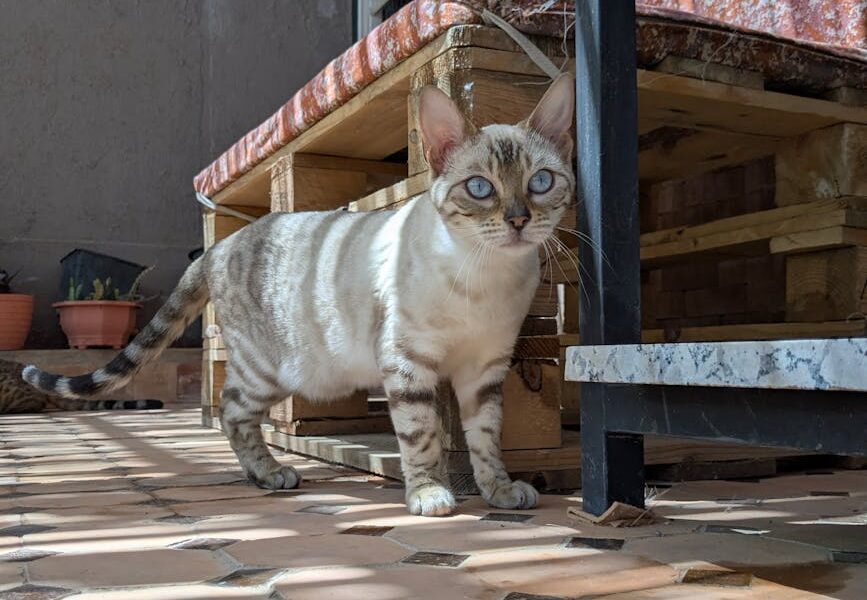
Snow Bengals appear in three subtypes. Seal lynx point shows the lightest cream-to-white background with markings in lighter brown to dark seal, and ice-blue eyes. Seal sepia shows a warmer ivory-to-tan background with darker markings and gold to green eyes. Seal mink shows an intermediate background with aqua to blue-green eyes. Pattern can be spotted, rosetted, or marble within any of these snow color types.
Marble Bengals show a flowing horizontal pattern with three contrasting shades. The pattern should not look like a tabby’s classic blotched pattern but should have a more organic, swirling, marble-stone look. On a brown base, marble shows tan, brown, and dark brown contrast. On a snow base, marble shows cream, light tan, and seal point contrast. On silver or charcoal bases, marble shows silver-white, gray, and black tones.
Temperament and Personality
Bengal personality is consistent across all colors and patterns. Expect a high-energy, intelligent, athletic cat with strong prey drive, water curiosity, vocal communication, and a tendency to climb anything climbable. Bengals are not low-key apartment cats unless deliberately set up with extensive vertical space and daily structured play.
Snow Bengals are sometimes anecdotally described as slightly mellower than brown Bengals, but evidence is weak. Color genetics do not meaningfully affect personality. Marble Bengals likewise share the full Bengal temperament regardless of pattern.
Both varieties form strong bonds with their families and can be vocal in the way Bengals are: a mix of meows, chirps, and the breed’s signature trills. They typically tolerate or enjoy other social cats and friendly dogs, though prey drive can make them poor candidates for households with small caged pets like birds or hamsters. For more on Bengal-specific traits, see our Bengal cat care guide.
Care, Grooming, and Activity Needs
Grooming is straightforward across all Bengal varieties. The short, dense coat with glitter trait needs only weekly combing to manage shedding and keep the coat looking polished. Snow Bengals’ lighter background can show dirt more visibly, which sometimes prompts more frequent grooming for show preparation, but daily life requires no special routine.
Activity needs are demanding. Both snow and marble Bengals require daily structured play, vertical climbing space, and ideally puzzle feeders or training sessions. A Bengal without enough enrichment will create its own, which often means counter surfing, opening cabinets, or destroying soft furnishings. Read our Bengal cat hub and cat enrichment ideas for setups.
Diet matters for Bengals because of high metabolic activity and historical sensitivity to certain ingredients. Our Bengal cat diet guide walks through commercial-food considerations and protein needs. Both color varieties have identical dietary requirements.
Health and Lifespan
Bengals share a common breed health profile regardless of color or pattern. Hypertrophic cardiomyopathy is a relevant concern across many pedigreed cats and should be screened with cardiac ultrasound. Bengal-specific concerns include progressive retinal atrophy (testable genetically) and Bengal pyruvate kinase deficiency (also testable). Reputable breeders screen for all three.
Lifespan typically falls within the typical pedigreed cat range, with well-bred and well-cared-for Bengals reaching their mid-teens. Routine wellness exams, dental care, and weight management contribute most to longevity. Our HCM in cats overview covers the most relevant cardiac concern, and our adult cat wellness checklist outlines routine care.
Color-specific health concerns are minimal. Snow Bengals’ colorpoint-related genes do not introduce additional risks beyond what the breed already carries. Marble Bengals’ recessive pattern gene is similarly health-neutral.
Living Situation Fit
Both varieties suit households that can deliver Bengal-level engagement: active families, work-from-home owners, multi-pet households with another social cat, or homes with adequate cat trees, wall shelves, and secure outdoor enclosures. Apartment living is possible but requires deliberate setup; small apartments with no vertical space and absent owners are a poor fit.
Bengals do well with respectful older children, friendly dogs, and other cats when introduced thoughtfully. They typically struggle in homes with small caged prey-style pets unless the cages are absolutely secure. Senior owners often find Bengals more demanding than expected and may prefer a calmer breed.
For climate, both varieties handle a wide range. The short coat suits temperate to warm climates well, with indoor temperature stability preferred. For lifestyle alternatives, see our most playful cat breeds and highest energy cat breeds roundups.
Cost and Availability
Bengals are widely available through TICA breeders in North America, Europe, and parts of Asia. Pet-quality brown Bengals typically start in the low to mid four figures, with snow and marble varieties generally similar to slightly higher depending on demand. Breeders offering snow marble (combined snow color and marble pattern) sometimes price these higher because of the visual rarity.
For sibling B107 articles in this batch, see our snow Bengal cat color variants and marble Bengal cat coat pattern profiles. Related comparisons in this batch include silver Bengal cat color profile, charcoal Bengal cat color profile, and our F1 Bengal cat owners guide.
Rescue is also worth considering. Bengals turn up in shelters and breed rescues, often as adolescents whose energy outpaced their previous owner’s expectations. Read our adopting a rescue Bengal cat guide and browse cat-only rescues.
Decision Framework: When to Choose Each
Choose a Snow Bengal if you love the wild-looking Bengal pattern on a lighter cream-to-ivory background, you appreciate the option of striking ice blue or aqua eyes (depending on snow subtype), and you want a Bengal whose appearance is more reminiscent of a snow leopard or pale wild cat. Snow lynx point is the lightest, sepia the warmest, and mink the in-between option.
Choose a Marble Bengal if you prefer flowing horizontal swirls to discrete spots or rosettes, you find the marble-stone visual aesthetic compelling, and you want a Bengal that looks more like a small painted leopard than a spotted wild cat. Marble pattern works on brown, snow, silver, and charcoal base colors.
Choose a snow marble Bengal if you want both the lighter color base and the marble pattern in one cat. These are the rarest combination and often have the longest waitlists, but they deliver a unique visual that no other domestic cat can match. For pattern-related context, see our cat breeds with spotted coats roundup.
Frequently Asked Questions
Is a snow Bengal the same as a snow marble Bengal?
No. Snow describes color, not pattern. A snow Bengal can be spotted, rosetted, or marble. A snow marble is the specific combination of a snow color base with a marble pattern. Both are recognized within the Bengal standard.
Are marble Bengals less wild looking than spotted Bengals?
The marble pattern looks more like a small painted leopard or marble-stone swirl, while spotted and rosetted Bengals more closely evoke the Asian Leopard Cat. Whether marble looks “wild” depends on personal taste; both are TICA-recognized variations within the breed.
Do snow Bengals have different temperaments than brown Bengals?
Bengal temperament is consistent across colors. Anecdotal claims of color-linked personality differences are not supported by genetics; coat color genes do not meaningfully affect behavior.
Are marble Bengals rarer than spotted Bengals?
Yes, in most breeder programs. Marble is recessive, requiring both parents to carry the gene, while spotted patterns dominate the breed’s visual identity and breeding focus. This makes marble Bengals less commonly produced.
Can I adopt a Bengal?
Yes. Bengals are surrendered to shelters and Bengal-specific rescues regularly. Browse the adopt cats hub for current listings and check our reputable rescue red flags guide before contacting any rescue. Bengal mixes are also common in general rescue.
Looking to adopt a Snow Bengal vs Marble Bengal?
Browse Snow Bengal vs Marble Bengal cats and mixes available for adoption from shelters and rescues near you.
Find Snow Bengal vs Marble Bengal Cats for Adoption