
Last updated: May 6, 2026
In this article
- The Short Answer on Areca Palms and Pets
- What the Areca Palm Actually Is
- The Critical Name Confusion: Areca Palm vs Betel Nut Palm
- What “Non-Toxic” Means in Practice
- The Real Caveats With Areca Palms
- Cat-Specific Considerations
- Dog-Specific Considerations
- Areca Palms in Tropical Outdoor Landscapes
- Comparing Areca to Other Palms
- What to Do If Your Pet Eats Areca Palm
- For Households Adding a New Pet
- Frequently Asked Questions
The Short Answer on Areca Palms and Pets
Yes, the areca palm (Dypsis lutescens, also known as the butterfly palm, golden cane palm, or yellow palm) is listed by the ASPCA as non-toxic to both cats and dogs. The areca palms safe for pets question lands solidly on the reassuring side. If your cat batted at the fronds of your living room areca or your dog mouthed a fallen leaflet, you are not facing a poisoning emergency. This is one of the most cat-and-dog-safe large indoor palms widely available, which is part of why interior designers, plant retailers, and pet owners have embraced it for decades.
That said, “non-toxic” does not mean “consume freely.” Any plant matter eaten in large quantity can cause vomiting or diarrhea simply because pet GI tracts are not built for big servings of fibrous foliage. Large fronds can also be a chewing or obstruction concern for puppies and aggressive chewers. And there is one critical naming confusion to address: the “areca palm” of houseplant culture (Dypsis lutescens) is NOT the same plant as the “areca nut” or “betel nut” palm (Areca catechu), which IS toxic. The names overlap but the species are different.
What the Areca Palm Actually Is
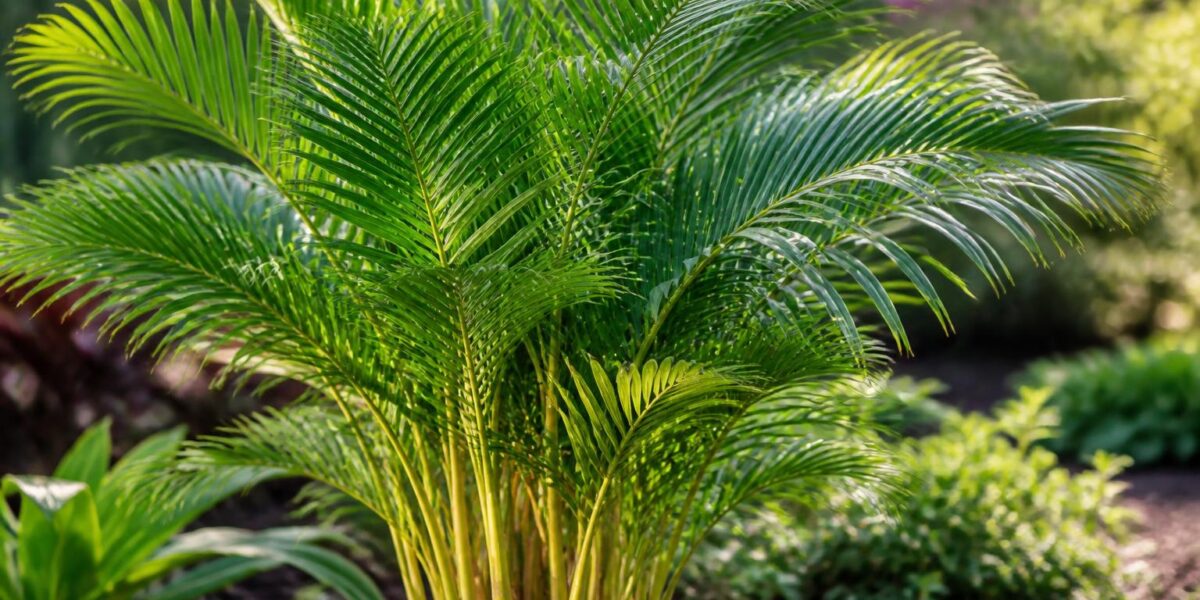
The houseplant universally sold as “areca palm” is Dypsis lutescens, native to Madagascar but now grown worldwide. It is a clumping palm with multiple slender stems emerging from the base, each topped by graceful arching fronds with narrow, feathery leaflets. In its native habitat it can reach 6 to 12 metres; in indoor cultivation it usually stays under 2 to 3 metres in containers.
The plant tolerates indoor conditions remarkably well — bright indirect light, average household humidity, and modest watering. It also functions well as a tropical landscape plant in frost-free climates, where it appears as a feature shrub or hedge in gardens across Florida, southern California, Hawaii, the Caribbean, Singapore, Malaysia, southern China, parts of Australia, and the Mediterranean.
Cultivar names you may see include “butterfly palm,” “yellow palm,” “golden cane palm,” “areca palm,” and the older botanical name Chrysalidocarpus lutescens, which is the same plant. The reclassification to Dypsis happened a few decades ago but the older name persists on plant tags, retailer listings, and books.
The Critical Name Confusion: Areca Palm vs Betel Nut Palm
This is the single most important point in this article. There are two unrelated palms commonly called by names containing “areca”:
Dypsis lutescens — the houseplant areca palm. Non-toxic per ASPCA. Native to Madagascar. Multi-stemmed clumping palm. The plant in this article. Sold as “areca palm” in nurseries and garden centres worldwide. No psychoactive compounds, no significant pet poisoning risk.
Areca catechu — the betel nut palm. A different species in a different genus. Native to Southeast Asia and the Pacific. Single-stemmed tall palm. Produces the betel nut, which is chewed as a stimulant in many South Asian and Pacific cultures. Contains arecoline and related alkaloids that are psychoactive in humans and toxic to pets.
The two plants look quite different. Dypsis lutescens is a multi-stemmed shrubby palm common as a houseplant. Areca catechu is a tall single-trunk tree that produces visible nut clusters. They are not the same plant and they are not in the same risk category. The ASPCA non-toxic listing applies to Dypsis lutescens. If a household has actual betel nut (areca catechu) products — chewing nuts, paan, supari — those should be kept away from pets.
If you are reading this article because of a pet concern, identify which plant your pet actually encountered. The houseplant with feathery arching fronds clumping from a multi-stemmed base is almost certainly Dypsis lutescens, the safe one.
What “Non-Toxic” Means in Practice
The ASPCA non-toxic listing means there is no documented systemic toxicity from typical exposures. It does not mean the plant is consumable food. Pets that eat large amounts of any plant matter can develop:
- Vomiting
- Diarrhea or loose stools
- Drooling
- Reduced appetite for a day or two
- Pawing at the mouth from leaf-edge irritation
These signs are non-specific and self-limiting in most cases. They reflect the simple fact that a dog or cat is not adapted to digest large servings of palm frond. The same signs can occur with grass, ornamental ferns, and many other “non-toxic” plants.
For households where this is the realistic question — “my cat occasionally chews a frond, do I need to worry” — the honest answer is no, you do not need to panic, but the chewing behaviour is worth addressing for the cat’s own comfort. Provide cat-safe alternatives like cat grass, redirect attention with toys, and consider whether the cat is bored or undernourished if the chewing is frequent.
The Real Caveats With Areca Palms
Three practical caveats are worth knowing about even though the chemical toxicity is essentially nil:
Frond and leaflet ingestion in puppies. A puppy that grabs a long piece of palm frond can swallow it whole or in pieces. Long, fibrous, semi-rigid plant material can cause chewing-related obstruction or, more rarely, become a linear foreign body in the digestive tract. Watch puppies around any large-frond houseplant and discourage chewing.
Soil and pesticide exposure. Houseplants from commercial nurseries are sometimes treated with systemic insecticides (neonicotinoids and others) that persist in plant tissue and soil. A pet that drinks from the saucer or repeatedly chews freshly bought leaves may be exposed to pesticide residues rather than to the plant itself. Re-pot in fresh substrate and rinse new plants thoroughly if pet access is likely.
Heavy soil use and fertilizer. Cats sometimes use indoor pot soil as litter, and dogs occasionally dig in pots. Slow-release fertilizer pellets, bone meal, blood meal, and cocoa-based mulches present their own pet hazards independent of the plant. Cocoa mulch is particularly dangerous to dogs because of theobromine. Keep these out of pet-accessible pots.
Cat-Specific Considerations
Cats are the most common houseplant chewers in pet households and the species the ASPCA non-toxic listing matters most for. Dypsis lutescens is one of the few large feature palms a cat owner can install with genuine confidence. For comparison, sago palm (Cycas revoluta) is severely toxic to cats and dogs and is not a true palm. Bamboo palm and cat-specific palm safety covers similar non-toxic options.
For cats that chew fronds repeatedly, consider:
- Providing dedicated cat grass (oat, wheat, or barley grass trays) so the chewing instinct has a designed outlet
- Repositioning the palm so the lower fronds are not in cat-strike zone
- Trimming away ragged, pet-damaged frond ends to discourage continued chewing
- Reviewing the cat’s nutrition — some chewers are seeking missing fibre
Our roundup of cat-safe houseplants covers a broader list of confidently safe greenery for cat households. Palm safety for cats walks through the wider palm-versus-not-palm distinction (sago palm is the most important false-palm to know about).
Dog-Specific Considerations
Dogs interact with areca palms differently than cats. Most adult dogs ignore them. Puppies and bored adolescent dogs may chew on accessible fronds, leading to the obstruction concerns mentioned above. Dogs are also more likely to dig in pots, knock plants over, and sample fertilizer pellets in the soil.
For dog households:
- Position the palm out of regular dog activity zones
- Use a heavy ceramic pot that resists tipping
- Cover the soil surface with smooth river stones if your dog is a digger
- Pick up dropped fronds promptly to reduce chew temptation
- Avoid cocoa mulch in indoor or outdoor pots accessible to dogs
For broader dog-and-palm safety, see palms and dog safety for the species roundup. Most true palms are safe; sago palm and oil palm are the famous exceptions.
Areca Palms in Tropical Outdoor Landscapes
Outside the houseplant context, Dypsis lutescens is widely planted in tropical and subtropical landscapes — Florida, Hawaii, Singapore, Malaysia, the Caribbean, parts of Australia. As a hedge plant or feature shrub, it forms multi-stemmed clumps several metres tall.
For pet households in these climates, the safety story is the same. The plant is non-toxic, large fronds present a chewing concern for some dogs, and falling fronds in heavy weather can be a tripping hazard. Outdoor specimens may carry pesticide residues if professionally maintained — ask your landscape contractor what is being applied if pets have routine access.
For Singapore and tropical Asian households especially, the areca palm joins a small but useful list of confidently pet-friendly tropical plants. Our guide to pet-safe tropical houseplants for Singapore covers other low-risk choices, including the calathea and prayer plant family that share the non-toxic profile.
Comparing Areca to Other Palms
Not all “palms” are created equal. The category includes some of the safest large indoor plants and some of the most dangerous. Worth knowing where each sits:
- Areca palm (Dypsis lutescens): Non-toxic. The subject of this article.
- Bamboo palm (Chamaedorea seifrizii): Non-toxic per ASPCA.
- Parlor palm (Chamaedorea elegans): Non-toxic per ASPCA.
- Kentia palm (Howea forsteriana): Non-toxic per ASPCA.
- Ponytail palm (Beaucarnea recurvata): Non-toxic per ASPCA, though it is technically not a true palm.
- Sago palm (Cycas revoluta): Severely toxic. Not a true palm. Causes life-threatening liver failure in dogs and cats.
- Areca catechu (betel nut palm): Toxic. Different species from Dypsis lutescens.
- Fishtail palm (Caryota spp.): Calcium oxalate fruits cause significant oral irritation.
If you are buying a palm for a pet household, confirm the species name on the tag. “Areca palm” with multi-stemmed clumping habit is reliable. Anything labelled “sago” or “cycad” is not a palm and is dangerous.
What to Do If Your Pet Eats Areca Palm
For typical small-volume chewing of Dypsis lutescens fronds:
- Stop further access. Move the plant or supervise more closely.
- Check the mouth gently if your pet tolerates it. Remove visible plant fragments.
- Offer fresh water and observe for vomiting or loose stools over the next 24 hours.
- Most pets are fine without further intervention. Mild GI upset typically resolves in 12 to 24 hours.
Call your vet if you see repeated vomiting, diarrhea lasting more than 24 hours, refusal to eat for more than a meal or two, or any unusual behavioural changes. The ASPCA APCC at 888-426-4435 (consultation fee) and the Pet Poison Helpline at 855-764-7661 (consultation fee) are 24-hour resources if you cannot reach your usual vet.
If your pet ate large quantities of frond material — especially a small dog or cat that swallowed long pieces — call the vet promptly. Foreign-body obstruction is the realistic concern, not poisoning. The vet may want to examine, image, and decide on next steps. Do not induce vomiting at home with long, semi-rigid plant material on board, as it can cause more damage on the way out than passing.
For Households Adding a New Pet
If you are bringing home a new dog or cat, the areca palm is a safe choice that does not need to be relocated. Walk through the rest of your plant collection alongside it — identify any genuinely toxic plants (sago palm, lilies in cat households, dieffenbachia, oleander, pothos, etc.) and decide whether to rehome them or restrict pet access.
Our cat adoption guide includes an indoor pet-proofing checklist that covers plants alongside cords, foods, household chemicals, and other hazards. Dog adoption resources cover similar ground for dog households. Haworthia is another reliably non-toxic plant that pairs well with areca palms in a pet-safe planting scheme — small succulent on the desk, large feature palm in the corner.
Frequently Asked Questions
Is the areca palm really completely safe for cats?
The ASPCA lists Dypsis lutescens (the houseplant areca palm) as non-toxic to cats. There is no documented systemic toxicity at typical exposures. Cats that eat large amounts of any plant material can develop mild GI upset; this is not specific to areca palm and is not a poisoning emergency.
What about my dog chewing on areca palm fronds?
The plant itself is non-toxic to dogs. The realistic concern is mechanical: long fibrous frond pieces can cause obstruction in small dogs and aggressive chewers. Discourage frond chewing, pick up dropped leaflets, and call your vet if your dog swallows large amounts of leaf material.
Is this the same plant as the betel nut palm?
No. The houseplant “areca palm” is Dypsis lutescens, native to Madagascar. The betel nut palm is Areca catechu, native to Southeast Asia. They are different species in different genera. Only Dypsis lutescens is the non-toxic ASPCA-listed houseplant. Betel nut products contain arecoline and are toxic.
Can I keep an areca palm where my pets can reach it?
Yes, generally. The plant is non-toxic. The main reasons to position it carefully are pesticide residues on newly bought plants, soil amendment exposures (especially cocoa mulch, which is dangerous for dogs), and avoiding chewing damage to the plant itself. Re-pot new plants in fresh soil if pet access is likely.
Are there any palms I should avoid in a pet household?
Yes — sago palm (Cycas revoluta) is the most important. It is severely toxic to dogs and cats and is sometimes mistakenly grouped with palms in retail. Fishtail palm (Caryota) has calcium oxalate fruits. Most true palms — areca, bamboo, parlor, kentia, ponytail — are non-toxic.


