
Last updated: May 16, 2026
In this article
- Ash Trees and Pets at a Glance
- What Is an Ash Tree?
- Toxicity Status and ASPCA Listing
- Possible Symptoms After Ash Ingestion
- The Samara Drop and Autumn Cleanup
- Mechanical Hazards in the Yard
- What to Do If Your Pet Eats Ash
- Mountain Ash and the Naming Confusion
- Ash in the Mixed Canopy
- Indoor Ash Decor and Wood Products
- Adoption and the Ash-Shade Yard
- Frequently Asked Questions
Ash Trees and Pets at a Glance
Are ash trees safe for pets? For dogs and cats, the answer is generally yes. The various ash species in the genus Fraxinus, including white ash (Fraxinus americana), green ash (Fraxinus pennsylvanica), and European ash (Fraxinus excelsior), are not on the ASPCA toxic-plant list. Available poison-control literature does not link the genus to severe canine or feline poisonings, and the leaves, bark, and samara seeds of ash trees are not associated with documented systemic toxicity in companion animals at typical exposure levels.
The caveats are familiar from the rest of this batch. Ash is not an edible plant for pets, and large ingestion of leaves or seeds may produce mild GI upset such as drool, vomiting, or soft stool simply because the dog and cat digestive systems were not designed for vegetation in volume. Mechanical risks from chewed twigs, fallen branches in storm season, and crowded samara drops in autumn deserve respect. With normal yard supervision, however, ash trees are firmly in the safer category alongside the rest of the hardwoods we cover in this batch.
What Is an Ash Tree?
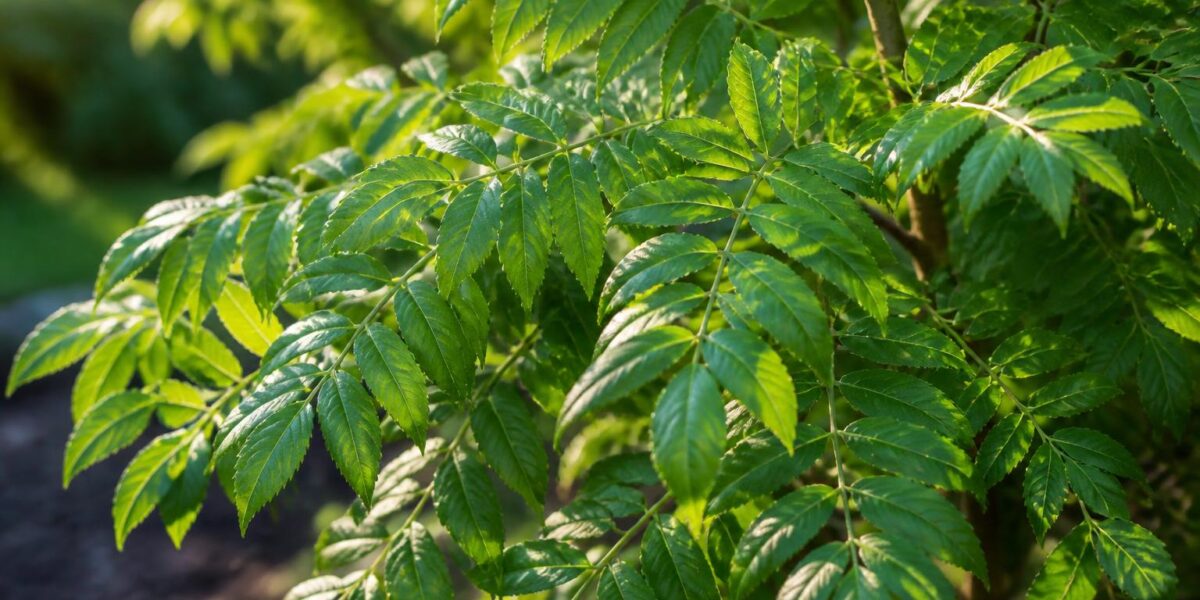
Ash trees are deciduous hardwoods native to temperate forests across North America, Europe, and Asia. Mature trees range from 50 to 100 feet tall depending on species, with compound leaves of five to nine leaflets, a strong vertical form, and a smooth gray bark that develops diamond-pattern furrows with age. The flowers are inconspicuous, but the seeds are distinctive: long, oar-shaped winged samaras that drop in autumn and helicopter to the ground.
Ash wood is famously strong, light, and shock-resistant, which is why it has been the traditional material for baseball bats, tool handles, and oar shafts. White ash is the species most commonly used for sports equipment in North America. The genus has been under serious threat from the emerald ash borer, an invasive insect that has killed tens of millions of ash trees across the eastern United States since the early 2000s. As a result, mature ash trees are becoming less common in many neighborhoods, but they remain widely planted in parts of the country and most of Europe.
Toxicity Status and ASPCA Listing
The ASPCA Animal Poison Control Center does not list any Fraxinus species on its toxic-plant rosters for dogs, cats, or horses. Veterinary case reports do not link ash foliage, bark, or samara to severe poisoning in companion animals. Livestock-management literature places ash on the safe-grazing list for cattle and sheep.
Where caution applies in pet households is mechanical. Ash bark is firm and ridged, and a chewing dog can splinter chips that injure gums or pharynx. Falling samaras in autumn can drop in dense windrows under a tree, and a vacuuming puppy may sweep up handfuls along with the leaves. Storm-damaged ash trees, especially those weakened by emerald ash borer, drop heavy branches without warning, which is a physical injury risk independent of plant toxicity.
Possible Symptoms After Ash Ingestion
For oral ingestion of ash leaves, bark, or samara seeds, possible symptoms in dogs include drool, lip licking, single-episode vomiting, soft stool, and brief reluctance to eat the next meal. Some dogs paw at the mouth after biting fibrous bark or twigs. Most dogs that eat a small quantity will be fine within a day.
Cats rarely engage with ash material directly. A cat that bites a fallen leaf may drool or vomit a fiber wad without further consequence. Severe systemic symptoms such as tremors, seizures, organ failure, or persistent uncontrolled vomiting are not characteristic of ash ingestion. If those signs appear, suspect either another toxin in the environment or a medical condition unrelated to plant exposure.
The Samara Drop and Autumn Cleanup
Ash samaras are the long winged seeds that helicopter down in autumn. A mature ash can produce hundreds of thousands of samaras in a heavy seed year, blanketing the ground under the tree and drifting into garden beds and onto patios. The samaras are not chemically toxic, but they are fibrous and indigestible, and a dog that eats a mouthful may produce a fiber-wad vomit or pass undigested seed material in the stool.
Daily cleanup during the samara drop window is the most useful management step. Walk a loop with a yard waste bin and gather seeds before your dog has a chance to graze. The samaras compost slowly and can be added to a sealed compost bin, or bagged for municipal yard waste pickup. A leaf blower handles a heavy drop quickly, although the samaras are sticky enough to need a rake follow-up.
Mechanical Hazards in the Yard
Beyond the samara drop, the bigger ash-related yard risks are storm damage and bark chewing. Emerald ash borer infestations weaken ash trees structurally, and infested trees can drop large branches in high wind. If you have a mature ash tree on your property and the canopy is thinning, have it assessed by an arborist for safety pruning. A dog under a falling branch is a more pressing risk than a dog chewing a leaf.
Ash bark is not chemically toxic, but heavy chewing on twigs or bark patches can splinter and irritate the gums or cause minor oral injury. Redirect a chewing dog to a sanctioned chew toy and supervise yard time during the chewing phase of puppyhood.
What to Do If Your Pet Eats Ash
If you witness or suspect ingestion, remove any plant fragments from your pet’s mouth and offer a small drink of water. Photograph the tree and any chewed material. Most pets that swallow a small amount of ash leaf, bark, or samara will be fine after a quiet evening of observation.
Phone your own veterinarian first if your pet shows persistent vomiting, refusal to eat, lethargy, or any concerning systemic sign. The ASPCA Animal Poison Control Center at 888-426-4435 and the Pet Poison Helpline at 855-764-7661 are available around the clock for second opinions. Do not induce vomiting at home without veterinary instruction; in most ash-related cases, the symptoms are mild and resolve with rest.
Mountain Ash and the Naming Confusion
The name “mountain ash” sometimes shows up in plant-safety questions and creates confusion. Mountain ash (Sorbus aucuparia, also called rowan) is not a true ash. It is a member of the rose family with compound leaves that look superficially like ash leaves, but it produces clusters of bright orange-red berries rather than samaras, and its safety profile is different. Rowan berries can cause mild GI upset in dogs and cats, particularly when consumed unripe, and our dedicated guide covers that species in detail.
If you are looking at a tree with compound leaves and trying to identify it as ash or mountain ash, the seed structure is the easiest difference. True ash produces winged samaras; mountain ash produces berry clusters. The bark differs as well: true ash develops diamond-pattern furrows, while mountain ash bark is smoother and grayer.
Ash in the Mixed Canopy
Ash often shares a yard with other temperate hardwoods. Beech, hickory, sycamore, and larch are all neighbors with low toxicity profiles. Oak and chestnut sit on the mildly toxic side. Willow, birch, elm, and cottonwood are common companions.
For broader yard planning, the pet-safe garden plants guide gathers companion species without toxicity flags. Knowing which trees carry which risk lets you prioritize daily cleanup where it actually matters.
Indoor Ash Decor and Wood Products
Ash branches occasionally appear in indoor floral arrangements, especially in fall and winter displays. The same low-toxicity rule applies: a single chewed leaf is unlikely to cause issues, but vases full of branches should sit out of feline jumping range. Stale floral water is the hidden risk in any indoor display because bacterial overgrowth can produce a stomach upset independent of the plant itself.
Ash wood used for furniture, sports equipment, and tool handles is not chemically dangerous to pets. The mechanical risks from a chewed wooden object are the same as for any other hardwood: splintering, dental damage from heavy crunching, and aspiration of small chips. A baseball bat or hammer handle in the closet is not a toxin worry.
Adoption and the Ash-Shade Yard
Pet owners with ash trees in the yard generally have one fewer worry than households dealing with toxic species like sago palm, oleander, or yew. The ash safety profile means yard time can focus on enrichment and supervision rather than constant vigilance about what was just chewed.
If you are weighing whether to add a dog or cat to your home, the adopt dogs and adopt cats hubs collect adoptable animals along with practical first-week guidance. With basic yard hygiene during the autumn samara drop and storm-aware pruning of weakened trees, ash shade is a comfortable place for both pets and humans to spend an afternoon.
Frequently Asked Questions
Are ash trees toxic to dogs?
True ash trees (Fraxinus species) are not listed as toxic by the ASPCA. Mild GI upset is possible from large ingestion of leaves or samara seeds, but severe systemic toxicity is not characteristic of the genus.
Are ash trees toxic to cats?
Ash trees are not on the ASPCA toxic-to-cats list. Cats rarely engage with ash material directly, and incidental chewing of a fallen leaf usually produces only mild drool or a single vomiting episode at most.
Is mountain ash the same as ash?
No. Mountain ash (Sorbus aucuparia, also known as rowan) is in the rose family, while true ash (Fraxinus) is in the olive family. Their safety profiles differ, and our rowan berries guide covers mountain ash separately.
What should I do if my dog ate ash leaves or samara seeds?
Watch for vomiting, soft stool, or appetite loss for 24 hours. If symptoms persist or worsen, or if a small dog ate a large quantity, contact your veterinarian, ASPCA Animal Poison Control at 888-426-4435, or the Pet Poison Helpline at 855-764-7661.
Is the wood of an ash tree dangerous if my dog chews on it?
Ash wood is not chemically toxic. Mechanical risks from chewed twigs and branches are the same as for any hardwood: splinters, dental damage, and minor oral irritation. Redirect persistent chewers to sanctioned chew toys.


