
Last updated: May 16, 2026
In this article
- Sycamore Trees and Pets at a Glance
- What Is a Sycamore Tree?
- Toxicity Status and ASPCA Listing
- Possible Symptoms After Sycamore Exposure
- The Seed-Ball Hair Problem
- Mechanical Hazards in the Yard
- What to Do If Your Pet Eats Sycamore
- Sycamore Around Cats Specifically
- Sycamore Around Dogs Specifically
- Sycamore in the Mixed Canopy
- Living With a Plane Tree in the City
- Frequently Asked Questions
Sycamore Trees and Pets at a Glance
Are sycamore trees safe for pets? For dogs and cats, the answer is generally yes. The American sycamore (Platanus occidentalis), the London plane (Platanus x acerifolia), and the Oriental plane (Platanus orientalis) are not listed as toxic by the ASPCA, and the available poison-control literature does not link the genus to severe canine or feline poisonings. For households with companion animals, a sycamore in the yard is mostly a question of mechanical hygiene rather than chemical danger.
One important caveat applies before we move on, and it concerns horses, not dogs or cats. Some sycamore species, particularly the European sycamore (Acer pseudoplatanus, which despite the name is actually a maple), have been linked to atypical myopathy in horses through a compound called hypoglycin A. That horse-specific risk does not extend to the Platanus sycamores covered in this article, and it does not affect dogs or cats. Pet owners reading older European veterinary articles about sycamore-related horse poisonings should know that the offending tree is botanically a maple, not a true sycamore. Our red maple leaves guide and the broader Japanese maple and silver maple guides cover the maple side of that conversation.
What Is a Sycamore Tree?
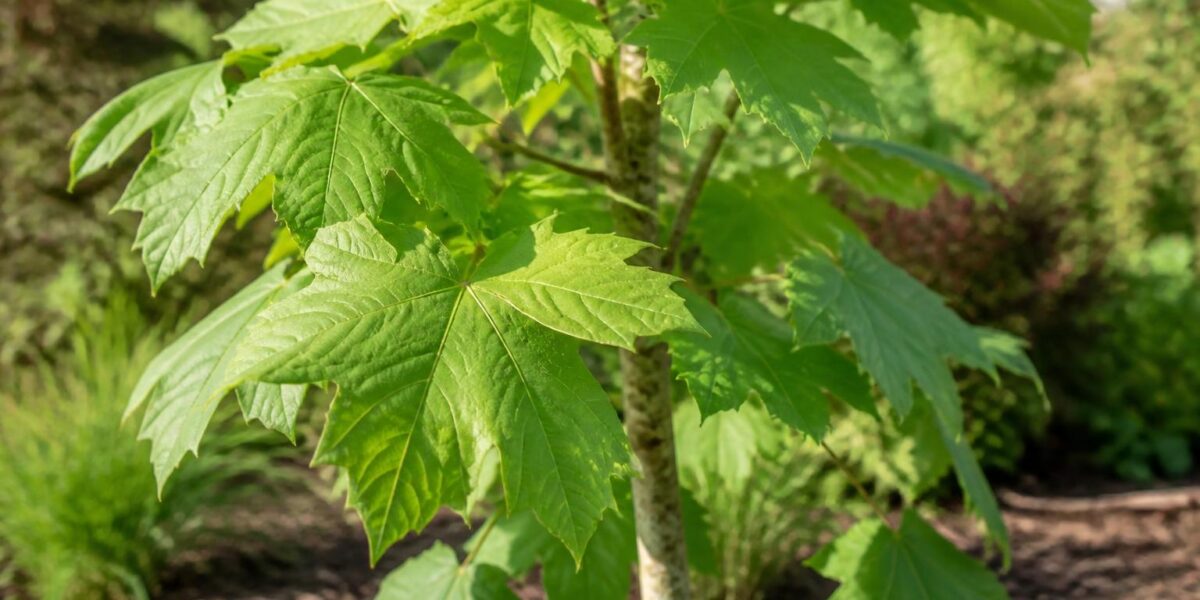
Sycamores in North America and many planted urban settings are tall deciduous hardwoods with distinctive mottled bark that flakes off in patches of cream, gray, and tan. Mature American sycamore (Platanus occidentalis) can reach 75 to 130 feet tall, with broad palmate leaves that look like an oversized maple leaf and a wide spreading crown. The species is among the largest hardwoods native to eastern North America and is often planted along rivers and floodplains.
The London plane is a hybrid of American sycamore and Oriental plane and is one of the most widely planted street trees in temperate cities worldwide. Its tolerance for compacted soil and air pollution makes it a favorite for urban landscaping. All Platanus species share the same general safety profile for pets, the same mottled bark, and the same fuzzy ball-shaped seed clusters that hang from twigs through winter and break apart in spring.
Toxicity Status and ASPCA Listing
The ASPCA Animal Poison Control Center does not list any Platanus species on its toxic-plant rosters for dogs, cats, or horses. Available case reports do not link sycamore foliage, bark, or seed to severe poisoning in companion animals. The widely quoted “sycamore” horse-poisoning literature actually refers to Acer pseudoplatanus, a European maple species, and not to the true plane-trees in this article.
Where caution applies in pet households is mechanical, not chemical. Sycamore bark sheds in large papery patches that fall to the ground. Seed balls, when they break apart in spring, release thousands of tiny stiff hairs that can irritate eyes, noses, and respiratory tracts in pets, humans, and especially in people with asthma. Those hairs are the source of the “sycamore allergy” complaint familiar to anyone living in a London plane neighborhood.
Possible Symptoms After Sycamore Exposure
For oral ingestion of sycamore leaves, bark, or twigs, possible symptoms in dogs include drool, lip licking, single-episode vomiting, soft stool, and brief reluctance to eat. Cats rarely chew sycamore material, but a curious feline that bites a fallen leaf or bark patch may drool or vomit fiber briefly. Symptoms typically resolve within a day without intervention.
For respiratory exposure during seed-ball break-up season (late winter to early spring in most climates), pets may experience nasal irritation, sneezing, watery eyes, and minor coughing. Dogs that nose around fallen seed balls and inhale the released hairs are most likely to react. Cats that walk through seed-ball debris and groom afterward may ingest small amounts of fluff and produce occasional cough. Severe systemic symptoms are not characteristic of sycamore exposure.
The Seed-Ball Hair Problem
Sycamore seed balls hang from the twigs through fall and winter as tan or brown fuzzy spheres about an inch in diameter. As the weather warms, the balls dry, crack, and disintegrate, releasing seeds attached to long stiff hairs that drift on air currents for weeks. In urban neighborhoods planted heavily with London plane, the spring “fluff” can dust patios, decks, and pet bedding.
For dogs that snuffle vigorously along sidewalks, this is when low-grade nasal irritation appears. For cats that lick fluffy paws, mild oral irritation is the equivalent. Neither is dangerous, but pets with pre-existing respiratory disease (asthma, chronic bronchitis, brachycephalic dogs) can have flares during peak season. Walk in sycamore-heavy areas in early morning when the air is calm, and rinse paws after walks to reduce tracked-in fluff.
Mechanical Hazards in the Yard
Sycamore bark sheds in papery patches all year, with peak shedding in summer. Patches on the ground can be chewed by dogs or shredded into smaller pieces by play. The bark is not chemically dangerous, but heavy ingestion of fibrous bark can cause minor GI obstruction or constipation in small dogs. Twigs and small branches drop after storms; a chewing dog can splinter twigs and produce gum or oral injury.
Whole seed balls underfoot are a slip hazard for older pets and a chewing target for puppies. Most pets ignore them, but a teething puppy may bite into one and inhale a mouthful of fluff, producing a brief sneeze fit. Daily cleanup during peak fall and spring debris seasons handles the worst of these issues.
What to Do If Your Pet Eats Sycamore
If you witness or suspect ingestion, remove any plant fragments from your pet’s mouth and offer a small drink of water. Photograph the tree and any chewed material. Most pets that swallow a small amount of sycamore leaf, bark, or seed will be fine after a quiet evening of observation.
Phone your own veterinarian first if your pet shows persistent vomiting, refusal to eat, lethargy, or labored breathing. The ASPCA Animal Poison Control Center at 888-426-4435 and the Pet Poison Helpline at 855-764-7661 are available around the clock for second opinions. Do not induce vomiting at home without veterinary instruction. Most sycamore-related calls are reassurance calls; severe outcomes are not characteristic of the species.
Sycamore Around Cats Specifically
Cats interact with sycamore mostly through paws and grooming. Outdoor cats walk through fallen leaves, bark patches, and seed-ball fluff, then groom the residue off later. The risk profile for cats is therefore slightly different from dogs: less direct chewing, more grooming-mediated ingestion of small amounts.
For indoor cats, sycamore exposure usually appears only when humans bring branches inside for floral decoration. Sycamore foliage in fall arrangements is a low-toxicity decoration but should still sit out of feline jumping range, because chewing a single leaf is unlikely to cause issues but chewing several can produce drool or a vomited wad. Stale floral water is its own bacterial-growth concern in any vase. Our cat-safe houseplants guide covers indoor strategies for cat households.
Sycamore Around Dogs Specifically
Dogs are the more exposure-prone species in a sycamore yard because they nose, chew, and dig. Adult dogs usually leave the tree alone except during yard play, but puppies in their oral phase may shred bark patches, gnaw fallen twigs, or carry seed balls around as toys. None of these behaviors are chemically dangerous, but they are messier than they sound and they create cleanup work.
For training around the tree, work on a calm “leave it” cue near bark patches and seed balls. Reward attention back to you. Walk leashed past sycamores during peak debris seasons, and rinse paws after off-lead time. Our pet-safe garden plants guide covers companion species for a dog-friendly yard.
Sycamore in the Mixed Canopy
Sycamore often shares its space with other temperate hardwoods. Beech, hickory, ash, and larch all sit on the safer end of the temperate canopy. Oak and chestnut sit on the mildly toxic side. Willow, birch, elm, and cottonwood are the soft-bark counterparts you may encounter on the same property.
Knowing which trees on your property carry which risk profile makes daily yard hygiene more efficient. Trees with documented toxicity flags get the heaviest cleanup; trees with mainly mechanical concerns get a light pickup; bystanders like sycamore and beech mostly need a casual eye.
Living With a Plane Tree in the City
If you live in a London-plane-heavy city and your dog walks the same blocks every day, the seed-ball season can be a low-grade nuisance for several weeks. Dust off bedding more often during peak fluff, wipe paws and muzzle after walks, and keep windows reasonably closed during high-pollen windows. Pets with diagnosed asthma, chronic bronchitis, or post-viral airway disease should have their seasonal management plan reviewed with the veterinarian who manages their care.
For everyone else, a London plane on the corner is a feature of city living that pets adapt to easily. The shade, the leaf litter, and the seasonal rhythm are all part of the urban year. If you are weighing whether to bring an animal into a city home, the adopt dogs and adopt cats hubs collect adoptable animals along with practical urban-living tips for the first weeks.
Frequently Asked Questions
Are sycamore trees toxic to dogs?
True sycamores (Platanus species) are not on the ASPCA toxic list. Mild GI upset from leaf or bark chewing is possible, and respiratory irritation from spring seed-ball fluff can affect dogs with pre-existing airway disease.
Are sycamore trees toxic to cats?
Sycamores are not listed as toxic to cats. Cats rarely chew sycamore directly, but tracked-in seed-ball fluff and grooming-mediated ingestion of small amounts of leaf debris are mild irritation possibilities.
What about the sycamore that poisons horses?
The horse-toxic “sycamore” in older European veterinary literature is actually Acer pseudoplatanus, a maple. The true plane-tree sycamores (Platanus) covered in this article are not implicated in equine atypical myopathy.
Are sycamore seed balls dangerous if my pet eats one?
Sycamore seed balls are not chemically toxic. The fine hairs released during break-up can irritate eyes, noses, and the GI tract if a large amount is ingested. Most pets pass small amounts without incident.
What should I do if my dog ate sycamore bark or leaves?
Watch for vomiting, soft stool, or coughing for 24 hours. If symptoms persist or worsen, contact your veterinarian, ASPCA Animal Poison Control at 888-426-4435, or the Pet Poison Helpline at 855-764-7661.


