
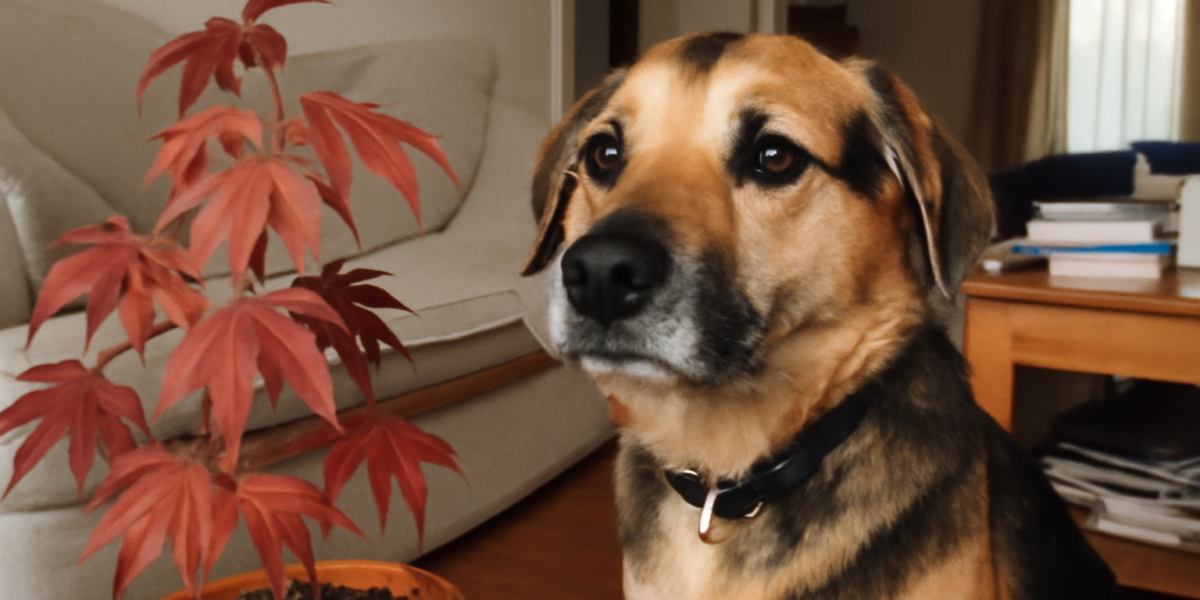
Are Red Maple Leaves Toxic to Pets? The Quick Answer
The honest answer for red maple leaves (Acer rubrum) is “it depends on the species you are asking about.” Red maple leaves are famously and well-documented as severely toxic to horses, where wilted leaves cause acute hemolytic anemia — a destruction of red blood cells that can be fatal. For dogs and cats, the toxicity picture is much less established. There are no large clinical case series demonstrating clear red maple toxicity in dogs or cats, and the ASPCA’s toxic-plant database does not list red maple as a major toxin for either species. That said, the chemistry that hurts horses is at least theoretically concerning, and most veterinary toxicologists treat large ingestions of wilted red maple leaves as a low-grade concern in dogs and cats rather than a non-issue.
In this article
- Are Red Maple Leaves Toxic to Pets? The Quick Answer
- What Red Maple Looks Like and Where Pets Encounter It
- The Horse Toxicity Story: Why Red Maple Has Its Reputation
- What About Dogs and Cats? The Less-Established Picture
- Symptoms to Watch For
- How Much Is Too Much for Dogs and Cats?
- What to Do If Your Pet Eats Red Maple Leaves
- Veterinary Treatment
- Wildlife and Other Species: Squirrels, Deer, and Insects
- Other Maple Species and Maple Yard Safety
- Other Yard Hazards Worth Pairing With Maple Awareness
- Pet-Safe Tree Alternatives
- Welcome-Home Yard Audits
- Frequently Asked Questions
If your dog or cat has chewed red maple leaves — especially wilted or fall leaves — call your veterinarian or poison control for guidance. The risk is generally lower than for grayanotoxin or cardiac glycoside plants, but a phone consult helps you decide whether observation at home or a clinic visit is appropriate. Call your veterinarian, the ASPCA Animal Poison Control Center at 888-426-4435 (fee applies), or the Pet Poison Helpline at 855-764-7661 (fee applies).
What Red Maple Looks Like and Where Pets Encounter It
Red maple is a deciduous tree native to the eastern and central United States and southeastern Canada, ranging from southern Newfoundland to Florida and west to Texas and Manitoba. It is one of the most widespread and most common trees in eastern North American forests and is also widely planted as a landscape and street tree because of its brilliant fall color. The leaves are typically three- to five-lobed, four to six inches across, with red leaf stems (petioles) and red-tinged twigs that give the tree its name. In autumn, the leaves turn vivid red, orange, or yellow.
Pets encounter red maple primarily as a yard or street tree. Dogs scavenge fallen leaves in autumn, especially during yard cleanup season. Cats may chew on lower branches accessible from the ground. Indoor pets are at much lower risk unless cut branches are brought inside as fall decor.
The closely related silver maple (Acer saccharinum) and red-silver hybrids share some toxic potential. Sugar maple (Acer saccharum) and Norway maple (Acer platanoides) are less implicated, though dogs ingesting any maple species in volume should be evaluated. Japanese maple (Acer palmatum) is generally considered low-risk and is sometimes used as an ornamental in pet-friendly yards, though confirmation is always wise.
The Horse Toxicity Story: Why Red Maple Has Its Reputation
The red maple toxicity literature is dominated by horse cases. Horses that consume wilted red maple leaves — typically from fallen branches after storms, pruning debris, or browsing on hung-up leaves in pasture — develop a severe form of hemolytic anemia. The toxic principle is gallic acid and possibly other oxidative compounds that develop as the leaves wilt. These compounds cause oxidative damage to horse red blood cells, leading to methemoglobinemia and Heinz body anemia. Horses can die within days of ingesting as little as a few pounds of wilted leaves.
This horse-specific toxicity is well-documented in veterinary literature and is one of the classic examples of species-specific plant poisoning. Fresh green leaves and dried fully-brown leaves are less toxic than wilted (recently fallen but not yet desiccated) leaves. Fall season, when leaves drop and lie on the ground in transitional moisture, is the highest-risk period for horses with pasture access to maples.
Veterinarians who manage equine practices have decades of experience with red maple poisoning, and the warnings against allowing horses near red maple are now standard horse-care advice. The same warnings have, by extension, made many dog and cat owners worry about red maple, even though the species toxicity picture for small animals is much less clear.
What About Dogs and Cats? The Less-Established Picture
For dogs and cats, the toxicity story is genuinely less well-established. The ASPCA’s toxic-plant database does not list Acer rubrum as a significant toxin for either species. Veterinary toxicology textbooks generally treat red maple as a horse-specific concern. There are no published clinical case series documenting consistent red maple toxicity in companion small animals.
That said, the underlying chemistry — oxidative damage to red blood cells — is theoretically possible in any mammal that ingests sufficient amounts of the relevant compounds. Cats are particularly susceptible to oxidative red blood cell damage in general (which is why onions and garlic are far more dangerous to cats than to many other species). So while there is no strong clinical evidence that pet cats are dropping ill from red maple, a cat ingesting large amounts of wilted leaves is a situation worth a vet call.
Dogs typically tolerate plant material better than horses do because of differences in digestive physiology, body size, and how much plant material they actually consume. A dog who chews a few maple leaves is at very low risk. A dog who consumes large quantities of wilted leaves may warrant observation, especially if the dog is small, young, or has pre-existing health issues.
Symptoms to Watch For
For pets with confirmed or suspected significant red maple ingestion, the symptoms to watch for parallel the horse picture but are less commonly observed. Watch for lethargy, reduced appetite, pale or yellowish gums (indicating potential anemia and red blood cell breakdown), brown-tinged urine (a sign of red blood cell breakdown products in urine), increased respiratory rate, weakness, and reduced exercise tolerance.
More commonly, pets ingesting maple leaves show generic GI signs: drooling, vomiting, soft stool or diarrhea, and a temporary loss of appetite. These symptoms usually resolve on their own within a day or two and reflect the general gastrointestinal irritation that comes with eating any plant material.
The dramatic hemolytic anemia picture seen in horses is rare or absent in dog and cat clinical reports. If you observe genuinely concerning signs (especially anything suggesting anemia — pale gums, yellow eyes or skin, dark urine, severe weakness), get to a vet immediately for evaluation. These signs warrant blood work to assess red blood cell health regardless of the source.
How Much Is Too Much for Dogs and Cats?
There is no established mg-per-kilogram threshold for red maple toxicity in dogs and cats, in part because clear toxicity has not been well-documented. The horse threshold (around 1.5 to 3 grams of dried leaves per kilogram body weight) does not transfer cleanly to small animals. The practical message for dog and cat parents is that small ingestions are very low risk, and large ingestions of wilted leaves warrant a phone call to the vet.
Body size matters in any toxicity calculation. A small cat eating multiple wilted leaves is a relatively larger exposure than a Labrador eating the same amount. Cats with chronic kidney disease, anemia, or other health issues have less margin for any oxidative stress. Dogs with hemolytic anemia history (some breeds, including English Springer Spaniels, are predisposed) deserve extra caution.
Wilted leaves are theoretically more concerning than fully fresh or fully dried leaves because the toxic compounds are most concentrated in the wilting phase. Fall yard cleanup is the realistic risk window — leaves that have been on the ground for a day or two are in the wilted phase. Fresh leaves on the tree are less concerning; fully brown desiccated leaves on the ground in late winter are also less concerning.
What to Do If Your Pet Eats Red Maple Leaves
For most pet households, a small amount of red maple leaf chewing is a low-urgency situation. Remove your pet from the source, check the mouth for plant material, and observe for the next 24 to 48 hours. Mild GI signs that resolve on their own are typical and not alarming.
For larger ingestions, especially of wilted leaves, call your veterinarian or poison control. Provide your pet’s species, weight, age, health background, the part and approximate amount of plant ingested, and the time of ingestion. Have a leaf or photograph available so the staff can confirm the species. Maple species can be confused with each other and with other broad-leafed trees; correct ID matters for accurate risk assessment.
Do not induce vomiting at home unless directly instructed by a veterinary professional. For pets showing signs that suggest anemia or red blood cell breakdown — pale gums, dark urine, severe weakness — go to an emergency vet immediately for blood work and supportive care. These cases are rare for red maple specifically but warrant urgent evaluation.
Veterinary Treatment
For typical low-grade GI signs after maple-leaf chewing, treatment is supportive: observation, bland diet, fluids if vomiting has been substantial, and anti-nausea medication if needed. Most cases resolve within 24 to 48 hours without specific intervention.
For rare cases involving hemolytic anemia or oxidative red blood cell damage, treatment is more intensive. The team may run a complete blood count and chemistry panel, evaluate red blood cell morphology for Heinz bodies, provide IV fluid support, blood transfusion in severe cases, oxygen support, and supportive care. These severe presentations are uncommon but warrant aggressive treatment if they occur.
Most pets recover fully from red maple ingestion. The horse-style severe outcome is the exception, not the rule, in dogs and cats. Pet parents who call early and follow vet guidance generally do well.
Wildlife and Other Species: Squirrels, Deer, and Insects
Red maples are heavily browsed by deer, squirrels, and various insects throughout the year, and most wildlife seem to manage maple leaves without obvious toxicity. Squirrels eat maple seeds, buds, and bark. Deer browse young trees. White-tailed deer, in particular, are major consumers of red maple in their range. The fact that wildlife eat maple without major toxicity is sometimes cited as evidence that the red maple toxicity story is overblown for non-horses.
This is an oversimplification — wildlife species have different physiology, and what is safe for deer may not be safe for cats — but the general observation does support the idea that red maple is not a dramatic universal toxin the way oleander or yew are. The horse-specific vulnerability is real and well-documented; the small-animal toxicity question is less settled.
For pet parents, the takeaway is that red maple should not be on the same emergency list as severe-tier plants like mountain laurel or sago palm, but it is worth treating large ingestions of wilted leaves with appropriate caution. Yard cleanup during fall remains a sensible practice for households with horses, dogs, and cats sharing the property.
Other Maple Species and Maple Yard Safety
Sugar maple (Acer saccharum) and Norway maple (Acer platanoides) are less often implicated in toxicity reports but should still be monitored. Silver maple (Acer saccharinum) and red-silver hybrids share some toxic potential with red maple. Japanese maple (Acer palmatum) is generally considered low-risk and is sometimes used as an ornamental in pet-friendly yards, though confirmation is always wise.
For yard safety, the practical recommendation is yard cleanup during fall leaf-drop, especially if you have horses or other livestock alongside your dogs and cats. Bagging or composting fallen leaves promptly reduces wilting time and exposure risk. Pruning debris from any storm damage should be cleared before pets can scavenge it.
Indoor decor with cut maple branches in fall is a small additional exposure consideration. Cut leaves wilt quickly in vases, and a chewing pet may sample them. Most pets ignore vase greenery, but the seasonal centerpiece is worth keeping out of reach.
Other Yard Hazards Worth Pairing With Maple Awareness
If you are doing a yard audit because of maple concerns, several other common yard plants are worth thinking through. Acorns and oak leaves are widespread fall hazards — see our pieces on acorns and dogs and oak leaves and dogs for the tannin-related concern. Mountain laurel, rhododendron, and azalea are far more dangerous and are covered in our mountain laurel guide for dogs and mountain laurel guide for cats.
Stone fruits drop in late summer and early fall — see cherry pits and dogs for the cyanide and obstruction risks. Horse chestnuts (Aesculus species) drop large nuts in fall that are toxic to dogs and cats.
The general fall yard cleanup approach addresses most of these risks at once. A weekly leaf and debris cleanup during October and November, combined with prompt removal of fallen fruit and nuts, is the practical pet-safety behavior for households in regions with mixed deciduous landscapes. Our roundup of pet-safe garden plants can guide longer-term landscape planning.
Pet-Safe Tree Alternatives
If you are designing a yard with pets in mind and want to avoid the maple uncertainty, consider trees with cleaner safety profiles. Crabapple, dogwood, redbud, magnolia (most species are non-toxic), serviceberry, and many native flowering trees offer landscape value without the toxic-leaf concern. Always cross-check specific cultivars against the ASPCA toxic-plant database before planting.
For a smaller-scale fall color option, Japanese maples (Acer palmatum) are generally considered low-risk and provide vibrant autumn foliage. Confirm safety for your specific pet situation, especially in households with livestock or horses where any maple species would warrant caution.
Pet-safe yards combine thoughtful plant selection with management of trees you cannot easily remove. A mature red maple is a significant landscape feature; you do not need to cut it down for a dog or cat household, but you should clean up fallen leaves promptly and supervise chewing dogs during fall.
Welcome-Home Yard Audits
When a new pet joins your household — through adoption, fostering, or a major routine change — the first few weeks are when plant exposures are most likely. New pets are exploring everything, the household is in flux, and you do not yet know your pet’s individual chewing personality. Identifying the trees and plants in your yard is a useful first-week project.
Walk your property and identify the major trees. Note any maples, oaks, stone fruit trees, and known toxic species. Plan your yard cleanup routine around the seasonal drops you can predict — leaves in fall, fruit in late summer, flowers in spring. This intentional approach catches most of the avoidable risks.
Our team at Walk Me Home Rescue’s dog adoption page and cat adoption page walks adopters through yard audits as part of welcome-home prep. Five minutes of plant ID and risk assessment is much cheaper than a vet visit during the first few weeks. Pets deserve to come home to a space designed for their safety, even when the toxicity picture for some plants — like red maple for dogs and cats — is less dramatic than the horse-pasture warning would suggest.
Frequently Asked Questions
Are red maple leaves dangerous to my dog or cat?
Red maple leaves are famously dangerous to horses, but the toxicity picture for dogs and cats is much less established. Small ingestions are very low risk. Large ingestions of wilted leaves warrant a phone call to your veterinarian. The ASPCA does not list red maple as a major toxin for dogs and cats.
What if my pet eats fall red maple leaves from the yard?
Most pets who chew a few fallen maple leaves show no significant problem. Mild GI signs like drooling, vomiting, or soft stool may occur and usually resolve within a day. Watch for any signs of anemia (pale gums, dark urine, weakness) and call your vet if those appear. Yard cleanup during fall reduces exposure for chronically scavenging dogs.
Is the red maple in my front yard going to hurt my dog?
A mature red maple in your yard is not a daily hazard for a typical dog. Brief leaf chewing during outdoor time is very low risk. The main concern is large ingestions of wilted leaves during fall. Routine yard cleanup and supervision during fall leaf-drop are sensible precautions.
Are Japanese maples safer for pet-friendly yards?
Japanese maples (Acer palmatum) are generally considered low-risk for pets and are often used in pet-friendly landscapes. They lack the strong horse-toxicity association that red maple has. As always, cross-check specific cultivars against the ASPCA toxic-plant database before planting in a pet-accessible yard.
What other fall yard plants should I worry about?
Acorns, oak leaves, mountain laurel, rhododendron, horse chestnuts, and stone fruits (cherry, peach, plum pits) are common fall yard hazards. Mountain laurel and rhododendron are severe-tier emergencies and warrant immediate vet calls. Acorns and stone fruits are moderate risks. A weekly yard cleanup routine during fall addresses most of these at once.


