
Last updated: May 16, 2026
In this article
- The Quick Answer on Japanese Maple and Pets
- What Japanese Maple Actually Is
- Why Japanese Maple Is Considered Low-Risk
- What Could Still Go Wrong
- Symptoms to Watch For After a Nibble
- What to Do if Your Pet Eats Japanese Maple
- Japanese Maple Versus Other Yard Trees
- Placing Japanese Maple in a Pet-Friendly Yard
- Caring for Japanese Maple in a Pet Household
- Adoption and Pet-Safe Living
- Frequently Asked Questions
The Quick Answer on Japanese Maple and Pets
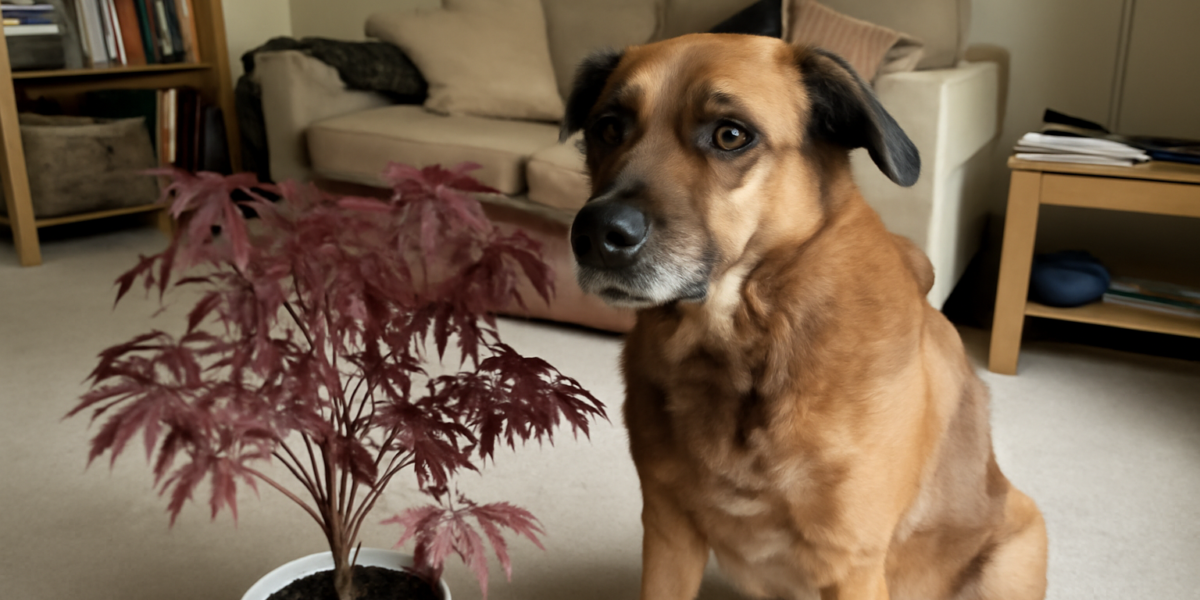
If your cat just brushed past the lacy red foliage of the Japanese maple by the patio, take a breath. Japanese maple is not toxic to pets in the form most cats and dogs encounter it, which is a slow-growing ornamental tree with delicate palmate leaves and a gentle, sculptural habit. Japanese maple (Acer palmatum) is not listed on the ASPCA toxic plant database for cats, dogs, or horses. Compared with the genuinely scary yard trees like oak, black walnut, or yew, this Japanese garden classic sits in a much calmer category.
That comforting safety profile is worth holding onto because the maple genus has one notable concerning member: the red maple (Acer rubrum), whose wilted leaves are toxic to horses and a moderate concern for some other species. Japanese maple is a different species entirely, with different chemistry and a much smaller stature than red maple. We cover the red maple story in our companion piece on red maple leaves and pets, and the distinction matters because casual identification confuses the two more often than gardeners realize. The realistic outcome of a pet brushing or chewing a Japanese maple leaf is no symptoms at all or a brief, self-resolving episode of mild stomach upset.
What Japanese Maple Actually Is
Acer palmatum is a small to medium deciduous tree native to Japan, Korea, and parts of China. Mature size ranges from six feet for dwarf cultivars to thirty feet for full-sized species forms, with a slow growth rate that makes the species a favorite for tight ornamental spaces. The leaves are palmate with five to nine pointed lobes, depending on the cultivar. Fall color ranges from glowing scarlet through deep burgundy, gold, and orange.
You will see Japanese maple sold in dozens of named cultivars. Popular forms include ‘Bloodgood’ (upright with deep purple-red foliage), ‘Crimson Queen’ (cascading lacy form), ‘Sango Kaku’ (coral-bark with bright winter color), ‘Inaba Shidare’ (weeping with finely cut leaves), and ‘Butterfly’ (variegated cream-and-green). All of these are still Acer palmatum or closely related Acer japonicum and Acer shirasawanum cultivars under the hood, with the same low-risk safety profile.
The plant is sometimes confused with red maple (Acer rubrum), which is a much larger native North American shade tree with simpler three-lobed leaves and a documented horse-toxicity story. It is also confused with silver maple (Acer saccharinum) and sugar maple (Acer saccharum), both of which are native shade trees rather than ornamental specimens. Our companion guide on silver maple and pets covers another non-toxic relative.
Why Japanese Maple Is Considered Low-Risk
Most plant safety lists put Japanese maple alongside the broader Acer palmatum group as non-toxic to cats and dogs. The leaves and bark do not contain the calcium oxalate raphides of aroid family plants, the cardiac glycosides of oleander, or the grayanotoxins of azalea. The species lacks the redox-active phenolic compounds that drive the wilted-leaf hemolysis story in red maple horses. Decades of cohabitation with cats, dogs, and grazing wildlife have not produced poison control case patterns that flag Japanese maple as a concerning species.
If you keep a mixed maple collection, you may want to verify identification before assuming the safety profile is the same. Red maple specifically requires more caution, and our piece on red maple leaves and pets covers the distinction in detail. Other temperate trees from this batch that share the safe-for-pets rating include silver maple, cottonwood, and the broader temperate-tree neighbors like magnolia.
What Could Still Go Wrong
The realistic problems from a chewed Japanese maple are mechanical and gastrointestinal. Any leafy material eaten in volume can cause vomiting or diarrhea simply because cats and dogs are not built to digest a salad of fibrous leaves. Japanese maple leaves are softer than oak or magnolia leaves, so they tend to pass through more easily, but a determined eater can still trigger a brief upset stomach.
The bigger management concern with Japanese maple is the helicopter-style winged seeds (samaras) that drop from older trees in late summer. Whole samaras are not toxic, but they can be a mild choking hazard for very small dogs and they do clog up coats and paw fur in a slightly annoying way. Sweep up under productive trees regularly and keep an eye on small dogs during heavy seed drops.
Pesticide residue on shop-bought specimens is also worth a quick caution. Aphids, scale, and Japanese beetles all attack maples to varying degrees, and treated nursery stock can carry insecticide residue that is more concerning than the plant itself. Quarantine new transplants for at least two weeks before letting curious pets share the space.
Symptoms to Watch For After a Nibble
Most pets that taste a Japanese maple leaf will show no signs at all. If symptoms appear, they tend to be mild and short-lived, usually within a few hours of grazing. Possible signs include:
- Drooling or repeated lip-licking
- One or two episodes of vomiting
- Soft stool or mild diarrhea
- Reduced appetite for the next meal
- Briefly subdued mood after a large salad
What you should not see from a chewed Japanese maple is severe weakness, tremors, seizures, collapse, blood in vomit or stool, breathing trouble, or pale gums. If any of those appear, the plant is unlikely to be the only thing your pet got into and you need urgent veterinary care regardless of which tree they sampled. Pale gums or jaundiced eyes specifically should prompt an immediate call, especially if there is any chance the leaves were actually red maple rather than Japanese maple.
What to Do if Your Pet Eats Japanese Maple
Start with calm observation. Remove any chewed branches from your pet’s reach, wipe their mouth with a damp cloth to clear residual sap or pollen, and offer a small drink of fresh water. Do not give milk, do not try to make your pet vomit at home, and do not give activated charcoal or human medications without veterinary guidance.
Call your own veterinarian if your pet is small, very young, very old, has existing health issues, ate a substantial portion of foliage, or shows symptoms that last more than a few hours. For after-hours guidance, the ASPCA Animal Poison Control Center is reachable at (888) 426-4435, and the Pet Poison Helpline is at (855) 764-7661. Both lines charge a consultation fee but can give you species-specific advice and a case number your regular vet can follow up with.
Bring a leaf or photo of the tree to any clinic visit. Even though Japanese maple is widely planted, an emergency vet may not be able to distinguish a chewed fragment from a red maple leaf, and confirming the species rules out the more concerning look-alike. Take a clear photo of the whole tree as well as a single leaf, since growth habit and bark color help with identification.
Japanese Maple Versus Other Yard Trees
Japanese maple sits comfortably with the other ASPCA non-toxic ornamental trees you might already grow. The rest of this batch covers silver maple as another safe relative, cottonwood as another safe shade tree, and oak trees as a more concerning relative because of acorn and young-leaf gallotannin content. Our broader temperate-tree map also includes horse chestnuts, locust trees, black walnut, and pecan trees, each with its own safety profile.
The pattern across yard trees is that ornamental specimens are usually safer than nut and seed-producing shade trees, simply because the chemistry that defends large nuts and acorns from animal predation is what creates pet hazards. Japanese maple does produce winged samaras, but they lack the gallotannin content of acorns and the juglone of black walnut. The species is one of the easier ornamental trees to live with in a pet household.
Placing Japanese Maple in a Pet-Friendly Yard
Japanese maple thrives in part shade with shelter from afternoon sun, well-drained soil, and consistent moisture. The pet-friendly approach is to plant it where you actually want it as a focal point: beside a walkway, near a patio, in a courtyard, or as a centerpiece in a small lawn. The slow growth rate and refined branch structure make Japanese maple one of the better small-space trees, which also means it rarely creates the kind of foliage drift that worries dog owners.
Consider adding a low border of pet-safe perennials around the base of the tree, especially if your dog likes to dig at the trunk or your cat treats the lower branches as a scratching post. Our pet-safe garden plants list pulls together suitable companions, and the rest of this batch includes herbs like catnip, catmint, lemon balm, and bee balm that pair beautifully with Japanese maple in mixed plantings.
For new plantings near a fence, choose an upright cultivar like ‘Bloodgood’ or ‘Sango Kaku’ rather than a weeping form. Weeping cultivars trail to the ground and can become an irresistible cat hammock or dog tug toy. Upright cultivars hold their lower branches a few feet off the ground and stay out of casual mouth-level access.
Caring for Japanese Maple in a Pet Household
A healthy Japanese maple is a tidy Japanese maple, and tidy trees are easier for households with curious pets. Prune in late winter or early spring while the tree is dormant, focusing on dead and crossing branches rather than aggressive shaping. Japanese maple resents heavy pruning and tends to bleed sap from large cuts, so light annual maintenance produces the best results.
Mulch the root zone with a few inches of hardwood chips, keeping the mulch a couple of inches away from the trunk to prevent rot. Avoid foliar pesticides that could transfer to a chewing pet; soap sprays for aphids are usually a safer alternative than systemic insecticides. Japanese maples are generally low-maintenance once established and rarely need anything beyond seasonal mulch and the occasional deep watering during summer heat waves.
Adoption and Pet-Safe Living
If you are reading this because you are pet-proofing in advance of bringing home a new companion, that is exactly the level of care a rescue animal deserves. Walk Me Home Rescue connects people with pets through our adopt cats and adopt dogs hubs, and a thoughtfully chosen ornamental tree is one small but meaningful piece of a welcoming home.
Most adopters find that Japanese maple is one of the easier specimen trees to live with. The tree is slow-growing, structurally beautiful, non-toxic, and pairs well with the rest of a pet-safe planting plan. Pair it with low-risk perennials and shrubs from our pet-safe lists, and the whole front yard or courtyard becomes a calm, welcoming space without the management overhead of an oak or black walnut.
Frequently Asked Questions
Is Japanese maple safe for cats specifically?
Japanese maple (Acer palmatum) is generally considered non-toxic to cats per the ASPCA and major plant safety references. A small graze of leaves or bark is unlikely to cause more than briefly mild stomach upset. Indoor cats rarely encounter the plant directly because it is a yard tree, and outdoor cats tend to walk past without sampling it. Keep an eye on any pesticide treatments applied to nursery stock.
Can dogs eat Japanese maple leaves?
An occasional nibble of Japanese maple leaves is unlikely to cause more than mild stomach upset in most dogs. Larger ingestions may produce vomiting, soft stool, or briefly reduced appetite. Skip the next meal if your dog seems queasy, offer plenty of water, and call your veterinarian if symptoms last more than a few hours or your dog is very small, very young, or has existing health issues.
How is Japanese maple different from red maple?
Japanese maple (Acer palmatum) is a small ornamental tree with finely lobed palmate leaves, native to East Asia, and not on the ASPCA toxic list. Red maple (Acer rubrum) is a much larger native North American shade tree with simpler three-lobed leaves and a documented wilted-leaf hemolysis concern, particularly for horses. The two species are easy to distinguish once you have seen them side by side, but a chewed leaf fragment can be confusing to an emergency vet.
Are Japanese maple samaras (helicopter seeds) dangerous?
Samaras are not toxic but can be a mild choking or obstruction hazard for very small dogs that swallow whole seed clusters. Sweep up under productive trees during late summer drops, and keep an eye on toy breeds during peak seed shed. Most cats and medium-sized dogs ignore samaras entirely.
Where should I plant Japanese maple in a yard with pets?
Japanese maple does well as a focal-point tree near a patio, walkway, or courtyard, especially in part shade with shelter from afternoon sun. Choose an upright cultivar rather than a weeping form for households with rough-playing dogs. Avoid foliar pesticides that could transfer to a chewing pet, and add a low border of pet-safe perennials at the base if your dog or cat tends to dig or scratch at the trunk.


