
Last updated: May 6, 2026
In this article
- The Short Answer: Magnolia Leaves Are Safe for Pets
- Magnolia in the Garden: A Quick Overview
- What “Non-Toxic” Means in This Context
- The Mechanical Caveat: Large Leaves and Puppy Chewing
- What to Do If Your Pet Ate Magnolia Plant Material
- Magnolia Flowers and Garden Safety
- Distinguishing Magnolia from Other Trees
- Magnolia Seeds and Seed Cones
- Other Safe Landscape Trees for Pet Households
- Building a Pet-Safe Yard Around a Magnolia
- The Bigger Picture: Bringing 1,500 Articles Home
- Bringing a Pet Home to a Plant-Friendly Garden
- Frequently Asked Questions
The Short Answer: Magnolia Leaves Are Safe for Pets
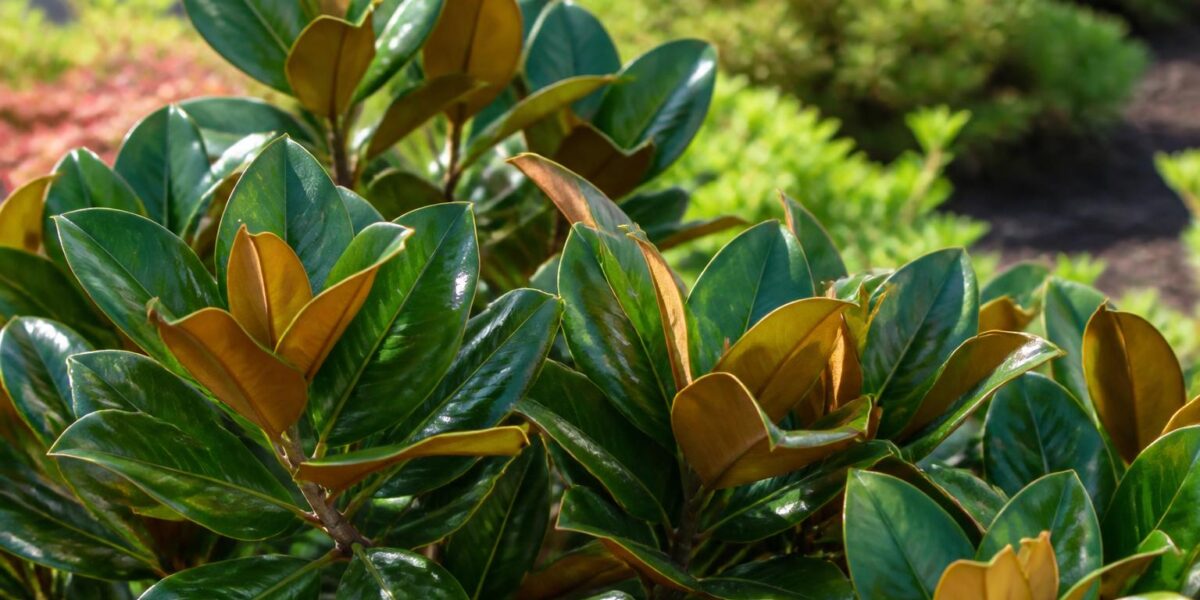
Good news, and a fitting place to land for the close of our toxic-plants series. Magnolia trees — the broad family of flowering deciduous and evergreen trees in the genus Magnolia, including the iconic Southern magnolia (Magnolia grandiflora) — are not on the ASPCA toxic-plant list. The leaves, flowers, bark, and seeds do not contain documented toxic principles that produce meaningful poisoning in cats or dogs. If your pet investigated a fallen magnolia leaf, mouthed a flower petal, or chewed a twig, the chemistry is friendly.
The “but” is mild and applies to most safe plants. Any plant matter eaten in larger amounts than the gut is used to can cause vomiting or soft stool, and the large dropped leaves of mature magnolias can pose a mechanical chewing hazard for puppies — a chunk of leathery leaf can lodge in the throat or cause GI obstruction in a small dog. Magnolia leaves safe for pets searches usually end with reassurance plus common-sense yard cleanup. The plant itself earns its safe reputation cleanly.
Magnolia in the Garden: A Quick Overview
Magnolias are an ancient genus of flowering trees and shrubs — the family Magnoliaceae predates the evolution of bees, and the cup-shaped flowers are pollinated by beetles in some species. The genus contains around 200 species worldwide, with notable concentrations in eastern North America and East Asia. Many are widely planted as ornamentals.
The most-encountered species in pet households include Southern magnolia (Magnolia grandiflora) — the large evergreen tree of the American South with glossy dark-green leaves and huge cream flowers; star magnolia (M. stellata) — a small deciduous tree with starry white spring flowers; saucer magnolia (M. × soulangeana) — pink-flowered hybrid common in temperate gardens; and sweet bay (M. virginiana) — semi-evergreen native to the eastern US.
All are considered non-toxic to pets in the available veterinary databases. Distinguish from champaca (Magnolia champaca, sometimes still listed under its older genus Michelia) — a tropical magnolia relative used in incense and floral garlands across South Asia. Champaca is also considered safe for pets and is covered in our companion piece on champaca flowers and pets.
What “Non-Toxic” Means in This Context
Magnolia’s safe-for-pets status comes from two converging lines of evidence. First, the genus is not on the ASPCA toxic-plant database, and there are no significant case reports of magnolia-driven poisoning in cats or dogs in the veterinary toxicology literature. Second, magnolia tissue is generally bland, leathery, and unappetizing — pets rarely choose to eat substantial amounts.
The leaves contain magnoflorine and other alkaloids in trace amounts — these compounds are studied for various pharmacological effects in human research but are not present at concentrations relevant to pet ingestion. The flowers contain minor essential oils that produce the characteristic lemony fragrance but, again, not at toxic levels.
This combination — low toxic-principle content plus low palatability — means magnolia rarely creates a vet visit. Most pet owners who search “magnolia leaves safe for pets” do so out of general caution, not from worry about a specific incident.
The Mechanical Caveat: Large Leaves and Puppy Chewing
The one realistic risk worth flagging is mechanical, not chemical. Mature Southern magnolias produce huge leathery leaves — up to 25 cm long — that drop year-round (the tree is evergreen but sheds older leaves continuously). The dropped leaves are tough, slow to decay, and reasonably fun for a chewing puppy.
For most pets, chewing a fallen magnolia leaf is no more eventful than chewing any other leaf. The leaf gets shredded and partially eaten, the dog moves on, and a brief soft stool the next day is the worst-case digestive outcome.
For puppies and very small dogs, larger torn pieces of leathery leaf can occasionally cause issues. A folded leaf chunk swallowed whole could lodge in the esophagus. A determined chewer working through several leaves over time could ingest enough plant material to cause vomiting or, rarely, a foreign-body obstruction. These are uncommon scenarios but worth knowing about.
Yard cleanup of dropped magnolia leaves does double duty — it tidies the lawn and reduces the puppy’s chew-toy options. Weekly raking during peak shed periods is usually plenty.
What to Do If Your Pet Ate Magnolia Plant Material
For the typical scenario — a curious chew of leaf, twig, or flower — home monitoring is appropriate. Move the pet to a quiet area, offer fresh water, and watch for an hour or two. Most pets show no symptoms whatsoever. Some may have a single soft stool the next day. That is the outer end of normal.
Call the vet if you observe any of the following: persistent vomiting beyond two episodes, refusal to eat for more than a single meal, lethargy that does not lift after a couple of hours, signs of choking or distress (gagging, pawing at the mouth), or any breathing difficulty. These would be unusual for magnolia alone and may suggest a different plant ingested at the same time, a foreign-body obstruction, or an unrelated illness.
For after-hours questions, the ASPCA Animal Poison Control Center at (888) 426-4435 and the Pet Poison Helpline at (855) 764-7661 are staffed around the clock. Both charge a consultation fee. Both will give your local vet a case number to streamline follow-up care.
Do not induce vomiting at home. The plant is not toxic enough to warrant decontamination, and home emesis carries its own risks (aspiration in particular). Decontamination decisions belong to the vet.
Magnolia Flowers and Garden Safety
Magnolia flowers are showy, fragrant, and beloved — the saucer magnolia in early spring is one of the great seasonal plant moments in many temperate gardens. Pet owners sometimes wonder whether the petals are safe, particularly if a curious cat batted at fallen blooms or a dog grabbed a low petal.
The flowers share the same friendly profile as the leaves. There is no documented toxic compound, and the flowers are not particularly attractive to pets to eat. Some cats may briefly investigate a fallen magnolia petal as a play object — fluffy texture, interesting smell — but mature cats generally lose interest quickly.
For households with cut magnolia branches in floral arrangements indoors, the same principle applies. The flowers and stems are safe. Container water from cut flowers carries its own minor concerns (bacteria, dissolved sap residues) but is not specifically magnolia-related and applies to any cut-flower vase.
Distinguishing Magnolia from Other Trees
Magnolia confusion is rare because the trees have a distinctive look — large simple oval leaves, often glossy and dark on top with a paler underside, and large cup-shaped or starry flowers. A few possible look-alikes exist.
Loblolly bay (Gordonia lasianthus) and other tea-family trees can resemble Southern magnolia from a distance. Toxicity profiles for these are limited but they are not commonly associated with pet poisoning either.
Sweet bay magnolia (M. virginiana) is sometimes confused with bay laurel (Laurus nobilis) — the culinary bay used in cooking. They are different families with different chemistry. Bay laurel is generally safe for pets in normal kitchen-spice amounts but is not a magnolia. The leaf shape (longer, narrower in laurel) helps with ID.
If you are unsure which tree your pet investigated, photograph the leaf, the bark, and any flower or fruit. Bring the photo to a vet visit if one becomes necessary. Identification matters more than usual in worry calls; the safe-vs-toxic differential among landscape trees is wide.
Magnolia Seeds and Seed Cones
After flowering, magnolias develop distinctive cone-like fruit that splits open in late summer or autumn to reveal red-orange seeds. The seeds hang briefly on silk-like threads from the fruit before dropping.
The seeds themselves are not classified as toxic. Birds eat them readily, and in some species the seeds are an important wildlife food. For pets, the seed cones may attract curiosity — they are interesting shapes — but ingestion is unusual and consequences are mild. A puppy who chewed a seed cone may vomit briefly from plant matter; obstruction risk from intact seed cones is low because they tend to break apart in chewing.
Yard cleanup during fruit drop reduces ground-level temptation. The seed cones decompose slowly and can persist for a season or more if not collected.
Other Safe Landscape Trees for Pet Households
If you are building a pet-safer yard from scratch, magnolia is a reliable centerpiece choice. Several other landscape trees pair well in the safe category.
Dogwood (Cornus florida and similar) is generally regarded as low-toxicity for pets, though the small fruits cause mild GI upset in some pets. Crabapple (Malus species) is mostly safe — the small fruits are eaten by birds and cause minimal pet issues. Serviceberry (Amelanchier) is non-toxic and produces edible blue-purple berries.
For comparison, some landscape trees to avoid or fence include yew, oleander, several stone-fruit species in fruiting season, black locust, and black walnut. Our companion pieces walk through these — for example, locust trees and pets, rowan berries, and hawthorn berries in this same B113 batch.
Building a Pet-Safe Yard Around a Magnolia
Mature magnolias often anchor the planting design of a yard, and pet-safe companion planting around them is straightforward. Groundcovers like creeping sedum, pet-safe grasses, and many ferns work well in the partial shade beneath the canopy.
Avoid cocoa-shell mulch in any pet area — it contains theobromine, the same toxin that makes chocolate dangerous to dogs. Pine bark, hardwood, or leaf mold mulches are pet-safer choices. Avoid using any nut-tree byproducts (walnut shells, pecan hulls) as mulch in dog-accessible areas.
Slow-release fertilizer pellets are an underappreciated yard hazard. They look like seeds or kibble to some dogs and contain nitrogen, potassium, and sometimes iron at concentrations that produce vomiting if eaten. Apply granular fertilizers when pets are not in the yard and water them in promptly.
The Bigger Picture: Bringing 1,500 Articles Home
This article happens to land at the close of a long content journey. Walk Me Home Rescue’s plant-safety series has now covered a comprehensive range of houseplants, garden plants, landscape trees, regional natives, and food-adjacent plants — most of the practical questions a pet owner is likely to have about whether the green things in their environment are friend or foe.
The throughline across all those articles is consistent. Identify what you have. Keep the truly dangerous plants out of pet reach (or out of the yard entirely). Pick up dropped fruit, nuts, and pods during seasonal drops. Respond promptly to suspected ingestions with a phone call, photograph, and clear timeline. Do not panic, but do not ignore. And lean on the resources — your local vet, the ASPCA Animal Poison Control Center, the Pet Poison Helpline — when in doubt.
Magnolia is a fitting closer because it is the kind of plant the whole project was about: beautiful, beloved, well-loved by humans and friendly to the pets who share the space. Building a pet-safe home is rarely about removing every plant. It is about knowing which ones are friends and which ones need a closer eye.
Bringing a Pet Home to a Plant-Friendly Garden
If you are reading this article in preparation for adopting a new cat or dog, you are exactly the audience this whole library was written for. The plant audit is one practical step in a broader home-prep checklist that includes secure trash storage, food-safe pantry organization, fenced yard inspection, identifying emergency vet routes, and stocking basic first aid.
The rescue mission that drives Walk Me Home Rescue is bigger than any one article. Every cat and dog in shelter care is waiting for a home that has thought carefully about safety, comfort, and long-term welfare. If you have walked through this entire plant series and now want to walk through the adoption process, our hubs at adopt a cat and adopt a dog are the next step.
For broader plant-safe ideas to round out the yard, our overview of pet-safe garden plants covers verified-safe options across categories, and cat-safe flowers and cat-safe houseplants cover indoor and seasonal plant choices. Magnolia fits naturally into all three lists as one of the easier-to-love safe choices.
Frequently Asked Questions
Are magnolia leaves toxic to dogs?
No. Magnolia leaves are not on the ASPCA toxic-plant list. The leaves are unappetizing and rarely eaten in significant quantities. Mild GI upset from large ingestions is the outer end of typical reaction.
What about magnolia flowers — can my cat play with fallen petals?
Yes. Magnolia flowers share the safe profile of the rest of the plant. Cats sometimes briefly investigate fallen petals as play objects and lose interest quickly. No documented toxic principle is present.
My puppy chewed up a fallen magnolia leaf. Should I worry?
Probably not. Most puppies pass small amounts of leaf material with no issues. Watch for vomiting or trouble swallowing in the first few hours. Call your vet if your puppy is very small or shows signs of choking or distress.
Are magnolia seeds dangerous?
No documented toxicity. The bright red seeds in autumn cones are eaten by birds and pose no specific pet poisoning risk. Mechanical concerns (chewed seed cones, swallowed pieces) are rare but possible in puppies.
Is Magnolia champaca the same as garden magnolias?
It is a related species in the same genus, used in South Asian floral and incense traditions. Champaca is also considered safe for pets — see our companion piece on champaca flowers for the full guide.


