
Last updated: May 4, 2026
In this article
- Why Flower Safety Matters for Cat Owners
- Cat Safe Flowers You Can Display with Confidence
- Dangerous Flowers Every Cat Owner Must Avoid
- What to Tell Your Florist
- Keeping Floral Arrangements Out of Reach
- Safe Alternatives for Cat Owners Who Love Flowers
- What to Do If Your Cat Eats Flowers
- Frequently Asked Questions
Cat-Safe Flowers: Beautiful Bouquets That Won’t Harm Your Cat
Fresh flowers bring color, fragrance, and life into a home — but for cat owners, a beautiful bouquet can carry a hidden and sometimes fatal risk. Many of the most popular cut flowers sold in grocery stores and florist shops are toxic to cats, and even a curious nibble on a petal or a sip of vase water can lead to a veterinary emergency. The good news is that plenty of gorgeous, widely available cat safe flowers exist, and with a little knowledge, you can fill your home with blooms without putting your feline companion in danger.
This guide walks you through ten cat safe flowers that belong in every cat-friendly household, five dangerous flowers you should never bring through the door, and practical advice for communicating with florists, positioning arrangements, and knowing exactly what to do if your cat eats something it should not have.
Why Flower Safety Matters for Cat Owners
Cats are curious by nature. They bat at dangling petals, chew on leaves, drink from vases, and rub their faces against stems. Unlike dogs, cats groom themselves constantly, which means pollen that lands on fur is almost guaranteed to be ingested during their next grooming session. This makes cats uniquely vulnerable to plant toxins — even ones they did not deliberately eat.
Many toxic flowers cause symptoms that are easy to dismiss in the first few hours. A cat may vomit once, seem tired, or lose interest in food. By the time an owner recognizes something is seriously wrong, organ damage may already be underway. Lilies, for example, can cause irreversible kidney failure within 24 to 72 hours of exposure, and the early signs look like nothing more than a mild stomach upset.
Choosing cat safe flowers is not about being overly cautious — it is about understanding that a preventable tragedy happens in veterinary clinics every week. Knowing which flowers are safe and which are dangerous is one of the simplest, most effective things you can do to protect your cat. If you are considering adopting a cat, building this knowledge now will help you create a safe environment from day one.
Cat Safe Flowers You Can Display with Confidence
The following ten flowers are considered non-toxic to cats and are widely available at florists, garden centers, and grocery stores. They offer a range of colors, textures, and price points, so you can build stunning arrangements without compromising your cat’s safety.
Roses. The classic rose is one of the most reliably cat safe flowers available. All colors and varieties — from long-stemmed red roses to spray roses and garden roses — are non-toxic to cats. The only precaution is to remove thorns before displaying them, as a thorn can injure a cat’s mouth, paw, or eye. Rose petals, leaves, and stems are all safe if your cat happens to chew on them, though ingesting large quantities of any plant material can cause mild gastrointestinal upset.
Sunflowers. Bright, cheerful, and completely non-toxic, sunflowers are an excellent choice for cat-friendly homes. Their large size makes them a bold centerpiece on their own, and they pair well with other safe flowers in mixed arrangements. Sunflowers produce minimal pollen once cut, which is an added advantage in a home with a cat that likes to investigate vases up close.
Orchids. Phalaenopsis orchids — the variety most commonly sold as houseplants and in floral arrangements — are non-toxic to cats. Orchids are long-lasting, elegant, and available in dozens of colors, making them one of the most practical and beautiful cat safe flowers you can own. Because orchids are typically displayed in pots rather than vases, there is also less risk of a cat drinking contaminated water.
Snapdragons. These tall, colorful spikes add vertical interest to bouquets and are completely safe for cats. Snapdragons come in shades of pink, red, yellow, orange, white, and purple, and they hold up well as cut flowers. Their unusual shape also makes them less tempting for cats to chew on compared to flat-petaled flowers, though they remain safe even if your cat does take a bite.
Gerbera daisies. Among the most popular cat safe flowers, gerbera daisies offer vivid, saturated colors — hot pink, orange, yellow, red, and white — that can anchor an entire arrangement. They are non-toxic, affordable, and available year-round at most florists. Their sturdy stems and large flower heads make them a practical choice for households where a curious cat might knock over a vase.
Zinnias. Zinnias are a cottage-garden favorite that happen to be entirely safe for cats. They come in an extraordinary range of colors, from deep burgundy to lime green, and their layered petals give arrangements a lush, full look. Zinnias are most readily available from late spring through fall, and they are easy to grow in a home garden if you want a steady supply of cat safe flowers throughout the season.
Freesia. Prized for their sweet fragrance and delicate trumpet-shaped blooms, freesias are non-toxic to cats and make a lovely addition to any bouquet. They are available in white, yellow, pink, red, purple, and orange. If your cat is particularly sensitive to strong scents, keep freesia arrangements in a well-ventilated area, but the fragrance itself poses no toxicity risk.
Asters. These daisy-like flowers are available in shades of purple, pink, white, and blue, and they are completely safe for cats. Asters add a wildflower quality to arrangements and are especially popular in fall bouquets. They are hardy as cut flowers and can last a week or more in fresh water, giving you long-lasting beauty without any risk to your pet.
Lisianthus. Sometimes called Texas bluebell or prairie gentian, lisianthus produces ruffled, rose-like blooms that look far more expensive than they are. They are non-toxic to cats and available in white, pink, purple, and bicolor varieties. Lisianthus is a favorite among florists for bridal work and formal arrangements, and it is equally at home in a casual kitchen bouquet. If you want cat safe flowers that look high-end, lisianthus is an outstanding choice.
Camellias. With their glossy green leaves and perfectly formed blooms, camellias bring a refined, garden-party elegance to any space. They are non-toxic to cats and available in white, pink, red, and variegated shades. Camellias are less commonly found in standard grocery store bouquets but are well worth requesting from a florist, especially during their peak season in late winter and early spring.
Many cat breeds are especially curious and active around plants and flowers. If you are exploring which breed might be right for your household, our cat breeds directory can help you understand temperament differences and plan your home environment accordingly.
Dangerous Flowers Every Cat Owner Must Avoid
While the list of cat safe flowers is reassuring, the list of dangerous flowers is essential knowledge. The following species are commonly found in store-bought bouquets and floral deliveries, and every one of them poses a real threat to your cat’s health.
Lilies. True lilies — including Easter lilies, tiger lilies, Asiatic lilies, Oriental lilies, stargazer lilies, and daylilies — are the single most dangerous flower a cat can encounter. Every part of the plant is toxic, including the pollen and the water in the vase. Ingestion causes acute kidney failure, and without aggressive veterinary treatment within hours, the outcome is often fatal. There is no safe amount of lily exposure for a cat. If you have a cat, lilies should never enter your home under any circumstances.
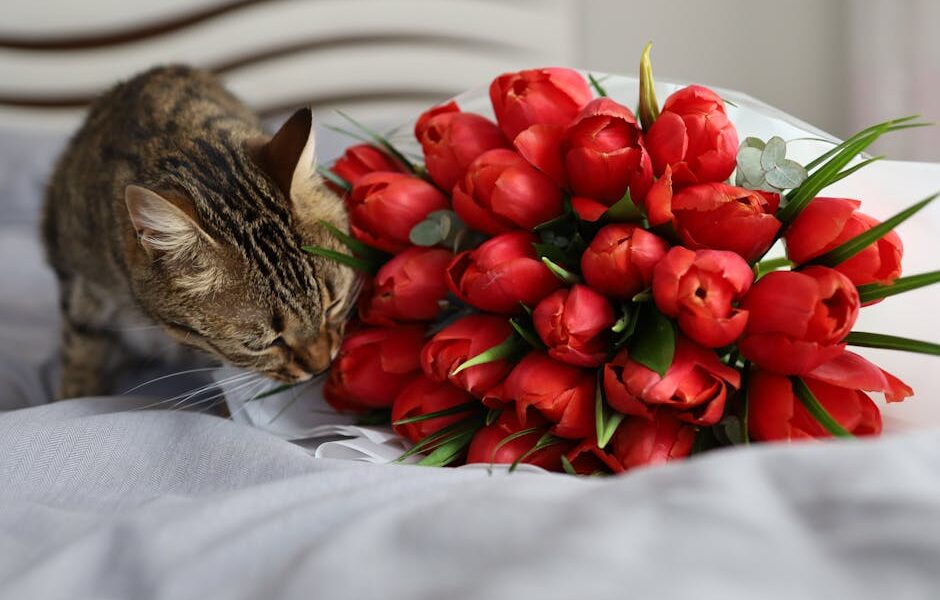
Tulips. Tulips contain tulipalin A and tulipalin B, toxic compounds concentrated most heavily in the bulb but present throughout the plant. A cat that chews on tulip petals, leaves, or stems can experience drooling, vomiting, diarrhea, and depression. Bulb exposure is more severe and can cause increased heart rate and difficulty breathing. Tulips are extremely common in spring bouquets and should be specifically excluded from any arrangement entering a home with cats.
Daffodils. All parts of the daffodil contain lycorine, a toxic alkaloid that causes vomiting, diarrhea, abdominal pain, and in severe cases, cardiac arrhythmias and respiratory depression. The bulb is the most dangerous part, but the flowers, stems, and leaves are all toxic. Daffodils are a staple of spring arrangements and are frequently mixed into bouquets without being prominently listed on the label.
Carnations. While carnations are less acutely dangerous than lilies or daffodils, they are mildly toxic to cats and can cause gastrointestinal irritation, vomiting, and diarrhea if ingested. Some cats also develop skin irritation from contact with carnation sap. Because carnations are one of the most common and affordable filler flowers in mixed bouquets, they appear in arrangements far more often than many owners realize. Given the wide availability of genuinely cat safe flowers, there is no reason to take the risk.
Chrysanthemums. Chrysanthemums — often shortened to mums — contain pyrethrins, natural insecticidal compounds that are toxic to cats. Ingestion can cause vomiting, diarrhea, excessive drooling, loss of coordination, and skin irritation. Mums are a fall favorite and appear in seasonal bouquets, potted arrangements, and garden displays from September through November. They should be kept entirely away from cats.
Baby’s breath. This delicate filler flower, a fixture in mixed bouquets and wedding arrangements, contains gyposenin, a saponin that is mildly to moderately toxic to cats. Ingestion causes vomiting and diarrhea. Because baby’s breath is so commonly used as a background filler, it is easy to overlook in a bouquet — but it should be removed or replaced with a safe alternative like statice or wax flower before displaying the arrangement near a cat.
What to Tell Your Florist
Most florists want to help, but they are not veterinarians and may not know which flowers are toxic to cats. Being specific and proactive when ordering is the best way to ensure you receive cat safe flowers.
Start by stating clearly that you have cats and need every flower in the arrangement to be non-toxic to felines. Do not assume that a “pet-safe” label on a pre-made bouquet means it has been checked against a veterinary toxicity list — it often has not. Ask the florist to list every flower and filler included in the arrangement before it is assembled.
Provide a short list of flowers you know are safe — roses, sunflowers, gerbera daisies, snapdragons, orchids, lisianthus, freesia, asters, zinnias, and camellias are all excellent starting points. Equally important, tell the florist which flowers must be excluded: no lilies of any kind, no tulips, no daffodils, no chrysanthemums, no carnations, and no baby’s breath. If the florist cannot confirm the safety of every component, ask them to substitute with greenery or filler that you have verified.
When receiving flowers as a gift, inspect the bouquet carefully before placing it in your home. If you cannot identify every flower and confirm its safety, keep the arrangement in a room your cat cannot access until you have had a chance to check each species.
Keeping Floral Arrangements Out of Reach
Even when your bouquet contains only cat safe flowers, taking steps to keep arrangements out of easy reach is a smart habit. Cats can knock over vases, scatter broken glass, and ingest plant material in quantities large enough to cause gastrointestinal upset regardless of toxicity.
Place vases on stable, elevated surfaces that your cat cannot easily jump to. Avoid windowsills, low coffee tables, and countertops adjacent to cat trees or shelves your cat uses as launching pads. Heavy, wide-bottomed vases are more difficult to tip than tall, narrow ones. If your cat is especially determined, consider displaying flowers inside a glass cloche or enclosed terrarium-style vessel that allows you to enjoy the blooms while physically preventing your cat from accessing them.
Change vase water regularly and do not add flower food packets to the water in a cat-friendly home. Some commercial flower food contains chemicals that can be harmful if ingested. Fresh, clean water changed every two days will keep your flowers looking their best without introducing unnecessary risk.
Safe Alternatives for Cat Owners Who Love Flowers
If managing fresh flowers around a curious cat feels like too much work, several alternatives let you enjoy the beauty of blooms without any risk at all.
High-quality artificial flowers have come a long way and can be nearly indistinguishable from real ones. Silk, fabric, and paper flowers require no water, produce no pollen, and carry zero toxicity risk. They also last indefinitely, making them a cost-effective long-term choice.
Dried flower arrangements using cat safe species — dried roses, dried sunflowers, dried lavender (which is non-toxic to cats in small dried amounts, though the essential oil should be avoided), and dried statice — offer a rustic, textured aesthetic that works beautifully in many home styles. Because they contain no water, you eliminate the risk of your cat drinking from a contaminated vase.
If you enjoy having living plants in your home, consider cat-safe houseplants like spider plants, Boston ferns, calatheas, and parlor palms. These provide greenery and improve air quality without posing a danger to your cat. Combined with occasional bouquets of cat safe flowers like roses or sunflowers, you can create a lush, plant-filled home that is entirely feline-friendly.
For cat owners who are still deciding which feline companion to welcome into their lives, our adoption page can connect you with cats who are ready for a safe, loving home.
What to Do If Your Cat Eats Flowers
Even in the most carefully managed homes, accidents happen. If your cat has eaten, chewed, or been in close contact with any flower — whether you believe it is safe or not — take the following steps.
Identify the flower. Determine exactly which species your cat was exposed to. If you are not sure, take a photo of the flower or bring a sample with you to the vet. Accurate identification is critical because it determines the urgency and type of treatment required.
If the flower is known to be toxic — especially if it is a lily — treat the situation as an emergency. Do not wait for symptoms to appear. Contact your veterinarian or an emergency animal clinic immediately. Time is the single most important factor in a successful outcome for lily poisoning and many other plant toxicities.
If the flower is a known cat safe species (roses, sunflowers, orchids, gerbera daisies, etc.), monitor your cat closely for the next 12 to 24 hours. Even non-toxic plants can cause mild vomiting or diarrhea if ingested in significant quantities, simply because a cat’s digestive system is not designed to process large amounts of plant material. If symptoms are mild and resolve within a few hours, your cat is likely fine. If vomiting persists, your cat becomes lethargic, or you notice any change in urination, contact your veterinarian.
If you cannot identify the flower, err on the side of caution and call your veterinarian. Provide as much detail as you can — the color, shape, and size of the flower, where you purchased the bouquet, and how long ago your cat was exposed. Your vet can help you assess the risk and decide whether an in-person examination is needed.
Do not induce vomiting at home unless a veterinary professional or poison control specialist has specifically instructed you to do so. Inducing vomiting incorrectly can cause additional harm, including aspiration pneumonia.
Keep the number of your local emergency veterinary clinic saved in your phone. In an urgent situation, the seconds spent searching for a phone number can feel like hours. Being prepared is the simplest and most effective form of protection.
Frequently Asked Questions
Are all roses safe for cats, including miniature and wild varieties?
Yes. All varieties of roses — hybrid tea, floribunda, grandiflora, miniature, climbing, shrub, and wild roses — are considered non-toxic to cats. The only physical hazard is thorns, which should be removed before displaying cut roses in a home with cats. Rose petals and leaves are safe if ingested in small amounts, though eating a large quantity of any plant material can cause mild stomach upset in cats.
Can the water in a vase of cat safe flowers still be dangerous?
Plain water from a vase of non-toxic flowers is generally not harmful, but it can accumulate bacteria, mold, and dissolved plant compounds over time that may cause mild gastrointestinal irritation if your cat drinks from it. Commercial flower food packets can contain sugars, bleach, and acidifiers that are not safe for cats to ingest. The safest approach is to change the water frequently, skip the flower food, and position the vase where your cat cannot easily access it.
My cat only licked a lily petal but did not eat it. Is that still dangerous?
Yes. Even minimal contact with a true lily — licking a petal, grooming pollen off fur, or drinking vase water — can deliver enough toxin to cause kidney damage in a cat. Do not wait for symptoms. Contact your veterinarian or an emergency clinic immediately. Early, aggressive treatment dramatically improves the chances of a full recovery.
How can I tell if a mixed bouquet contains toxic flowers?
Inspect every stem in the arrangement individually. Look specifically for lilies (large, trumpet-shaped blooms with prominent stamens and powdery pollen), tulips (cup-shaped flowers on thick stems), daffodils (trumpet-shaped central corona surrounded by six petals), chrysanthemums (dense, layered pom-pom or daisy-like heads), and baby’s breath (tiny white clusters used as filler). If you cannot identify a flower, photograph it and look it up before allowing your cat near the arrangement. When in doubt, remove the unidentified flower from the bouquet entirely.
Are dried flowers safer for cats than fresh ones?
Dried flowers made from cat safe species are just as safe as their fresh counterparts. However, dried flowers from toxic species retain their toxicity — a dried lily is still dangerous to a cat. The drying process does not neutralize the toxic compounds in plants like lilies, tulips, or daffodils. Always verify that the species itself is non-toxic before assuming a dried arrangement is safe for your home.
What are the best cat safe flowers for a wedding or special event?
Roses, lisianthus, orchids, gerbera daisies, and freesia are all popular choices for weddings and formal events, and every one of them is non-toxic to cats. Lisianthus in particular offers the lush, ruffled look of peonies or garden roses at a more accessible price point. Communicate your requirements to your florist early in the planning process so they can source the right varieties and avoid substituting toxic alternatives at the last minute.


