
Last updated: May 16, 2026
In this article
- The Short Answer: Hawthorn Berries Are Low-Toxicity
- Distinguishing Hawthorn from Other Berry Trees
- What “Cardiac Glycoside” Means in the Hawthorn Context
- What Actually Happens When a Pet Eats Hawthorn Berries
- The Real Hawthorn Hazard: Thorns
- What to Do If Your Pet Ate Hawthorn Berries
- Hawthorn in the Yard: Coexistence with Pets
- The Companion Berries: Other Tree Berries You May Have
- Hawthorn in Herbal Medicine — Why It Matters for Pet Owners
- Cat-Specific Considerations
- Pet-Safer Alternatives for Berry Gardens
- Building a Berry-Aware Pet Yard
- Frequently Asked Questions
The Short Answer: Hawthorn Berries Are Low-Toxicity
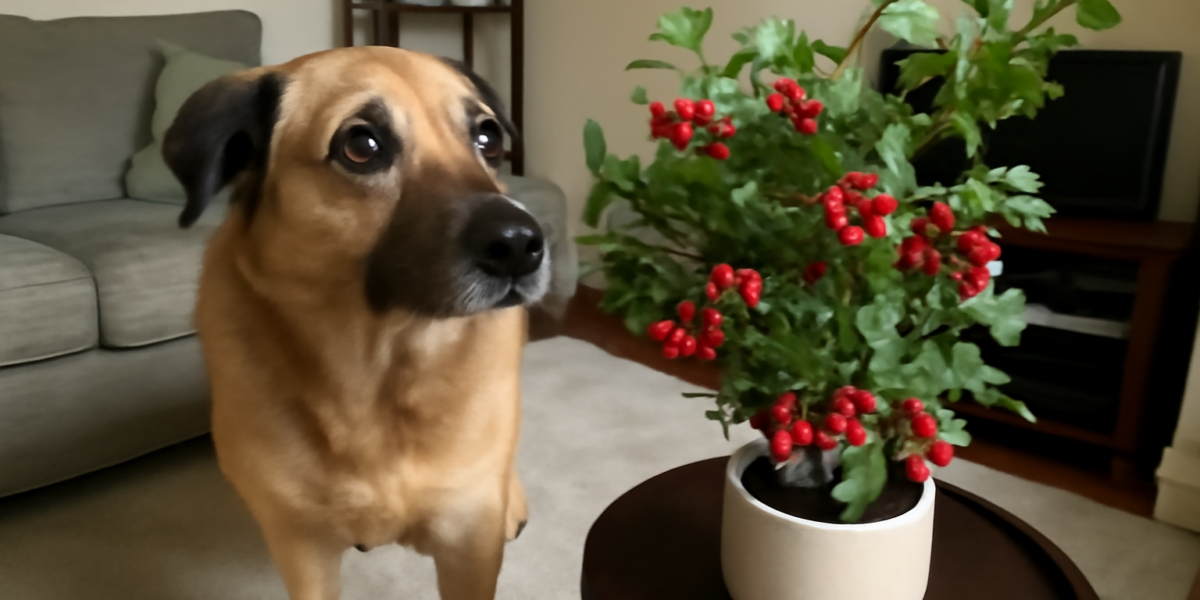
Hawthorn berries — the small red or orange-red fruits of trees and shrubs in the genus Crataegus — are considered low-toxicity to dogs and cats. Most pet ingestions cause no symptoms or, at most, mild gastrointestinal upset (vomiting, soft stool) that resolves on its own within a day. Severity tier sits at mild for nearly all realistic exposures. The berries are widely used in human cuisine — jellies, jams, herbal preparations — and even in moderate raw consumption are not associated with significant pet poisoning.
The realistic hawthorn risks for pets sit elsewhere. The mechanical hazard from thorny branches is genuine — hawthorn produces stout sharp thorns that can cause paw, mouth, and eye injuries. And the cardiac-glycoside framing sometimes attached to hawthorn in human herbal medicine is about concentrated medicinal extract, not fresh berries — so do not panic if you see “hawthorn supports the heart” in a wellness blog. Hawthorn berries toxic pets searches usually deserve reassurance plus a quick check for thorn injuries.
Distinguishing Hawthorn from Other Berry Trees
Hawthorn is a large genus of trees and shrubs in the rose family (Rosaceae), with hundreds of species and many ornamental cultivars. The most-encountered species are common hawthorn (Crataegus monogyna), Midland hawthorn (C. laevigata), and various cultivated forms used as hedging and ornamental specimens. North American natives include C. crus-galli (cockspur hawthorn) and C. phaenopyrum (Washington hawthorn).
Hawthorn is recognizable by its small lobed leaves, dense thorny branching habit, white spring flowers in flat-topped clusters, and small red or orange berries called haws that ripen in autumn. The thorns are the giveaway — most hawthorns produce stout straight thorns up to several centimeters long along the stems and branches. Hedging hawthorn, in particular, is famously thorny.
Distinguish from other berry-bearing trees with similar appearance. Rowan/mountain ash has compound feather-like leaves and is in a different genus. Pyracantha (firethorn) has similar berries but evergreen leaves and even more dramatic thorns. Cotoneaster has small red berries but a different growth habit.
What “Cardiac Glycoside” Means in the Hawthorn Context
Pet owners sometimes panic when they read that hawthorn contains “cardiac glycosides” or affects the heart. This framing is borrowed from human herbal medicine, and the context is important.
Hawthorn extract — concentrated standardized preparations of leaves, flowers, and berries — has a long history in European herbal medicine for cardiovascular support. The preparations contain modest amounts of various flavonoids and compounds with mild cardiotonic effects in pharmacological doses. These extracts are nothing like the cardiac glycosides in oleander, foxglove, or yew, which are acutely toxic.
The fresh raw berries that pets actually encounter contain very low levels of these compounds and have no clinically significant cardiac effect on ingestion. The “hawthorn affects the heart” framing applies to medicinal doses of concentrated extract, not to a dog who ate a few haws off the ground. A pet would need to ingest something like a bottle of hawthorn tincture before the cardiotonic compounds became a meaningful concern, and even then the alcohol content of the tincture would likely be the bigger issue.
So if you read about “hawthorn cardiac toxicity” and it scared you, take a breath. Fresh berries off the tree are not in that risk tier.
What Actually Happens When a Pet Eats Hawthorn Berries
The realistic clinical picture after hawthorn berry ingestion is mild. Many pets show no symptoms whatsoever. Some show one or two episodes of vomiting from plant-matter volume, particularly if the ingestion was substantial. Soft stool over the following day is also within range. Most pets are back to normal within 24 hours.
The seeds inside the berries contain trace cyanogenic glycosides typical of the rose family, but the seeds are small, hard, and pass through the gut largely unchewed. Mass ingestion of haws would be required to release any meaningful amount of cyanide, and clinical reports of hawthorn-driven cyanide poisoning in pets are essentially absent from the veterinary literature.
If a pet is showing more than mild symptoms after eating hawthorn berries, look for other causes: a different plant ingested at the same time, a swallowed branch fragment causing obstruction, or unrelated illness. Hawthorn alone is rarely the explanation for serious symptoms.
The Real Hawthorn Hazard: Thorns
If hawthorn earns a second look from a pet-safety perspective, it is for the thorns, not the berries. Hawthorn thorns are stout, sharp, and oriented at angles that catch fur and skin. A pet that pushes through a hawthorn hedge can come out with embedded thorns in paws, lips, ears, or muzzle.
Common thorn injury presentations include sudden limping, pawing at the face, drooling, head-shaking, or a refusal to eat that signals oral pain. Examine the pet carefully if a hawthorn encounter is suspected. Embedded thorns should be removed with clean tweezers if visible; deep, multiple, or facial thorns need a vet visit, possibly under sedation for a thorough exam.
Eye trauma from hawthorn is the worst-case scenario. A pet that pushed face-first into a hedge can develop a corneal scratch, and even small abrasions can become deep ulcers within hours if untreated. Squinting, tearing, or pawing at one eye after a hawthorn encounter is a same-day vet visit.
What to Do If Your Pet Ate Hawthorn Berries
For straightforward berry ingestion, home monitoring is usually appropriate. Move the pet away from the plant, pick up dropped berries, and watch for an hour or two. Offer fresh water. Note any vomiting or behavioral changes. Most pets show no symptoms or a single brief episode of vomiting and are fine.
Call the vet if: the ingestion was very large (a substantial pile of berries), your pet is small (under 5 kg or so), vomiting persists beyond two episodes, lethargy or refusal to eat lasts more than several hours, or there is bloody vomit or stool. The phone resources for after-hours questions are the ASPCA Animal Poison Control Center at (888) 426-4435 and the Pet Poison Helpline at (855) 764-7661. Both charge a consultation fee.
Always check for thorn injuries after a hawthorn-related ingestion. The pet that ate berries was likely close enough to the tree to get scratched, and thorns are easy to miss in the initial worry about the berries.
Do not induce vomiting at home. Decontamination decisions belong to the vet, and home emesis is not warranted for low-toxicity ingestions like hawthorn berries.
Hawthorn in the Yard: Coexistence with Pets
Hawthorn is widely used as hedging, and many UK and European gardens have substantial hawthorn boundaries. Coexistence with pets is straightforward in most cases. The berries themselves are not the priority concern; thorn-related injuries are.
Practical steps: Trim back lower branches that intrude into pet zones. Avoid letting puppies push through hedge gaps as a play activity (the thorns will eventually find them). Pick up dropped berries during peak fall to reduce ground-level temptation. Provide a clear designated path through any yard where hawthorn is a hedge so the dog learns where to walk.
For households building new hedges, consider mixing in safer non-thorny species. Beech, hornbeam, privet (with caveats — privet berries are mildly toxic), or holly (also with caveats — berries toxic) are alternatives, each with their own profile. Our pet-safe garden plants overview covers verified-safe choices.
The Companion Berries: Other Tree Berries You May Have
Hawthorn often grows alongside other berry-bearing species, and pets that find hawthorn often find others. Knowing the differential helps with triage.
Rowan berries (mountain ash) are mildly toxic raw and cause GI upset. Holly berries are toxic to dogs and cats with GI upset as the typical picture. Juniper berries are low-toxicity but warrant a call for large amounts.
If your pet ate berries off a thorny tree with simple lobed leaves and small white spring flowers — that is hawthorn, and the news is good. If your pet ate berries off a tree with feather-like compound leaves and orange-red fruits — that is rowan, and a call may be warranted. Photograph what you can and bring the photo if you visit the vet.
Hawthorn in Herbal Medicine — Why It Matters for Pet Owners
Hawthorn extract is a popular herbal supplement marketed for cardiovascular support, mostly for elderly humans with mild congestive heart issues. It is sold as tinctures (alcohol-based liquid extracts), capsules, and dried tea preparations. These products contain concentrated active compounds and warrant careful storage in homes with pets.
A pet that drank an alcohol-based hawthorn tincture is dealing with two problems: the alcohol (toxic to dogs and cats — depression, hypoglycemia, hypothermia) and the concentrated extract (mild cardiotonic effects in larger amounts). Call your vet for any pet ingestion of human herbal supplements; they often involve more than one active.
Pets do not benefit from hawthorn supplements. Veterinary cardiology has its own well-established treatments for heart disease, and species-specific dosing and safety are not well characterized for human herbal preparations. Do not give hawthorn (or any human supplement) to a pet without veterinary guidance.
Cat-Specific Considerations
Cats rarely eat hawthorn berries — they are obligate carnivores and small berries are uninteresting. The realistic feline exposure is to a kitten playing with a fallen berry, or to an outdoor cat that brushed against a hedge and picked up a thorn or two.
For cats specifically, the bigger risk in any hawthorn-adjacent yard is thorn injury rather than berry ingestion. Thorn-related corneal injuries, mouth wounds, and abscesses from deeply embedded thorns are the real veterinary cases. Outdoor cats with hawthorn hedges should be checked over after vigorous outdoor sessions, particularly in hedge-thrashing seasons (mating, hunting).
For broader cat plant audits, our roundup of cat-safe flowers walks through verified-safe options. Hawthorn falls into the “low-toxicity but mechanically risky” category — coexistence is fine, supervision matters.
Pet-Safer Alternatives for Berry Gardens
If you want a berry-bearing landscape that is pet-safer overall, several options exist. Serviceberry (Amelanchier) produces edible blue-purple berries similar to blueberries and is low-toxicity for pets. Crabapple (Malus) produces small fruits that are mostly low-toxicity (the seeds contain cyanogenic glycosides, but pets rarely chew them). Blueberries on smaller bushes are pet-safe in moderation.
Trees and shrubs with the worst pet profiles include yew, oleander, rhododendron and azalea, foxglove, and several others — these would not typically be classed alongside hawthorn but are worth distinguishing. Yew is far more dangerous than any of the berry trees discussed here.
Building a Berry-Aware Pet Yard
Hawthorn is a beautiful, ecologically valuable, hardy plant that deserves a place in many gardens. Coexistence with pets is mostly about supervision during peak fruit drop and quick response to thorn injuries. The chemistry is not the problem.
For new pet households, the yard audit fits with broader pet-safety prep. Our pet-safe garden plants overview covers options across categories. Walk Me Home Rescue’s hubs at adopt a cat and adopt a dog include home and yard prep alongside breed and temperament guidance for new families.
Frequently Asked Questions
Are hawthorn berries poisonous to dogs?
Hawthorn berries are considered low-toxicity. Most ingestions cause no symptoms or mild GI upset that resolves within a day. Serious poisoning is not associated with fresh raw berries.
Will hawthorn affect my dog’s heart?
No. The “cardiac” framing for hawthorn comes from concentrated human herbal extracts in medicinal doses. Fresh berries contain low levels of the active compounds and do not produce clinically significant heart effects in pets.
What about hawthorn thorns?
Thorns are the bigger hawthorn hazard. They can cause paw, mouth, and eye injuries. Examine the pet after any hawthorn encounter and see your vet for embedded, deep, or facial thorns.
Are the leaves and seeds also low-toxicity?
The leaves are low-toxicity. The seeds inside the berries contain trace cyanogenic glycosides like other rose-family seeds, but pets rarely chew them; ingestion of intact berries is essentially a non-issue for cyanide.
Should I worry if my cat or dog ate hawthorn jelly?
Generally no — the cooking removes most concerns about the berries themselves. The sugar content of jelly is the bigger consideration. Do not offer jam or jelly deliberately to pets.


