
Last updated: May 16, 2026
In this article
- The Quick Answer for Blueberry Gardeners
- Botanical Profile: The Vaccinium Genus
- What ASPCA and Veterinary Sources Say
- Why Blueberries Are a Pet-Friendly Landscape Choice
- The Quantity Question
- Real-World Hazards Worth Naming
- Symptoms If Something Goes Wrong
- What to Do If Your Pet Eats Blueberry Plant Material
- Cultivar Variation: Does It Matter?
- Where Blueberry Sits in the Berry Lineup
- Designing the Pet-Safe Edible Garden
- Frequently Asked Questions
The Quick Answer for Blueberry Gardeners
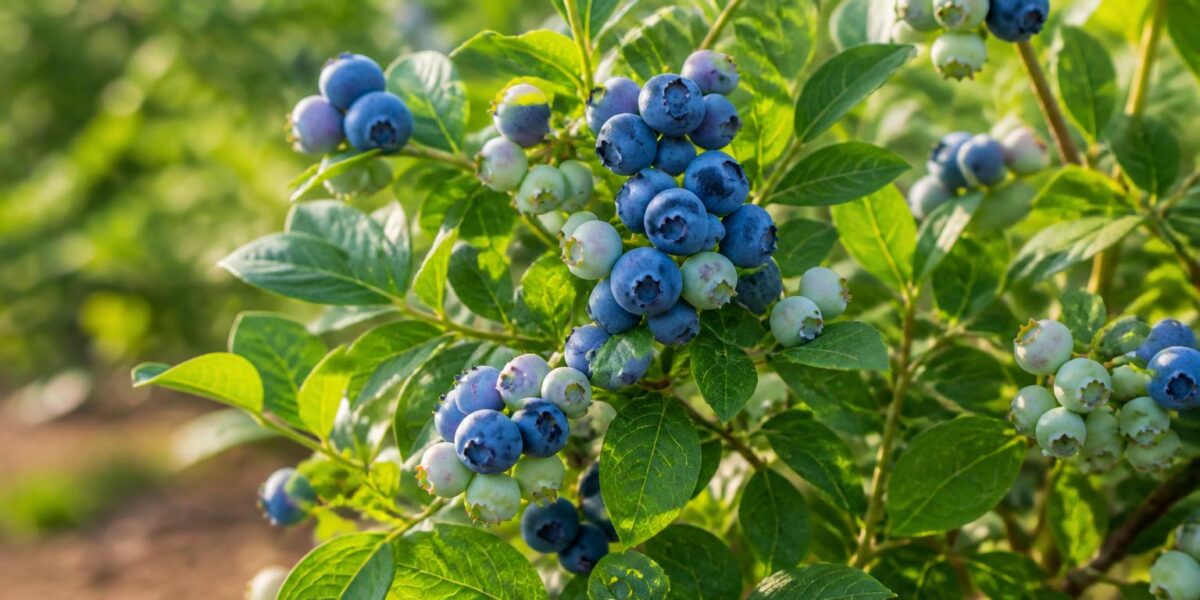
Good news for anyone with a blueberry hedge or a few patio pots — blueberry plants are safe for pets. The ASPCA Animal Poison Control Center does not list highbush blueberry (Vaccinium corymbosum), lowbush blueberry (Vaccinium angustifolium), or any other commonly grown Vaccinium species as toxic to dogs, cats, or horses. The leaves, the woody stems, the flowers, and the ripe fruit are all considered non-toxic. The fruit, in fact, is one of the most pet-friendly berries you can grow — small enough that even cats sometimes investigate, sweet enough that dogs reliably help themselves, and free of the choking-pit hazard that makes stone fruits trickier.
The caveats are gentle. Blueberry shrubs do not have thorns (unlike their bramble cousins raspberry and blackberry), so the mechanical risk profile is much lower. The two real concerns are simple: large volumes of leaves can cause mild stomach upset like any plant fiber, and netting used to protect the fruit from birds is a tangle-and-strangulation risk if pets roam under the bushes unsupervised. This guide walks through what to expect, what to watch for, and how to keep your blueberry patch a happy zone for the whole family.
Botanical Profile: The Vaccinium Genus
Blueberries belong to the genus Vaccinium, in the heath family (Ericaceae) — the same family as cranberries, lingonberries, huckleberries, and bilberries. The two species that dominate North American gardens are:
- Vaccinium corymbosum — northern highbush blueberry, the typical 4-to-7-foot deciduous shrub of commercial production and home gardens. Cultivars include ‘Bluecrop’, ‘Duke’, ‘Patriot’, ‘Elliott’, and ‘Pink Lemonade’ (a pink-fruited variety).
- Vaccinium angustifolium — lowbush blueberry, a knee-high spreading shrub native to eastern North America. The classic Maine wild blueberry.
You may also grow rabbiteye blueberry (Vaccinium virgatum) in the southern US, half-high hybrids in cold climates, or the related lingonberry (Vaccinium vitis-idaea) and cranberry (Vaccinium macrocarpon). All are non-toxic. The Ericaceae family does include genuinely toxic plants — azalea, rhododendron, mountain laurel, pieris — but those carry grayanotoxins and are botanically distinct. Vaccinium itself is the pet-safe corner of the family.
What ASPCA and Veterinary Sources Say
Blueberry plants do not appear on the ASPCA’s toxic-plant database for dogs, cats, or horses. Pet Poison Helpline does not flag the genus either. The fruit is widely recognized as safe for canine consumption — see our food-side notes at can dogs eat blueberries and can cats eat blueberries for serving guidance — and the leaves, while not commonly eaten, are not on poison-control radar.
This is one of those nice cases where the toxicology and the everyday folk wisdom line up. Your dog who steals blueberries off the bush is in no danger of poisoning. The bigger questions are about quantity (don’t let them gorge and unbalance their meals) and about the protective infrastructure around the bushes (netting, fertilizer, mulch).
Why Blueberries Are a Pet-Friendly Landscape Choice
If you are designing a garden with a dog-loving household in mind, blueberry shrubs check a lot of boxes:
- No thorns — unlike raspberry, blackberry, and rose
- Non-toxic in every part — leaves, bark, fruit, flowers
- Compact, well-behaved growth habit — they do not aggressively spread by runners
- Fall foliage color (highbush turns flame red) for visual interest
- Edible fruit that is genuinely safe to share in moderation
- Pollinator-friendly white spring flowers
Pair blueberries with other safe options from our pet-safe garden plants guide, and you have a foundation planting that does not require constant supervision.
The Quantity Question
“Non-toxic” is not “unlimited.” A medium-sized dog who eats a single cup of fresh blueberries off the shrub will be fine. A 90-pound Labrador who finds a pruned branch loaded with berries on the ground and eats two pounds of fruit is going to have an interesting digestive afternoon — not poisoning, but legitimate GI upset from sugar and fiber load. Cats are usually self-limiting. They might lick juice off a fallen berry, occasionally bat one around, and move on.
The general moderation rule veterinary sources cite is treats should not exceed about 10% of daily calories. Blueberries are very low calorie, so the practical limit is more about volume than calorie math. Half a dozen berries for a small dog, up to a quarter cup for a large dog, on any given day is unremarkable.
Real-World Hazards Worth Naming
The plant itself is not the issue. The setup around the plant sometimes is:
- Bird netting. Soft plastic mesh used to keep cedar waxwings off the harvest is a tangle and asphyxiation hazard for cats and small dogs who duck under bushes. Use rigid frames or pull netting tight and high; remove it after harvest.
- Mulch type. Cocoa-shell mulch, sometimes used in acidic-soil beds, contains theobromine and is genuinely toxic to dogs. Use pine bark, pine needles, or shredded leaves instead.
- Fertilizer pellets. Ammonium-sulfate-based acid fertilizers and bone meal can both attract and harm dogs. Water in fully and store bags out of reach.
- Iron sulfate / sulfur soil amendments. Used to lower pH for blueberries; ingestion of granules is an iron-toxicity risk. Apply, water, and keep dogs off the bed for the first day.
- Pesticide spray residues. Choose pet-conscious products and respect re-entry intervals on the label.
Symptoms If Something Goes Wrong
From the plant itself, expected signs are minimal. Possible but mild:
- One or two soft stools, sometimes stained blue-purple from anthocyanin pigments (this looks alarming but is just dye, not blood)
- A single episode of vomiting after a binge
- Briefly reduced appetite
Signs that prompt a vet call include persistent vomiting (more than two episodes in a few hours), true blood in stool (bright red or black tarry — different from purple staining), profound lethargy, abdominal pain, refusal to drink, or anything suggesting the pet got into something other than the plant — fertilizer, mulch, pesticide. If you can bring the suspected substance label to the call, do.
What to Do If Your Pet Eats Blueberry Plant Material
For a typical exposure — your dog stole some berries, your cat chewed a leaf — the right response is calm observation. Offer fresh water, hold off on the next meal for 90 minutes if your pet seems queasy, and watch for the next 12 to 24 hours. If symptoms develop and feel mild and self-limiting, ride them out. If they intensify or last beyond a day, call.
For a suspect exposure — your pet might have gotten into fertilizer, mulch, or sprayed plant material — call sooner. Three good resources:
- Your own veterinarian — first call during business hours
- ASPCA Animal Poison Control Center: (888) 426-4435 — 24/7, fee may apply
- Pet Poison Helpline: (855) 764-7661 — 24/7, fee applies
Do not induce vomiting at home unless a vet has told you to. With a non-toxic plant, vomiting induction has no benefit and real risks.
Cultivar Variation: Does It Matter?
Across the dozens of named highbush, lowbush, half-high, and rabbiteye cultivars, toxicity does not change. ‘Pink Lemonade’ (with pink fruit), ‘Sunshine Blue’ (a southern compact), ‘Top Hat’ (dwarf for containers), ‘Elliott’ (late-season), ‘Patriot’ (cold-hardy) — all are equally safe. The ornamental cultivars sold for landscaping rather than fruit production are also Vaccinium and therefore non-toxic, though their fruit is sometimes smaller or less abundant.
Wild huckleberries and lingonberries grown in some gardens are also Vaccinium. Same status. The “huckleberry” name does cause some confusion — true Vaccinium huckleberries are non-toxic; the unrelated Solanum “garden huckleberry” (a nightshade-family plant) is a different story entirely. Read the Latin name on the nursery tag.
Where Blueberry Sits in the Berry Lineup
Among garden berries, blueberry sits squarely in the safe column with its closest siblings. Compare with the other Vaccinium: cranberry plants (also bog-grown, also safe). Compare with Rubus siblings: raspberry plants, blackberry plants, and boysenberry plants — all non-toxic, all with the bramble-thorn caveat that blueberry does not have. Compare with Fragaria: strawberry plants, also safe.
The contrast is elderberry plants — Sambucus, not Vaccinium, with cyanogenic glycosides in raw plant material. If you grow elderberry alongside blueberry for a hedge or pollinator garden, the safety stories are different and worth knowing.
Designing the Pet-Safe Edible Garden
Blueberries are a backbone plant for a yard that wants to grow food and host pets. Planted as a low informal hedge, they tolerate gentle traffic, give months of interest, and harvest in late summer. Pair with safe ground covers, safe shade trees like mulberry or persimmon, and safe perennials, and you have a landscape that works for foraging and frolicking alike.
If you are still in the planning-for-a-pet phase, browse adopt dogs or adopt cats when you are ready to add a pet to that garden — and walk the future companion through the patch on day one.
Frequently Asked Questions
Are blueberry leaves safe for dogs to chew?
Yes, blueberry leaves are non-toxic. A few chewed leaves are not a concern. Large volumes can produce mild GI upset from plant fiber, and chronic chewing on landscape plants is not a habit to encourage, but a single nibble is harmless.
Can cats eat blueberries from the bush?
They can, in tiny amounts. Cats are obligate carnivores; berries are a curiosity, not a nutrient source. A few accidentally consumed are fine. Most cats lose interest after one bite. See our food-side guide for portion notes.
Are unripe (green or pink) blueberries toxic?
No. Unripe blueberries are not poisonous, just sour and harder to digest. A few do nothing. A pile may produce a day of soft stool. The pigment that develops as they ripen is not the toxic part — it is just sugar accumulating.
What about blue-stained stool — is that blood?
Almost always pigment, not blood. Anthocyanins from blueberries can stain stool dark blue, purple, or even black. True digested blood is tarry black with a distinct smell; fresh blood is bright red. If you are unsure, take a photo and call your vet.
Is bird netting really that dangerous?
It is the most common blueberry-related vet visit we hear about — not poisoning, but entanglement. Cats and small dogs catch jaws and toes in the mesh and can panic. Use rigid framework or remove netting outside of harvest season. Never leave loose netting puddled on the ground.


