
Last updated: May 16, 2026
In this article
- Are Strawberry Plants Safe for Pets?
- Meet the Strawberry Plant
- What ASPCA-Aligned Toxicology Says
- Possible Mild Reactions From Big Ingestions
- Cats vs. Dogs: Practical Risk Differences
- Practical Caveats for Outdoor Strawberry Patches
- Strawberry Plants Indoors
- What To Do If Your Pet Eats a Lot of Strawberry Plant
- Other Pet-Safe Berry and Fruit Plants
- When to Call Your Veterinarian
- Adopting With a Berry Garden in Mind
- Frequently Asked Questions
Are Strawberry Plants Safe for Pets?
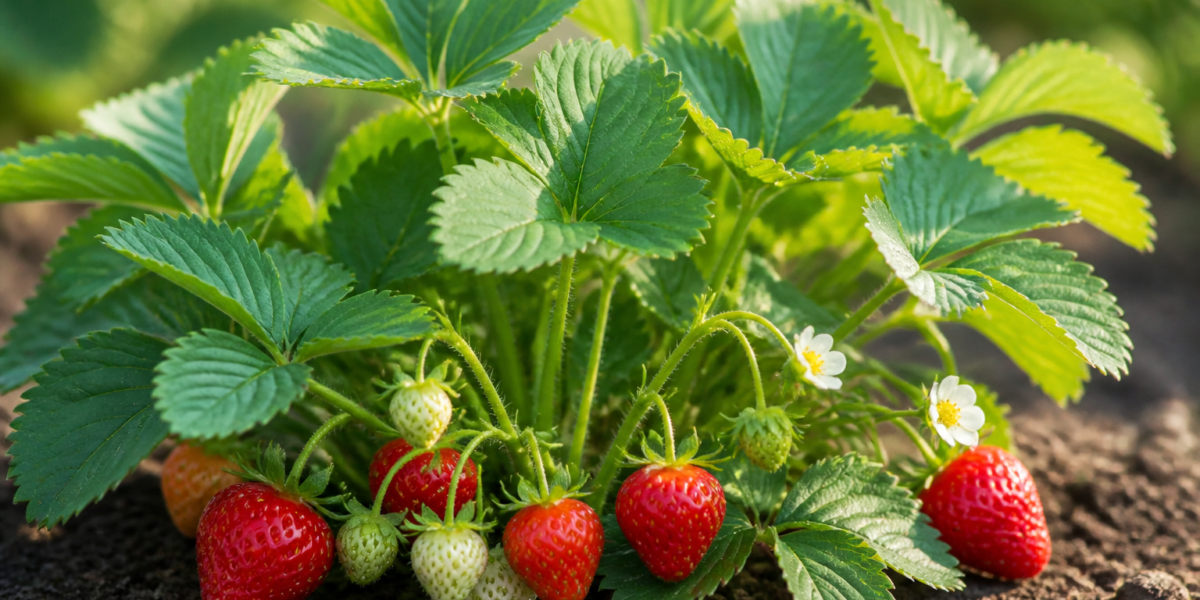
If your dog has discovered the strawberry patch or your cat is eyeing the strawberry pot on the patio, the question of whether strawberry plants safe for pets is a true claim is a smart one to ask before you panic. The reassuring answer is yes. Strawberry plants (Fragaria × ananassa, the cultivated garden strawberry, and Fragaria vesca, the wild or alpine strawberry) are listed as non-toxic to cats and dogs by the ASPCA. The leaves, stems, runners, flowers and fruit do not contain documented toxic compounds in meaningful amounts.
That said, “non-toxic” does not mean “unlimited snack.” A pet that eats a large quantity of any plant matter can develop short-term GI upset, and a real-world strawberry patch comes with a few practical caveats: pesticide residues on shop-bought plants, slug-bait granules in garden beds, the long runners that can wrap around small paws, and the simple risk of a dog scarfing too many fruits at once. This guide walks through the science, the caveats, what to do if your pet eats a big mouthful, and when to call your veterinarian.
Meet the Strawberry Plant
The cultivated garden strawberry, Fragaria × ananassa, is a hybrid first developed in 18th-century France. It belongs to the rose family (Rosaceae) along with apples, pears, raspberries and roses, and shares some of the same growth habits as those cousins. Wild strawberry, Fragaria vesca, is its smaller, sweeter relative and grows in shaded woodland edges across the northern hemisphere.
Strawberry plants are low-growing perennials that send out long horizontal stems called runners or stolons. Each runner roots wherever it touches soil, eventually forming a mat of clones around the parent plant. Spring brings clusters of small white flowers; summer brings the familiar red fruits.
You will most often meet strawberries in three settings: planted in garden beds, growing in raised “strawberry pots” with multiple side openings, and grown in compact containers on patios and balconies. All three are within easy reach of a curious dog at floor level, and elevated pots can still be batted by a determined cat.
What ASPCA-Aligned Toxicology Says
The ASPCA’s plant database lists Fragaria × ananassa as non-toxic to cats, dogs and horses. Wild strawberry (Fragaria vesca) is not separately listed but shares the same chemistry and is treated the same way by veterinary toxicology references. There are no documented cyanogenic glycosides, calcium oxalates, cardiac glycosides or other systemic toxins in the leaves, stems or fruit.
This rating is well established because strawberries have been grown commercially and in home gardens for centuries with no consistent record of pet poisoning beyond mild GI upset from over-eating. Veterinary poison control hotlines treat strawberry exposures as low-priority and typically focus the conversation on dose, age, and any unusual symptoms rather than the plant itself.
For the human food side of the question, our companion articles on whether dogs can eat strawberries and whether cats can eat strawberries cover serving sizes, sugar content and preparation. You can read our guide on whether dogs can eat strawberries and our piece on whether cats can eat strawberries to learn how the fruit fits into a balanced diet.
Possible Mild Reactions From Big Ingestions
Even though the plant itself is safe, a pet that eats large amounts of any vegetation can develop short-term GI upset. The most likely outcomes after a strawberry binge are:
- One bout of vomiting, often with chunks of red fruit and green leaf material visible.
- Soft stool or one or two episodes of diarrhea over the next 12 to 24 hours.
- Bright pink or red-stained urine for a few hours after a fruit binge; this is harmless food coloring rather than blood, but it can be alarming.
- Temporary loss of appetite as the pet’s stomach settles.
- Drooling or lip-licking right after the snack as the pet adjusts to the unfamiliar texture.
The runners and stems are tougher and more fibrous than the fruit, so a dog that swallows a long runner without chewing it well can occasionally have trouble passing it. Watch for repeated vomiting, hunched posture or appetite loss, and call your veterinarian if signs persist past 24 hours.
Cats vs. Dogs: Practical Risk Differences
Both species are at very low risk from strawberry plants because the plant lacks the compounds that drive species-specific toxicity. In practice, the risk profile splits more by behavior than by chemistry.
Dogs are far more likely to eat large quantities of strawberries because they go nose-first into the patch and treat it like a buffet. Small dogs eating a punnet’s worth of fruit at once can develop GI upset from sugar and fiber overload, even though the fruit itself is non-toxic. Diabetic dogs and dogs on weight-management diets should be limited to occasional small fruits to avoid sugar spikes.
Cats usually have less interest in fruit but may chew leaves and runners out of curiosity. They can be more sensitive to plant fiber than dogs, so a single mouthful of leaves may be enough to cause one bout of vomiting. The actual quantity ingested is usually small.
Pets with chronic kidney disease, diabetes, pancreatitis or food allergies should still get individual veterinary advice before being allowed free access to a strawberry patch. The plant is safe in the abstract, but each pet’s underlying health changes the calculation.
Practical Caveats for Outdoor Strawberry Patches
The plant chemistry is reassuring, but the patch as a whole environment has more variables. The most common real-world risks are:
- Pesticide residues. Many shop-bought strawberry plants are sprayed at the nursery before sale, and many commercial garden patches use insecticides and fungicides during the growing season. Wash any fruit you offer your pet with plain water, and reconsider feeding fruit you have just sprayed.
- Slug bait and snail pellets. Iron phosphate and metaldehyde slug baits are commonly used around strawberry beds. Metaldehyde is highly toxic to dogs and cats. Choose pet-safe iron-phosphate baits and apply them according to label directions.
- Bird netting. Loose netting over strawberry beds can entangle small dogs, cats and wildlife. Use rigid frames or weighted nets that pets cannot push under.
- Runners as tripping hazards. Long stolons across paths can wrap around legs and paws. Keep runners trimmed back from walking routes.
- Compost piles. Strawberry plants going to compost can ferment, and fermenting plant matter can contain ethanol or mycotoxins that are unsafe for pets.
- Sugar load. Dogs that eat large quantities of ripe fruit can develop GI upset and, in diabetic dogs, blood-sugar swings.
For more on planning a pet-friendly garden around fruit plants, see our guide to pet-safe garden plants. For nearby fruit-tree neighbors that may share the patch, our pieces on mulberry trees and apple trees walk through similar caveats.
Strawberry Plants Indoors
Strawberry plants are increasingly grown indoors in window-sill pots, hydroponic kits and patio containers. The same safety profile applies, but the practical concerns shift slightly.
Indoor strawberry care tips for pet households:
- Skip systemic insecticide granules. They can leach into the fruit and the surrounding soil, and they are not necessary for indoor pots with proper care.
- Choose organic potting mix labeled “OMRI listed” or “for edibles.” Avoid mixes with chemical fertilizer pellets that pets could swallow when investigating the pot.
- Use a heavy ceramic pot rather than a lightweight plastic one to reduce tipping if a paw bumps it.
- Place the pot on a windowsill or counter rather than a low shelf if you have a determined dog.
- Pick fruit promptly when ripe so it does not fall and tempt a binge.
Pets that have been raised around fresh produce often learn to wait for their share. Offering a small piece of strawberry from your hand teaches your pet that the fruit comes from you, not from the floor.
What To Do If Your Pet Eats a Lot of Strawberry Plant
If your dog or cat takes a few nibbles, do not panic. Remove any remaining plant material from the mouth and the floor. Offer fresh water. Watch for at least four hours. Most pets show no symptoms at all.
If your pet has eaten a much larger quantity (think a full punnet of fruit, multiple long runners, or a mouthful of leaves), watch for a longer window and call a veterinarian if you see:
- Repeated vomiting or vomiting with blood.
- Persistent or watery diarrhea.
- Lethargy, weakness or hiding behavior in cats.
- Loss of appetite for more than 24 hours.
- Hunched posture, abdominal pain or bloating.
- Tremors, weakness or any neurological signs (these often suggest a different exposure such as slug bait rather than the plant itself).
Keep emergency numbers visible:
- Your regular veterinarian.
- ASPCA Animal Poison Control Center at 888-426-4435 (a consultation fee may apply).
- Pet Poison Helpline at 855-764-7661 (a consultation fee may apply).
- The closest 24-hour emergency animal hospital.
Do not make your pet vomit at home. DIY methods can cause aspiration pneumonia and other complications, and they are unnecessary for non-toxic plants.
Other Pet-Safe Berry and Fruit Plants
If you love the idea of a berry patch, you can keep building a non-toxic edible garden across several genera. Most berry plants have similar safety profiles to strawberries, with bramble thorns being the main extra consideration in the Rubus genus.
Pet-safe berry options to consider in a layered patch:
- Raspberry plants, with bramble thorns to plan around.
- Blackberry plants, the thorniest of the brambles.
- Blueberry plants, low-thorn shrub berries.
- Cranberry plants, low-growing bog plants.
- Mulberry trees, for ripe-only fruit.
The one fruit-side outlier to avoid is elderberry, which is toxic in raw form. Read our guide on whether elderberry plants are toxic to pets if you have wild elderberry growing nearby.
When to Call Your Veterinarian
Even with a non-toxic plant, professional advice is the safest path when a pet eats a large quantity, when symptoms last more than 24 hours, or when you suspect another exposure such as pesticide or slug bait. Call your veterinarian, the ASPCA Animal Poison Control Center at 888-426-4435, or the Pet Poison Helpline at 855-764-7661 with the relevant details.
Be ready to share your pet’s species, breed, age and weight, the plant’s botanical name (Fragaria × ananassa or Fragaria vesca for wild strawberry), how much was eaten, how long ago, and any other potential exposures, including fertilizers, slug bait, fungicides and other plants. Photos of the patch help if there is any doubt about identification.
Adopting With a Berry Garden in Mind
Berry patches and pets can absolutely coexist with planning. Build raised beds the dog cannot reach, choose pet-safe slug control, keep nets rigid rather than loose, and offer fruit by hand so your pet learns that the harvest comes from you. Browse adoptable cats and adoptable dogs through Walk Me Home Rescue to find a calm, garden-friendly companion who matches your lifestyle.
Frequently Asked Questions
Are strawberry plants safe for cats?
Yes. The ASPCA lists Fragaria × ananassa as non-toxic to cats. Mild GI upset is still possible if a cat eats a large quantity of leaves or fruit at once.
Are strawberry plants safe for dogs?
Yes. Dogs are not at risk of poisoning from strawberry plants. Watch for short-term vomiting or soft stool if your dog eats a large quantity, and call your vet if symptoms last more than 24 hours.
Are strawberry leaves and runners safe to chew?
Yes. The leaves, stems and runners are non-toxic. Long runners can occasionally cause GI distress if a small dog swallows them whole, so trim runners back from walking routes.
Why is my dog’s urine pink after eating strawberries?
That is harmless food coloring from the fruit pigments rather than blood. It usually clears within a day. If you are unsure whether you are seeing pigment or blood, photograph it and call your veterinarian.
What about pesticides on shop-bought strawberry plants?
Pesticide residues are a real-world concern, even though the plant itself is non-toxic. Wash all fruit before serving, choose organic-grown plants when possible, and avoid systemic insecticides on fruiting plants you intend to share.


